On This Page
Description
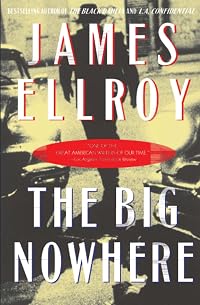
Los Angeles, 1950. Red crosscurrents: the Commie Scare and a string of brutal mutilation killings. Gangland intrigue and Hollywood sleaze. Three cops caught in a hellish web of ambition, perversion, and deceit. Danny Upshaw is a sheriff's deputy stuck with a bunch of snuffs nobody cares about; they're his chance to make his name as a cop ... and to sate his darkest curiosities. Mal Considine is the DA's Bureau brass. He's climbing on the Red Scare bandwagon to advance his career and to gain show more custody of his adopted son, a child he saved from the horror of postwar Europe. Buzz Meeks-bagman, ex-Narco goon, and pimp for Howard Hughes-is fighting communism for the money. All three men have purchased tickets to a nightmare. show lessTags
Recommendations





Member Reviews
Questo libro mi è piaciuto molto. Non gli ho dato 5 stelline solo perché c’è voluto un bel po’ (più di metà romanzo) perché mi prendesse, ma poi mi ha catturato così pienamente che non ho potuto che dargli un voto comunque alto. Solitamente a me non piacciono i libri, i gialli in particolare, in cui alla fine non c’è una chiara soluzione positiva per i “buoni” (per quanto fosse labile questa etichetta in questo romanzo) e i “cattivi” non sono tutti, in qualche modo, sconfitti. Sì, lo ammetto, c’ho questa debolezza di volere che, almeno nella finzione, tutto vada a finire nel migliore dei modi. Essendo questo libro però un noir, già immaginavo che non sarei rimasta completamente soddisfatta da questo punto di show more vista. Nonostante questo comunque il romanzo m’è piaciuto molto, anzi, direi che proprio questa componente “nera” ha accresciuto il mio piacere nel leggere, perché non mi sarei affezionata così tanto ai vari personaggi se non fossero stati così tristi, fallaci, imperfetti, sfortunati e un po’ “neri” anche loro.
I really liked this book. I didn't give it 5 stars just because it took me quite a bit (more than half novel) to gain my interest, but then he caught me so completely that I couldn't not give it a high rating anyway. I usually don't like books, expecially mistery ones, in which at the end there isn't a clear positive solution for the "good ones" (even if this label was very fleeting in this novel) and the "bad ones" are all, somehow, defeated. Yes, I admit it, I've got this weakness of wanting that, at least in fiction, everything is going to end up in the best way. Since this book, however, is a noir I already figured that I would not be left completely satisfied about by this point. Despite this, anyway, I liked the novel a lot, I would say that its "dark" component has increased my pleasure in reading, because I wouldn't be so fond of the various characters if they weren't so sad, flawed, imperfect, unfortunate and a bit "dark" too.
http://www.naufragio.it/iltempodileggere/16656 show less
I really liked this book. I didn't give it 5 stars just because it took me quite a bit (more than half novel) to gain my interest, but then he caught me so completely that I couldn't not give it a high rating anyway. I usually don't like books, expecially mistery ones, in which at the end there isn't a clear positive solution for the "good ones" (even if this label was very fleeting in this novel) and the "bad ones" are all, somehow, defeated. Yes, I admit it, I've got this weakness of wanting that, at least in fiction, everything is going to end up in the best way. Since this book, however, is a noir I already figured that I would not be left completely satisfied about by this point. Despite this, anyway, I liked the novel a lot, I would say that its "dark" component has increased my pleasure in reading, because I wouldn't be so fond of the various characters if they weren't so sad, flawed, imperfect, unfortunate and a bit "dark" too.
http://www.naufragio.it/iltempodileggere/16656 show less
I know what to expect from James Ellroy by now, and "The Big Nowhere" is another fun excursion into L.A. period piece sleaze. I think that the Los Angeles Times is just talking up the home team when it calls Ellroy "one of the great writers of our time," but I'll admit that "The Big Nowhere" is entertaining and even rewarding in spots.
You can't fault Ellroy for ambiance or research. Here, he concerns himself with the Red Scare and the lefty underground that it targeted, though Ellroy also seems to have done meticulous research on L.A.'s mid-fifties jazz scene, its union politics, and its severely closeted homosexual community, too. As usual, his prose sizzles, hitting a sweet spot between heady trash and writerly depth. While most of show more this novel's protagonists are still, in the best Ellroy fashion, well-rendered noir cartoons, he handles the emotional and sexual development -- and subsequent unraveling -- of one of them with real skill and sensitivity.
Of course, "The Big Nowhere" has its share of problems, too. Everything's still pretty garish, literary pretensions be damned: Ellroy's villains are too evil, his tough guys too picturesquely macho, and his plot too complex to really be taken seriously. Also problematic is Ellroy's scathing portrayal of the Hollywood "reds" that were blacklisted during the McCarthy era. Some of the abuse he heaps on them is probably appropriate to the period, but there's also places where I wondered if he wasn't letting his own politics -- which have reported to be everything from ultra-right to center-left -- seep into his writing. Sometimes, reading this one feels like being trapped with your paranoid, politically reactionary uncle at Thanksgiving dinner. It's a shame, too, because, when the book sticks to jazz joints, covert "boys only" shindigs, and plain old murder, it's actually kind of fun. show less
You can't fault Ellroy for ambiance or research. Here, he concerns himself with the Red Scare and the lefty underground that it targeted, though Ellroy also seems to have done meticulous research on L.A.'s mid-fifties jazz scene, its union politics, and its severely closeted homosexual community, too. As usual, his prose sizzles, hitting a sweet spot between heady trash and writerly depth. While most of show more this novel's protagonists are still, in the best Ellroy fashion, well-rendered noir cartoons, he handles the emotional and sexual development -- and subsequent unraveling -- of one of them with real skill and sensitivity.
Of course, "The Big Nowhere" has its share of problems, too. Everything's still pretty garish, literary pretensions be damned: Ellroy's villains are too evil, his tough guys too picturesquely macho, and his plot too complex to really be taken seriously. Also problematic is Ellroy's scathing portrayal of the Hollywood "reds" that were blacklisted during the McCarthy era. Some of the abuse he heaps on them is probably appropriate to the period, but there's also places where I wondered if he wasn't letting his own politics -- which have reported to be everything from ultra-right to center-left -- seep into his writing. Sometimes, reading this one feels like being trapped with your paranoid, politically reactionary uncle at Thanksgiving dinner. It's a shame, too, because, when the book sticks to jazz joints, covert "boys only" shindigs, and plain old murder, it's actually kind of fun. show less
A sordid murder on New Year's Eve has Los Angeles Sheriff's Department Deputy Danny Upshaw tracing down leads that reveal as much about himself as the killer. Meanwhile, a grand jury probe into possible Communist activities in Hollywood studios promises a Los Angeles Police Department captaincy for Lieutenant Mal Considine and offers enough money to entice indebted former police officer Buzz Meeks in providing muscle for the job.
Unlike the previous two titles I read by Ellroy, this book is told in the third person and follows three separate stories instead of one. Predictably, the three plots end up coming together at some point; I rather preferred when they interacted than when they didn't. The characters were interesting but deeply show more flawed; while following their stories was compelling, I doubt you'd want to meet any of them in real life. It's worth noting that Ellroy blends fact and fiction with this story, focusing on characters that he invented but having them interact with actual people from the time period (e.g., Mickey Cohen, Howard Hughes, etc.)
As with his previous books, Ellroy pulls no punches when it comes to his language and representations of a misogynistic, racist 1950s police force that is corrupt and brutal. There is also a fair amount of gore described with the murders, although I feel like less so here than in The Black Dahlia, the title preceding this one on the series. Basically, it's not for the faint of heart or easily offended.
The main murder mystery took some winding paths and lead to a conclusion that was both predictable and surprising, which I cannot further elucidate on without giving away spoiler details. Ellroy does, for the most part, plot things out very well and comes full circle with his storylines. With one detail in particular, I went back to the beginning and re-read some parts to see exactly what he had been up to while the reader was unawares.
The last half of the book was a page turner whereas the first half had a lot to introduce with three separate POV characters and storylines, as well as a decent amount of time spent describing the rivalry between LAPD and LASD, a subplot that was somewhat germane to the story but not one I found particularly as interesting. However, it did eventually pan out in a big way. This book does end in a somewhat vague way for one of the characters and not everything is tied up neatly in a bow -- just enough to whet the reader's appetite for the next book in the series. show less
Unlike the previous two titles I read by Ellroy, this book is told in the third person and follows three separate stories instead of one. Predictably, the three plots end up coming together at some point; I rather preferred when they interacted than when they didn't. The characters were interesting but deeply show more flawed; while following their stories was compelling, I doubt you'd want to meet any of them in real life. It's worth noting that Ellroy blends fact and fiction with this story, focusing on characters that he invented but having them interact with actual people from the time period (e.g., Mickey Cohen, Howard Hughes, etc.)
As with his previous books, Ellroy pulls no punches when it comes to his language and representations of a misogynistic, racist 1950s police force that is corrupt and brutal. There is also a fair amount of gore described with the murders, although I feel like less so here than in The Black Dahlia, the title preceding this one on the series. Basically, it's not for the faint of heart or easily offended.
The main murder mystery took some winding paths and lead to a conclusion that was both predictable and surprising, which I cannot further elucidate on without giving away spoiler details. Ellroy does, for the most part, plot things out very well and comes full circle with his storylines. With one detail in particular, I went back to the beginning and re-read some parts to see exactly what he had been up to while the reader was unawares.
The last half of the book was a page turner whereas the first half had a lot to introduce with three separate POV characters and storylines, as well as a decent amount of time spent describing the rivalry between LAPD and LASD, a subplot that was somewhat germane to the story but not one I found particularly as interesting. However, it did eventually pan out in a big way. This book does end in a somewhat vague way for one of the characters and not everything is tied up neatly in a bow -- just enough to whet the reader's appetite for the next book in the series. show less
The spanish version of the title "El Gran Desierto (The Big Desert)" doesn't really have much to do with the novel. 99% of the plot happens in the city, and the Big Nowhere refers to the empty spaces trying to figure out why psychopaths do the things they do, or the silence between a big jazz soliloquy. Maybe the translators didn't read the thing. Anyhow, this book is about three cops in 50s´ Los Angeles, a captain Mal Considine who sees an oportunity to become a big shot in the bureau by going against communist infiltration in Hollywood while dealing with a divorce lawsuit (which his going up the ladder in his job will help), taking with him an ex cop problem solver for Howard Hughes and a mob guy "Buzz" Meeks while taking the girl of show more the mob guy, and Danny Upshaw a brilliant young detective who is also investigating a series of psychosexual crimes with queer undertones. The plot thickens the moment the two investigations start crossing one another. Every criminal witness and "good guy" is interesting, from their motives to their psychological underpinnings. Ellroy is absolutely brutal with his characters, he doesn't let them take a breath throughout the whole novel. And with clear muscly and 50s´ LA idiomatic prose the pace is relentless.
Cliché shouters, sloganeers, fashion-conscious pseudoidealists. Locusts attacking social causes with the wrong information and bogus solutions, their one legit gripe - the Sleepy Lagoon case - almost blown through guilt by association: fellow travelers soliciting actual Party members for picketing and leaflet distribution, nearly discrediting everything the Sleepy Lagoon Defense Committee said and did. Hollywood writers and actors and hangers-on spouting cheap trauma, Pinko platitudes and guilt over raking in big money during the Depression, then penancing the bucks out to spurious leftist causes
Sounds familiar? show less
Cliché shouters, sloganeers, fashion-conscious pseudoidealists. Locusts attacking social causes with the wrong information and bogus solutions, their one legit gripe - the Sleepy Lagoon case - almost blown through guilt by association: fellow travelers soliciting actual Party members for picketing and leaflet distribution, nearly discrediting everything the Sleepy Lagoon Defense Committee said and did. Hollywood writers and actors and hangers-on spouting cheap trauma, Pinko platitudes and guilt over raking in big money during the Depression, then penancing the bucks out to spurious leftist causes
Sounds familiar? show less
A page turner from old LA. Written like JE was sitting in Hollywood in 1951 divining a tale of murder and mayhem involving the LAPD. Almost a 4.5 but it dragged in parts where the story focused on the Commies and got a little convoluted when Coleman became a larger part of the story at the end. The killing of Upshaw and Considine were surprises that made the book that much better. And Meeks being the survivor made it a little unreal but nonetheless a great read from another LA.
What a roller coaster ride!
Getting into the rhythm is a bit like watching a production of Shakespeare - you have to get your ear attuned to the language, but once you achieve that, you are off and away and able to immerse yourself wholly in the experience. It takes a while to sort out the parallel plot lines and keep the characters in an orderly arrangement in your head. I even went back and re-read the first 3 chapters after about ten, and re-established them for myself (after that it was all quite clear).
I suspect this is a matter of coming to terms with Ellroy's style - once mastered it's not such a big deal. For that reason, LA Confidential, the next book, didn't leave me quite so breathless, but I suspect it may have done if it show more has been my starting point.
Ellroy's setting may be 1950s Los Angeles, and homage may being paid to the noir detectives of earlier eras, but his writing - both language and themes - is graphically contemporary. It has as much to tell us about current values as anything, as well as exposing the corruption and nastiness of a previous era. As someone brought up on a diet rich in the Hollywood dream factory (Dragnet, Perry Mason, and family sitcoms depicting the 'sunny' side of urban America where cops were your friend, and the ranch house in the suburbs an unassailable good) I love this exposition of the seemier side of life - which as contemporary events - eg the Rodney King bashing - show us are no less real.
The story was of personal interest to me - the Grand Jury investigations into unions and Hollywood. The hard-bitten cynicism of several of the bad-guy heroes adds edge and bite to the historical facts.
Straight after closing the covers on The Big Nowhere, I started LA Confidential, the next in the LA Quartet. I liked it just as much.
There is no clear definition of a 'goodie' or 'baddie' in an Ellroy characterisation. Some of the fringe characters seem to get away with being decent (and one-dimensional), but they are only there to serve other purposes when necessary to tie the plot together.
Once again, don't read it if you are squeamish about the bizarre and often distasteful things humans can do to one another. Not for the sanctimonious who don't want to believe ill of those we entrust with policing human excess either !
Anyone who loves detective fiction, is a fan of film and/or book noir, and likes a good read, and isn't turned off by some pretty graphic descriptions of mutilation and bizarre practices should like this. show less
Getting into the rhythm is a bit like watching a production of Shakespeare - you have to get your ear attuned to the language, but once you achieve that, you are off and away and able to immerse yourself wholly in the experience. It takes a while to sort out the parallel plot lines and keep the characters in an orderly arrangement in your head. I even went back and re-read the first 3 chapters after about ten, and re-established them for myself (after that it was all quite clear).
I suspect this is a matter of coming to terms with Ellroy's style - once mastered it's not such a big deal. For that reason, LA Confidential, the next book, didn't leave me quite so breathless, but I suspect it may have done if it show more has been my starting point.
Ellroy's setting may be 1950s Los Angeles, and homage may being paid to the noir detectives of earlier eras, but his writing - both language and themes - is graphically contemporary. It has as much to tell us about current values as anything, as well as exposing the corruption and nastiness of a previous era. As someone brought up on a diet rich in the Hollywood dream factory (Dragnet, Perry Mason, and family sitcoms depicting the 'sunny' side of urban America where cops were your friend, and the ranch house in the suburbs an unassailable good) I love this exposition of the seemier side of life - which as contemporary events - eg the Rodney King bashing - show us are no less real.
The story was of personal interest to me - the Grand Jury investigations into unions and Hollywood. The hard-bitten cynicism of several of the bad-guy heroes adds edge and bite to the historical facts.
Straight after closing the covers on The Big Nowhere, I started LA Confidential, the next in the LA Quartet. I liked it just as much.
There is no clear definition of a 'goodie' or 'baddie' in an Ellroy characterisation. Some of the fringe characters seem to get away with being decent (and one-dimensional), but they are only there to serve other purposes when necessary to tie the plot together.
Once again, don't read it if you are squeamish about the bizarre and often distasteful things humans can do to one another. Not for the sanctimonious who don't want to believe ill of those we entrust with policing human excess either !
Anyone who loves detective fiction, is a fan of film and/or book noir, and likes a good read, and isn't turned off by some pretty graphic descriptions of mutilation and bizarre practices should like this. show less
A body is found near a local swimming hole and the brutality of the murder is frightening. Deputy Danny Upshaw is charged with finding the perp and closing the case. When it’s discovered the victim was gay, Ellroy brings the reader into the homophobic culture of 1950s Los Angeles while pushing Upshaw to his limit in his drive to tag the guilty party.
Elsewhere, both Mal Considine and Buzz Meeks become entwined in the communist red scare. Mal is using it to his advantage in an attempt to advance his fledgling career while Buzz Meeks is shaking down unions accused of spreading red propaganda.
It isn’t long until all three men are frying together in the same pan.
With The Big Nowhere, Ellroy was cooking with all the same ingredients used show more in The Black Dahlia: the seedy crime culture of 1950s L.A., snappy hard boiled dialogue, and compelling characters. So what was missing? It took me a while to pin it down but I think it eventually boils down to the narrative style. For whatever reason, I seem to prefer my crime fiction told in a first person narrative style. I’m not sure if that’s good or bad but I like to really get inside the head of the protagonist and uncover the case with him/her. I’m not saying that if a crime fiction author chooses the third person style he/she fails immediately; I just find it difficult to become fully immersed in the presented case.
Why does it matter so much with this novel? I think it suffers due to my own comparisons with Dahlia and just how much I enjoyed that experience. That being said, The Big Nowhere is itself a compelling story that has everything you could want in a dark, gritty gangland tale. While in my opinion it falls short of the tremendous Black Dahlia, it shares a similar tone and fans of the first novel in the L.A Quartet series should find some enjoyment in its followup.
Also posted @ Every Read Thing show less
Elsewhere, both Mal Considine and Buzz Meeks become entwined in the communist red scare. Mal is using it to his advantage in an attempt to advance his fledgling career while Buzz Meeks is shaking down unions accused of spreading red propaganda.
It isn’t long until all three men are frying together in the same pan.
With The Big Nowhere, Ellroy was cooking with all the same ingredients used show more in The Black Dahlia: the seedy crime culture of 1950s L.A., snappy hard boiled dialogue, and compelling characters. So what was missing? It took me a while to pin it down but I think it eventually boils down to the narrative style. For whatever reason, I seem to prefer my crime fiction told in a first person narrative style. I’m not sure if that’s good or bad but I like to really get inside the head of the protagonist and uncover the case with him/her. I’m not saying that if a crime fiction author chooses the third person style he/she fails immediately; I just find it difficult to become fully immersed in the presented case.
Why does it matter so much with this novel? I think it suffers due to my own comparisons with Dahlia and just how much I enjoyed that experience. That being said, The Big Nowhere is itself a compelling story that has everything you could want in a dark, gritty gangland tale. While in my opinion it falls short of the tremendous Black Dahlia, it shares a similar tone and fans of the first novel in the L.A Quartet series should find some enjoyment in its followup.
Also posted @ Every Read Thing show less
Members
- Recently Added By
Lists

The Guardian's 1000 Novels Everyone Must Read
1,005 works; 551 members

1001 Books You Must Read Before You Die
1,448 works; 1,135 members

2015 UpROOTed
28 works; 1 member

Library Books/Loans
37 works; 1 member

Books Read in 2019
4,052 works; 110 members

Jones & Newman: Best Horror Books Further Recommended Reading
577 works; 4 members

living room bookshelf
150 works; 1 member

Bookshelf from Interstellar
62 works; 1 member
Author Information

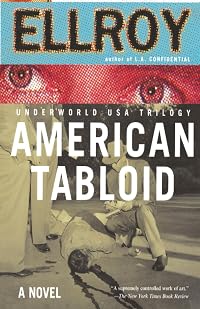
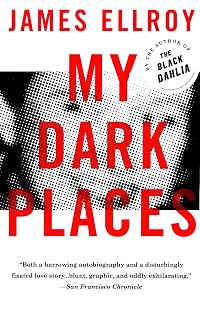
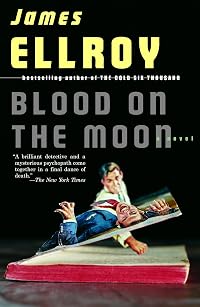
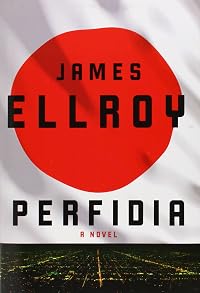
James Ellroy was born in Los Angeles in 1948. His L. A. Quartet novels - "The Black Dahlia", "The Big Nowhere", "L. A. Confidential", & "White Jazz" - were international best-sellers. His novel "American Tabloid" was Time magazine's Novel of the Year for 1995; his memoir, "My Dark Places", was a "Time" Best Book of the Year & a "New Yorker Times" show more Notable Book for 1996. He lives in Kansas City. (Publisher Provided) James Ellroy was born in Los Angeles, California on March 4, 1948. His parents were divorced and he moved in with his father after his mother was murdered in 1958. The story of his mother's unsolved murder would become the basis for his 1996 nonfiction work entitled My Dark Places. He attended Fairfax High School, where he sent Nazi pamphlets to girls he liked and criticized JFK, while advocating the reinstatement of slavery. He was eventually expelled for preaching Nazism in his English class. He joined the army after his expulsion from school, but after realizing that he did not belong there, he faked a stutter and convinced the army psychologist that he was not mentally fit for combat. After three months, he received a dishonorable discharge and returned home. His father died soon thereafter. He was thrown in juvenile hall for stealing a steak from the local market. When he got out, his father's friend became his guardian, but by the age of eighteen, he was back on the streets. He was sleeping outside, stealing, drinking and experimenting with drugs. It wasn't long before he was thrown in jail for breaking into a vacant apartment. When he got out of jail, he started a job at an adult book store, his addictions growing progressively larger. He was misusing the drug Benzedrex, a sinus inhalent which nearly drove him to Schizophrenia and his drinking was ruining his health. He contracted pneumonia twice as well as a condition called post-alchohol brain syndrome. Fearing for his sanity, he joined AA, became sober and found a job as a golf caddy. At the age of 30, he wrote his first novel entitled Brown's Requiem, which was published in 1981. His other works include Clandestine, Blood on the Moon, Because the Night, Suicide Hill, Killer on the Road, and The Cold Six Thousand. His works The Black Dahlia and L. A. Confidential were adapted into feature films. Ellroy's title, Perfidia, made the New York Times bestseller list in 2014. 030i show less
All Editions
Awards and Honors
Awards
Notable Lists
Series

Belongs to Publisher Series
Work Relationships
Common Knowledge
- Canonical title
- The Big Nowhere
- Original title
- The Big Nowhere
- Original publication date
- 1988
- People/Characters
- Buzz Meeks; Danny Upshaw; Malcolm Considine; Dudley Smith
- Important places
- Hollywood, Los Angeles, California, USA; Los Angeles, California, USA; California, USA
- Epigraph
- It was written that I should be loyal to the nightmare of my choice --
Joseph Conrad, Heart of Darkness - Dedication
- To Glenda Revelle
- First words
- Thundershowers hit just before midnight, drowning out horn honks and noisemaker blare that usually signalled New Year's on the Strip, bringing 1950 to the West Hollywood Substation in a wave of hot squeals with meat wagon bac... (show all)kup.
- Last words
- (Click to show. Warning: May contain spoilers.)Three dangerous men gone for parts unknown.
- Original language
- English
Classifications
Statistics
- Members
- 2,175
- Popularity
- 9,368
- Reviews
- 24
- Rating
- (4.02)
- Languages
- 13 — Danish, Dutch, English, Finnish, French, German, Greek, Italian, Japanese, Polish, Portuguese, Spanish, Swedish
- Media
- Paper, Audiobook, Ebook
- ISBNs
- 72
- ASINs
- 21