On This Page
Description
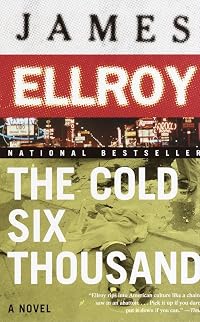
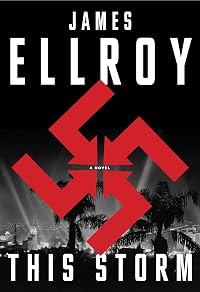
Wayne Tedrow, Jr., a young Vegas policeman with $6,000 in cash, is drawn unwittingly into a conspiracy involving the cover-up of the truth about the assassination of John F. Kennedy.Tags
Recommendations

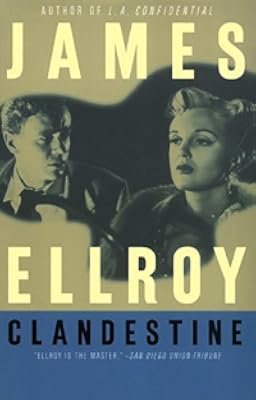
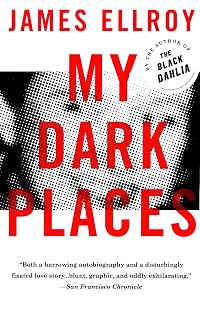





Member Reviews
James Ellroy’s second volume exploring the illicit and illegal activities shaping U.S. political history, The Cold Six Thousand, is as sweeping in scope and nefarious in character as the first, American Tabloid. Many of the major characters return, and it’s amazing (and darkly humourous) to see how much of what “we know” can be attributed to the hidden machinations of Ellroy’s imagined cabal. It’s conspiracy theory, to be sure, believable not as literal truth but as type: this is how things work, with individual and idiosyncratic agendas metastasizing into social trends and iconic events. Cold Six Thousand is book-ended with political assassinations, and fraught with all manner of thievery and murder in between, a comment on show more the American Sixties and what follows.
It seems to me that Ellroy trades in ideal types rather than historical truths. His imagined transcripts of confidential phone conversations between J. Edgar Hoover and undercover operatives; his briefs and document inserts from confidential CIA files; his headlines and ledes from media stories – all of these are utterly convincing. I don’t know how the transcript of a CIA bugging operation reads, but Ellroy has convinced me he knows. I don’t know how mafiosi run their businesses, but it sure seems like their plans would unfold the way Ellroy depicts them here. Whether racist slang among 1960s U.S. adults sounded like his dialogue reads, is again unclear to me. But it never reads like he's making it up. The chapter summarizing the history and significance of Viet Nam to U.S. political-military security from 1954 to 1964 (in the form of a CIA brief from one agent to another as preamble to an unsanctioned covert ops) is deft without being reductive. And it still reads like a government brief.
So if nothing happened quite the way he writes it, I’d bet it happened something like his version. (And the real point, perhaps, is that not only won’t we ever know, we can’t know. Nothing records this level of history. Ellroy is the closest we’d ever have. Put another way: it isn’t falsifiable, the very essence of fiction.) Ellroy’s history is at the level of the floorboards, what’s fascinating is how his version dovetails with the head-height version(s) bandied about in school textbooks and popular culture.
And his prose is something else, much more stylised than the first volume. I agree with those thinking a reader will either love or hate it, his staccato word flow and almost adjective-less prose weaves a peculiar aura around the events he describes. Hardboiled is perhaps true but beside the point, really, with descriptive passages as clipped and repetitive as dialogue. Ellroy has provided the written equivalent of a mantra or recitation, with the sound of his words as important as their meaning. A singular achievement, in conception as well as in sustained performance. show less
It seems to me that Ellroy trades in ideal types rather than historical truths. His imagined transcripts of confidential phone conversations between J. Edgar Hoover and undercover operatives; his briefs and document inserts from confidential CIA files; his headlines and ledes from media stories – all of these are utterly convincing. I don’t know how the transcript of a CIA bugging operation reads, but Ellroy has convinced me he knows. I don’t know how mafiosi run their businesses, but it sure seems like their plans would unfold the way Ellroy depicts them here. Whether racist slang among 1960s U.S. adults sounded like his dialogue reads, is again unclear to me. But it never reads like he's making it up. The chapter summarizing the history and significance of Viet Nam to U.S. political-military security from 1954 to 1964 (in the form of a CIA brief from one agent to another as preamble to an unsanctioned covert ops) is deft without being reductive. And it still reads like a government brief.
So if nothing happened quite the way he writes it, I’d bet it happened something like his version. (And the real point, perhaps, is that not only won’t we ever know, we can’t know. Nothing records this level of history. Ellroy is the closest we’d ever have. Put another way: it isn’t falsifiable, the very essence of fiction.) Ellroy’s history is at the level of the floorboards, what’s fascinating is how his version dovetails with the head-height version(s) bandied about in school textbooks and popular culture.
And his prose is something else, much more stylised than the first volume. I agree with those thinking a reader will either love or hate it, his staccato word flow and almost adjective-less prose weaves a peculiar aura around the events he describes. Hardboiled is perhaps true but beside the point, really, with descriptive passages as clipped and repetitive as dialogue. Ellroy has provided the written equivalent of a mantra or recitation, with the sound of his words as important as their meaning. A singular achievement, in conception as well as in sustained performance. show less
Did not disappoint after American Tabloid. The writing style is distinctly odd, there's a rhythm that you have to fall into and when you do it's almost like poetry. Once again, I think Ellroy is pretty close to the truth here. If you're into crime fiction, conspiracy theories and American history, this series covers all the bases.
James Ellroy's "The Cold Six Thousand," is as difficult to read and as insightful as a transcript of a Trump rally. Is it possible that an author, who has spent perhaps years in agonizing research, might resent his readers breezing through his/her novel from EWR to LAX and retaliate by writing the next novel with such antagonistic brutal staccato sentences and sentence fragments, and with more than sufficient gangster patois, and with so many twists of motivations and puzzling consequences, so as to make his reader grind teeth and spit invectives in search of some vague clarity of meaning? An exception are the epistolary inserts, mostly fictional (one assumes) FBI documents which are clearly written and either expositions or show more transcriptions of conversations or illegal surveillances.
All in all, the book is a very long linguistic nightmare. show less
All in all, the book is a very long linguistic nightmare. show less
Well I finally got around to reading this and what a blast. Great how the forward starts out talking about how people romanticise a golden era that never was and then *bang* it takes you right into this dark, amoral underbelly of America. Gratuitous violence, corruption, blackmail, all delivered with some snappy one liners - sounds like a an episode of The Sopranos except it makes that lot look positively moral. Oh and enough conspiracy theory to bring Fox Mulder out of retirement.
This is an astoundingly good novel. What is most striking about it is James Ellroy's buckshot prose, which he has taken to a new level, even for him. It scans almost like beat poetry.
Virtually every page (of 700 odd) is studded with short (and I mean *really* short, even by Ellroy's standards), staccato sentences repeating phrases in groups of three: "Frank was a doctor. Frank had bad habits. Frank made bad friends."; "Wayne yawned. Wayne pulled carbons. The fine print blurred."
I can see that this could, quite reasonably, prove extremely irritating, but I found that it gave the novel a real rhythm, like a Bo Diddley jungle beat. That sounds pretentious, I know, but if you read it (and buy into it) you'll see what I mean. And it is show more used to extremely good, often comic effect.
As is the case with all Ellroy's novels, life is solitary, poor, nasty, brutish and (for the most part) short, although it must be said the principal protagonists do, by comparison, seem blessed with unfeasible longevity, and the plot is so Byzantine as to make Constantinople look like a one horse town: Cuba, Vietnam, Howard Hughes, the Vegas mafia, JFK's assassination, RFK's assassination, the Klan, Martin Luther King's assassination - it's all here, and in Ellroy's universe it's all inextricably linked.
I doubt it has any value as history (whether or not it is, Ellroy is clearly steeped in the history of the era), but it's such an exhilarating read, it really doesn't matter. show less
Virtually every page (of 700 odd) is studded with short (and I mean *really* short, even by Ellroy's standards), staccato sentences repeating phrases in groups of three: "Frank was a doctor. Frank had bad habits. Frank made bad friends."; "Wayne yawned. Wayne pulled carbons. The fine print blurred."
I can see that this could, quite reasonably, prove extremely irritating, but I found that it gave the novel a real rhythm, like a Bo Diddley jungle beat. That sounds pretentious, I know, but if you read it (and buy into it) you'll see what I mean. And it is show more used to extremely good, often comic effect.
As is the case with all Ellroy's novels, life is solitary, poor, nasty, brutish and (for the most part) short, although it must be said the principal protagonists do, by comparison, seem blessed with unfeasible longevity, and the plot is so Byzantine as to make Constantinople look like a one horse town: Cuba, Vietnam, Howard Hughes, the Vegas mafia, JFK's assassination, RFK's assassination, the Klan, Martin Luther King's assassination - it's all here, and in Ellroy's universe it's all inextricably linked.
I doubt it has any value as history (whether or not it is, Ellroy is clearly steeped in the history of the era), but it's such an exhilarating read, it really doesn't matter. show less
This book is so good I wonder more people haven't read it. Its predecessor "American Tabloid" was terrific as well. I think people are put off by Ellroy's clipped style of writing but I think it goes perfectly with the story. The humor is dark, the anti-heroes brutal and human. This book is for advanced readers because of its complexities. But if you can give it a go you will realize that Ellroy is a genius.
“Anybody who doesn't know that politics is crime has got a few screws loose.”
Firstly I should point out that this book is the sequel of "American Tabloid" regarded by many as the basis to the cult movie Pulp Fiction.However, as I can attest, it can be read as a stand alone.
''The Cold Six Thousand,'' depicts an American political underbelly teeming with conspiracy and crime as seen through the eyes of three mid-level operatives: Ward Littell, an F.B.I. agent turned mob lawyer; Pete Bondurant, a hired killer and racket operator; and Wayne Tedrow Jr., a Las Vegas policeman and son of a crooked union leader cum casino owner in the city. The novel begins a few minutes after President Kennedy's assassination in 1963 and follows its show more characters as they become embroiled with the burgeoning civil rights movement, the Las Vegas gambling industry and the Vietnamese opium trade, and ends with the assassinations of both Martin Luther King and Robert F. Kennedy in 1968. The F.B.I., the Ku Klux Klan, the C.I.A., Cuban political expatriates, J.Edgar Hoover and Howard Hughes to name but a few also make an appearance and at some time or other the three main characters will end up working for or with each of these entities -- sometimes several of them at once.
This novel will not teach anybody anything new about any of the events that take place throughout, instead it leans very heavily on the side of the conspiracy theories of the time. It is richly peppered with scenes of violence although this rarely if ever gets gratuitous and plenty of what is no doubt regarded as gangster slang of the time. Many of the sentences are only two or three words long and many are repeated tabloid style yet my copy of this novel is nearly 700 pages long so is a pretty hefty tome.
Now to me the length rather than being it's strength is it's weakness. The tale is just too far reaching and I must admit that on more than one occasion I was tempted to throw in the towel with it however, I did soldier on and complete it. Personally I would have preferred Ellroy concentrated on one historical event rather than so many. Nor did I really find the three main characters with their somewhat convoluted and entwined alliances that convincing, this was particularly true of that of Ward Littell. In the end I felt that it was OK but reads like the author's pet hobby-horse rather than a true work of fiction IMHO and ultimately was left frustrated instead of enlightened by it. show less
Firstly I should point out that this book is the sequel of "American Tabloid" regarded by many as the basis to the cult movie Pulp Fiction.However, as I can attest, it can be read as a stand alone.
''The Cold Six Thousand,'' depicts an American political underbelly teeming with conspiracy and crime as seen through the eyes of three mid-level operatives: Ward Littell, an F.B.I. agent turned mob lawyer; Pete Bondurant, a hired killer and racket operator; and Wayne Tedrow Jr., a Las Vegas policeman and son of a crooked union leader cum casino owner in the city. The novel begins a few minutes after President Kennedy's assassination in 1963 and follows its show more characters as they become embroiled with the burgeoning civil rights movement, the Las Vegas gambling industry and the Vietnamese opium trade, and ends with the assassinations of both Martin Luther King and Robert F. Kennedy in 1968. The F.B.I., the Ku Klux Klan, the C.I.A., Cuban political expatriates, J.Edgar Hoover and Howard Hughes to name but a few also make an appearance and at some time or other the three main characters will end up working for or with each of these entities -- sometimes several of them at once.
This novel will not teach anybody anything new about any of the events that take place throughout, instead it leans very heavily on the side of the conspiracy theories of the time. It is richly peppered with scenes of violence although this rarely if ever gets gratuitous and plenty of what is no doubt regarded as gangster slang of the time. Many of the sentences are only two or three words long and many are repeated tabloid style yet my copy of this novel is nearly 700 pages long so is a pretty hefty tome.
Now to me the length rather than being it's strength is it's weakness. The tale is just too far reaching and I must admit that on more than one occasion I was tempted to throw in the towel with it however, I did soldier on and complete it. Personally I would have preferred Ellroy concentrated on one historical event rather than so many. Nor did I really find the three main characters with their somewhat convoluted and entwined alliances that convincing, this was particularly true of that of Ward Littell. In the end I felt that it was OK but reads like the author's pet hobby-horse rather than a true work of fiction IMHO and ultimately was left frustrated instead of enlightened by it. show less
Members
- Recently Added By
Published Reviews
ThingScore 100
added by Delfi_r
Lists

Books Read in 2017
4,249 works; 130 members

Books With Numbers in the Title
308 works; 13 members
Author Information

James Ellroy was born in Los Angeles in 1948. His L. A. Quartet novels - "The Black Dahlia", "The Big Nowhere", "L. A. Confidential", & "White Jazz" - were international best-sellers. His novel "American Tabloid" was Time magazine's Novel of the Year for 1995; his memoir, "My Dark Places", was a "Time" Best Book of the Year & a "New Yorker Times" show more Notable Book for 1996. He lives in Kansas City. (Publisher Provided) James Ellroy was born in Los Angeles, California on March 4, 1948. His parents were divorced and he moved in with his father after his mother was murdered in 1958. The story of his mother's unsolved murder would become the basis for his 1996 nonfiction work entitled My Dark Places. He attended Fairfax High School, where he sent Nazi pamphlets to girls he liked and criticized JFK, while advocating the reinstatement of slavery. He was eventually expelled for preaching Nazism in his English class. He joined the army after his expulsion from school, but after realizing that he did not belong there, he faked a stutter and convinced the army psychologist that he was not mentally fit for combat. After three months, he received a dishonorable discharge and returned home. His father died soon thereafter. He was thrown in juvenile hall for stealing a steak from the local market. When he got out, his father's friend became his guardian, but by the age of eighteen, he was back on the streets. He was sleeping outside, stealing, drinking and experimenting with drugs. It wasn't long before he was thrown in jail for breaking into a vacant apartment. When he got out of jail, he started a job at an adult book store, his addictions growing progressively larger. He was misusing the drug Benzedrex, a sinus inhalent which nearly drove him to Schizophrenia and his drinking was ruining his health. He contracted pneumonia twice as well as a condition called post-alchohol brain syndrome. Fearing for his sanity, he joined AA, became sober and found a job as a golf caddy. At the age of 30, he wrote his first novel entitled Brown's Requiem, which was published in 1981. His other works include Clandestine, Blood on the Moon, Because the Night, Suicide Hill, Killer on the Road, and The Cold Six Thousand. His works The Black Dahlia and L. A. Confidential were adapted into feature films. Ellroy's title, Perfidia, made the New York Times bestseller list in 2014. 030i show less
Awards and Honors
Distinctions
Notable Lists
Series

Belongs to Publisher Series
Work Relationships
Common Knowledge
- Canonical title
- The Cold Six Thousand
- Original title
- The Cold Six Thousand
- Original publication date
- 2001
- People/Characters
- Wayne Tedrow, Jr. (Sergeant, L.V.P.D.); Lieutenant Buddy Fritsch, L.V.P.D.; Officer Maynard D. Moore, Dallas P.D.; J. Edgar Hoover; Pete Bondurant; Ward J. Littell (show all 8); Jack Ruby; Howard Hughes
- Important places
- Dallas, Texas, USA; Las Vegas, Nevada, USA; Saigon, Vietnam; Memphis, Tennessee, USA; Mexico City, Mexico; Los Angeles, California, USA (show all 18); Washington, D.C., USA; Little Rock, Arkansas, USA; Dak Sut, Vietnam; Mexico; USA; Vietnam; Arkansas, USA; California, USA; Nevada, USA; Tennessee, USA; Texas, USA; Pulaski County, Arkansas, USA
- Important events
- Vietnam War (1955 | 1975); Assassination of John F. Kennedy (1963-11-22); Assassination of Robert F. Kennedy (1968-06-05); Assassination of Martin Luther King, Jr. (1968-04-04)
- Dedication
- To BILL STONER
- First words
- They sent him to Dallas to kill a nigger pimp named Wendell Durfee. He wasn't sure he could do it.
The Casino Operators Council flew him. They supplied first-class fare. They tapped their slush fund. They greased him. ... (show all)They fed him six cold. - Last words
- (Click to show. Warning: May contain spoilers.)Wayne stood tiptoed. Wayne made a picture frame. Wayne got a full window view. The club head arced. His father screamed. Blood sprayed the panes.
- Original language
- English
- Canonical DDC/MDS
- 813.54
- Canonical LCC
- PS3555.L6274
Classifications
- Genres
- Fiction and Literature, General Fiction, Mystery, Historical Fiction
- DDC/MDS
- 813.54 — Literature & rhetoric American literature in English American fiction in English 1900-1999 1945-1999
- LCC
- PS3555 .L6274 — Language and Literature American literature American literature Individual authors 1961-
- BISAC
Statistics
- Members
- 1,999
- Popularity
- 10,508
- Reviews
- 24
- Rating
- (3.77)
- Languages
- 14 — Danish, Dutch, English, Finnish, French, German, Hungarian, Italian, Japanese, Norwegian (Bokmål), Polish, Portuguese, Spanish, Swedish
- Media
- Paper, Audiobook, Ebook
- ISBNs
- 53
- ASINs
- 11