On This Page
Description
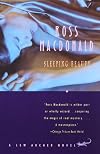
Sleeping Beauty plunges detective Lew Archer into a fascinating and intricate case connected to a disastrous oil spill on the Southern California coast. Ross Macdonald's masterful tale leads his investigator into a load of trouble involving ransom, a lethal dose of Nembutal, the death of a stranger found floating off shore, and three generations of the imposing Lennox family, whose offshore oil platform caused the spill. The young Lennox heiress-glimpsed for a haunting moment on the beach, show more clutching an oil-drenched sea bird in her arms-has disappeared, and while on her trail, Archer finds himself journeying into the hidden lives of a family twisted by money, power, and a compulsive instinct for infidelity. show lessTags
Recommendations





































Member Reviews
“I tried to move like a neutral in the no man’s land between the lawless and the law. But when the shooting started I generally knew which side I belonged on.”
Archer is on his way back from Mazatlán to Pacific Point, California, when he sees the oil spill that will play a part in this complex unraveling of old sins coming to bear on the present. Some of Macdonald’s descriptions, as seen through Archer’s eyes from the air as his plane comes in, are wonderful, capturing the terrible price paid by nature when men are careless, and care only about money:
“An offshore oil platform stood up out of its windward end like the metal handle of a dagger that had stabbed the world and made it spill black blood.”
Archer as narrator talks show more about Pacific Point being one of his favorite places on the California coast, because of its beauty. Then once he’s on the ground there’s this:
“From the hill above the harbor I could see the enormous slick spreading like premature night across the sea.”
Moments later, in a walk along the damaged beach, Archer happens upon the girl in the case. Laurel Russo is trying to save a bird covered in oil. Her grief and pain at the bird’s plight tells Archer that she’s in emotional trouble which goes far beyond the bird’s. He takes her back with him to his apartment, and after a phone call to her estranged husband, Tom, a pharmacist, she bolts. Archer quickly discovers she’s taken from his medicine cabinet a bottle of sleeping tablets, and is alarmed because of her fragile state.
Thus begins his desperate search for the girl. He’s seen two men at a restaurant that he notes early on, and they will come into play at a certain point. One of them will, in fact, wash ashore on the morning after Archer has a brief liaison with Elizabeth. She is tied to the Somerville and Lennox clans, who are responsible for the black blood creeping toward shore. They may also be responsible for some real blood spilled on an escort carrier headed for Okinawa, and in a bedroom where a child remained alone for days after the murder of its mother. There is a ransom note, and a kidnapping which might be very real, or might be faked. That unknown leads Archer to be less than forthcoming with the authorities, because his main priority is Laurel.
I recalled this as my favorite among Ross Macdonald’s literate Lew Archer novels. The Lew Archer novels were a means to an end for Macdonald, who used the form to spotlight broken and damaged people in peril, and in need of mending. After revisiting the narrative, I find it to be the zenith of what he tried to do with the detective form, which as he once noted, gave him all the rope he’d ever need. Just how good Sleeping Beauty is, and how the author felt about it, might be indicated by his dedicating the book to Eudora Welty, with whom he had a sort of 84 Charing Cross Road type of relationship. Sleeping Beauty is literate yet full of movement as the search for Laurel in the present begins spiraling backward toward the past. It is a labyrinth, the entanglement of one family’s affairs and the damage it has strewn across both the physical landscape and the emotional one.
One of the things which strikes the reader is how unpleasant most of the people Archer encounters seem to be. Archer occasionally bites back, but has to stop short so that he can find out what he needs to know to find Laurel. There seems to be little warmth or tenderness among most of the family. When they speak, their words have an edge of nastiness or dismissal you often encounter in those who’ve either gotten their way for too long because of money and bluster, or have never gotten their way because they were the recipients of the bluster, but not the money. The more Archer talks to those around Laurel, the more it becomes evident that something is being hidden:
“The dim air of the place oppressed me. I felt as if I was lost in the catacombs under a city where no one could be trusted or believed.”
That mistrust includes Elizabeth, with whom Archer shares a tender moment, only to discover that’s all it was:
“I couldn’t tell if she was a hard woman who had moments of softness, or a soft woman who could be hard on occasion.”
The men fare even worse, either unpleasant and obstinate, or deeply troubled, like Laurel’s husband, Tom, who may be as messed up as his young wife. Archer walks in on him having a dream, and it confirms that some past trauma is the catalyst for what’s happening now. Why Archer even cares, beyond his sense of responsibility over the bottle of sleeping pills, is explained in something Laurel has written on the back of a heartfelt letter from her husband, Tom:
“I get these terrible depressions and then I don’t want to live in the world at all. Not even with you. But I’m fighting it.”
It is this letter, and Laurel’s response, which creates sympathy for the couple, and Laurel especially. Macdonald wisely gives it to the reader about a quarter way into the story, so we’ll care as much as Archer. Up to that point, the people are so insufferable we almost want Archer to start slapping them around. It helps draw the reader in, and explains why Archer puts up with them. He needs them, so he can keep pushing them, and get at the truth so that he can give the couple damaged by their respective families a chance.
The ending is quiet yet powerful, softly and sadly reverberating back through the narrative, as was Macdonald’s intent. Sleeping Beauty is a wonderful piece of writing, and I’m still of the opinion that this is his most successful novel in terms of what he was attempting to do. It would certainly explain him dedicating Sleeping Beauty to Eudora Welty. On a technical note, it has a couple of typos which don’t affect the reading — although one of them makes a sentence confusing for a moment. Every book has them, even the great ones, so it's not a big deal.
This is a terrific, literate novel which just happens to be a mystery story featuring a detective. That’s probably the best way to describe all of Macdonald’s later novels, once he’d moved sideways from Chandler. I don’t quite agree with Anthony Boucher, who suggested in the New York Times that Macdonald was a better novelist than Chandler and Hammett ever were, because it really is apples and oranges. I think Eudora Welty came much closer to pinning down the difference in styles, so I’ll allow her words to punctuate my review of Sleeping Beauty:
“A more serious and complex writer than Chandler and Hammett ever were.” show less
Archer is on his way back from Mazatlán to Pacific Point, California, when he sees the oil spill that will play a part in this complex unraveling of old sins coming to bear on the present. Some of Macdonald’s descriptions, as seen through Archer’s eyes from the air as his plane comes in, are wonderful, capturing the terrible price paid by nature when men are careless, and care only about money:
“An offshore oil platform stood up out of its windward end like the metal handle of a dagger that had stabbed the world and made it spill black blood.”
Archer as narrator talks show more about Pacific Point being one of his favorite places on the California coast, because of its beauty. Then once he’s on the ground there’s this:
“From the hill above the harbor I could see the enormous slick spreading like premature night across the sea.”
Moments later, in a walk along the damaged beach, Archer happens upon the girl in the case. Laurel Russo is trying to save a bird covered in oil. Her grief and pain at the bird’s plight tells Archer that she’s in emotional trouble which goes far beyond the bird’s. He takes her back with him to his apartment, and after a phone call to her estranged husband, Tom, a pharmacist, she bolts. Archer quickly discovers she’s taken from his medicine cabinet a bottle of sleeping tablets, and is alarmed because of her fragile state.
Thus begins his desperate search for the girl. He’s seen two men at a restaurant that he notes early on, and they will come into play at a certain point. One of them will, in fact, wash ashore on the morning after Archer has a brief liaison with Elizabeth. She is tied to the Somerville and Lennox clans, who are responsible for the black blood creeping toward shore. They may also be responsible for some real blood spilled on an escort carrier headed for Okinawa, and in a bedroom where a child remained alone for days after the murder of its mother. There is a ransom note, and a kidnapping which might be very real, or might be faked. That unknown leads Archer to be less than forthcoming with the authorities, because his main priority is Laurel.
I recalled this as my favorite among Ross Macdonald’s literate Lew Archer novels. The Lew Archer novels were a means to an end for Macdonald, who used the form to spotlight broken and damaged people in peril, and in need of mending. After revisiting the narrative, I find it to be the zenith of what he tried to do with the detective form, which as he once noted, gave him all the rope he’d ever need. Just how good Sleeping Beauty is, and how the author felt about it, might be indicated by his dedicating the book to Eudora Welty, with whom he had a sort of 84 Charing Cross Road type of relationship. Sleeping Beauty is literate yet full of movement as the search for Laurel in the present begins spiraling backward toward the past. It is a labyrinth, the entanglement of one family’s affairs and the damage it has strewn across both the physical landscape and the emotional one.
One of the things which strikes the reader is how unpleasant most of the people Archer encounters seem to be. Archer occasionally bites back, but has to stop short so that he can find out what he needs to know to find Laurel. There seems to be little warmth or tenderness among most of the family. When they speak, their words have an edge of nastiness or dismissal you often encounter in those who’ve either gotten their way for too long because of money and bluster, or have never gotten their way because they were the recipients of the bluster, but not the money. The more Archer talks to those around Laurel, the more it becomes evident that something is being hidden:
“The dim air of the place oppressed me. I felt as if I was lost in the catacombs under a city where no one could be trusted or believed.”
That mistrust includes Elizabeth, with whom Archer shares a tender moment, only to discover that’s all it was:
“I couldn’t tell if she was a hard woman who had moments of softness, or a soft woman who could be hard on occasion.”
The men fare even worse, either unpleasant and obstinate, or deeply troubled, like Laurel’s husband, Tom, who may be as messed up as his young wife. Archer walks in on him having a dream, and it confirms that some past trauma is the catalyst for what’s happening now. Why Archer even cares, beyond his sense of responsibility over the bottle of sleeping pills, is explained in something Laurel has written on the back of a heartfelt letter from her husband, Tom:
“I get these terrible depressions and then I don’t want to live in the world at all. Not even with you. But I’m fighting it.”
It is this letter, and Laurel’s response, which creates sympathy for the couple, and Laurel especially. Macdonald wisely gives it to the reader about a quarter way into the story, so we’ll care as much as Archer. Up to that point, the people are so insufferable we almost want Archer to start slapping them around. It helps draw the reader in, and explains why Archer puts up with them. He needs them, so he can keep pushing them, and get at the truth so that he can give the couple damaged by their respective families a chance.
The ending is quiet yet powerful, softly and sadly reverberating back through the narrative, as was Macdonald’s intent. Sleeping Beauty is a wonderful piece of writing, and I’m still of the opinion that this is his most successful novel in terms of what he was attempting to do. It would certainly explain him dedicating Sleeping Beauty to Eudora Welty. On a technical note, it has a couple of typos which don’t affect the reading — although one of them makes a sentence confusing for a moment. Every book has them, even the great ones, so it's not a big deal.
This is a terrific, literate novel which just happens to be a mystery story featuring a detective. That’s probably the best way to describe all of Macdonald’s later novels, once he’d moved sideways from Chandler. I don’t quite agree with Anthony Boucher, who suggested in the New York Times that Macdonald was a better novelist than Chandler and Hammett ever were, because it really is apples and oranges. I think Eudora Welty came much closer to pinning down the difference in styles, so I’ll allow her words to punctuate my review of Sleeping Beauty:
“A more serious and complex writer than Chandler and Hammett ever were.” show less
Another splendid Lew Archer tale by Ross Macdonald, rife with dark family secrets, the visitation of the sins of the fathers on the younger generation, all the themes Macdonald explored over and over in his books, always seeming to create fresh angles from which to view the human foibles on display. The mystery this time revolves around a young woman who may or may not have been kidnapped, the wealthy oil family from which she springs, and a nearly three-decade old murder. Macdonald remains one of the great private eye novelists of all time, and SLEEPING BEAUTY stands high among his many books.
review of
Ross MacDonald's Sleeping Beauty
by tENTATIVELY, a cONVENIENCE - May 17-18, 2021
As much as I love MacDonald's writing there's a bit too much formulaicness going on: there's almost inevitably the woman (or women) that the detective Archer finds compellingly attractive & a kidnapping (or faux kidnapping) that ups the drama ante. That sd, he did change w/ the times. In this case, 1973, environmentalism has entered the scene, stage left. I found that refreshing.
"I flew home from Mazatlán on a Wednesday afternoon. As we approached Los Angeles, the Mexicana plane dropped low over the sea and I caught my first glimpse of the oil spill.
"It lay on the blue water off Pacific Point in a free-form slick that seemed miles wide and many show more miles long. An offshore oil platform stood up out of its windward end like the metal handle of a dagger that had stabbed the world and made it spill black blood." - p 1
Those are the 1st 2 paragraphs & they set the scene nicely. Archer, as is so often the case, encounters a pivotal person randomly. She's carrying an oil-covered bird that she's trying to save. She quickly insinuates herself into Archer's life.
""You mentioned that you had a family. You said they were in the oil business."
""You must have misunderstood me. And I'm getting tired of being questioned, if you don't mind." Her mood was swinging like an erratic pendulum from being hurt to hurting. "You seem to be mortally afraid of getting stuck with me."" - p 10
She had sd that she had family in the oil business. In fact, they were directly connected to the oil spill. She makes off w/ Archer's sleeping pills & goes to destination unknown. Archer is concerned & feels partially responsible so he gets embroiled w/ trying to find her & to prevent her from committing suicide. One cd say that this particular female character isn't exactly positive, is a bit of a drama queen - but, HO!, there's another female character who IS positive.
"I went out to the kitchen. Gloria was drying dishes at the sink, her black hair tied up on each side with shoelaces. She gave me a quick bright glance over her shoulder. "You shouldn't come out here. This place is a mess."" - p 25
I particularly like the touch w/ the shoelaces.
""May I offer my congratulations?"
""Sure, and I accept. We'd be married now, but we want to do it right. That's why I took this little job with Tom on top of my regular job. I'd do it for nothing, but Tom can afford to pay me."
"She was a lively, open girl, and in a mood to talk now that Laurel's parents were out of hearing." - p 26
Of course, there are a few glitches: she's doing the dishes, typical stereotyped female drudge work, she's getting married (boring bourgeois pseudo-happiness).
The woman who was carrying the oil-covered bird, the one who disappeared, y'know? There're hints as to her activist mindset.
"Tom wanted children; she didn't. She said she didn't want to bring children into this world."
""What did she mean?"
""I don't know. All the violence and cruelty in the world, I guess." - p 31
I've sd pretty much the same thing..
""Do you think the blowout had anything to do with what's happened to your niece?"
""I don't quite understand. You mean some environmentalist maniac is responsible?"
""I wasn't suggesting that. I'm a bit of an environmentalist myself. So was—" I realized as I caught myself that I half believed Laurel was dead.."Your niece is, too."" - p 43
"["]Odi et amo. Excrucior."
""What does that mean?"
"" 'I hate you and I love you. And it hurts.' That's my own translation from Catullus. They printed it in the annual at River Valley School."" - p 47
Oh, c'mon! Every schoolchild knows that that's Sappho & it translates as "Odors & ammo?! Screw you!!'
"The only personal thing I found was a letter folded into a book of stories entitled Permanent Errors." - p 66
"In this collection of short stories, a young man ends a relationship, a couple journeys to Dachau, a son contemplates his mother's death, and a grieving widower finds love again with a young Navaho woman Google Books Originally published: 1970 Author: Reynolds Price" - on the etheric plane of the great oracle
"I lapsed for a while into my freeway daydream: I was mobile and unencumbered, young enough to go where I had never been and clever enough to do new things when I got there.
"The fantasy snapped in my face when I got to Santa Monica. It was just another part of the megalopolis which stretched from San Diego to Ventura, and I was a citizen of the endless city." - p 75
What a rude awakening, huh?! Still, I reckon it's not as bad as coming out of yr daydream b/c you weren't paying attn to the traffic & you run over a PROMISING YOUNG PERSON pushing one of those quadruple baby strollers.
This bk was published in 1973. MacDonald shows major signs of being sensitive to the ecological issues that many of us were discovering in the early '70s. Even more telling of the author's political awareness is the following:
"["]It was nearly dawn when he got home, and he was in poor shape. He was talking about death and destruction."
""Exactly what was he saying?"
""I wouldn't want to repeat it over the phone. You never know who's listening these days.["]" - p 87
I'm more or less positive that one of my phones was tapped in 1979. What about you?
"There were further changes on the wharf. A couple of dozen picketers were walking back and forth across its entrance. They carried homemade signs: "Do Not Patronize: Oil Facilities," "Oil Spoils," "Pollution!" Most of the picketers were middle-aged, though there were several long-haired youths among them." - p 96
What surprises me about the above is the "Most of the picketers were middle-aged" but I assume that wd've been an accurate description for his time & place. He provides a reporter's perspective & a look at direct action.
""Why didn't they take the right preventative measures?"
""It costs money," he said. "Oilmen are gamblers, most of them, and they'd rather take a little chance than spend a lot of money. Or wait for technology to catch up." He added after a moment, "They're not the only gamblers. We're all in the game. We all drive cars, and we're all hooked on oil. The question is how can we get unhooked before we drown in the stuff."" - p 98
"One of the young sign carriers sat down in front of the wheels. His face was pale and scared, as if he knew what a poor brake his body was to the heavy movements of the world. But he sat without moving as the double wheels turned almost on top of him.
"The driver spat an inaudible word and slammed on his brakes. He climbed down out of the cab, swinging a tire iron in his hand. I got out of my car at the same time and pushed through the line of picketers to face him. He was a flat-nosed young man with angry eyes.
""Get back," he said to me, "I'm making a delivery."
""Sorry, we don't need a tire iron."
""You look as if you need one, right across the face."
""It wouldn't be a good idea," I said. "Put it down, eh?"
""When you get out of the way. I'm on legitimate business."
""You don't look so legitimate with that thing in your hand."" - p 99
Go, Archer, go!
Another one of MacDonald's recurrent tropes is to have something deep in the past become relevant to the present.
""What happened to the woman?"
""Apparently she was murdered a long time ago. It may have been the same year that the gas tank ruptured and sent him into the sea. The dead woman and the ruptured gas tank came up together in the same interview."" - p 172
I'm going to give this one a 5 star review just to give MacDonald a slightly bigger plug than usual AND b/c I'm tickled pink by the 1973 activism. I reckon I cd somewhat accurately claim to've been a fledgling political activist since about 1969 or 1970 so this makes me swim back thru the waves of time. Before I was tickled pink I was sortof a sickly green so you can see why I'm thankful enuf to give a 5 star rating. show less
Ross MacDonald's Sleeping Beauty
by tENTATIVELY, a cONVENIENCE - May 17-18, 2021
As much as I love MacDonald's writing there's a bit too much formulaicness going on: there's almost inevitably the woman (or women) that the detective Archer finds compellingly attractive & a kidnapping (or faux kidnapping) that ups the drama ante. That sd, he did change w/ the times. In this case, 1973, environmentalism has entered the scene, stage left. I found that refreshing.
"I flew home from Mazatlán on a Wednesday afternoon. As we approached Los Angeles, the Mexicana plane dropped low over the sea and I caught my first glimpse of the oil spill.
"It lay on the blue water off Pacific Point in a free-form slick that seemed miles wide and many show more miles long. An offshore oil platform stood up out of its windward end like the metal handle of a dagger that had stabbed the world and made it spill black blood." - p 1
Those are the 1st 2 paragraphs & they set the scene nicely. Archer, as is so often the case, encounters a pivotal person randomly. She's carrying an oil-covered bird that she's trying to save. She quickly insinuates herself into Archer's life.
""You mentioned that you had a family. You said they were in the oil business."
""You must have misunderstood me. And I'm getting tired of being questioned, if you don't mind." Her mood was swinging like an erratic pendulum from being hurt to hurting. "You seem to be mortally afraid of getting stuck with me."" - p 10
She had sd that she had family in the oil business. In fact, they were directly connected to the oil spill. She makes off w/ Archer's sleeping pills & goes to destination unknown. Archer is concerned & feels partially responsible so he gets embroiled w/ trying to find her & to prevent her from committing suicide. One cd say that this particular female character isn't exactly positive, is a bit of a drama queen - but, HO!, there's another female character who IS positive.
"I went out to the kitchen. Gloria was drying dishes at the sink, her black hair tied up on each side with shoelaces. She gave me a quick bright glance over her shoulder. "You shouldn't come out here. This place is a mess."" - p 25
I particularly like the touch w/ the shoelaces.
""May I offer my congratulations?"
""Sure, and I accept. We'd be married now, but we want to do it right. That's why I took this little job with Tom on top of my regular job. I'd do it for nothing, but Tom can afford to pay me."
"She was a lively, open girl, and in a mood to talk now that Laurel's parents were out of hearing." - p 26
Of course, there are a few glitches: she's doing the dishes, typical stereotyped female drudge work, she's getting married (boring bourgeois pseudo-happiness).
The woman who was carrying the oil-covered bird, the one who disappeared, y'know? There're hints as to her activist mindset.
"Tom wanted children; she didn't. She said she didn't want to bring children into this world."
""What did she mean?"
""I don't know. All the violence and cruelty in the world, I guess." - p 31
I've sd pretty much the same thing..
""Do you think the blowout had anything to do with what's happened to your niece?"
""I don't quite understand. You mean some environmentalist maniac is responsible?"
""I wasn't suggesting that. I'm a bit of an environmentalist myself. So was—" I realized as I caught myself that I half believed Laurel was dead.."Your niece is, too."" - p 43
"["]Odi et amo. Excrucior."
""What does that mean?"
"" 'I hate you and I love you. And it hurts.' That's my own translation from Catullus. They printed it in the annual at River Valley School."" - p 47
Oh, c'mon! Every schoolchild knows that that's Sappho & it translates as "Odors & ammo?! Screw you!!'
"The only personal thing I found was a letter folded into a book of stories entitled Permanent Errors." - p 66
"In this collection of short stories, a young man ends a relationship, a couple journeys to Dachau, a son contemplates his mother's death, and a grieving widower finds love again with a young Navaho woman Google Books Originally published: 1970 Author: Reynolds Price" - on the etheric plane of the great oracle
"I lapsed for a while into my freeway daydream: I was mobile and unencumbered, young enough to go where I had never been and clever enough to do new things when I got there.
"The fantasy snapped in my face when I got to Santa Monica. It was just another part of the megalopolis which stretched from San Diego to Ventura, and I was a citizen of the endless city." - p 75
What a rude awakening, huh?! Still, I reckon it's not as bad as coming out of yr daydream b/c you weren't paying attn to the traffic & you run over a PROMISING YOUNG PERSON pushing one of those quadruple baby strollers.
This bk was published in 1973. MacDonald shows major signs of being sensitive to the ecological issues that many of us were discovering in the early '70s. Even more telling of the author's political awareness is the following:
"["]It was nearly dawn when he got home, and he was in poor shape. He was talking about death and destruction."
""Exactly what was he saying?"
""I wouldn't want to repeat it over the phone. You never know who's listening these days.["]" - p 87
I'm more or less positive that one of my phones was tapped in 1979. What about you?
"There were further changes on the wharf. A couple of dozen picketers were walking back and forth across its entrance. They carried homemade signs: "Do Not Patronize: Oil Facilities," "Oil Spoils," "Pollution!" Most of the picketers were middle-aged, though there were several long-haired youths among them." - p 96
What surprises me about the above is the "Most of the picketers were middle-aged" but I assume that wd've been an accurate description for his time & place. He provides a reporter's perspective & a look at direct action.
""Why didn't they take the right preventative measures?"
""It costs money," he said. "Oilmen are gamblers, most of them, and they'd rather take a little chance than spend a lot of money. Or wait for technology to catch up." He added after a moment, "They're not the only gamblers. We're all in the game. We all drive cars, and we're all hooked on oil. The question is how can we get unhooked before we drown in the stuff."" - p 98
"One of the young sign carriers sat down in front of the wheels. His face was pale and scared, as if he knew what a poor brake his body was to the heavy movements of the world. But he sat without moving as the double wheels turned almost on top of him.
"The driver spat an inaudible word and slammed on his brakes. He climbed down out of the cab, swinging a tire iron in his hand. I got out of my car at the same time and pushed through the line of picketers to face him. He was a flat-nosed young man with angry eyes.
""Get back," he said to me, "I'm making a delivery."
""Sorry, we don't need a tire iron."
""You look as if you need one, right across the face."
""It wouldn't be a good idea," I said. "Put it down, eh?"
""When you get out of the way. I'm on legitimate business."
""You don't look so legitimate with that thing in your hand."" - p 99
Go, Archer, go!
Another one of MacDonald's recurrent tropes is to have something deep in the past become relevant to the present.
""What happened to the woman?"
""Apparently she was murdered a long time ago. It may have been the same year that the gas tank ruptured and sent him into the sea. The dead woman and the ruptured gas tank came up together in the same interview."" - p 172
I'm going to give this one a 5 star review just to give MacDonald a slightly bigger plug than usual AND b/c I'm tickled pink by the 1973 activism. I reckon I cd somewhat accurately claim to've been a fledgling political activist since about 1969 or 1970 so this makes me swim back thru the waves of time. Before I was tickled pink I was sortof a sickly green so you can see why I'm thankful enuf to give a 5 star rating. show less
Ross Macdonald's [Sleeping Beauty], published in 1973, is one in a series of novels featuring private investigator Lew Archer. Though re-read for me, it unfolded as an all-new story; CRS, I blame. It was pretty good, with a convoluted plot and many seemingly unrelated characters, all wrapped up by page 245, the final page.
Archer is walking along a beach south of L.A., looking at the damage being done by oil flowing from an off-shore drilling platform. The well casing blew out, and efforts to stop the flow aren't succeeding. He sees a young woman clutching an oil-soaked grebe walk by and, after a brief conversation with her, he observes to her that most such victims don't survive. She storms off. Short time later, he sees her grieving show more over the now-dead bird. At her request, he drives her to his apartment so she can call her husband to ask him to pick her up. Post-call, Laurel (for that's her name) tell Archer he husband won't come for it. She uses the bathroom, and storms out of the apartment. Then Archer realizes the medicine cabinet is open and a bottle of prescription sleeping pills are gone. Unsettled by what she might do with the pills, he begins a search for her.
Til all is said and done, Archer has coaxed buried secrets from the families of both Laurel and her husband. The relations between husbands and wives, between parents and children: all toxic. Of course, they all tie together. Neatly. Even with a surprise culprit. As do all good crime novels, it's got a motor that won't be shut down, that keeps the pages turning. Yes. I liked it. show less
Archer is walking along a beach south of L.A., looking at the damage being done by oil flowing from an off-shore drilling platform. The well casing blew out, and efforts to stop the flow aren't succeeding. He sees a young woman clutching an oil-soaked grebe walk by and, after a brief conversation with her, he observes to her that most such victims don't survive. She storms off. Short time later, he sees her grieving show more over the now-dead bird. At her request, he drives her to his apartment so she can call her husband to ask him to pick her up. Post-call, Laurel (for that's her name) tell Archer he husband won't come for it. She uses the bathroom, and storms out of the apartment. Then Archer realizes the medicine cabinet is open and a bottle of prescription sleeping pills are gone. Unsettled by what she might do with the pills, he begins a search for her.
Til all is said and done, Archer has coaxed buried secrets from the families of both Laurel and her husband. The relations between husbands and wives, between parents and children: all toxic. Of course, they all tie together. Neatly. Even with a surprise culprit. As do all good crime novels, it's got a motor that won't be shut down, that keeps the pages turning. Yes. I liked it. show less
Reading the final book in this series. For me. 😢 I read my first one, which was the last one in the series, sixteen years ago! And now I’m done… Unfortunately, this might have been my least favorite of the series.
This one starts with a big oil spill off the coast of Pacific Point. And Archer then follows a suicidal woman from the beach who ends up being connected with the spill and then abducted soon after. And then it gets tangled up with an incident on a ship during World War II. And pretty much the whole time, I was wondering why he followed the lady in the first place.
“We sat and looked at each other, the unreality expanding between us until it lay like a pollution over the endless sea, all the way to Okinawa and the show more war.”
“Move to Bremerton” by MXPX rattled about in my head as some of the plot backstory took place in that city! show less
This one starts with a big oil spill off the coast of Pacific Point. And Archer then follows a suicidal woman from the beach who ends up being connected with the spill and then abducted soon after. And then it gets tangled up with an incident on a ship during World War II. And pretty much the whole time, I was wondering why he followed the lady in the first place.
“We sat and looked at each other, the unreality expanding between us until it lay like a pollution over the endless sea, all the way to Okinawa and the show more war.”
“Move to Bremerton” by MXPX rattled about in my head as some of the plot backstory took place in that city! show less
WARNING: This review may contain spoilers.
****
Ehh. I feel somewhat indifferent toward the conclusion of this book, which is a shame because it is very solidly written and the plot fairly interesting. Archer encounters a beautiful, vulnerable, angry young woman named Laurel, whose family is in the oil business and dealing with a spill at one of their rigs. She's upset by the whole spill situation and ends up disappearing after Archer drives her to his apartment, but not before taking a whole vial of Nembutal pills. Archer isn't sure what it is about her that makes him want to help, but after talking to her husband, Archer takes the case and tries to bring her back home.
If you've read The Chill, you may notice some thematic similarities: show more a wife disappears, the husband hires Archer to find her, the family has a dark secret lurking in their past that Archer realizes has some bearing on the disappearance, and so on. The two stories are sufficiently different that it doesn't feel repetitive, but I think this one was a bit more predictable than The Chill was. There were several instances where a name or a well-placed comment would make me think "Hmm, I bet X is what happened." And the surprise revelations came so thick and fast in the conclusion that I guess I became blasé about it. "Ho-hum, another dramatic twist." It probably also did not help that I was trying to finish this off on the bus and was cranky because the bus was late and the traffic was bad (as usual).
Still, I'd recommend this book anyway if you like the sound of the plot. There are some good lines and it's an interesting study, just not quite as good as The Chill. show less
****
Ehh. I feel somewhat indifferent toward the conclusion of this book, which is a shame because it is very solidly written and the plot fairly interesting. Archer encounters a beautiful, vulnerable, angry young woman named Laurel, whose family is in the oil business and dealing with a spill at one of their rigs. She's upset by the whole spill situation and ends up disappearing after Archer drives her to his apartment, but not before taking a whole vial of Nembutal pills. Archer isn't sure what it is about her that makes him want to help, but after talking to her husband, Archer takes the case and tries to bring her back home.
If you've read The Chill, you may notice some thematic similarities: show more a wife disappears, the husband hires Archer to find her, the family has a dark secret lurking in their past that Archer realizes has some bearing on the disappearance, and so on. The two stories are sufficiently different that it doesn't feel repetitive, but I think this one was a bit more predictable than The Chill was. There were several instances where a name or a well-placed comment would make me think "Hmm, I bet X is what happened." And the surprise revelations came so thick and fast in the conclusion that I guess I became blasé about it. "Ho-hum, another dramatic twist." It probably also did not help that I was trying to finish this off on the bus and was cranky because the bus was late and the traffic was bad (as usual).
Still, I'd recommend this book anyway if you like the sound of the plot. There are some good lines and it's an interesting study, just not quite as good as The Chill. show less
This is my 4th Ross MacDonald read in a row. I've been having a good time with his Lew Archer PI. This one was published in 1973 and has a news-worthy contemporary feel. That's because the patriarch of the troubled family is the head of a California oil company, a company that has had an oil spill off the coast. With this as the backdrop, his daughter gets kidnapped, or does she? Lew Archer will try to find her, while the case mushrooms into three murders.
Members
- Recently Added By
Lists

Best Noir Fiction
160 works; 14 members

Books Read in 2013
1,630 works; 51 members

Books Read in 2022
5,226 works; 115 members

#MysteryBingo2025Silver(Original)
13 works; 1 member
#MysteryBingo2025Silver(Revised)
13 works; 1 member
Author Information

103+ Works 14,274 Members
Awards and Honors
Awards
Distinctions
Notable Lists
Series

Belongs to Publisher Series
Common Knowledge
- Canonical title*
- Nukkuva kaunotar
- Original title
- Sleeping Beauty
- Original publication date
- 1973
- People/Characters
- Lew Archer; Laurel Russo; Allie Russo; Tom Russo; Tony Lashman; Nelson Bagley (show all 16); Captain Somerville; William Lennox; Sylvia Lennox; Jack Lennox; Elizabeth Somerville; Marion Lennox; Harold Sherry; Dr. Brokaw; Gloria Flaherty; Dr. Lampson
- Important places
- Pacific Point, California, USA
- Dedication
- To Eudora Welty
- First words
- I flew home from Mazatlan on a Wednesday afternoon.
- Last words
- (Click to show. Warning: May contain spoilers.)I picked up the phone and started to make the necessary calls.
- Original language*
- Inglés
*Some information comes from Common Knowledge in other languages. Click "Edit" for more information.
Classifications
Statistics
- Members
- 550
- Popularity
- 54,105
- Reviews
- 15
- Rating
- (3.69)
- Languages
- 13 — Catalan, Czech, Dutch, English, Finnish, French, German, Hungarian, Italian, Japanese, Polish, Spanish, Swedish
- Media
- Paper, Audiobook, Ebook
- ISBNs
- 42
- UPCs
- 1
- ASINs
- 23