On This Page
Description
Tohru Honda is an orphaned teenager who comes to live with the Sohma family in exchange for housekeeping duties, but she soon comes to know the family secret.Tags
Recommendations


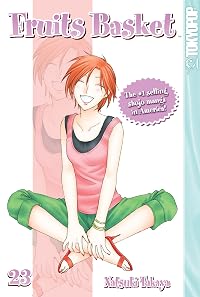
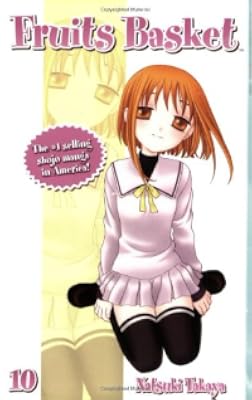

Member Recommendations

Jenson_AKA_DL Shape shifters and love triangles, what fun!
Member Reviews
Fruits Basket, or Furuba as I knew it back in the days when I read the hodgepodge translations in a dedicated yahoogroup (RIP RosettaStoneCafe), on paper sounds so...inane that I can understand how some people would question its popularity. Lasting over 20 books, spawning a vastly popular anime and have the distinct infamy of having worse OTP wars then almost ANY other series (with a resolution that was straight up WRONG whether you were Team Kyo or Team Yuki or just Team Tohru), Furuba turns even the most jaded hearts of shoujo manga to puddles of water.
Don't let the pastel colors, cheerful faces and sparkling quotes fool you--Furuba chapters often do heel turns in narrative tone with no warning (the anime at least the MUSIC changes to show more ominous) that involve dark themes. I have friends today who STILL can not hear "When snow melts, what does it become?" (or any variation of that) without BAWLING (don't worry you find out why in the next volume). I personally can't think of Momiji without getting sniffly and watery-eyed.
The basic premise is this: Tohru Honda (who has the blandest name ever, its like Jane Smith in English) is a perky, sheerful, 1st year high school (10th grade American) student who's hardworking, has two very close friends and in general looks on the bright side of life. Despite being abandoned by her only living relatives after her mother (who raised her single-handedly for over a decade) died in a sudden brutal accident. Having to live in a tent while working every night to afford to go to school. One day, by accident, she finds out that she camping on the "Prince" of the school's family property and through a series of vaguely believable (if you've already bought into the premise of a 15 year old girl living in a tent because her relations are jackasses) circumstances winds up living at that Prince's home (that he shares with his cousin Shigure, a novelist).
Thus begins Tohru's life as she's swept up into the drama of the Sohma family's curse.
Its important to note that even though this first volume doesn't do much to persuade the reader of Tohru's Mary-Sueness being acceptable, there's a lot of smaller details here that later becomes important. Shigure in particular as this guy is SHADY AS HELL. And I'm not talking about his inappropriate need to comment on High School girls constantly (this kind of makes sense in a twisted way later on).
If you've come from the anime into this then be aware that the anime covers roughly the first five volumes of the manga. A few character/situations are excluded in the anime, as they're not important/expanded on until later volumes, but overall the anime did a faithful reproduction of these volumes. In some cases a BETTER then faithful reproduction. for instance Tohru's paternal side (her grandpa, Aunt and 2 older cousins) as well as that whole situation has a bit more emotional weight to it in the anime because it comes a smidge later then in the manga. We're given more time in the anime to see how (and why) Tohru unintentionally leads herself into forgetting that living with the Sohmas is temporary. It was more impactful when her own family treats her worse then a trio of complete strangers.
Especialy that one jackass son of the aunt's who wants to be a police officer so Tohru choosing to accept the hospitality of a classmate SO SHE WOULDN'T LIVE IN THE WOODS IN A TENT BY HERSELF was a "stain" on the "family's reputation". His smug insinuations that she was engaging in tawdry activities made my skin crawl and her female cousin's insistence that she keep her meager possessions in a corner is ridiculous.
I really hate her paternal family (even her grandfather, who though he stands up to his family doesn't seem to understand WHY Tohru, if she really had no other option, would have put up with that crap. She's distressingly desperate to belong somewhere, to have a family again. To have someone tell her she's wanted and needed.).
But this my friends is the only volume without any real OMG THE ANGST IT KILLS ME angst. Yuki, primarily, has some darker introspection moments (but that doesn't bare fruit until later) and we get glimpses of the true pain Tohru is hiding behind her cheerful smile, but by in large this is a fluffy, light-hearted volume.
From here on out get ready for abuse (verbal, mental, physical), quasi-incest (other then a few direct connections the Sohma's all call each other cousins so who the hell knows who is closely tied to who), intolerance, racism, classism, prejudice, social stratification, a level of emotional manipulation the world has rarely seen, bullying, gender identity shaming, mental illness shaming/slandering and of course AKITO.
If you're coming from the anime that Akito is only a tenth of how vicious this character gets. Actually not even a tenth. More like a drop in the pail of how vicious this little jerk is. Granted the problems Akito faced growing up are tenfold worse as well, but that also means Akito brings the hell. show less
Don't let the pastel colors, cheerful faces and sparkling quotes fool you--Furuba chapters often do heel turns in narrative tone with no warning (the anime at least the MUSIC changes to show more ominous) that involve dark themes. I have friends today who STILL can not hear "When snow melts, what does it become?" (or any variation of that) without BAWLING (don't worry you find out why in the next volume). I personally can't think of Momiji without getting sniffly and watery-eyed.
The basic premise is this: Tohru Honda (who has the blandest name ever, its like Jane Smith in English) is a perky, sheerful, 1st year high school (10th grade American) student who's hardworking, has two very close friends and in general looks on the bright side of life. Despite being abandoned by her only living relatives after her mother (who raised her single-handedly for over a decade) died in a sudden brutal accident. Having to live in a tent while working every night to afford to go to school. One day, by accident, she finds out that she camping on the "Prince" of the school's family property and through a series of vaguely believable (if you've already bought into the premise of a 15 year old girl living in a tent because her relations are jackasses) circumstances winds up living at that Prince's home (that he shares with his cousin Shigure, a novelist).
Thus begins Tohru's life as she's swept up into the drama of the Sohma family's curse.
Its important to note that even though this first volume doesn't do much to persuade the reader of Tohru's Mary-Sueness being acceptable, there's a lot of smaller details here that later becomes important. Shigure in particular as this guy is SHADY AS HELL. And I'm not talking about his inappropriate need to comment on High School girls constantly (this kind of makes sense in a twisted way later on).
If you've come from the anime into this then be aware that the anime covers roughly the first five volumes of the manga. A few character/situations are excluded in the anime, as they're not important/expanded on until later volumes, but overall the anime did a faithful reproduction of these volumes. In some cases a BETTER then faithful reproduction. for instance Tohru's paternal side (her grandpa, Aunt and 2 older cousins) as well as that whole situation has a bit more emotional weight to it in the anime because it comes a smidge later then in the manga. We're given more time in the anime to see how (and why) Tohru unintentionally leads herself into forgetting that living with the Sohmas is temporary. It was more impactful when her own family treats her worse then a trio of complete strangers.
Especialy that one jackass son of the aunt's who wants to be a police officer so Tohru choosing to accept the hospitality of a classmate SO SHE WOULDN'T LIVE IN THE WOODS IN A TENT BY HERSELF was a "stain" on the "family's reputation". His smug insinuations that she was engaging in tawdry activities made my skin crawl and her female cousin's insistence that she keep her meager possessions in a corner is ridiculous.
I really hate her paternal family (even her grandfather, who though he stands up to his family doesn't seem to understand WHY Tohru, if she really had no other option, would have put up with that crap. She's distressingly desperate to belong somewhere, to have a family again. To have someone tell her she's wanted and needed.).
But this my friends is the only volume without any real OMG THE ANGST IT KILLS ME angst. Yuki, primarily, has some darker introspection moments (but that doesn't bare fruit until later) and we get glimpses of the true pain Tohru is hiding behind her cheerful smile, but by in large this is a fluffy, light-hearted volume.
From here on out get ready for abuse (verbal, mental, physical), quasi-incest (other then a few direct connections the Sohma's all call each other cousins so who the hell knows who is closely tied to who), intolerance, racism, classism, prejudice, social stratification, a level of emotional manipulation the world has rarely seen, bullying, gender identity shaming, mental illness shaming/slandering and of course AKITO.
If you're coming from the anime that Akito is only a tenth of how vicious this character gets. Actually not even a tenth. More like a drop in the pail of how vicious this little jerk is. Granted the problems Akito faced growing up are tenfold worse as well, but that also means Akito brings the hell. show less
This is a general review for the Fruits Basket series, but I may add specific reviews to certain volumes.
This manga series will always hold a special place in my favorite books collection, possibly because it was the first one I ever read. But also because it rivals "text" books in terms of character, plot, and sheer emotion.
It starts off misleadingly simple. Tohru Honda, a young orphan who recently lost her beloved mother, is living in the woods to avoid being taken to her unsavory relatives. By chance, she wanders past the home of three charismatic young men one day; Shigure, Yuki, and Kyo Sohma. Sympathetic to her situation, they offer her a temporary place in their household. But it doesn't take long for Tohru to realize they are show more hiding an astonishing secret. The three of them, as well as the other thirteen members of the Sohma clan, are cursed by the spirits of the thirteen animals of the Chinese zodiac. Each time they are too closely touched by a member of the opposite sex, they transform into their spirit animal.
And as the story goes on, you are drawn inexorably into its very heart. The way that Tohru meets each Sohma, each with painful memories, angry scars, burdens of sorrow; each grappling desperately with the pain of being alone, unable to truly become close to another. The way Tohru's kind heart and pure spirit slowly begin to work their simple magic on the Sohma family. And the way each character comes to terms with love, life, the past, family, and their own identity. And of course, as with every story, there is the romance; the warring cousins Kyo and Yuki, both of them falling in very different ways for Tohru.
I laughed. I cried. I clutched the book with anger and fear and suspense and hope. I tried to pick favorites from the immense cast of characters, and came up with about fifteen. This manga was not just a passing "fun" series that was good for a laugh. I truly became deeply attached to it. show less
This manga series will always hold a special place in my favorite books collection, possibly because it was the first one I ever read. But also because it rivals "text" books in terms of character, plot, and sheer emotion.
It starts off misleadingly simple. Tohru Honda, a young orphan who recently lost her beloved mother, is living in the woods to avoid being taken to her unsavory relatives. By chance, she wanders past the home of three charismatic young men one day; Shigure, Yuki, and Kyo Sohma. Sympathetic to her situation, they offer her a temporary place in their household. But it doesn't take long for Tohru to realize they are show more hiding an astonishing secret. The three of them, as well as the other thirteen members of the Sohma clan, are cursed by the spirits of the thirteen animals of the Chinese zodiac. Each time they are too closely touched by a member of the opposite sex, they transform into their spirit animal.
And as the story goes on, you are drawn inexorably into its very heart. The way that Tohru meets each Sohma, each with painful memories, angry scars, burdens of sorrow; each grappling desperately with the pain of being alone, unable to truly become close to another. The way Tohru's kind heart and pure spirit slowly begin to work their simple magic on the Sohma family. And the way each character comes to terms with love, life, the past, family, and their own identity. And of course, as with every story, there is the romance; the warring cousins Kyo and Yuki, both of them falling in very different ways for Tohru.
I laughed. I cried. I clutched the book with anger and fear and suspense and hope. I tried to pick favorites from the immense cast of characters, and came up with about fifteen. This manga was not just a passing "fun" series that was good for a laugh. I truly became deeply attached to it. show less
Fruits Basket is probably my very favorite manga that I have read to date. Now, I wholeheartedly admit that the premise is weird and unlikely, but, hey, it's fantasy. Anyway, if you can get past the initial outlandishness, you discover a story full of heart and darkness. This is my fourth or fifth time through the series, and I just love it more every time.
Having read through a few reviews on Goodreads, I know that this series, and the character of Tohru especially, gets a lot of flak for being too cutesy. It seems that some people did not buy Tohru's consistently positive attitude or her naivete. For me, it worked. Tohru has her painful past, and she does occasionally struggle to put forward that happy face. In fact, I think that she's show more an incredibly strong character, because she tries so hard and does her best to be happy no matter what life throws her way.
Also criticized is the zodiac curse. Yes, it's crazy and not likely. Who cares? The least popular aspect seems to be the fact that one of the side effects of the curse is that hugging a member of the opposite sex will turn them into their animal. It sounds so arbitrary and like it was solely introduced for hijinks and humor. Actually, I think that there's more to it. This part of the curse is what really separates the Sohma's from other people. They are drawn more into the family and unable to mingle in society for fear of discovery. Their curse is being stuck together.
What really makes me love this story so much though is the way that it grows and changes. In most series, there isn't too much of a marking of time, but in Fruits Basket, the characters change a lot in both personality and appearance. I love that you can literally see the characters growing up from children to adults. Additionally, I really appreciate the level of depth in pretty much all of the rather extensive set of main characters. Each one gets at least one chapter focusing on their own issues.
If you don't believe me about the depth of the story, here's a quote, which pretty much perfectly sums up being young: "It's good to be young, without experience in how to live, struggling desperately as if you were going to drown, even though you could float if you just drew on your own strength." I just love that. Above and beyond the fantasy plot, this is really just a touching story of a lot of broken people coming together and trying to find the courage to believe in themselves and to really love.
Not only that, but the art is gorgeous. It takes a couple of volumes for Takaya to get into the swing of things, but after that I occasionally find myself pausing and just staring at a particular frame to admire the beauty therein. Of course, manga art gets criticized a lot for being ridiculous, so if you don't like it, then you won't like the art here either, since it's got the standards (like big eyes versus narrow ones to indicate degrees of masculinity/femininity).
Do not be fooled by the pretty shoujo artwork and cutesy opening chapters, though. Fruits Basket is very dark and tackled a lot of painful issues, such as parental abuse. However, it does so with heart and hope. This will always be one of my very favorite works of literature. show less
Having read through a few reviews on Goodreads, I know that this series, and the character of Tohru especially, gets a lot of flak for being too cutesy. It seems that some people did not buy Tohru's consistently positive attitude or her naivete. For me, it worked. Tohru has her painful past, and she does occasionally struggle to put forward that happy face. In fact, I think that she's show more an incredibly strong character, because she tries so hard and does her best to be happy no matter what life throws her way.
Also criticized is the zodiac curse. Yes, it's crazy and not likely. Who cares? The least popular aspect seems to be the fact that one of the side effects of the curse is that hugging a member of the opposite sex will turn them into their animal. It sounds so arbitrary and like it was solely introduced for hijinks and humor. Actually, I think that there's more to it. This part of the curse is what really separates the Sohma's from other people. They are drawn more into the family and unable to mingle in society for fear of discovery. Their curse is being stuck together.
What really makes me love this story so much though is the way that it grows and changes. In most series, there isn't too much of a marking of time, but in Fruits Basket, the characters change a lot in both personality and appearance. I love that you can literally see the characters growing up from children to adults. Additionally, I really appreciate the level of depth in pretty much all of the rather extensive set of main characters. Each one gets at least one chapter focusing on their own issues.
If you don't believe me about the depth of the story, here's a quote, which pretty much perfectly sums up being young: "It's good to be young, without experience in how to live, struggling desperately as if you were going to drown, even though you could float if you just drew on your own strength." I just love that. Above and beyond the fantasy plot, this is really just a touching story of a lot of broken people coming together and trying to find the courage to believe in themselves and to really love.
Not only that, but the art is gorgeous. It takes a couple of volumes for Takaya to get into the swing of things, but after that I occasionally find myself pausing and just staring at a particular frame to admire the beauty therein. Of course, manga art gets criticized a lot for being ridiculous, so if you don't like it, then you won't like the art here either, since it's got the standards (like big eyes versus narrow ones to indicate degrees of masculinity/femininity).
Do not be fooled by the pretty shoujo artwork and cutesy opening chapters, though. Fruits Basket is very dark and tackled a lot of painful issues, such as parental abuse. However, it does so with heart and hope. This will always be one of my very favorite works of literature. show less
How can I convey how much I am in love with everything about this series? The art style, the writing, the characters (oh, God, the characters!) - everything! I love it, and I think I can reread it a thousand times and it would never get old. That is a miracle in itself, because I don't usually reread things, and I definitely almost never love them with as much ferocity as I did the first time. So there. The only issue I have is with the translation, which feels forced and stunted sometimes, but I sort of managed to glide over that one... And I still loved this first volume to bits. I can't wait to read more of this series. And more. And more.
I feel weird giving Fruits Basket three stars because it is such a popular manga and anime, but I don't have the nostalgia factor of reading this or watching this when I was younger and I really don't like the art style. I'm pretty sure Natsuki Takaya has grown as an artist, but her art in Fruits Basket, like many other artists and mangaka, is in my opinion bad. I really enjoy the art style in the new anime and to compare the two is so hard. If I had grown up with Takaya's art, and similar styles, I would probably have no problem, but I didn't.
For me when I rate Manga, Graphic Novels, or Comics the art style plays a huge factor in my rating, and if I think the art is bad then the rating will be bad because I can't just ignore the art. show more I read Demon Slayer and while at the time I really enjoyed it I have my doubts now because I was really hyped up from the amazing animation of the series and that blinded me from seeing the sometimes-shaky art and story. I also have read Ooku and in my reviews I mentioned how a lot of the male characters look the same and that affected my rating of Ooku. I'm not just reading a Manga/Graphic Novel/Comic for the story; I am also reading it for the art. I'm not giving Fruits Basket five stars just because I love the 2019 anime and how beautiful it is; I would be lying to myself if I did that.
Fruits Basket is a rough story to review because I don't want to piss off fans, but I also don't want to pretend like Fruits Basket doesn't make me feel emotions. I like Fruits Basket and I think it goes in a great direction in the story further down the line, but I just don't think the Manga is for me.
Lastly, I just want to mention that my review should not dissuade anyone from reading Fruits Basket or should be seen as a personal attack on its fans or creator. These are just my personal opinions that truly only affect me individually. If you love the Fruits Basket Manga then that's amazing and I really am happy for you. We like what we like, and don't let some College Sophomore on the internet tell you what you can and can't like. show less
For me when I rate Manga, Graphic Novels, or Comics the art style plays a huge factor in my rating, and if I think the art is bad then the rating will be bad because I can't just ignore the art. show more I read Demon Slayer and while at the time I really enjoyed it I have my doubts now because I was really hyped up from the amazing animation of the series and that blinded me from seeing the sometimes-shaky art and story. I also have read Ooku and in my reviews I mentioned how a lot of the male characters look the same and that affected my rating of Ooku. I'm not just reading a Manga/Graphic Novel/Comic for the story; I am also reading it for the art. I'm not giving Fruits Basket five stars just because I love the 2019 anime and how beautiful it is; I would be lying to myself if I did that.
Fruits Basket is a rough story to review because I don't want to piss off fans, but I also don't want to pretend like Fruits Basket doesn't make me feel emotions. I like Fruits Basket and I think it goes in a great direction in the story further down the line, but I just don't think the Manga is for me.
Lastly, I just want to mention that my review should not dissuade anyone from reading Fruits Basket or should be seen as a personal attack on its fans or creator. These are just my personal opinions that truly only affect me individually. If you love the Fruits Basket Manga then that's amazing and I really am happy for you. We like what we like, and don't let some College Sophomore on the internet tell you what you can and can't like. show less
This was my first experience with reading manga. The format was fairly easy to get used to, and the author did a good job of building the panes to make the progression of the story smooth to follow.
However, I had a hard time at first distinguishing the characters (and figuring out the names that went with the characters when they were referred to and not in the pane) and what their particular zodiac sign was.
I think I need more practice with manga...
However, I had a hard time at first distinguishing the characters (and figuring out the names that went with the characters when they were referred to and not in the pane) and what their particular zodiac sign was.
I think I need more practice with manga...
Oh, why didn't they have this when I was 14?! I would have loved it so! I can definitely see why this series is popular with teens and kids. Tohru Honda is orphaned and living on her own in a tent when she meets Yuki and Shigure Sohma. When the boys find out she has no home, they invite her to live with them and she does, cooking and cleaning in exchange for a safe, warm home. Tohru also discovers the Sohma family secret - they are cursed and each member of the family turns into a different animal from the zodiac when hugged by a person of the opposite gender. Tohru, being as sweet and honorable as she is, vows to keep their secret.
This is good, clean fun with cute, mysterious boys and tidbits from Japanese culture.
This is good, clean fun with cute, mysterious boys and tidbits from Japanese culture.
Members
- Recently Added By
Lists

Books Read in 2017
4,249 works; 130 members

BitLife
212 works; 4 members

The Five Books That Represent Us
391 works; 149 members

The Best Of
8 works; 1 member
Author Information

147 Works 36,300 Members
Some Editions
Awards and Honors
Series

Belongs to Publisher Series
Work Relationships
Is contained in
Has as a reference guide/companion
Has as a supplement
Common Knowledge
- Canonical title
- Fruits Basket, Vol. 1
- Original title
- フルーツバスケット 1
- Original publication date
- 1999-01
- People/Characters
- Tohru Honda; Kyo Sohma; Yuki Sohma; Shigure Sohma; Kagura Sohma
- Important places
- Japan
- Related movies
- Fruits Basket (2001 | IMDb)
- First words*
- Yuki mag zwar aussehen wie ein schöner Märchenprinz...
- Last words*
- (Click to show. Warning: May contain spoilers.)Ich bin wieder zu Hause.
- Original language
- Japanese
*Some information comes from Common Knowledge in other languages. Click "Edit" for more information.
Classifications
- Genres
- Graphic Novels & Comics, Teen
- DDC/MDS
- 741.5952 — Arts & recreation Drawing & decorative arts Drawing Comic books, graphic novels, fotonovelas, cartoons, caricatures, comic strips History, geographic treatment, biography Asian Japanese
- LCC
- PN6790 .J34 .F87613 — Language and Literature Literature (General) Literature (General) Collections of general literature Comic books, strips, etc.
- BISAC
Statistics
- Members
- 2,514
- Popularity
- 7,670
- Reviews
- 43
- Rating
- (4.07)
- Languages
- 11 — Chinese, Danish, Dutch, English, Finnish, French, German, Japanese, Polish, Portuguese, Spanish
- Media
- Paper, Ebook
- ISBNs
- 52
- ASINs
- 13