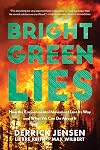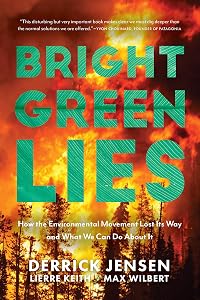
Bright Green Lies: How the Environmental Movement Lost Its Way and What We Can Do About It (Politics of the Living)
by Derrick Jensen
On This Page
Description
""Bright Green Lies exposes the hypocrisy and bankruptcy of leading environmental groups and their most prominent cheerleaders. The best-known environmentalists are not in the business of speaking truth, or even holding up rational solutions to blunt the impending ecocide, but instead indulge in a mendacious and self-serving delusion that provides comfort at the expense of reality. They fail to state the obvious: We cannot continue to wallow in hedonistic consumption and industrial expansion show more and survive as a species. The environmental debate, Derrick Jensen and his coauthors argue, has been distorted by hubris and the childish desire by those in industrialized nations to sustain the unsustainable. All debates about environmental policy need to begin with honoring and protecting, not the desires of the human species, but with the sanctity of the Earth itself. We refuse to ask the right questions because these questions expose a stark truth-we cannot continue to live as we are living. To do so is suicidal folly. 'Tell me how you seek, and I will tell you what you are seeking,' the German philosopher Ludwig Wittgenstein said. This is the power of Bright Green Lies: It asks the questions most refuse to ask, and in that questioning, that seeking, uncovers profound truths we ignore at our peril."-Chris Hedges, Pulitzer Prize-winning journalist and author of America: The Farewell Tour"-- show lessTags
Recommendations















Member Reviews
True environmentalists don’t buy into The Green New Deal. They think all the encouraging words from other environmentalists are bright green lies. Because at bottom, all the positive noises are simply a sop to industrialized society and the giant industries that run it. And according to Bright Green Lies, the book, it’s all about maintaining the current opulent lifestyle, and continuing to destroy the planet. No sacrifices will be made that might slow the consumer economy.
This dramatic, sane and passionate book lays out the lies with evidence like simple math and direct observation. It is a straightforward deconstruction of things like “renewable” energy, “sustainable” agriculture and pointless optimism that it is not too show more late if mankind would just take any kind of action right now. The book is wide-ranging and constantly challenging of common knowledge and perceptions. From hydropower to soil remediation, everything gets its moment to fail.
It is only not too late if mankind is willing to back away from 21st century luxuries. That means abandoning capitalism, because capitalism cannot stand retrenching. It is all about digging up resources without payment, while obtaining huge subsidies for doing it. And more. Always more.
Sadly, environmentalists are all about the subsidies too. Like all capitalists, they want government to foot the bill so they can succeed, financially. It is not about saving the planet at all, the authors have found. Lifestyle over ecology is the operating manifesto, whether they admit it or not say Derrick Jensen, Lierre Keith and Max Wilbert, the three authors of Bright Green Lies.
These three are clearly on the side of the planet. They even use the pronoun who for any animal, bird or insect, as if they were on the same plane as humans, a very nice touch in a relentless book of destructive practices bent on eliminating every other species and burning every bit of carbon:
-Extinctions have gone from just over a hundred a day to more than two hundred every day, just in our lifetime.
-Topsoil on the prairies has gone from 12 feet deep in the late 1800s, to inches today, requiring constant input of artificial fertilizers on what was once the most fertile land on the continent.
-“If your culture trashes your environment and destroys almost all the old growth forest in a couple of centuries, then your civilization is not sustainable.”
-Agriculture, the biggest crime of all, is “biotic cleansing”.
-Sustainable agriculture is an oxymoron.
-A green industrial facility is an impossibility.
A lot of the book is dedicated to debunking renewable systems. Solar, wind, tidal and geoengineering projects all require gigantic convoys of tax dollars, while providing no real reduction in greenhouse gases over fossil fuels. For one thing, all the mining, manufacturing, transporting, assembling and maintaining of these systems add tremendously to the environmental toll. Wind and solar are not dependable sources. And environmentalists lie about how they are taking over in some economies. Their math is bogus, cherry-picking short periods of otherwise slack demand on a sunny or windy off-day to report that renewables carried the burden almost entirely on their own. They then attribute dominance of renewables to the entire country. This, the book says, is how Germany got its reputation in wind and solar. The truth is much more pathetic. Environmentalists have learned to game the system.
There is an entire chapter on dams and hydropower, long considered the poster child for renewables and sustainables. The authors show how the dams (they say there are two million in the USA alone) wreak havoc with animals, birds, fish and insects as well as topsoil and air. The interruption of water flows prevents fish from doing what they must to contribute to the balance, with hundreds of other creatures dependent on them. Silts no longer flow downstream. Flooding no longer feeds the forests, meadows and plains. Species like the huge variety of salmon all over the world, now face extinction thanks to dams. The huge amount of natural resources commandeered to build and maintain the dams makes them far from benign players in the carbon buildup. Not to mention that they are responsible for nearly a quarter of the methane that escapes into the atmosphere from manmade sources. As with every method and means they explore, the chapter ends with the question – call this sustainable?
The same story applies in the chapters on wind and solar. It’s hard to tell which one is worse. They consume vast amounts of concrete, steel and rare earths. They are hugely expensive and are only competitive thanks to massive subsidies at every step. They kill endangered species. They are dependent on weather and so are not at all dependable sources of energy. There are scary stats to ponder: Scotland cleared 17,000 acres of 14 million trees to install wind energy systems. Was this a good trade?
Not for the first time, the authors show that mathematically, there just isn’t enough space, money or resources to make the whole civilization run on renewables. They say it would take 80 billion metric tons of extraction to effect the switch. The planet would basically have to devote everything it produces for years to come to pull off this conversion. And it wouldn’t be worth it because ultimately, renewables provide a net-zero reduction in carbon emissions per dollar. Not net zero as in carbon reduction, but net zero difference from fossil fuels. It’s an environmental con game for the authors.
Clearly, many environmentalists have been drinking the corporate Kool-Aid. They get agreement from Big Industry by softening their attacks and promising everyone can keep doing what they’re already doing while they somehow heal the planet. This is pie in the sky environmentalism. The truth is much more grim.
As long as corporations are considered people, they will hide their true calling – milking government and the planet for as much money as possible. And for anyone who has followed my reviews, it is clearly the corporations in their immoral quest to rule the world that all this rests on. The entire global economy is based on taking carbon out of the ground and putting it in the air by burning it. The cost of doing this is trivial; there is essentially no charge for it. Paying for the effects of it is not to be mentioned in the same breath as corporations.
One of the more insulting episodes is the ongoing LEED scam, in which high-priced engineers certify the environmental friendliness of buildings and factories. They give the example of the ideal home, displayed at a Las Vegas trade show in 2013. This LEED-certified platinum home is 7000 square feet, has a four-car garage and redundant energy systems. A perfect fit for the environmentally conscious American.
Another travesty I found is an energy report in The Economist. It projects that by just 2030, Saudi Arabia will consume as much energy just for air-conditioning as it sells in petroleum. This is nothing like sustainability. Sustainability is an urban legend – wishful thinking only.
For me, the most dramatic quote in the book comes from corporate anthropologist Jane Anne Morris. She wrote in Help! I’ve Been Colonized and I Can’t Get Up: “Corporate persons have constitutional rights to due process and equal protection that human persons, affected citizens, don’t have. For noncorporate human citizens, there’s a democracy theme park where we can pull levers on voting machines and talk into microphones at hearings. But don’t worry; they’re not connected to anything and nobody is listening except for us. What regulatory law regulates is citizen input, not corporate behavior.”
There is a remarkable chapter on recycling as well. The book examines the component parts of various recyclables, showing where they came from, what properties they have, how they are made, how they are saved, and how much of them can appear in new products. It is not very encouraging, though there are some bright spots. Bottles are recycled at the rate of 10%. Clothing is pretty much a disaster, with the average American consumer purchasing nearly 50 new pieces every year and disposing of others. Steel has a pretty decent story but it is clearly an exception.
When they speak publicly about their hard truths, the authors find there is quite naturally resistance. Participants refuse to consider solutions that would reduce their luxuries and their lifestyles. Their criticism is couched in - but that would hurt the economy! Which the authors take as further proof (if any were needed) that it is the economy that is destroying the planet.
There’s lots to argue about in these 400 pages. Just one example: they try to pin the death of birds on wind turbines, even to the drop in pressure from the blades that can burst the heart of a passing bird. The numbers they come up with amount to under two million, way down the list from the real killers.
Ordinary housecats annually kill 2.5 billion birds in North America alone. And for no reason other than boredom. The authors acknowledge this, but seem to think it is somehow natural, acceptable, and/or irrelevant, which it is not. The seven billion humans on this planet keep a billion cats as pets. Compare this to the 35 remaining Scottish wildcats the book mentions several times, or the 3000 total number of tigers left in the world. It is another instance of Man’s sheer weight upsetting yet another balance. We have domesticated the cat into a weapon of mass destruction for our own simple pleasure.
There are simply not enough fish in the ocean for a billion housecats, as we are finding out now. Housecats are not benign beings in the environment. Like Man, they are removed from the ecological system, not dependent on any other species and not participating in any other chain. Every other living thing is dependent on other beings for its existence and can only exist because of them. Not so Man. Or cats. These exceptions are proving to be intolerable to the health of the planet.
Their conclusion, they say, is simple: to stop destroying the planet, stop destroying the planet. They mean this literally. In the conclusions, they show that cleanup experiments from England to India show that nature rushes back in given half a chance. Grasses revitalize the soil, birds are attracted to the increased presence of insects, top predators keep the ruminants from destroying the plant growth, and the soil comes alive with literally trillions of interactions between species from bacteria on up the chain. Unexpected and unpredicted relationships show how quickly nature can restore the balance, but it means letting nature take control, and that is something Man will not even consider.
They take the 3Rs of environmentalism (Reduce, Reuse, Recycle) and add three of their own – Refuse, Resist, and Restore. These are fighting words and show the authors’ true colors.
Let there be no doubt, this is a tough book. The reality of restoring balance means Man sacrificing what he has built. Cities can never be carbon neutral. Vertical farming is a nice demo project, but it does not scale. Cities will always have to outsource to supply themselves, pushing the pollution and the carbon onto others, for a huge net loss – somewhere else. Industrial agriculture can never be sustainable. Nor can mining or manufacturing. As long as Man insists on transporting everything globally, the planet will suffer the consequences.
The book provides no acceptable path to success. It is either do it right now or suffer the consequences. But in a country where getting people to wear masks during a pandemic has failed miserably, and people protested for months when the government sought to eliminate incandescent light bulbs in favor of LEDs, any kind of sacrifice at all will not play. The authors show that stopping deforestation and restoring logged lands would remove more carbon from the air than is generated by all cars (over a billion of them). And a mere 2% increase in carbon sequestration in soil would offset 100% of greenhouse gas emissions. But there is zero will to do these things.
The prize will go to whomever figures out how to make palatable the sacrifices that are minimum requirements to save mankind from itself. Bright Green Lies isn’t it, but it does call out the environmental movement for its bogus positions and hypocrisy. Is that a help?
David Wineberg show less
This dramatic, sane and passionate book lays out the lies with evidence like simple math and direct observation. It is a straightforward deconstruction of things like “renewable” energy, “sustainable” agriculture and pointless optimism that it is not too show more late if mankind would just take any kind of action right now. The book is wide-ranging and constantly challenging of common knowledge and perceptions. From hydropower to soil remediation, everything gets its moment to fail.
It is only not too late if mankind is willing to back away from 21st century luxuries. That means abandoning capitalism, because capitalism cannot stand retrenching. It is all about digging up resources without payment, while obtaining huge subsidies for doing it. And more. Always more.
Sadly, environmentalists are all about the subsidies too. Like all capitalists, they want government to foot the bill so they can succeed, financially. It is not about saving the planet at all, the authors have found. Lifestyle over ecology is the operating manifesto, whether they admit it or not say Derrick Jensen, Lierre Keith and Max Wilbert, the three authors of Bright Green Lies.
These three are clearly on the side of the planet. They even use the pronoun who for any animal, bird or insect, as if they were on the same plane as humans, a very nice touch in a relentless book of destructive practices bent on eliminating every other species and burning every bit of carbon:
-Extinctions have gone from just over a hundred a day to more than two hundred every day, just in our lifetime.
-Topsoil on the prairies has gone from 12 feet deep in the late 1800s, to inches today, requiring constant input of artificial fertilizers on what was once the most fertile land on the continent.
-“If your culture trashes your environment and destroys almost all the old growth forest in a couple of centuries, then your civilization is not sustainable.”
-Agriculture, the biggest crime of all, is “biotic cleansing”.
-Sustainable agriculture is an oxymoron.
-A green industrial facility is an impossibility.
A lot of the book is dedicated to debunking renewable systems. Solar, wind, tidal and geoengineering projects all require gigantic convoys of tax dollars, while providing no real reduction in greenhouse gases over fossil fuels. For one thing, all the mining, manufacturing, transporting, assembling and maintaining of these systems add tremendously to the environmental toll. Wind and solar are not dependable sources. And environmentalists lie about how they are taking over in some economies. Their math is bogus, cherry-picking short periods of otherwise slack demand on a sunny or windy off-day to report that renewables carried the burden almost entirely on their own. They then attribute dominance of renewables to the entire country. This, the book says, is how Germany got its reputation in wind and solar. The truth is much more pathetic. Environmentalists have learned to game the system.
There is an entire chapter on dams and hydropower, long considered the poster child for renewables and sustainables. The authors show how the dams (they say there are two million in the USA alone) wreak havoc with animals, birds, fish and insects as well as topsoil and air. The interruption of water flows prevents fish from doing what they must to contribute to the balance, with hundreds of other creatures dependent on them. Silts no longer flow downstream. Flooding no longer feeds the forests, meadows and plains. Species like the huge variety of salmon all over the world, now face extinction thanks to dams. The huge amount of natural resources commandeered to build and maintain the dams makes them far from benign players in the carbon buildup. Not to mention that they are responsible for nearly a quarter of the methane that escapes into the atmosphere from manmade sources. As with every method and means they explore, the chapter ends with the question – call this sustainable?
The same story applies in the chapters on wind and solar. It’s hard to tell which one is worse. They consume vast amounts of concrete, steel and rare earths. They are hugely expensive and are only competitive thanks to massive subsidies at every step. They kill endangered species. They are dependent on weather and so are not at all dependable sources of energy. There are scary stats to ponder: Scotland cleared 17,000 acres of 14 million trees to install wind energy systems. Was this a good trade?
Not for the first time, the authors show that mathematically, there just isn’t enough space, money or resources to make the whole civilization run on renewables. They say it would take 80 billion metric tons of extraction to effect the switch. The planet would basically have to devote everything it produces for years to come to pull off this conversion. And it wouldn’t be worth it because ultimately, renewables provide a net-zero reduction in carbon emissions per dollar. Not net zero as in carbon reduction, but net zero difference from fossil fuels. It’s an environmental con game for the authors.
Clearly, many environmentalists have been drinking the corporate Kool-Aid. They get agreement from Big Industry by softening their attacks and promising everyone can keep doing what they’re already doing while they somehow heal the planet. This is pie in the sky environmentalism. The truth is much more grim.
As long as corporations are considered people, they will hide their true calling – milking government and the planet for as much money as possible. And for anyone who has followed my reviews, it is clearly the corporations in their immoral quest to rule the world that all this rests on. The entire global economy is based on taking carbon out of the ground and putting it in the air by burning it. The cost of doing this is trivial; there is essentially no charge for it. Paying for the effects of it is not to be mentioned in the same breath as corporations.
One of the more insulting episodes is the ongoing LEED scam, in which high-priced engineers certify the environmental friendliness of buildings and factories. They give the example of the ideal home, displayed at a Las Vegas trade show in 2013. This LEED-certified platinum home is 7000 square feet, has a four-car garage and redundant energy systems. A perfect fit for the environmentally conscious American.
Another travesty I found is an energy report in The Economist. It projects that by just 2030, Saudi Arabia will consume as much energy just for air-conditioning as it sells in petroleum. This is nothing like sustainability. Sustainability is an urban legend – wishful thinking only.
For me, the most dramatic quote in the book comes from corporate anthropologist Jane Anne Morris. She wrote in Help! I’ve Been Colonized and I Can’t Get Up: “Corporate persons have constitutional rights to due process and equal protection that human persons, affected citizens, don’t have. For noncorporate human citizens, there’s a democracy theme park where we can pull levers on voting machines and talk into microphones at hearings. But don’t worry; they’re not connected to anything and nobody is listening except for us. What regulatory law regulates is citizen input, not corporate behavior.”
There is a remarkable chapter on recycling as well. The book examines the component parts of various recyclables, showing where they came from, what properties they have, how they are made, how they are saved, and how much of them can appear in new products. It is not very encouraging, though there are some bright spots. Bottles are recycled at the rate of 10%. Clothing is pretty much a disaster, with the average American consumer purchasing nearly 50 new pieces every year and disposing of others. Steel has a pretty decent story but it is clearly an exception.
When they speak publicly about their hard truths, the authors find there is quite naturally resistance. Participants refuse to consider solutions that would reduce their luxuries and their lifestyles. Their criticism is couched in - but that would hurt the economy! Which the authors take as further proof (if any were needed) that it is the economy that is destroying the planet.
There’s lots to argue about in these 400 pages. Just one example: they try to pin the death of birds on wind turbines, even to the drop in pressure from the blades that can burst the heart of a passing bird. The numbers they come up with amount to under two million, way down the list from the real killers.
Ordinary housecats annually kill 2.5 billion birds in North America alone. And for no reason other than boredom. The authors acknowledge this, but seem to think it is somehow natural, acceptable, and/or irrelevant, which it is not. The seven billion humans on this planet keep a billion cats as pets. Compare this to the 35 remaining Scottish wildcats the book mentions several times, or the 3000 total number of tigers left in the world. It is another instance of Man’s sheer weight upsetting yet another balance. We have domesticated the cat into a weapon of mass destruction for our own simple pleasure.
There are simply not enough fish in the ocean for a billion housecats, as we are finding out now. Housecats are not benign beings in the environment. Like Man, they are removed from the ecological system, not dependent on any other species and not participating in any other chain. Every other living thing is dependent on other beings for its existence and can only exist because of them. Not so Man. Or cats. These exceptions are proving to be intolerable to the health of the planet.
Their conclusion, they say, is simple: to stop destroying the planet, stop destroying the planet. They mean this literally. In the conclusions, they show that cleanup experiments from England to India show that nature rushes back in given half a chance. Grasses revitalize the soil, birds are attracted to the increased presence of insects, top predators keep the ruminants from destroying the plant growth, and the soil comes alive with literally trillions of interactions between species from bacteria on up the chain. Unexpected and unpredicted relationships show how quickly nature can restore the balance, but it means letting nature take control, and that is something Man will not even consider.
They take the 3Rs of environmentalism (Reduce, Reuse, Recycle) and add three of their own – Refuse, Resist, and Restore. These are fighting words and show the authors’ true colors.
Let there be no doubt, this is a tough book. The reality of restoring balance means Man sacrificing what he has built. Cities can never be carbon neutral. Vertical farming is a nice demo project, but it does not scale. Cities will always have to outsource to supply themselves, pushing the pollution and the carbon onto others, for a huge net loss – somewhere else. Industrial agriculture can never be sustainable. Nor can mining or manufacturing. As long as Man insists on transporting everything globally, the planet will suffer the consequences.
The book provides no acceptable path to success. It is either do it right now or suffer the consequences. But in a country where getting people to wear masks during a pandemic has failed miserably, and people protested for months when the government sought to eliminate incandescent light bulbs in favor of LEDs, any kind of sacrifice at all will not play. The authors show that stopping deforestation and restoring logged lands would remove more carbon from the air than is generated by all cars (over a billion of them). And a mere 2% increase in carbon sequestration in soil would offset 100% of greenhouse gas emissions. But there is zero will to do these things.
The prize will go to whomever figures out how to make palatable the sacrifices that are minimum requirements to save mankind from itself. Bright Green Lies isn’t it, but it does call out the environmental movement for its bogus positions and hypocrisy. Is that a help?
David Wineberg show less
Oh, Lord. Once I was blind and now I see.
This polemic on society’s addiction to growth and its implications for the natural world reads like revelation.
The authors take us on a whirlwind tour of green solutions to climate change and why they won’t work, and they won’t work because their objectives are to keep the economy humming along while the planet sags under the weight of resource extraction, the eradication of habitat, the continued domination of monoculture, and the greed of our cities.
It’s hard not to agree with the authors on their premise.
Whether it’s on bird-bashing wind turbines, the damming of the rivers’ effects on fish habitat, the scraping of the ocean floors, the impact of mining deadly minerals for solar show more panels and our infernal smartphones, strip-mining our landscapes for ever increasing mountains of coal to burn and lithium salts to refine, or dredging up the liquid hydrocarbons from the depths, it’s all bad news.
We think our cities can be green, but that’s only if we ignore the outsourcing of the pollution our cities create. We send our garbage and our recycling thousands of miles to poorer and more desperate jurisdictions. Less obvious, our cities demand and consume minerals, food, chemicals, and electricity that are only being harvested far away in ways that would make us pause if it happened in front of our eyes. That includes the materials needed for green solutions.
Do we reduce, reuse, recycle? At the end of the day we don’t reduce, we reuse, but recycling is never enough to satisfy demand.
The authors prefer us to start with reflection on the endgame of unmitigated growth, then advise that we refuse to go along with the paradigm, resist continued intrusion on the world’s biological bounty, and restore what we have broken.
I have read elsewhere what it would actually mean to the planet to build out all those electric cars, and develop the electrical grid to feed the electricity for those cars.
For one thing it would mean heavy mining of the seas and its attendant risks to the ocean habitat. Then there’s all the cement we’d need to build out wind turbines. Increased cement manufacturing would mean dredging up a lot of sand and dramatically increasing CO2 emissions to make the stuff.
Then there’s the question of how likely is it that the public and ultimately, politicians globally will stop the destruction?
The authors conclude the planet would be much better served if we reigned in our consumption, replaced asphalt with grasslands, and freeze any plans to mine the oceans. Nature has many ways to capture carbon but we have to stop interfering.
Now. show less
This polemic on society’s addiction to growth and its implications for the natural world reads like revelation.
The authors take us on a whirlwind tour of green solutions to climate change and why they won’t work, and they won’t work because their objectives are to keep the economy humming along while the planet sags under the weight of resource extraction, the eradication of habitat, the continued domination of monoculture, and the greed of our cities.
It’s hard not to agree with the authors on their premise.
Whether it’s on bird-bashing wind turbines, the damming of the rivers’ effects on fish habitat, the scraping of the ocean floors, the impact of mining deadly minerals for solar show more panels and our infernal smartphones, strip-mining our landscapes for ever increasing mountains of coal to burn and lithium salts to refine, or dredging up the liquid hydrocarbons from the depths, it’s all bad news.
We think our cities can be green, but that’s only if we ignore the outsourcing of the pollution our cities create. We send our garbage and our recycling thousands of miles to poorer and more desperate jurisdictions. Less obvious, our cities demand and consume minerals, food, chemicals, and electricity that are only being harvested far away in ways that would make us pause if it happened in front of our eyes. That includes the materials needed for green solutions.
Do we reduce, reuse, recycle? At the end of the day we don’t reduce, we reuse, but recycling is never enough to satisfy demand.
The authors prefer us to start with reflection on the endgame of unmitigated growth, then advise that we refuse to go along with the paradigm, resist continued intrusion on the world’s biological bounty, and restore what we have broken.
I have read elsewhere what it would actually mean to the planet to build out all those electric cars, and develop the electrical grid to feed the electricity for those cars.
For one thing it would mean heavy mining of the seas and its attendant risks to the ocean habitat. Then there’s all the cement we’d need to build out wind turbines. Increased cement manufacturing would mean dredging up a lot of sand and dramatically increasing CO2 emissions to make the stuff.
Then there’s the question of how likely is it that the public and ultimately, politicians globally will stop the destruction?
The authors conclude the planet would be much better served if we reigned in our consumption, replaced asphalt with grasslands, and freeze any plans to mine the oceans. Nature has many ways to capture carbon but we have to stop interfering.
Now. show less
Many years ago there was an environmental movement. It began long before anyone knew Al Gore or Gretta and it was full grown before carbon footprint consciousness was trendy or cool. These activists that were screaming about every single creature lost and every blade of grass turned into concrete seemed about as extreme and crazy as anyone could be. Most were considered left over hippies with a new cause. In those long ago days, they were also treated like any extreme fanatical crazy would be treated. They were demeaned, arrested, sued and denounced by their opponents and they were mostly ignored or laughed at by the regular people.
The sad thing is that now we know that they really were onto something. It can be a really hard thing for show more someone who is busting their ass to pay the bills and maybe get just ahead enough to have some comfort to find the time, energy, and or motivation to give a damn about some disaster to the planet and nature half a world away. It is a challenging thing to understand that what happens in some remote mountain village in Asia or South American can have profound and direct impact on your life and or your way of life. Heck, it is even hard to care about what happens in places like Love Canal, New York or Picher, Oklahoma or any of the other more than 1300 Superfund Toxic Sties in the United States. The problem is that like a cancer in the body, if you do not care about what happens because the cancer is not somewhere important, by the time it spreads to somewhere important it will be too late to stop it. The same holds true with industrial practices that destroy the planet wherever they go. They strip out every usable resource and squeeze every bit of profit and then leave a permanent scar and move on to the next site with resources to strip bare and they will continue to do so as long as there is a profit to be made. No location on the planet is safe from their greed.
Even if you are proactive, unlike the cancer patient above, and go to the doctor and get the tumor removed; but now you have not a life but an existence scheduled around chemo treatments and down days and check-ups and tests and more down days you get a cure that is more damaging and destructive than the original tumor (depending on your priorities and definitions). There is NO perfect solution to ANY problem. That is part of the challenge of life, solving problems the best way possible and then dealing with not only the known or foreseen side effects but more importantly recognizing and understanding and learning from the unintended and unforeseen side effects. And there are ALWAYS unintended and unforeseen side effects. How do we make the best choices and decisions and pick the best solutions to the most daunting problems facing us? Hopefully, we use our minds, our intelligence and creativity, our morals, our sense of fairness and right over wrong, our hearts, our compassion and our humanity. Most importantly, we have to have clear worthy goals and be willing to make hard choices to reach those worthy goals and live with those solutions.
In the environmental movement this is not what happened. Instead, the movement was usurped by opportunists that could see a whole profitable movement sweep the world. Enter the age of the trendy, shiny, and very cool Bright Greens. They took the 3 R’s of the Green Movement and reduced them to the 1 that would be inline with profit margins and consumerism. Well done Corporate America and Corporate World. The original 3 R’s were to reduce the amount of waste that one created, presumably by reducing the amount of things that one threw out by reducing the amount of consumption and or being aware of the waste from each purchase or product, to reuse or repurpose those things that no longer worked in their original role, but could serve another purpose which would in essence also reduce, and the surviving R, recycle, the R that could be made into profit for the corporate world.
Most people today, consider themselves to be environmentally concerned citizens, but when you strip away all the marketing and trending hashtags, do you know just how you stack up in your roll of Steward Of The Planet? You might think that you are doing your best, buying products that are “organically” grown and packaged in recyclable packaging. Donating to the right causes. Voting for the right candidates. Supporting the right parties. But are you still buying the latest iPhone, every release date and remote working from your favorite coffee shop on your Mac Pro? Going home and still binging Netflix most nights while you order take out Sushi or pho delivered by your Uber Eats, Door Dash guy in his electric Mini, your water from bottles, cause tap water, GROSS! You have sworn off meat cause cow farts are second behind humans for causing CO2 emissions. You’ve gone vegan cause all the pretty people are and science proves we are herd animals so we should be eating plants and fake things.
However, there is a kink in your movement! It is built on a foundation of half-truths with walls of lies surrounding delusions of a Happily Ever After that cannot be. For every scientific study that proves one of the Bright Greens slogans there is at least one that disproves and more that find flaws with it. No this is not an article to bash lifestyles or living choices, but to ask you to make them with your eyes wide open and to engage in preferred behavior understanding all the implications. How do you do that, you ask.
Simple.
Pick up or order the new work Bright Green Lies by Derrick Jensen, Lierre Keith, and Max Wilbert. I recently received a copy of the book and wow. First, it is a long read, but it is worth it, so stick it out if you really care about Planet Earth. Second, if you read it with an open mind and with the intention of learning and understanding it is full of information, a lot of it stuff that we really truly should know, but we do not think about and some that we might have had some idea about but not the full and complete implications. To keep things balanced, the authors are original, dyed in the wool environmentalists, not the chic, trendy brand influencers of social media. So while a lot of their suggestions for solving the problem might seem out there and or crazy extreme, they, themselves, are aware that most of us cannot be that committed and or dedicated. And in that regard they show their humanness by openly sharing their short comings in reaching the ultimate goals that they layout. That being said, most of us can be more intentional and more aware and make better informed decisions about how we live our lives and how we spend our money and how we focus our lives.
While the book addresses most of the impacts of today’s most common way of life and supports their arguments regarding the pros and cons of all the popular trendy solutions, they also provide references to a multitude of other sources for you to research for yourself. Another words, unlike the politicians and CEOs and even popular activists their stance is not “take our word for it” but go do your own research and make up your own mind. To get your started I have included a couple links in the article that are short reads and barely scratch the surface of existing damage. Or you could continue letting industry lead the way to solving any environmental problems, most of their own making while claiming that they care.
I can honestly say that I will never live up to the goals of the book. However, having hard numbers and even theorized numbers from ‘expert’ solutions spelled out has brought details that I knew superficially into much better focus. The result is that I want to strive to live a much more intentional life and make more intentional choices in every aspect of my life. Most importantly, I want to be able to live with my choices, because I make them as informed as I can be. Will all my choices be perfect, no, they will not, but, it is my goal that they will be the best choices that causes the least negative impact all the way around. And that in my opinion is a very good start.
For your sake, for my sake, for the sake of your loved ones, for the sake of strangers read Bright Green Lies and make up your own mind, based on the research and not the trending hashtags. show less
The sad thing is that now we know that they really were onto something. It can be a really hard thing for show more someone who is busting their ass to pay the bills and maybe get just ahead enough to have some comfort to find the time, energy, and or motivation to give a damn about some disaster to the planet and nature half a world away. It is a challenging thing to understand that what happens in some remote mountain village in Asia or South American can have profound and direct impact on your life and or your way of life. Heck, it is even hard to care about what happens in places like Love Canal, New York or Picher, Oklahoma or any of the other more than 1300 Superfund Toxic Sties in the United States. The problem is that like a cancer in the body, if you do not care about what happens because the cancer is not somewhere important, by the time it spreads to somewhere important it will be too late to stop it. The same holds true with industrial practices that destroy the planet wherever they go. They strip out every usable resource and squeeze every bit of profit and then leave a permanent scar and move on to the next site with resources to strip bare and they will continue to do so as long as there is a profit to be made. No location on the planet is safe from their greed.
Even if you are proactive, unlike the cancer patient above, and go to the doctor and get the tumor removed; but now you have not a life but an existence scheduled around chemo treatments and down days and check-ups and tests and more down days you get a cure that is more damaging and destructive than the original tumor (depending on your priorities and definitions). There is NO perfect solution to ANY problem. That is part of the challenge of life, solving problems the best way possible and then dealing with not only the known or foreseen side effects but more importantly recognizing and understanding and learning from the unintended and unforeseen side effects. And there are ALWAYS unintended and unforeseen side effects. How do we make the best choices and decisions and pick the best solutions to the most daunting problems facing us? Hopefully, we use our minds, our intelligence and creativity, our morals, our sense of fairness and right over wrong, our hearts, our compassion and our humanity. Most importantly, we have to have clear worthy goals and be willing to make hard choices to reach those worthy goals and live with those solutions.
In the environmental movement this is not what happened. Instead, the movement was usurped by opportunists that could see a whole profitable movement sweep the world. Enter the age of the trendy, shiny, and very cool Bright Greens. They took the 3 R’s of the Green Movement and reduced them to the 1 that would be inline with profit margins and consumerism. Well done Corporate America and Corporate World. The original 3 R’s were to reduce the amount of waste that one created, presumably by reducing the amount of things that one threw out by reducing the amount of consumption and or being aware of the waste from each purchase or product, to reuse or repurpose those things that no longer worked in their original role, but could serve another purpose which would in essence also reduce, and the surviving R, recycle, the R that could be made into profit for the corporate world.
Most people today, consider themselves to be environmentally concerned citizens, but when you strip away all the marketing and trending hashtags, do you know just how you stack up in your roll of Steward Of The Planet? You might think that you are doing your best, buying products that are “organically” grown and packaged in recyclable packaging. Donating to the right causes. Voting for the right candidates. Supporting the right parties. But are you still buying the latest iPhone, every release date and remote working from your favorite coffee shop on your Mac Pro? Going home and still binging Netflix most nights while you order take out Sushi or pho delivered by your Uber Eats, Door Dash guy in his electric Mini, your water from bottles, cause tap water, GROSS! You have sworn off meat cause cow farts are second behind humans for causing CO2 emissions. You’ve gone vegan cause all the pretty people are and science proves we are herd animals so we should be eating plants and fake things.
However, there is a kink in your movement! It is built on a foundation of half-truths with walls of lies surrounding delusions of a Happily Ever After that cannot be. For every scientific study that proves one of the Bright Greens slogans there is at least one that disproves and more that find flaws with it. No this is not an article to bash lifestyles or living choices, but to ask you to make them with your eyes wide open and to engage in preferred behavior understanding all the implications. How do you do that, you ask.
Simple.
Pick up or order the new work Bright Green Lies by Derrick Jensen, Lierre Keith, and Max Wilbert. I recently received a copy of the book and wow. First, it is a long read, but it is worth it, so stick it out if you really care about Planet Earth. Second, if you read it with an open mind and with the intention of learning and understanding it is full of information, a lot of it stuff that we really truly should know, but we do not think about and some that we might have had some idea about but not the full and complete implications. To keep things balanced, the authors are original, dyed in the wool environmentalists, not the chic, trendy brand influencers of social media. So while a lot of their suggestions for solving the problem might seem out there and or crazy extreme, they, themselves, are aware that most of us cannot be that committed and or dedicated. And in that regard they show their humanness by openly sharing their short comings in reaching the ultimate goals that they layout. That being said, most of us can be more intentional and more aware and make better informed decisions about how we live our lives and how we spend our money and how we focus our lives.
While the book addresses most of the impacts of today’s most common way of life and supports their arguments regarding the pros and cons of all the popular trendy solutions, they also provide references to a multitude of other sources for you to research for yourself. Another words, unlike the politicians and CEOs and even popular activists their stance is not “take our word for it” but go do your own research and make up your own mind. To get your started I have included a couple links in the article that are short reads and barely scratch the surface of existing damage. Or you could continue letting industry lead the way to solving any environmental problems, most of their own making while claiming that they care.
I can honestly say that I will never live up to the goals of the book. However, having hard numbers and even theorized numbers from ‘expert’ solutions spelled out has brought details that I knew superficially into much better focus. The result is that I want to strive to live a much more intentional life and make more intentional choices in every aspect of my life. Most importantly, I want to be able to live with my choices, because I make them as informed as I can be. Will all my choices be perfect, no, they will not, but, it is my goal that they will be the best choices that causes the least negative impact all the way around. And that in my opinion is a very good start.
For your sake, for my sake, for the sake of your loved ones, for the sake of strangers read Bright Green Lies and make up your own mind, based on the research and not the trending hashtags. show less
 This review was written for LibraryThing Early Reviewers.
I enjoyed reading a new perspective on the environmental situation. It really made me think and re think, challenging my beliefs. I also appreciate the parts that point out the discrepancies in our more main stream logic. Like sustainable energy is impossible. Good point. However that doesn't mean we shouldn't try to reduce our effects on the environment, learn to adapt our way of life where we can. Try to be as close to sustainable as we can. We aren't all going to move into the woods, close down grocery stores and stop agriculture, oil or war. But maybe we just haven't found the solutions yet that allow us to rein our selves in. Let's keep trying. So I must be a bright green, because I am more optimistic and hopeful that we can do show more better, we are a part of the planet, we belong here and we can change. We have to keep the conversation going and open with a bit less judgement. We're all in this together. Blame doesn't lead to solutions and really we are all to blame. Yet it's somewhat out of our control too. Bigger than each of us individually. Maybe terra homes are not perfect but they need less energy. Let's build on that. Stop mowing our lawns and let them be wild. Plant bee/pollination gardens. Forrest gardening is great for the environment and wildlife. It's just a lost art. Only use absolutely necessary plastics. Like medical uses. Grow our own food without tilling the ground. Instead build mounds of dirt on top and plant in them. Aluminum can be recycled almost indefinitely. Create homes that generate electricity or Telsa batteries that individually run the lights or fridge. Have roof gardens and change the color of the roads so they don't heat the earth. Reconfigure the horrible way our road system is mapped so we can walk places again and bike. Add so many more trees and stop tearing up the planet by devaluing the things they are digging up. Greatly reducing the amount of animals processed for meat, while still having meat. Smaller scale. Have meals that only have one meat in them is a good start. Composting. Planting seeds from everyday fresh produce. I felt the labels like bright green helped make their point more clearly. While it also felt superior and condescending. Like I am a fool to believe a combination of innovation, creating new solutions and giving up somethings we don't need entirely would help. For me there is a middle ground. We cannot be perfect, that's not reasonable. Perfectionist will always be miserable. But we can do good and strive for better, push for change. It will take so many changes that when we look at the big picture it seems impossible, like what's the point. However a step at a time is more manageable and less impossible. Plus it gives courage and confidence to the next step that can be taken in the right direction. What we do to the earth is absolutely horrible and we must do better. I just expected more solutions. Although the way Bright Green Lies opened my mind to a more realistic reality makes it a very good read for me. I may not agree with everything, or the downer tone, but I understand so much more than ever before. I am a fan of how direct and detailed Bright Green lies was written. I love all the facts and numbers. I am a better person for having read it. I have less tunnel vision. It seems Capitalism or money and economy are the main hurtles. I hope we can one day get past our greed and need. Reduce and compromise, then re-evaluate and compromise again so we don't lose everything. Knowledge is power and influences our decisions. We do need to stop lying to ourselves. I had to re read this book a second time over year later just for it to sink in more.
Updated 2023 The first read was very much like a slap in the face. But a necessary one. The second time lead to more understanding. The authors are very opinionated and intense. But, I think it's because they feel like they are going crazy pointing out the obvious things that are the problem. While the rest of us pretend everything okay. Denial is a heck of a thing to overcome. Accountability is a whole other mountain we can't even reach right now. I personally have tried many so called green products that do not deliver and break down. Like a mower and hedge trimmer. The batteries last two years max and are horrible for the planet to make and replace. Yet, the old gas versions that are over a decade old still work. I pulled out our 10 year old mower and sanded some rust off a fuze and it works like new. The electric is just sitting unused due to a battery replacement that cost more than the mower originally did. I am starting to see the Green lie more and more. So, what is really better to use? Based on cold hard facts. Not some lifestyle idea I am being sold. So much information about what is green is inaccurate and conflicting. It's our responsibility to fact check these new "Green" technologies and make sure they really are better vs a lie that digs us deeper in the hole but makes us "feel" like we're doing better. A lot turns out to be worse for the planet and just another way to get us to pay more money for worse and messier harmful products. It's a vicious cycle, I now get why the authors feel so intense. It is hard to digest once you start seeing it clearly. show less
Updated 2023 The first read was very much like a slap in the face. But a necessary one. The second time lead to more understanding. The authors are very opinionated and intense. But, I think it's because they feel like they are going crazy pointing out the obvious things that are the problem. While the rest of us pretend everything okay. Denial is a heck of a thing to overcome. Accountability is a whole other mountain we can't even reach right now. I personally have tried many so called green products that do not deliver and break down. Like a mower and hedge trimmer. The batteries last two years max and are horrible for the planet to make and replace. Yet, the old gas versions that are over a decade old still work. I pulled out our 10 year old mower and sanded some rust off a fuze and it works like new. The electric is just sitting unused due to a battery replacement that cost more than the mower originally did. I am starting to see the Green lie more and more. So, what is really better to use? Based on cold hard facts. Not some lifestyle idea I am being sold. So much information about what is green is inaccurate and conflicting. It's our responsibility to fact check these new "Green" technologies and make sure they really are better vs a lie that digs us deeper in the hole but makes us "feel" like we're doing better. A lot turns out to be worse for the planet and just another way to get us to pay more money for worse and messier harmful products. It's a vicious cycle, I now get why the authors feel so intense. It is hard to digest once you start seeing it clearly. show less
This review was written for LibraryThing Early Reviewers.This book is an interesting study of the history of the green movement and how the realization that good intentions put in place early in the environmental cause might have have caused more harm for lack of research or precedent that neglect could have done. The books is a strong mixture of opinion and selective research but is interesting in its premise. It is well structured and written so worth a read to challenge the notion of what being "green" actually means.
This review was written for LibraryThing Early Reviewers.The authors premise is that the Green Revolution (Renewables, Solar Power, Wind, etc.) with all it's promise to lower CO2 emissions, is doing incredible harm to the more broader environment of our planet. The authors are very straight forward and to the point on their claims. The book is superbly organized and comprehensively documented with facts that support it's case. The authors also claim that the truer solution to the environmental ailments of our plant, lie in leaving behind our Industrial Society. Examples of how this is being done today in some places and how it might be continued are stated. I leave the choices of this matter to the reader, but I do highly recommend a reading of this book to anyone interested in the show more environmental future of Earth. show less
This review was written for LibraryThing Early Reviewers.I felt that the authors belabored their points – pages of examples to illuminate the same argument. One could say that the information is important enough to warrant the many examples, but sometimes it makes for tedious reading.
The majority of us have been blissfully unaware of the problems created by green technology, and the inability of this technology to bring about the desired planetary benefits which we would like to see. The authors present compelling arguments for a complete rethink of how we live our lives, and why big changes are needed in order to bring about a reversal in the destruction of our planet. These changes, although necessary, will not be easy – we all like our luxuries and conveniences.
The subtitle of the show more book is How the Environmental Movement Lost Its Way and What We Can Do About It. I would have liked to have seen more details on ‘what we can do about it,” but that could be a book by itself. show less
The majority of us have been blissfully unaware of the problems created by green technology, and the inability of this technology to bring about the desired planetary benefits which we would like to see. The authors present compelling arguments for a complete rethink of how we live our lives, and why big changes are needed in order to bring about a reversal in the destruction of our planet. These changes, although necessary, will not be easy – we all like our luxuries and conveniences.
The subtitle of the show more book is How the Environmental Movement Lost Its Way and What We Can Do About It. I would have liked to have seen more details on ‘what we can do about it,” but that could be a book by itself. show less
This review was written for LibraryThing Early Reviewers.Members
- Recently Added By
Lists

Best Environmental Books
32 works; 2 members
Author Information

51+ Works 4,415 Members
Derrick Jensen is the best-known voice, of the growing deep ecology movement. Winner of numerous awards and honors including the Eric Hoffer Book Award, USA Today's Critic's Choice, and Press Action s Person of the Year, Jensen is the author of over fifteen books, including Endgame, A Language Older Than Words, What We Leave Behind (with Aric show more McBay) and Deep Green Resistance (with McBay and Lierre Keith). Philosopher, teacher, and radical activist, he regularly stirs packed auditoriums across the country with revolutionary spirit. Jensen holds degrees in creative writing and mineral engineering physics. He lives in Crescent City, California. show less
Classifications
- Genres
- Science & Nature, Nonfiction, Politics and Government, General Nonfiction, History
- DDC/MDS
- 304.2 — Society, government, & culture Social sciences, sociology & anthropology Factors affecting social behavior Human ecology
- LCC
- GE195 .J457 — Geography, Anthropology and Recreation Environmental Sciences Environmental sciences Environmentalism. Green movement
- BISAC
Statistics
- Members
- 69
- Popularity
- 454,008
- Reviews
- 12
- Rating
- (3.78)
- Languages
- English
- Media
- Paper, Audiobook, Ebook
- ISBNs
- 3
- ASINs
- 4