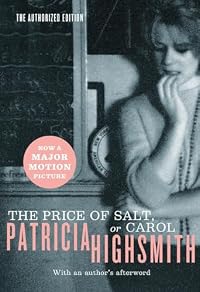
The Price of Salt
by Patricia Highsmith
On This Page
Description
A chance encounter between two lonely women leads to a passionate romance in this lesbian cult classic. Therese, a struggling young sales clerk, and Carol, a homemaker in the midst of a bitter divorce, abandon their oppressive daily routines for the freedom of the open road, where their love can blossom. But their newly discovered bliss is shattered when Carol is forced to choose between her child and her lover. Highsmith's sensitive treatment of fully realized characters who defy show more stereotypes about homosexuality marks a departure from previous lesbian pulp fiction. Erotic, eloquent, and suspenseful, this story offers an honest look at the necessity of being true to one's nature.The Price of Salt is the basis for the upcoming film Carol, starring Rooney Mara, Cate Blanchett, and Kyle Chandler, to be released December 18, 2015. show lessTags
Recommendations




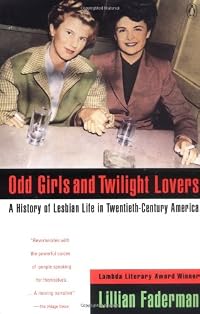


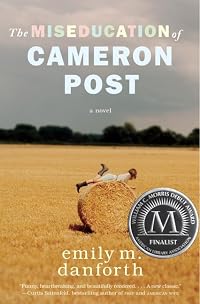
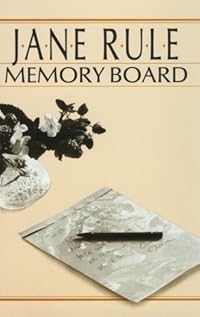
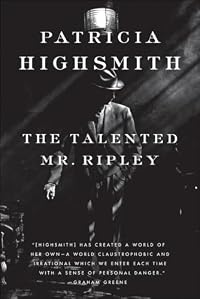



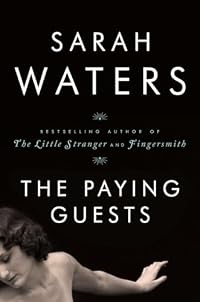
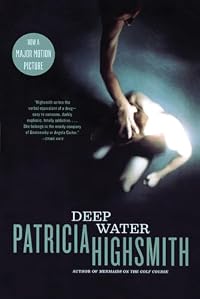

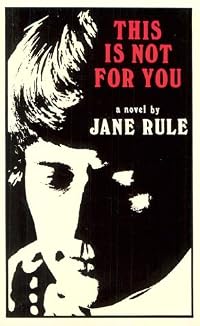














Member Recommendations
Member Reviews
I don’t read romance much at all and have never read a lesbian romance before so I had no idea that this was known as the one with the happy ending. None. So it came as a surprise to me that it turned out well and not in tragedy. When Therese found the gun, I thought it might end in the worst way possible. But Highsmith doesn’t follow this well-known dictum and nor does she take the easy or predictable way out with most of the story.
It did take me a while to get into though. It’s very quotidian and a bit stultifying in its everyday drudgery. I suppose that’s needed though to show the oasis that is the heart of Therese and Carol’s relationship as tentative as that is at first. For the longest time Highsmith lets us wonder just show more what Carol is up to and I feared the old false notion of homosexual as predator would wind up front and center. No, not that either although I just couldn’t figure what Carol saw in Therese. She is awkward and poor, unsophisticated and so besotted as to be robotic. Carol sees it, but doesn't take advantage of it. Neither does she really encourage Therese to be more independent though, and I feared to see how much of herself Therese would sacrifice. Towards the end I was really rooting for her when she got a hold of herself, let Carol go and then decided to make something of her life. It was that new found strength that let me be happy for them in the end. It became a relationship of equals then. Therese had the courage to reject Carol when she, Carol, had the courage to ask to try again. Both women had to walk away to get perspective and so the imagined future is a nice one.
In addition to the general idea of homosexuals as deviants, criminals and predators that the women fight against, there is the perfect way Highsmith uses Richard to show the special venom men save for women who reject them for other women. At first he categorizes Therese’s infatuation as a mental illness. He calls her crazy in a particular way that he probably wouldn’t do if she was crushing on a man. Then when she remains steadfast in her decision to break with him, leaving his letters unanswered, he just has to send her one long screed about how disgusted he is with her and how ruined her life will be since she’s rejected him and all men. Alas though, she rejected him first and so his bile washed off her like rain. It was meaningless because he was meaningless. The insecurity on display though was cringeworthy.
I can’t believe I waited this long to read this novel considering how much of Highsmith I’ve already collected and read. She was a gem and an enormous talent. show less
It did take me a while to get into though. It’s very quotidian and a bit stultifying in its everyday drudgery. I suppose that’s needed though to show the oasis that is the heart of Therese and Carol’s relationship as tentative as that is at first. For the longest time Highsmith lets us wonder just show more what Carol is up to and I feared the old false notion of homosexual as predator would wind up front and center. No, not that either although I just couldn’t figure what Carol saw in Therese. She is awkward and poor, unsophisticated and so besotted as to be robotic. Carol sees it, but doesn't take advantage of it. Neither does she really encourage Therese to be more independent though, and I feared to see how much of herself Therese would sacrifice. Towards the end I was really rooting for her when she got a hold of herself, let Carol go and then decided to make something of her life. It was that new found strength that let me be happy for them in the end. It became a relationship of equals then. Therese had the courage to reject Carol when she, Carol, had the courage to ask to try again. Both women had to walk away to get perspective and so the imagined future is a nice one.
In addition to the general idea of homosexuals as deviants, criminals and predators that the women fight against, there is the perfect way Highsmith uses Richard to show the special venom men save for women who reject them for other women. At first he categorizes Therese’s infatuation as a mental illness. He calls her crazy in a particular way that he probably wouldn’t do if she was crushing on a man. Then when she remains steadfast in her decision to break with him, leaving his letters unanswered, he just has to send her one long screed about how disgusted he is with her and how ruined her life will be since she’s rejected him and all men. Alas though, she rejected him first and so his bile washed off her like rain. It was meaningless because he was meaningless. The insecurity on display though was cringeworthy.
I can’t believe I waited this long to read this novel considering how much of Highsmith I’ve already collected and read. She was a gem and an enormous talent. show less
Therese is a young woman working in a department store in midcentury New York when she meets Carol, an older woman from the suburbs buying a doll for her daughter. Dissatisfied with her life and very apathetic about her boyfriend, Therese is drawn to Carol and looks for excuses to spend more and more time with her. When Carol’s soon-to-be ex-husband gets her child custody revoked for several months, Carol and Therese go on a road trip across the country together, staying in fancy hotels along the way, and falling in love. But a private detective follows them closely, looking for evidence against Carol, until she has to return to New York and fight for her child, and Therese has to decide whether to follow her, or not.
A true classic, show more and an essential read, but not a particularly delightful one. Both Therese and Carol are kind of unpleasant, but they grow over time as all good characters do. I really appreciated the insight into what it was like for lesbians to find each other and imagine a life together in the 40s or 50s, and the writing is very vivid. But I think it was longer than it needed to be. I appreciated that the ending was neither storybook perfect nor punishingly tragic. show less
A true classic, show more and an essential read, but not a particularly delightful one. Both Therese and Carol are kind of unpleasant, but they grow over time as all good characters do. I really appreciated the insight into what it was like for lesbians to find each other and imagine a life together in the 40s or 50s, and the writing is very vivid. But I think it was longer than it needed to be. I appreciated that the ending was neither storybook perfect nor punishingly tragic. show less
Oh, Patricia Highsmith. Thank you. I quite lost myself in “Carol” for a few days.
This book is unique and breathless, and it will not let go of you until the story is told. The writing is powerful.
“It reminded her of conversations at tables, on sofas, with people whose words seemed to hover over dead, unstirrable things, who never touched a string that played. And when one tried to touch a live string, looked at one with faces as masked as ever, making a remark so perfect in its banality that one could not even believe it might be subterfuge.”
“The half dangling, half cemented relationship” between Therese and Richard is so well painted, small details that slowly condense into ugliness. The chapter when they fly a kite is show more heartbreaking, and Richard does not understand.
The description of that first meeting between Therese and Carol is a bit like drowning. For me, Therese’s story is a story of an obsession that becomes… love? A kind of love? I am still not certain. And slowly, slowly, you realize that Therese is the villain here, a villain of selfishness and weakness – until Highsmith slaps you in the face with it.
In the afterword (a great one), the author calls her ending “happy”.
I’d call it an ambiguous, and not an unhappy ending.
And now, I’ll go and breathe. show less
This book is unique and breathless, and it will not let go of you until the story is told. The writing is powerful.
“It reminded her of conversations at tables, on sofas, with people whose words seemed to hover over dead, unstirrable things, who never touched a string that played. And when one tried to touch a live string, looked at one with faces as masked as ever, making a remark so perfect in its banality that one could not even believe it might be subterfuge.”
“The half dangling, half cemented relationship” between Therese and Richard is so well painted, small details that slowly condense into ugliness. The chapter when they fly a kite is show more heartbreaking, and Richard does not understand.
The description of that first meeting between Therese and Carol is a bit like drowning. For me, Therese’s story is a story of an obsession that becomes… love? A kind of love? I am still not certain. And slowly, slowly, you realize that Therese is the villain here, a villain of selfishness and weakness – until Highsmith slaps you in the face with it.
In the afterword (a great one), the author calls her ending “happy”.
I’d call it an ambiguous, and not an unhappy ending.
And now, I’ll go and breathe. show less
A slow-paced lesbian romance novel brimming with pathos that is highlighted by Highsmith's powerful prose. A forerunner of its kind, The Price of Salt was first published in the pulps to a cult-following among lesbian women, gaining wider recognition when it was republished in the 1990's. It was only after this success that Highsmith was willing to attach her real name to a work that was deeply personal to her.
Therese is a nineteen year old aspiring set designer in Manhattan, working odd jobs in order to meet her rent. Abandoned by her mother to a boarding school at a young age, Therese don't have many connections in the city outside of her boyfriend, and tangentially with his friends and family. Therese finds herself working in the show more toy department of a busy department store during Christmas time, and it is there she first meets Carol; an older blonde woman who reeks of sophistication, maturity, and sexuality. Therese is immediately captivated by her, and though her feelings come upon her fast, she is quick to think that this is more than just an adolescent crush. Therese and Carol's relationship broadens in scope and depth over the coming weeks, though complicated by Carol's soon to be ex-husband and her young daughter.
It's so interesting to me that Highsmith chose to center the novel around Therese's point of view, when Carol has the more nuanced position. In comparison to Carol, Therese feels freer to explore her feelings and dive headfirst into unknown water. Both of them are stifled by a prejudiced heteronormative world, but Carol risks custody of her child by involving herself with Therese. Therese, on the other hand, shows a lot of growth as a person over the course of their relationship. I found it easy to have empathy for both characters as they struggle to exist as they are in a hostile world.
There were moments where I struggled with The Price of Salt, especially towards the middle of plot when everything slowed down to a snails pace, but the captivating opening and stunning ending more than made up for that in my opinion. Besides being important as a canonical piece of queer fiction, The Price of Salt really does the romance genre right: tasteful, emotional, reflective, and tender. show less
Therese is a nineteen year old aspiring set designer in Manhattan, working odd jobs in order to meet her rent. Abandoned by her mother to a boarding school at a young age, Therese don't have many connections in the city outside of her boyfriend, and tangentially with his friends and family. Therese finds herself working in the show more toy department of a busy department store during Christmas time, and it is there she first meets Carol; an older blonde woman who reeks of sophistication, maturity, and sexuality. Therese is immediately captivated by her, and though her feelings come upon her fast, she is quick to think that this is more than just an adolescent crush. Therese and Carol's relationship broadens in scope and depth over the coming weeks, though complicated by Carol's soon to be ex-husband and her young daughter.
It's so interesting to me that Highsmith chose to center the novel around Therese's point of view, when Carol has the more nuanced position. In comparison to Carol, Therese feels freer to explore her feelings and dive headfirst into unknown water. Both of them are stifled by a prejudiced heteronormative world, but Carol risks custody of her child by involving herself with Therese. Therese, on the other hand, shows a lot of growth as a person over the course of their relationship. I found it easy to have empathy for both characters as they struggle to exist as they are in a hostile world.
There were moments where I struggled with The Price of Salt, especially towards the middle of plot when everything slowed down to a snails pace, but the captivating opening and stunning ending more than made up for that in my opinion. Besides being important as a canonical piece of queer fiction, The Price of Salt really does the romance genre right: tasteful, emotional, reflective, and tender. show less
A different type of the usual thriller I get from Highsmith, who definitely knows how to capture how it feels to be inexplicably obsessed with someone. Except, here, it's much more healthy and wholesome! (Surely there exists a short thesis somewhere analysing the obsessions in Strangers on a Train, the Ripley's, The Price of Salt/Carol, etc)
Highsmith captures the initial flushes of a crush, the uncertainties and the endless possibilities. So much of it feels like a blur, a languid montage of feelings and sceneries. The context and themes and inevitable barriers loom over our little bubble of contentment, but Highsmith delivers a sliver of hope.
I watched the movie after reading, and what admirable restraint and faithfulness to the show more original atmosphere with the set design and cinematography and - of course - the *eye* acting. show less
Highsmith captures the initial flushes of a crush, the uncertainties and the endless possibilities. So much of it feels like a blur, a languid montage of feelings and sceneries. The context and themes and inevitable barriers loom over our little bubble of contentment, but Highsmith delivers a sliver of hope.
I watched the movie after reading, and what admirable restraint and faithfulness to the show more original atmosphere with the set design and cinematography and - of course - the *eye* acting. show less
A classic example of the character-driven novel. My only other Highsmith is The Talented Mr Ripley, which has great characters but also a lot of plot, and this is a slower burn. I really like the way she writes this -- it's very contemplative and does a stunning job of dropping you into the time period in an intricately detailed but not heavy-handed way.
This novel shows something we didn't see much, in fiction, at the time period, and there's a lot to ponder there. Some small spoilers, but I read that this was the first lesbian novel to have a happy ending. I thought it was more ambiguous. They are together, but are they happy? Are they in long-haul love? But then you think about what people got at the time -- institutionalized! -- and show more it means a lot. show less
This novel shows something we didn't see much, in fiction, at the time period, and there's a lot to ponder there. Some small spoilers, but I read that this was the first lesbian novel to have a happy ending. I thought it was more ambiguous. They are together, but are they happy? Are they in long-haul love? But then you think about what people got at the time -- institutionalized! -- and show more it means a lot. show less
Carol (or The Price of Salt) is the first novel I've read by Highsmith, and hopefully it won't be the last.
Released in 1952, it was originally published under an alias. Highsmith's usual publishers (Harper) refused to publish it at all as they felt its lesbian theme would be suicide for her career.
This novel had some terrific characters and a thriller aspect to it which came as a surprise. As a reader we're never sure of Carol; she's the controlling force in the relationship, determining how it evolves and if it even evolves at all. For much of the novel we're suspicious of whether the younger and more inexperienced Theresa is anything more than a toy to her, and whilst we know that Theresa is clearly infatuated and in love, Highsmith show more keeps Carol's feelings veiled behind a cool, changeable demeanour and natural dominance born out of her wealth and the fact she is the older of the two.
Given the period in which the novel is set and attitudes towards homosexuality at that time, Highsmith is able to weave in some of her usual trademark thriller theme to the story which works really well. What will or won't transpire is out of the control of Theresa, the protagonist, which equally unnerves us as a reader.
4.5 stars - an enjoyable page-turner. Now to watch the movie. show less
Released in 1952, it was originally published under an alias. Highsmith's usual publishers (Harper) refused to publish it at all as they felt its lesbian theme would be suicide for her career.
This novel had some terrific characters and a thriller aspect to it which came as a surprise. As a reader we're never sure of Carol; she's the controlling force in the relationship, determining how it evolves and if it even evolves at all. For much of the novel we're suspicious of whether the younger and more inexperienced Theresa is anything more than a toy to her, and whilst we know that Theresa is clearly infatuated and in love, Highsmith show more keeps Carol's feelings veiled behind a cool, changeable demeanour and natural dominance born out of her wealth and the fact she is the older of the two.
Given the period in which the novel is set and attitudes towards homosexuality at that time, Highsmith is able to weave in some of her usual trademark thriller theme to the story which works really well. What will or won't transpire is out of the control of Theresa, the protagonist, which equally unnerves us as a reader.
4.5 stars - an enjoyable page-turner. Now to watch the movie. show less
Members
- Recently Added By
Lists

Pre-1969 LGBTQ Literature
182 works; 66 members

Best Lesbian Fiction (And Narrative Non-Fiction)
155 works; 36 members

Books Set in New York City
127 works; 21 members

1950s
340 works; 22 members

Female Protagonist
1,056 works; 56 members
The American Experience
173 works; 18 members

Publishing Triangle 100 Best Lesbian and Gay Novels
97 works; 6 members

Literature About Women and Girls
394 works; 39 members

A Novel Cure
742 works; 23 members

Good LGBT fiction for LGBT folk and friends
537 works; 54 members

Books Read in 2016
4,666 works; 197 members

SHOULD Read Books!
354 works; 9 members
Books Read in 2015
3,299 works; 126 members

Books Read in 2017
4,249 works; 130 members

Books Read in 2019
4,052 works; 108 members
Books in Riverdale
123 works; 3 members

Books in The Club Dumas
72 works; 1 member

Best Road Trip Books
13 works; 1 member

W. W. Norton & Company
47 works; 2 members

End of Your Life Book Club
134 works; 4 members

Books whose title names an object usually found in the kitchen
171 works; 14 members

Favorite Literary Love Stories
182 works; 101 members

Lesbian young adult fiction
50 works; 1 member
Read These Too
458 works; 9 members

Crime and Mysteries to Read
746 works; 31 members

Queer Fiction (Owned TBR)
142 works; 1 member

Recommended Horror and Dark Fiction by Women
81 works; 13 members
Talk Discussions
Past Discussions
June 2019: Patricia Highsmith in Monthly Author Reads (July 2019)
Author Information

301+ Works 32,840 Members
Patricia Highsmith wrote twenty-one novels including "Strangers on a Train" & the "Ripley" series. She died in 1995 in Switzerland, where she resided much of her life. (Publisher Provided) Patricia Highsmith (January 19, 1921 -- February 4, 1995) was an American novelist and short story writer, most widely known for her psychological thrillers, show more which led to more than two dozen film adaptations. She was born in Fort Worth, Texas. Highsmith grew up with her maternal grandmother in Astoria, Queens, and attended Barnard College. Her first novel, Strangers on a Train (1950), was adapted for stage and screen numerous times, notably by Alfred Hitchcock in 1951. In addition to her acclaimed series about murderer Tom Ripley, which was made into a film in 1955, she wrote many short stories, often macabre, satirical or tinged with black humor. Highsmith liked to examine the ways in which people can get to the point where they are capable of murder, as well as who they become after they have committed a crime. In carefully constructed stories and novels, she integrated this scrutiny of the human psyche into complex plots that often took unexpected twists. In Strangers on a Train, architect Guy Haines meets Charles Bruno on a train. Bruno conceives a plan to have Haines kill Bruno's father, while Bruno will kill Haines's wife. The effect that this plan has on Haines is the focus of the story. Highsmith's awards include: O. Henry Award for best publication of first story, for "The Heroine" in Harper's Bazaar (1946), Grand Prix de Littérature Policière, for The Talented Mr. Ripley (1957), and the Dagger Award -- Category Best Foreign Novel, for The Two Faces of January from the Crime Writers' Association of Great Britain (1964). Highsmith died of aplastic anemia and cancer in Locarno, Switzerland, at age 74. Her last novel, Small G: A Summer Idyll, was published one month after her death in 1995. (Bowker Author Biography) show less
Some Editions
Awards and Honors
Notable Lists
Series
Belongs to Publisher Series
Work Relationships
Is contained in
Has the adaptation
Common Knowledge
- Canonical title*
- Carol
- Original title
- The Price of Salt
- Alternate titles
- Carol
- Original publication date
- 1952
- People/Characters
- Therese Belivet; Carol Aird; Richard Semco; Abby Gerhard; Danny McElroy; Phil McElroy (show all 9); Hargess Foster Aird; Ruby Robichek; Genevieve Cranell
- Important places
- New York, New York, USA; New Jersey, USA; Chicago, Illinois, USA; Waterloo, Iowa, USA; Salt Lake City, Utah, USA; Colorado Springs, Colorado, USA (show all 8); Sioux Falls, South Dakota, USA; Des Moines, Iowa, USA
- Related movies
- Carol (2015 | IMDb)
- Dedication
- To Edna, Jordy and Jeff
- First words
- The lunch hour in the co-workers' cafeteria at Frankenberg's had reached its peak.
- Quotations
- Happiness was like a green vine spreading through her, stretching fine tendrils, bearing flowers through her flesh.
She had seen just now what she had only sensed before, that the whole world was ready to be their enemy, and suddenly what she and Carol had together seemed no longer love or anything happy but a monster between them, with ea... (show all)ch of them caught in a fist.
I don't mean people like that. I mean two people who fall in love suddenly with each other, out of the blue. Say two men or two girls ... I suppose it could happen, though, to almost anyone, couldn't it?
They're not horrid. One's just supposed to conform. I know what they'd like, they'd like a blank they could fill in. A person already filled in disturbs them terribly.
Remember what you said about physics not applying to people? ... Well, I’m not sure you’re
right ... Take friendships, for instance. I can think of a lot of cases where the two people have nothing in common. I think th... (show all)ere’s a definite reason for every friendship just as there’s a reason why certain atoms unite and others don’t—certain missing factors in one, or certain present factors in the other—what do you think? I think friendships are the result of certain needs that can be completely hidden from both people, sometimes hidden forever. - Last words
- (Click to show. Warning: May contain spoilers.)Therese walked towards her.
- Original language
- English
- Canonical DDC/MDS
- 813.54
- Canonical LCC
- PR6015.I366
- Disambiguation notice
- Carol was first published in the USA under the title The Price of Salt, 1952, and the author's pseudonym of Claire Morgan.
*Some information comes from Common Knowledge in other languages. Click "Edit" for more information.
Classifications
Statistics
- Members
- 3,554
- Popularity
- 4,596
- Reviews
- 129
- Rating
- (3.84)
- Languages
- 14 — Catalan, Chinese, Czech, Danish, Dutch, English, French, German, Galician, Italian, Norwegian (Bokmål), Spanish, Swedish, Portuguese (Portugal)
- Media
- Paper, Audiobook, Ebook
- ISBNs
- 104
- UPCs
- 1
- ASINs
- 41