On This Page
Description
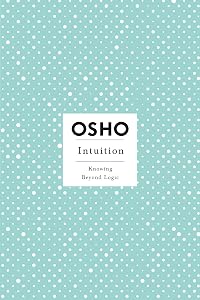
Discover your own deep well of wisdom in Intuition: Knowing Beyond Logic-from one of the greatest spiritual teachers of the twentieth century. Intuition deals with the difference between the intellectual, logical mind and the more encompassing realm of spirit. Logic is how the mind knows reality, intuition is how the spirit experiences reality. Osho's discussion of these matters is wonderfully lucid, occasionally funny, and thoroughly engrossing. All people have a natural capacity for show more intuition, but often social conditioning and formal education work against it. People are taught to ignore their instincts rather than to understand and use them as a foundation for individual growth and development-and in the process they undermine the very roots of the innate wisdom that is meant to flower into intuition. In this volume, Osho pinpoints exactly what intuition is and gives guidelines for how to identify its functioning in others and ourselves. You will learn to distinguish between genuine intuitive insight and the "wishful thinking" that can often lead to mistaken choices and unwanted consequences. Includes many specific exercises and meditations designed to nourish and support each individual's natural intuitive gifts. Osho challenges readers to examine and break free of the conditioned belief systems and prejudices that limit their capacity to enjoy life in all its richness. He has been described by the Sunday Times of London as one of the "1000 Makers of the 20th Century" and by Sunday Mid-Day (India) as one of the ten people-along with Gandhi, Nehru, and Buddha-who have changed the destiny of India. Since his death in 1990, the influence of his teachings continues to expand, reaching seekers of all ages in virtually every country of the world. show lessTags
Recommendations



Member Reviews
Osho is fantastic. At the moment I'm listening and committing to memory a number of string quartets, a most rewarding and energizing experience. What is required in doing this is not reason or logic but intuition, which reminded me of this inspirational book by Osho. I started to reread and couldn't stop. I wanted to share a few of my reflections.
“To know means to be silent, utterly silent, so you can hear the still, small voice within. To know means to drop the mind. When you are absolutely still, unmoving, nothing wavers in you, the doors open. You are part of this mysterious existence. You know it by becoming part of it, by becoming a participant in it. That is knowing.” ---------- Reminds me of Nietzsche’s Zarathustra urging show more us to flee from the flies of the marketplace; “You’ve been deafened by the noise of the great men and stung but the stings of the little men. Flee into your silence and solitude.” There comes a time when we have to turn off the TV and all the gadgets and simply rest in silence. There are few practices more refreshing.
“Intellect is your mind. Instinct is your body. And just as instinct functions perfectly on behalf of the body, intuition functions perfectly as far as your consciousness is concerned. Intellect is just between these two—a passage to be passed, a bridge to be crossed. ----------- This is a critical point that many people just don’t get: intuition is not a denial of reason or the opposite of reason, intuition transcends reason as, for example, when we look out at the ocean and feel a deep peace and oneness with the world or when we listen to a deeply moving piece of music.
“If the left hemisphere of the brain goes on dominating you, you will live a successful life—so successful that by the time you are forty you will have ulcers; by the time you are forty-five, you will have had at least one or two heart attacks. ---------- I vividly recall a friend of mine telling me he took everyone around him - friends, family, associates, people he met on the street - for granted and was focused on making money and being a great success in business. He then had a massive heart attack. He said when he was taken to the hospital in an ambulance, he appreciated people for the first time. Changed his life completely.
“Reason is an effort to know the unknown and intuition is the happening of the unknowable. To penetrate the unknowable is possible, but to explain it is not. The feeling is possible, the explanation is not.” ---------- Case in point: aesthetic experience. When creating in writing, music or the visual arts, we can’t be too conceptual since too much thinking can hold us back. I recall that quote from Louis Armstrong: “If you have to ask what jazz is, you’ll never know.”
“Because of the unknowable, life means something. When everything is known, then everything is flat. You will be fed up, bored.” ---------- Joseph Campbell reflected how the meaning of life is overemphasized, that is, figuring out the meaning of life isn’t really our prime question. The prime question we face is how we are going to live in a way that we feel completely alive. What I personally enjoy above Joseph Campbell’s words are the emphasis on ‘the way we feel’. In our modern world there is much too much disregard and disrespect for feelings and sensations. If we can relax into feelings and ongoing sensations, a rich, creamy many-textured world opens up.
Osho Art - Osho created a vivid work of art out of his own signature. show less
Osho is fantastic. At the moment I'm listening and committing to memory a number of string quartets, a most rewarding and energizing experience. What is required in doing this is not reason or logic but intuition, which reminded me of this inspirational book by Osho. I started to reread and couldn't stop. I wanted to share a few of my reflections.
“To know means to be silent, utterly silent, so you can hear the still, small voice within. To know means to drop the mind. When you are absolutely still, unmoving, nothing wavers in you, the doors open. You are part of this mysterious existence. You know it by becoming part of it, by becoming a participant in it. That is knowing.” ---------- Reminds me of Nietzsche’s Zarathustra urging show more us to flee from the flies of the marketplace; “You’ve been deafened by the noise of the great men and stung but the stings of the little men. Flee into your silence and solitude.” There comes a time when we have to turn off the TV and all the gadgets and simply rest in silence. There are few practices more refreshing.
“Intellect is your mind. Instinct is your body. And just as instinct functions perfectly on behalf of the body, intuition functions perfectly as far as your consciousness is concerned. Intellect is just between these two—a passage to be passed, a bridge to be crossed. ----------- This is a critical point that many people just don’t get: intuition is not a denial of reason or the opposite of reason, intuition transcends reason as, for example, when we look out at the ocean and feel a deep peace and oneness with the world or when we listen to a deeply moving piece of music.
“If the left hemisphere of the brain goes on dominating you, you will live a successful life—so successful that by the time you are forty you will have ulcers; by the time you are forty-five, you will have had at least one or two heart attacks. ---------- I vividly recall a friend of mine telling me he took everyone around him - friends, family, associates, people he met on the street - for granted and was focused on making money and being a great success in business. He then had a massive heart attack. He said when he was taken to the hospital in an ambulance, he appreciated people for the first time. Changed his life completely.
“Reason is an effort to know the unknown and intuition is the happening of the unknowable. To penetrate the unknowable is possible, but to explain it is not. The feeling is possible, the explanation is not.” ---------- Case in point: aesthetic experience. When creating in writing, music or the visual arts, we can’t be too conceptual since too much thinking can hold us back. I recall that quote from Louis Armstrong: “If you have to ask what jazz is, you’ll never know.”
“Because of the unknowable, life means something. When everything is known, then everything is flat. You will be fed up, bored.” ---------- Joseph Campbell reflected how the meaning of life is overemphasized, that is, figuring out the meaning of life isn’t really our prime question. The prime question we face is how we are going to live in a way that we feel completely alive. What I personally enjoy above Joseph Campbell’s words are the emphasis on ‘the way we feel’. In our modern world there is much too much disregard and disrespect for feelings and sensations. If we can relax into feelings and ongoing sensations, a rich, creamy many-textured world opens up.
Osho Art - Osho created a vivid work of art out of his own signature. show less
I guess I was expecting a little more than what was provided.
A intuição, segundo Osho, é a percepção direta da realidade, sem a interferência dos preconceitos e sistemas de crença da nossa mente. Trata-se de um “conhecimento além da lógica” e só aqueles que são capazes de ir além das limitações da lógica e da análise conseguem encontrar meios criativos para enfrentar as mudanças e novidades da vida diária. Nesse livro, Osho mostra como remover os obstáculos que anuviam a nossa intuição, de modo que ela possa florescer e proporcionar uma nova qualidade de inteligência e integridade à nossa vida.
Mar 6, 2025Portuguese (Brazil)
> « Intuition », de OSHO (2010 - Almasta - 190 p.). — Almasta nous présente un nouveau numéro de sa collection consacrée à Osho. Après la créativité, la maturité, la compassion et la joie, le thème choisi est l’Intuition. À première vue, quand on considère le terme intuition dans le sens courant de la vie moderne, on semble loin des notions habituelles de la spiritualité. Détrompons-nous : nous abordons-là l’un des ultimes mode de connaissance accessible à l’Homme. Notre mode de connaissance habituel se situe au niveau temporel du mental, socle de l’ego. A ce niveau, l’observateur est séparé de la chose observée. Un second niveau se situe dans ce qu’Osho nomme la « conscience sans contenu, ce qu’est show more la méditation. » Dans le troisième mode de connaissance, le contenu a disparu, « l’objet a disparu, et le sujet ne peut plus se maintenir plus longtemps. /…/ Au-delà du mental, qui est le monde de l’intellect, se trouve le monde de l’intuition. L’intuition ouvre ses portes par la méditation. La conscience, devient alors consciente d’elle-même ; on est alors au seuil de la vacuité. Krishnamurti parlait de l’éveil de l’intelligence - et non pas de l’intellect ! - ouvert vers l’inconnu. Osho se situe dans la même ligne. Pour lui, l’intuition est la manifestation de l’inconnaissance. du non-savoir de l’intellect. Il est très intéressant également de rapprocher l’approche d’Osho avec la vision de Rudolf Steiner pour qui l’homme peut accéder à trois niveaux supérieurs de connaissance par ce qu’il nomme imagination, inspiration et intuition. De même, Gurdjieff parlait lui des centres émotionnels et intellectuels supérieurs. Osho se situe donc dans les pas de ces visionnaires. Encore une fois, un ouvrage à lire, qui aborde également beaucoup d’autres thèmes comme ceux de la relation aux autres, notamment entre hommes et femmes.
—3e millénaire, (96), Été 2010 show less
—3e millénaire, (96), Été 2010 show less
Mar 31, 2019 (Edited)French
A mi parecer un libro puntero, de los que condensa muchas claves.
Oct 7, 2012Spanish
Ratings
Members
- Recently Added By
Author Information

2,103 Works 12,168 Members
OSHO, known for his revolutionary contribution to the science of inner transformation, continues to inspire millions of people worldwide in their search to define a new approach to individual spirituality that is self-directed and responsive to the everyday challenges of contemporary life. Osho was described by the UK's Sunday Times as one of the show more 1,000 Makers of the 20th Century. His internationally bestselling works are available in sixty languages around the world. show less
Series

Work Relationships
Classifications
- Genres
- Nonfiction, Religion & Spirituality, General Nonfiction
- DDC/MDS
- 299.93 — Religion Other religions Shintoism/Taoism/Other Mythologies Religions of other origin Religions of eclectic and syncretistic origin
- LCC
- BP605 .R34 .I583 — Philosophy, Psychology and Religion Islam. Bahaism. Theosophy, etc. Islam. Bahai Faith. Theosophy, etc. Other beliefs and movements
- BISAC
Statistics
- Members
- 276
- Popularity
- 117,187
- Reviews
- 6
- Rating
- (4.33)
- Languages
- 8 — Czech, English, Estonian, French, German, Portuguese, Spanish, Swedish
- Media
- Paper, Audiobook, Ebook
- ISBNs
- 19
- ASINs
- 4