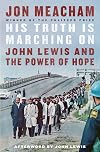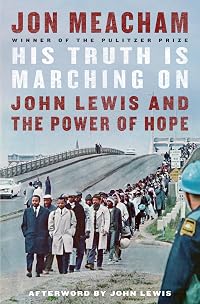
His Truth Is Marching On: John Lewis and the Power of Hope
by Jon Meacham
On This Page
Description
"John Lewis, who at age twenty-five marched in Selma and was beaten on the Edmund Pettus Bridge, is a visionary and a man of faith. Using intimate interviews with Lewis and his family and deep research into the history of the civil rights movement, Meacham writes of how the activist and leader was inspired by the Bible, his mother's unbreakable spirit, his sharecropper father's tireless ambition, and his teachers in nonviolence, Reverend James Lawson and Martin Luther King, Jr. A believer in show more hope above all else, Lewis learned from a young age that nonviolence was not only a tactic but a philosophy, a biblical imperative, and a transforming reality. At the age of four, Lewis, ambitious to become a preacher, practiced by preaching to the chickens he took care of. When his mother cooked one of the chickens, the boy refused to eat it--his first act of non-violent protest. Integral to Lewis's commitment to bettering the nation was his faith in humanity and in God, and an unshakable belief in the power of hope. Meacham calls Lewis "as important to the founding of a modern and multiethnic twentieth- and twenty-first century America as Thomas Jefferson and James Madison and Samuel Adams were to the initial creation of the nation-state in the eighteenth century. He did what he did--risking limb and life to bear witness for the powerless in the face of the powerful--not in spite of America, but because of America, and not in spite of religion, but because of religion"-- show lessTags
Recommendations


Member Reviews
Summary: An account of the life of Congressman John Lewis, focusing on the years of his leadership in the civil rights movement and the faith, hope, commitment to non-violence and the Beloved Community that sustained him.
We lost a hero this summer in the death of Congressman John Lewis. We may remember the last photos of him, days before his death on Black Lives Matter Plaza in Washington, DC, one more expression of the arc of a life spent in the hope that the nation would recognize the gift that his people are and that one day, his hope of Dr. King’s Beloved Community would be realized. We might also remember the image of him being clubbed to the ground on the approaches to the Edmund Pettus Bridge in Selma, a day he nearly lost his show more life. There is so much that came before, and between these images. In this new work, historian Jon Meacham offers a historical account coupled with Lewis’s recollections, that helps us understand not only the heroic work of this civil rights icon, but the wellsprings of motivation that spurred his long march.
Meacham begins with his ancestry, great-grandchild of a slave, child of sharecroppers in Troy, Alabama, growing up deep in the Jim Crow South in segregated schools, where a look, an inappropriate word might cost one’s life if you were black. Lewis was a child of the black church who knew he wanted to be a preacher, and practiced on the chickens on his parents farm. His faith, and early uneasiness with the inequities that did not measure up to the American dream meant “that the Lord had to be concerned with the ways we lived our lives right here on earth, that everything we did, or didn’t do in our lives had to be more than just a means of making our way to heaven.” Then he heard the Reverend Martin Luther King, Jr. on the radio and heard someone who gave voice to his growing calling and conviction., leading to pursuing seminary studies at the American Baptist Seminary in Nashville.
Meacham accounts how this led to sit-ins at restaurants, the Freedom Rides, the Children’s Crusade and the March on Washington, where he gave one of the most impassioned speeches as a leader of the Student Nonviolent Coordinating Committee (SNCC), refusing to back away from criticism of the Kennedy administration. Meacham describes the death of Kennedy, the civil rights leadership of Johnson, and Lewis’s growing exile from SNCC, from those like Stokely Carmichael who had tired of the slow progress of non-violent protest, that left him to go to Selma alone rather than with the SNCC. Again and again his principles led him to get into “good trouble.”
Through it all, including the deaths of King and Bobby Kennedy, he persisted, through multiple beatings and arrests. Much of this work chronicles his years in the civil rights movement, leaving the final chapter to summarize his years in Congress and legacy. What Meacham focuses on throughout are the theological convictions, rooted in Lewis’s belief in the Spirit of History, his faith in a loving God, and his belief that America’s ideals would prevail over America’s failings. Second is a focus on Lewis’s bedrock conviction of pursuing non-violent resistance rooted in a belief of the dignity of all people in the image of God, even one’s enemies, developed from the Bible, Dr. King, James Lawson and the Highlander Workshops, and the principles of Gandhi. The narrative is one of how Lewis “walked the talk” bearing numerous beatings without retaliation, sacrificing his leadership for his principles. Finally, Lewis lived toward a vision of America as Dr. King’s “Beloved Community.” From marches and activism to his years in politics, Meacham shows how he strove for the peace with justice that would overcome divisions between black and white. Meacham gives John Lewis the last word in his afterword:
"We won the battles of the 1960’s. But the war for justice, the war to make America both great and good, goes on. We the People are not a united people right now. We rarely are, but our divisions and our tribalism are especially acute. Many Americans have lost faith in the idea that what binds us together is more important than what separates us. Now as before, we have to choose, as Dr. King once put it, between community and chaos."
John Lewis never lost faith that what binds us together matters most and never stopped pursuing community rather than chaos. Meacham’s book leaves us the question of what will we believe and pursue in the days ahead. How we answer that may be decisive not only for our lives but also for our country.
________________________________
Disclosure of Material Connection: I received a complimentary review copy of this book from the publisher via Netgalley. The opinions I have expressed are my own. show less
We lost a hero this summer in the death of Congressman John Lewis. We may remember the last photos of him, days before his death on Black Lives Matter Plaza in Washington, DC, one more expression of the arc of a life spent in the hope that the nation would recognize the gift that his people are and that one day, his hope of Dr. King’s Beloved Community would be realized. We might also remember the image of him being clubbed to the ground on the approaches to the Edmund Pettus Bridge in Selma, a day he nearly lost his show more life. There is so much that came before, and between these images. In this new work, historian Jon Meacham offers a historical account coupled with Lewis’s recollections, that helps us understand not only the heroic work of this civil rights icon, but the wellsprings of motivation that spurred his long march.
Meacham begins with his ancestry, great-grandchild of a slave, child of sharecroppers in Troy, Alabama, growing up deep in the Jim Crow South in segregated schools, where a look, an inappropriate word might cost one’s life if you were black. Lewis was a child of the black church who knew he wanted to be a preacher, and practiced on the chickens on his parents farm. His faith, and early uneasiness with the inequities that did not measure up to the American dream meant “that the Lord had to be concerned with the ways we lived our lives right here on earth, that everything we did, or didn’t do in our lives had to be more than just a means of making our way to heaven.” Then he heard the Reverend Martin Luther King, Jr. on the radio and heard someone who gave voice to his growing calling and conviction., leading to pursuing seminary studies at the American Baptist Seminary in Nashville.
Meacham accounts how this led to sit-ins at restaurants, the Freedom Rides, the Children’s Crusade and the March on Washington, where he gave one of the most impassioned speeches as a leader of the Student Nonviolent Coordinating Committee (SNCC), refusing to back away from criticism of the Kennedy administration. Meacham describes the death of Kennedy, the civil rights leadership of Johnson, and Lewis’s growing exile from SNCC, from those like Stokely Carmichael who had tired of the slow progress of non-violent protest, that left him to go to Selma alone rather than with the SNCC. Again and again his principles led him to get into “good trouble.”
Through it all, including the deaths of King and Bobby Kennedy, he persisted, through multiple beatings and arrests. Much of this work chronicles his years in the civil rights movement, leaving the final chapter to summarize his years in Congress and legacy. What Meacham focuses on throughout are the theological convictions, rooted in Lewis’s belief in the Spirit of History, his faith in a loving God, and his belief that America’s ideals would prevail over America’s failings. Second is a focus on Lewis’s bedrock conviction of pursuing non-violent resistance rooted in a belief of the dignity of all people in the image of God, even one’s enemies, developed from the Bible, Dr. King, James Lawson and the Highlander Workshops, and the principles of Gandhi. The narrative is one of how Lewis “walked the talk” bearing numerous beatings without retaliation, sacrificing his leadership for his principles. Finally, Lewis lived toward a vision of America as Dr. King’s “Beloved Community.” From marches and activism to his years in politics, Meacham shows how he strove for the peace with justice that would overcome divisions between black and white. Meacham gives John Lewis the last word in his afterword:
"We won the battles of the 1960’s. But the war for justice, the war to make America both great and good, goes on. We the People are not a united people right now. We rarely are, but our divisions and our tribalism are especially acute. Many Americans have lost faith in the idea that what binds us together is more important than what separates us. Now as before, we have to choose, as Dr. King once put it, between community and chaos."
John Lewis never lost faith that what binds us together matters most and never stopped pursuing community rather than chaos. Meacham’s book leaves us the question of what will we believe and pursue in the days ahead. How we answer that may be decisive not only for our lives but also for our country.
________________________________
Disclosure of Material Connection: I received a complimentary review copy of this book from the publisher via Netgalley. The opinions I have expressed are my own. show less
Biography is boring – not! Meacham's book is not a detail-ridden examination of all the minutiae that undoubtedly filled every niche of the life of John Robert Lewis, just as such minutiae fill the lives of us all. Rather, the author focuses on the struggles of Lewis as he played critical roles in America's Civil Rights Movement of the 1960s, a movement that began with the bus boycotts in the mid 1950s. And what a focus Meacham achieves! For some of us, his writing brings it all back, and for those of us too young to remember the headlines and newscasts of fifty years ago this book brings that history to life.
Whoa! History? That's boring, too, isn't it? No, it is not, at least in Meacham's hands. The seminal hatred, the beatings show more (often by sheriffs, their deputies, and state police), the lynchings, the murders of white civil rights workers after their release from county jails in the dark of night, the bombing of the Sixteenth Street Baptist Church that killed four young girls dressed in their Sunday finery on Youth Day, the mounted state police riding down unarmed marchers—it's all here. Through it all, John Lewis both preached and exemplified nonviolent protest, holding fast to a Gandhi-inspired belief that love is more powerful than hatred and will, in the end, prevail. His steadfastness in the face of almost unbelievable hostility was remarkable, nearly superhuman in fact, and Meacham's narrative forces readers to ask how they themselves could persevere under such duress.
Why study such history? It's all in the past, right? First, let us ashamedly admit that, no, it is not in the past. While people are no longer being maimed en masse by thugs on Alabama's Edmund Pettus Bridge, the United States is far from reaching the Beloved Community in which Lewis believed and for which he strove. Second, let us also remember George Santayana's adage, “Those who cannot remember the past are condemned to repeat it.” Third, let us wonder how different our society might be today had the assassinations of the 1960s not occurred: President John Fitzgerald Kennedy (1963), Malcolm X (1965), The Reverend Doctor Martin Luther King, Jr. (1968), and Senator Robert Kennedy (1968). Individuals can be highly trained in technical professions, but are they truly educated if they do not understand at least the major events that shaped our present society, culture and values?
Who, then, would benefit from reading Meacham's history of John Robert Lewis with its focus on the turmoil of 1960s America? The answer appears to encompass two groups: those who read the newspaper reports and listened to the radio and television news announcers as the events in this book unfolded in real time but whose recollections have been softened by the passage of time and those who were yet too young, if indeed they had been born at all, to have been aware of the maelstrom tearing at the very fabric of this country because they really do need to know what it was like.
Of course many other books exist on the Civil Rights Movement and on John Robert Lewis' crucial part in it. Nonetheless, for its chronological arrangement, intriguing narrative style, striking photographs, flawless grammatical construction, and successful recreation of the emotional impact of the events of one of the most turbulent decades in U.S. history, His Truth Is Marching On is an outstanding example of a readable, engrossing, instructive, and valuable addition to the literature available to us today. If one wishes to read only one book on this topic, Jon Meacham's will be a superb choice. show less
Whoa! History? That's boring, too, isn't it? No, it is not, at least in Meacham's hands. The seminal hatred, the beatings show more (often by sheriffs, their deputies, and state police), the lynchings, the murders of white civil rights workers after their release from county jails in the dark of night, the bombing of the Sixteenth Street Baptist Church that killed four young girls dressed in their Sunday finery on Youth Day, the mounted state police riding down unarmed marchers—it's all here. Through it all, John Lewis both preached and exemplified nonviolent protest, holding fast to a Gandhi-inspired belief that love is more powerful than hatred and will, in the end, prevail. His steadfastness in the face of almost unbelievable hostility was remarkable, nearly superhuman in fact, and Meacham's narrative forces readers to ask how they themselves could persevere under such duress.
Why study such history? It's all in the past, right? First, let us ashamedly admit that, no, it is not in the past. While people are no longer being maimed en masse by thugs on Alabama's Edmund Pettus Bridge, the United States is far from reaching the Beloved Community in which Lewis believed and for which he strove. Second, let us also remember George Santayana's adage, “Those who cannot remember the past are condemned to repeat it.” Third, let us wonder how different our society might be today had the assassinations of the 1960s not occurred: President John Fitzgerald Kennedy (1963), Malcolm X (1965), The Reverend Doctor Martin Luther King, Jr. (1968), and Senator Robert Kennedy (1968). Individuals can be highly trained in technical professions, but are they truly educated if they do not understand at least the major events that shaped our present society, culture and values?
Who, then, would benefit from reading Meacham's history of John Robert Lewis with its focus on the turmoil of 1960s America? The answer appears to encompass two groups: those who read the newspaper reports and listened to the radio and television news announcers as the events in this book unfolded in real time but whose recollections have been softened by the passage of time and those who were yet too young, if indeed they had been born at all, to have been aware of the maelstrom tearing at the very fabric of this country because they really do need to know what it was like.
Of course many other books exist on the Civil Rights Movement and on John Robert Lewis' crucial part in it. Nonetheless, for its chronological arrangement, intriguing narrative style, striking photographs, flawless grammatical construction, and successful recreation of the emotional impact of the events of one of the most turbulent decades in U.S. history, His Truth Is Marching On is an outstanding example of a readable, engrossing, instructive, and valuable addition to the literature available to us today. If one wishes to read only one book on this topic, Jon Meacham's will be a superb choice. show less
The recently deceased congressman John Lewis has been a public light to the United States for over fifty years. Nicknamed “the conscience of Congress,” he courageously campaigned for civil rights since a college student in Nashville. The author Jon Meacham, surely one of America’s greatest biographers, writes this history of Lewis’ doings in the 1960s. With extreme acuity, gravity, and imagery, he captures what the civil rights movement resembled on the inside. In so doing, he memorializes Lewis in a way that proudly continues Lewis’ unique legacy.
I can compare reading the early chapters of this book to only one life experience – a tour of the Civil Rights Museum in Memphis, Tennessee. I was emotionally overwhelmed and show more captivated by the national struggle to love all races. Meacham’s research and writing so excels that he makes us see the world through Lewis’ eyes. And of course, Lewis’ vision of the world, captured in Dr. King’s phrase “the beloved community,” was and is one that ought to be held onto.
Lewis and others had to endure much to receive their just place in American culture. Regardless of one’s politics, ethnicity, or nationality, this story needs to be retold again and again. Lewis’ particular tale is one of courage, suffering, and eventual triumph. He famously even had his skull cracked by police in Selma, Alabama, as a testimony that black lives count for something. A photograph of him seeing recent Black Lives Matter protests precedes an afterword in the book by Lewis himself.
The main weakness of this book lies in its brevity. It only recounts about a decade of drama in Lewis’ life. I am left wanting to know this great human more. I am left wanting to learn about how he implemented his vision in one of the most difficult of all places – the United States Congress. I am left wanting to hear about his gentility as he transformed from a civil-rights soldier to dignified leader, much in the way that Washington, Grant, and Eisenhower have. Lewis’ greatness is not restricted to reactions to his skin color in the 1960s American South; it spans to his universal vision for the world. Meacham leaves us with an epilogue that describes such – again, I want more.
In an age of partisanship and vacuous national leadership, I hope that many read this work. It’s not inspiring. It’s tragic and sad, even disheartening. How can fellow human beings treat each other so poorly? This work corrects such prejudices and expresses deep determination to fight for what’s right and good and, dare I say, holy in this world. In the process of reading, it made me examine my own conscience and place in this world. Like all good expressions of the human spirit, it leaves me just wanting more. show less
I can compare reading the early chapters of this book to only one life experience – a tour of the Civil Rights Museum in Memphis, Tennessee. I was emotionally overwhelmed and show more captivated by the national struggle to love all races. Meacham’s research and writing so excels that he makes us see the world through Lewis’ eyes. And of course, Lewis’ vision of the world, captured in Dr. King’s phrase “the beloved community,” was and is one that ought to be held onto.
Lewis and others had to endure much to receive their just place in American culture. Regardless of one’s politics, ethnicity, or nationality, this story needs to be retold again and again. Lewis’ particular tale is one of courage, suffering, and eventual triumph. He famously even had his skull cracked by police in Selma, Alabama, as a testimony that black lives count for something. A photograph of him seeing recent Black Lives Matter protests precedes an afterword in the book by Lewis himself.
The main weakness of this book lies in its brevity. It only recounts about a decade of drama in Lewis’ life. I am left wanting to know this great human more. I am left wanting to learn about how he implemented his vision in one of the most difficult of all places – the United States Congress. I am left wanting to hear about his gentility as he transformed from a civil-rights soldier to dignified leader, much in the way that Washington, Grant, and Eisenhower have. Lewis’ greatness is not restricted to reactions to his skin color in the 1960s American South; it spans to his universal vision for the world. Meacham leaves us with an epilogue that describes such – again, I want more.
In an age of partisanship and vacuous national leadership, I hope that many read this work. It’s not inspiring. It’s tragic and sad, even disheartening. How can fellow human beings treat each other so poorly? This work corrects such prejudices and expresses deep determination to fight for what’s right and good and, dare I say, holy in this world. In the process of reading, it made me examine my own conscience and place in this world. Like all good expressions of the human spirit, it leaves me just wanting more. show less
The day of John Lewis' death I began reading the egalley for His Truth is Marching On: John Lewis and The Power of Hope by Jon Meacham.
It was a hard book to read, and heartbreaking, for Lewis was willing to lay down his life to achieve a just society, and he faced the most vicious violence.
Lewis has left behind a country still divided and angry, the dream of a Beloved Community unfulfilled. The struggle for the promise of America continues.
Meacham writes, "John Robert Lewis embodied the traits of a saint in the classical Christian sense of the term," a man who answered the call to do the Lord's work in the world. A man who faced tribulation and persecution for seeking the justice we are called to enact as our faith responsibility. A show more man who sought redemption for his country. A man whose faith never flagged, not in the face of hate and blows, not when the movement shifted away from non-violence. He was faithful to his Gospel call of peace and the establishment of The Beloved Community.
"The tragedy of man," the twentieth-century Protestant theologian Reinhold Niebuhr observed, "is that he can conceive self-perfection but cannot achieve it," Meacham quotes, adding, "And the tragedy of America is that we can imagine justice but cannot finally realize it."
I was only twenty when I married a seminary student. Professors and the school Dean had worked to integrate churches in the South. (see NYT article here.) I audited classes taught by these men. One wrote a seminal work on White Privilege, Segregation and the Bible. Another taught Niebuhr Moral Man in Immoral Society. It was an atmosphere that believed in faith in action, changing society to bring the Gospel to fulfillment.
The world has changed, including the church. Personal salvation and sanctity replaced social justice. Church as entertainment and community evolved. Separation from general society was the norm, with Christian music and businesses arising. We hardly recognize contemporary Christianity, especially it's alignment with Trump's divisive and racist actions.
We are at a decisive moment in history. What future will American choose?
Meacham is an inspirational and eloquent writer. His portrait of Lewis begins in his childhood through the Civil Rights movement and the Voting Rights act, ending with the rise of Black Power.
Meacham calls for us to be inspired by the life of John Lewis as we decide on our future in America. Will we remain divided and filled with hate? Or will we embrace love and faith in the value of every being? "God's truth is marching on," he reminds us, "We can do it...I believe we can do it."
Meacham ends his book with hope that America will yet achieve a just society.
I received a free ebook from the publisher through NetGalley. My review is fair and unbiased. show less
It was a hard book to read, and heartbreaking, for Lewis was willing to lay down his life to achieve a just society, and he faced the most vicious violence.
Lewis has left behind a country still divided and angry, the dream of a Beloved Community unfulfilled. The struggle for the promise of America continues.
Meacham writes, "John Robert Lewis embodied the traits of a saint in the classical Christian sense of the term," a man who answered the call to do the Lord's work in the world. A man who faced tribulation and persecution for seeking the justice we are called to enact as our faith responsibility. A show more man who sought redemption for his country. A man whose faith never flagged, not in the face of hate and blows, not when the movement shifted away from non-violence. He was faithful to his Gospel call of peace and the establishment of The Beloved Community.
"The tragedy of man," the twentieth-century Protestant theologian Reinhold Niebuhr observed, "is that he can conceive self-perfection but cannot achieve it," Meacham quotes, adding, "And the tragedy of America is that we can imagine justice but cannot finally realize it."
I was only twenty when I married a seminary student. Professors and the school Dean had worked to integrate churches in the South. (see NYT article here.) I audited classes taught by these men. One wrote a seminal work on White Privilege, Segregation and the Bible. Another taught Niebuhr Moral Man in Immoral Society. It was an atmosphere that believed in faith in action, changing society to bring the Gospel to fulfillment.
The world has changed, including the church. Personal salvation and sanctity replaced social justice. Church as entertainment and community evolved. Separation from general society was the norm, with Christian music and businesses arising. We hardly recognize contemporary Christianity, especially it's alignment with Trump's divisive and racist actions.
We are at a decisive moment in history. What future will American choose?
Meacham is an inspirational and eloquent writer. His portrait of Lewis begins in his childhood through the Civil Rights movement and the Voting Rights act, ending with the rise of Black Power.
Meacham calls for us to be inspired by the life of John Lewis as we decide on our future in America. Will we remain divided and filled with hate? Or will we embrace love and faith in the value of every being? "God's truth is marching on," he reminds us, "We can do it...I believe we can do it."
Meacham ends his book with hope that America will yet achieve a just society.
I received a free ebook from the publisher through NetGalley. My review is fair and unbiased. show less
I'm so disappointed in His Truth Is Marching On. I'm a great admirer of John Lewis, and I know that Meacham is a noted historical writer. There is just too much extraneous detail in this book. What I really wanted was a deeper examination of Lewis' life and career, including more about his work in the House of Representatives. I got the same biographical and Civil Rights Era basics that I've gotten from plenty of other sources, and a whole bunch of super-detailed conversations among others, not even pertaining directly to Lewis.
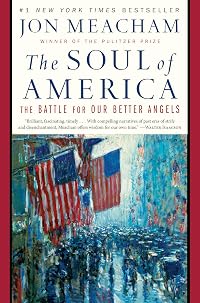
In fact, I felt like parts of this were possibly wholesale repeated from Meacham's The Soul of America. Like that book, this one could have done with a serious editing/paring both for continuity, order, and show more length.
My partner brought up the idea that perhaps Meacham's publisher has been rushing his books because of the upheaval of the current administration. Maybe so. Given that these are my only exposures to Meacham so far, I'm not encouraged to read more of him. show less
In fact, I felt like parts of this were possibly wholesale repeated from Meacham's The Soul of America. Like that book, this one could have done with a serious editing/paring both for continuity, order, and show more length.
My partner brought up the idea that perhaps Meacham's publisher has been rushing his books because of the upheaval of the current administration. Maybe so. Given that these are my only exposures to Meacham so far, I'm not encouraged to read more of him. show less
There is no way to go wrong with John Lewis as the subject of a book that’s written by a writer as good as Jon Meacham. No disappointments here. John Lewis was a giant of a man and Meacham has done an excellent job of getting my attention quickly and keeping it through to the very last page. After I had marked the most significant events, and the finest bits of Meacham’s writing with Post-Its, I was left with a book that closely resembled a colorful porcupine. I admire books like this that educate and bring history to life, where the reasons that drove events forward are evident, the people are fleshed out, and we are truly involved with the past, we’re far beyond just reading a collection of dates and names.
Most of us have seen show more the footage of John Lewis being beaten and clubbed to the ground near that infamous bridge in Selma many times over. Far fewer people knew just how many times that same John Lewis was beaten, abused, and jailed over the many long years during which he was protesting with his body for people’s rights. When many other people involved in the civil rights struggle started to doubt nonviolence as the strongest way to proceed, John Lewis never wavered from that path. While only in his mid-twenties, he quickly became known by Martin Luther King Jr. and many of the others at the heart of the movement, as well as some in the media.
He came by many of his beliefs just from being a very religious man, and the great-grandson of a slave. I learned a great deal more about the non-violence training that so many protesters received before putting their bodies within the reach of fists and clubs, hoses and dogs, and the raw, seething hatred of those people who saw him as more savage than civilized. I had known about MLK’s involvement, but I hadn’t been aware of how essential James Lawson had been with a structured way of teaching so many about nonviolence.
This book is the result of several decades of personal interviews with Lewis, nearly up to the day of his death. As a young boy he always wanted to be a minister, and Meacham had great fun relating the story about how the young Lewis would preach to his chickens. All his life, Lewis maintained a strong belief in God, humanity, and the importance of hope in our lives. Believing in humanity and hope seems perfectly suited for a good, honest politician. It’s harder in these times to put good and honest together when dealing with the world of politics, but that’s why John Lewis was always a giant who lived by his towering faith.
Weeks after his 80th birthday in March 2020, much thinner because of the cancer that was ravaging his body, John Lewis said the following. ”If the young people of the South—young black people, young women, young men—could change the world then,” he’d say. “then we can do it again, now.” The faith and the hope that had brought him so far in his life, was still strong within the man, even in Selma on yet another anniversary of that fateful day near the Edmund Pettus Bridge.
I challenge anyone to read this book and not be moved and maybe inspired by John Lewis’s life and words. People of his character don’t come along often, and we’re so fortunate that Jon Meacham was able to bring him forward so clearly with his fine writing. My late wife and I, always held John Lewis as a hero, and after reading this book, I’m sure that even more people will feel the same way. show less
Most of us have seen show more the footage of John Lewis being beaten and clubbed to the ground near that infamous bridge in Selma many times over. Far fewer people knew just how many times that same John Lewis was beaten, abused, and jailed over the many long years during which he was protesting with his body for people’s rights. When many other people involved in the civil rights struggle started to doubt nonviolence as the strongest way to proceed, John Lewis never wavered from that path. While only in his mid-twenties, he quickly became known by Martin Luther King Jr. and many of the others at the heart of the movement, as well as some in the media.
He came by many of his beliefs just from being a very religious man, and the great-grandson of a slave. I learned a great deal more about the non-violence training that so many protesters received before putting their bodies within the reach of fists and clubs, hoses and dogs, and the raw, seething hatred of those people who saw him as more savage than civilized. I had known about MLK’s involvement, but I hadn’t been aware of how essential James Lawson had been with a structured way of teaching so many about nonviolence.
This book is the result of several decades of personal interviews with Lewis, nearly up to the day of his death. As a young boy he always wanted to be a minister, and Meacham had great fun relating the story about how the young Lewis would preach to his chickens. All his life, Lewis maintained a strong belief in God, humanity, and the importance of hope in our lives. Believing in humanity and hope seems perfectly suited for a good, honest politician. It’s harder in these times to put good and honest together when dealing with the world of politics, but that’s why John Lewis was always a giant who lived by his towering faith.
Weeks after his 80th birthday in March 2020, much thinner because of the cancer that was ravaging his body, John Lewis said the following. ”If the young people of the South—young black people, young women, young men—could change the world then,” he’d say. “then we can do it again, now.” The faith and the hope that had brought him so far in his life, was still strong within the man, even in Selma on yet another anniversary of that fateful day near the Edmund Pettus Bridge.
I challenge anyone to read this book and not be moved and maybe inspired by John Lewis’s life and words. People of his character don’t come along often, and we’re so fortunate that Jon Meacham was able to bring him forward so clearly with his fine writing. My late wife and I, always held John Lewis as a hero, and after reading this book, I’m sure that even more people will feel the same way. show less
John Lewis' beatdown on the Edmund Pettis Bridge played on a loop on cable news after his death in 2020. The same film broke into network programming h0urs after it happened in 1965, and change came with the shock of recognizing what we could do to each other. Now it takes home confinement for us to sit with the casual cruelty caught weekly on citizen videos and police body cams, yet we seem less able to rouse ourselves. In recounting Lewis' student protests, Meacham shows the depths of his resilience (in one lunch counter sit-in, Lewis is locked in a Krystal hamburger stand and fumigated) and his simple faith in taking that one next step. Lewis is telling us, just march on.
Members
- Recently Added By
Author Information

35+ Works 15,216 Members
Jon Meacham was born in Chattanooga, Tennessee on May 20, 1969. He received a degree in English literature at the University of the South. He joined Newsweek as a writer in 1995. Three years later, at the age of 29, he was promoted to managing editor, supervising coverage of politics, international affairs, and breaking news. In 2006, he was show more promoted to editor at Newsweek. He is currently an executive editor at Random House. He won the Pulitzer Prize for American Lion: Andrew Jackson in the White House in 2009. His other works include Franklin and Winston: An Intimate Portrait of an Epic Friendship, American Gospel: God, the Founding Fathers, and the Making of a Nation. In 2001, he edited Voices in Our Blood: America's Best on the Civil Rights Movement. In 2013 his title Thomas Jefferson: The Art of Power made The New York Times Best Seller List. In 2015 Meacham's title Destiny and Power: The American Odyssey of George Herbert Walker Bush made The New York Times Best Seller List. His most recent book is entitled The Soul of America: The Battle for our Better Angels (2018). show less
Some Editions
Awards and Honors
Awards
Notable Lists
Common Knowledge
- Canonical title
- His Truth Is Marching On: John Lewis and the Power of Hope
- Original publication date
- 2020
- People/Characters
- John Lewis
- Epigraph
- Also I heard the voice of the Lord, saying, "Whom shall I send, and who will go for us?" Then said I, Here am I; send me. - The Book of Isaiah
- Dedication
- For all who toil and fight and live and die to realize the true meaning of America's creed
- First words
- Overture: The Last March.
His steps were slow, careful, precarious.
For John Lewis, slavery wasn't an abstraction. - Quotations
- We were beaten. Tear-gassed. Bullwhipped. On this bridge, some of us gave a little blood to help redeem the soul of America. - John Lewis, on the Edmund Pettus Bridge, commemorating the Bloody Sunday march of 1965
- Last words
- (Click to show. Warning: May contain spoilers.)"Why? Why? Why?"
(Click to show. Warning: May contain spoilers.)Epilogue: But you have to believe that it can be real, that it can be more than a dream.
(Click to show. Warning: May contain spoilers.)Afterword by John Lewis: It's all going to work out. - Original language
- English US
Classifications
- Genres
- Biography & Memoir, Politics and Government, General Nonfiction, History, Nonfiction
- DDC/MDS
- 328.73 — Society, government, & culture Political science U.S. Congress - Legislation & Legislative Process North America United States
- LCC
- E840.8 .L43 .M43 — History of the United States United States Later twentieth century, 1961-2000 Biography (General)
- BISAC
Statistics
- Members
- 631
- Popularity
- 45,987
- Reviews
- 13
- Rating
- (4.31)
- Languages
- English
- Media
- Paper, Audiobook, Ebook
- ISBNs
- 9
- ASINs
- 3