On This Page
Description
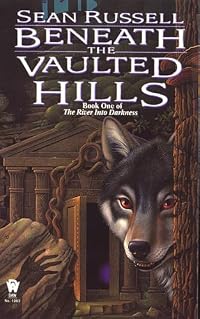
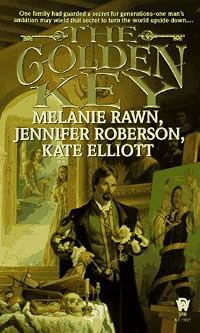
The last of the world's great mages, the enigmatic Lord Eldrich has dedicated his life to eradicating all remaining vestiges of magic in the world. But the fanatical Tellerites--followers of a long-dead mage-apprentice--oppose Eldrich, desiring the hidden knowledge of the magical arts and with it the coveted key to immortality. Drawn into this conflict against his will is Erasmus Flattery, who as a boy dwelt with Eldrich, and is still haunted by the memories of what transpired during his show more stay with the mage. Now Erasmus must lead as expedition to search for a secret that has remained hidden since the time of the first Mages! show lessTags
Recommendations




Member Reviews
This review is for both 'books' in this series
For a modern fantasy novel, The River into Darkness (Gonna call it RID for short) isn’t fluff. It successfully combines a good story with more substantial ruminations on morality, memory, fate, and the expressions of evil. This book wasn’t perfect, and not everyone will enjoy it, but its redeeming qualities far outweighed its failures. It has earned its place on my favorites shelf.
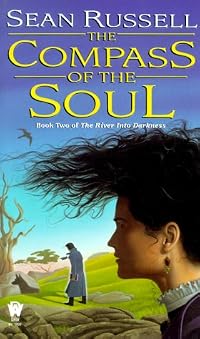
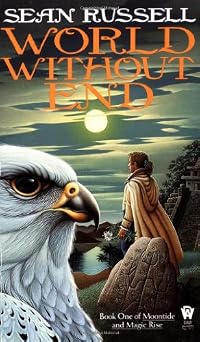
(For clarity, RID was broken down into two separate ‘books’, Beneath the show more Vaulted Hills and Compass of the Soul. Don’t be fooled, they are really just two volumes of the same book. The publisher, DAW, decided not to print a thousand page mass-market paperback encompassing both parts and instead split the book into two volumes. While RID was written after World Without End (same caveat in re the volumes), it is the chronological prequel.)
RID is set in a fantasy world akin to late 1700’s England. The plot starts out with courtly/aristocratic drama and international intrigue which is revealed to be a skirmish between two groups of magic wielders. Eldrich, the last proper mage, seeks to fulfill his group's wishes and destroy the last remnants of magic from the earth. His nemesis, the secret society of the Tellerites, are dedicated to preserving magic. Sounds pretty straightforward? Trust me, its not. The plot is too complicated and nuanced to be reduced to a paragraph or two (which is why all the book descriptions suck). We don’t even have a main character, there are like five.
I shouldn’t like this book as much as I do. The pacing is inconsistent, some of the characters are rather flat, and others are introduced mainly for their appearance in the next book (looking at you Averil Kent), some scenes are way too long, and others too short. Normally, these are dealbreakers for me, but they just work.
I read a review before reading this book, and someone said that the author spent most of the second volume trying to get you to like Eldrich. I saw that and said “Nah, that’s not something I’d fall for." Fast forward to the climactic scene at the very end. I realized that I was rooting for both Eldrich and the last Tellerite simultaneously. Not that I liked Eldrich at all, I still found him to be a despicable and disturbing character, but Russell was able to infuse RID with enough moral ambiguity to put me on the fence. I count that as a great success. I want to be persuaded like that when I read a book. Entertain me or make me feel conflicted, and this book did both.
Going back to the characters, the closest RID has to a conventional protagonist would be Erasmus Flattery, however, he’s not the main character. He is just along for the ride. He thinks of himself as the main character, and the others sometimes do too, but he’s not. There’s a scene in which Kent wonders what the Countess of Chilton likes about Erasmus. Kent is puzzled because Erasmus is ordinary and bland, lacking distinguishing features to win over the greatest beauty in the Kingdom. I feel like that was the author interjecting and saying that Erasmus is just the connecting character, not the main character. Lines of intrigue converge on Erasmus, but he’s not the subject of the intrigue.
With the exception of ‘Deacon’ (*coughs* Grand Inquisitor) Rose, I found the characters worthy of loving and hating. Russell did a good job of painting characters that felt real. They came off of the page and alive in my head.
About free will and decision making. Erasmus floats about like a falling leaf. The Countess of Chilton starts out the same way too. As the story progresses, she is presented with the illusion of choice. Essentially kidnapped, made to see visions, and scared out of her mind, she ‘makes a choice’ that she has to live with for the rest of the novel. She has to wrestle with the fact that she made the choice, even though it was under duress. The author plays with the moral ambiguity of a situation like that in a way that I found satisfying and worthy of the nuances.
I started this review with a quote about memory. One of Eldrich’s favorite things to do is to alter people’s memories. He routinely questions people and makes them forget, erasing himself from their minds, making them forget, his, to be frank, creepy, conduct. For the two artists in the book, Averil Kent the painter, and Marrianne Edden the novelist, memories are their most important possessions. It is what drives them on both their personal and professional levels, and Eldrich deems it fit to strip them of that. During those scenes I could feel their fear and rage on a deep level. Clarendon, on the other hand, has the ‘curse of memory’. He cannot forget. No detail is lost on him. He can remember things twenty years ago as clearly as if they were in front of him. His inability to forget makes him, in the core of his being, sad and miserable, irrational and distraught. His memory is so strong that even Eldrich cannot tamper with it. It truly was a curse for him.
Our antagonist (?) Anna Fielding, the last of the Tellerites, is another ambiguous character. At her center she is a frightened, harmed, and abused child. Messing with things she cannot understand in an attempt to follow her adopted family’s wishes and avenge their deaths. I couldn’t feel but pity, sympathy, and revulsion at her actions. Tragic, is the word I would use to describe her.
Anyway, I really enjoyed this book. Yeah, it was flawed. No, its not gonna be a Harry Potter or Lord of the Rings, but it was good. It’s gonna live in my head for a while.
Oh, my favorite quote of the book.
I’ll be regularly using that reply with my boss, coworkers, and friends. show less
Memory is fiction, a narrative we write and rewrite to explain an ever changing present, a story in which we are the hero, the victim, the wronged or the incomparable lover. And if memory is fiction, what then is history?
For a modern fantasy novel, The River into Darkness (Gonna call it RID for short) isn’t fluff. It successfully combines a good story with more substantial ruminations on morality, memory, fate, and the expressions of evil. This book wasn’t perfect, and not everyone will enjoy it, but its redeeming qualities far outweighed its failures. It has earned its place on my favorites shelf.
(For clarity, RID was broken down into two separate ‘books’, Beneath the show more Vaulted Hills and Compass of the Soul. Don’t be fooled, they are really just two volumes of the same book. The publisher, DAW, decided not to print a thousand page mass-market paperback encompassing both parts and instead split the book into two volumes. While RID was written after World Without End (same caveat in re the volumes), it is the chronological prequel.)
RID is set in a fantasy world akin to late 1700’s England. The plot starts out with courtly/aristocratic drama and international intrigue which is revealed to be a skirmish between two groups of magic wielders. Eldrich, the last proper mage, seeks to fulfill his group's wishes and destroy the last remnants of magic from the earth. His nemesis, the secret society of the Tellerites, are dedicated to preserving magic. Sounds pretty straightforward? Trust me, its not. The plot is too complicated and nuanced to be reduced to a paragraph or two (which is why all the book descriptions suck). We don’t even have a main character, there are like five.
I shouldn’t like this book as much as I do. The pacing is inconsistent, some of the characters are rather flat, and others are introduced mainly for their appearance in the next book (looking at you Averil Kent), some scenes are way too long, and others too short. Normally, these are dealbreakers for me, but they just work.
I read a review before reading this book, and someone said that the author spent most of the second volume trying to get you to like Eldrich. I saw that and said “Nah, that’s not something I’d fall for." Fast forward to the climactic scene at the very end. I realized that I was rooting for both Eldrich and the last Tellerite simultaneously. Not that I liked Eldrich at all, I still found him to be a despicable and disturbing character, but Russell was able to infuse RID with enough moral ambiguity to put me on the fence. I count that as a great success. I want to be persuaded like that when I read a book. Entertain me or make me feel conflicted, and this book did both.
Going back to the characters, the closest RID has to a conventional protagonist would be Erasmus Flattery, however, he’s not the main character. He is just along for the ride. He thinks of himself as the main character, and the others sometimes do too, but he’s not. There’s a scene in which Kent wonders what the Countess of Chilton likes about Erasmus. Kent is puzzled because Erasmus is ordinary and bland, lacking distinguishing features to win over the greatest beauty in the Kingdom. I feel like that was the author interjecting and saying that Erasmus is just the connecting character, not the main character. Lines of intrigue converge on Erasmus, but he’s not the subject of the intrigue.
With the exception of ‘Deacon’ (*coughs* Grand Inquisitor) Rose, I found the characters worthy of loving and hating. Russell did a good job of painting characters that felt real. They came off of the page and alive in my head.
About free will and decision making. Erasmus floats about like a falling leaf. The Countess of Chilton starts out the same way too. As the story progresses, she is presented with the illusion of choice. Essentially kidnapped, made to see visions, and scared out of her mind, she ‘makes a choice’ that she has to live with for the rest of the novel. She has to wrestle with the fact that she made the choice, even though it was under duress. The author plays with the moral ambiguity of a situation like that in a way that I found satisfying and worthy of the nuances.
I started this review with a quote about memory. One of Eldrich’s favorite things to do is to alter people’s memories. He routinely questions people and makes them forget, erasing himself from their minds, making them forget, his, to be frank, creepy, conduct. For the two artists in the book, Averil Kent the painter, and Marrianne Edden the novelist, memories are their most important possessions. It is what drives them on both their personal and professional levels, and Eldrich deems it fit to strip them of that. During those scenes I could feel their fear and rage on a deep level. Clarendon, on the other hand, has the ‘curse of memory’. He cannot forget. No detail is lost on him. He can remember things twenty years ago as clearly as if they were in front of him. His inability to forget makes him, in the core of his being, sad and miserable, irrational and distraught. His memory is so strong that even Eldrich cannot tamper with it. It truly was a curse for him.
Our antagonist (?) Anna Fielding, the last of the Tellerites, is another ambiguous character. At her center she is a frightened, harmed, and abused child. Messing with things she cannot understand in an attempt to follow her adopted family’s wishes and avenge their deaths. I couldn’t feel but pity, sympathy, and revulsion at her actions. Tragic, is the word I would use to describe her.
Anyway, I really enjoyed this book. Yeah, it was flawed. No, its not gonna be a Harry Potter or Lord of the Rings, but it was good. It’s gonna live in my head for a while.
Oh, my favorite quote of the book.
“Are you ready?”
“No. But I shall not become so with time”
I’ll be regularly using that reply with my boss, coworkers, and friends. show less
A fantasy story about the mystery of the last living magician and the group who want to keep magic alive and for themselves. The premise sounds great, but the book doesn't do much. It is a slow book and the writing is decent. The book is more of an adventure/journey story as a group of people find secrets of magic and history. The book started great, but it just didn't go anywhere.
The last of the mages who is determined to end magic. A schism of mages who want to revive magic. And all the people who are drawn into this battle. Basically follows several people as they attempt to find the entry way to Faery, the source of the mages power and the source of the mages themselves. Ends up with everyone trapped in some caves and finding their way out.
As in The Swan's War, this was slow, understated and more about the characters than anything else. Unlike The Swan's War, this was bone dry, boring and the characters came across as cardboard. Maybe I had too high expectations from earlier Russell...
As in The Swan's War, this was slow, understated and more about the characters than anything else. Unlike The Swan's War, this was bone dry, boring and the characters came across as cardboard. Maybe I had too high expectations from earlier Russell...
Moderately fun story which is a much slower paced one than most fantasy novels. Nothing outstanding but still was enjoyable.
Ratings
Members
- Recently Added By
Lists

Books Read in 2019
4,052 works; 108 members
Author Information

16 Works 4,064 Members
Some Editions
Series

Belongs to Publisher Series
Common Knowledge
- Canonical title
- Beneath the Vaulted Hills
- Original publication date
- 1997
- People/Characters
- Sutton Abelard (Lord Moncrief, King's Man); Admiral Sir Joseph Brookes (Sea Lord); Percy Bryce; Randall Spencer Clarendon; Elaural Lady Chilton (Countess of Chilton); Sir John Dalrymple (show all 18); Sanfield Dandish; Marianne Edden; Eldrich; Anna Fielding; Erasmus Flattery; Halsey; Samual Hayes; Fenwick Kehler; Averil Kent; Deacon Rose; Lord Skye; Walky
- Important places
- Avonel, Farrland; Castlebough, Farrland; Compton Heath, Farrland; Merton, Farrland; Mirror Lake Cave, Farrland
- Epigraph
- The journey out through darkened lands /
A way beneath the vaulted hill /
The tidal years sound elder bells, /
Though falcons cry and thrushes trill.
Men of such stature, of such undeniable greatness, cast shadows beyond our limited world. - HALDEN: ESSAYS - Dedication
- I'm sure that every writer, at some point, has received encouragement and advice from kindly teachers, and in this I'm no different. This book is dedicated to them (for teachers receive so little credit for their work), espec... (show all)ially the late Helen Fawcett, Chris Evans, Catharine Jones, and Larry Kendal, wherever he is.
- First words
- He sat before a window which stood slightly ajar and read by starlight.
- Quotations
- It is, perhaps, less than true to say it all began in a brothel, but I found Samual Hayes hiding in such an establishment and this marked the turning point if not an actual beginning. How Samual Hayes had become misfortune's ... (show all)whipping boy, I will never understand. - the journal of Erasmus Flattery
Memory is fiction, a narrative we write and rewrite to explain an ever-changing present, a story in which we are the hero, the victim, the wronged or the incomparable lover. And if memory is fiction, what then is history? - H... (show all)ALDEN: ESSAYS
He has escaped from memory.
A man may move either westward through life, following the light, or eastward toward the gathering darkness. It is a kind of orientation of temperament that is set in our earliest years; an emotional compass. One either pursu... (show all)es one's dreams or one's memories, and it is an exceptional man who, once his compass has been set, can alter it even a point or two. - HALDEN: ESSAYS
Memory is nothing more than a receptacle of our past; the future is a fabric of dreams. And the much vaunted present, that which we are all to seize with a passion, is but the smallest measure of an instant, the single tick o... (show all)f a clock, a medium for translating the future into the past, dreams into memory. - MARIANNE EDDEN: A REFLECTION ON THE DEATH OF MICHAEL VALPY
A memory is a dream turned to disappointment. - HALDEN - Last words
- (Click to show. Warning: May contain spoilers.)A breeze moved the branches overhead, whispering in a soft, green voice, welcoming him back to the world, to the brief life of men.
Classifications
Statistics
- Members
- 267
- Popularity
- 120,685
- Reviews
- 4
- Rating
- (3.67)
- Languages
- English, French, German
- Media
- Paper, Ebook
- ISBNs
- 5
- UPCs
- 1
- ASINs
- 2