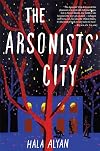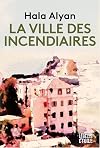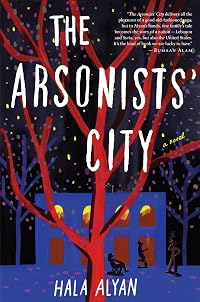
The Arsonists' City
by Hala Alyan
On This Page
Description
A rich family story, a personal look at the legacy of war in the Middle East, and an indelible rendering of how we hold on to the people and places we call home The Nasr family is spread across the globe-Beirut, Brooklyn, Austin, the California desert. A Syrian mother, a Lebanese father, and three American children: all have lived a life of migration. Still, they've always had their ancestral home in Beirut-a constant touchstone-and the complicated, messy family love that binds them. But show more following his father's recent death, Idris, the family's new patriarch, has decided to sell. The decision brings the family to Beirut, where everyone unites against Idris in a fight to save the house. They all have secrets-lost loves, bitter jealousies, abandoned passions, deep-set shame-that distance has helped smother. But in a city smoldering with the legacy of war, an ongoing flow of refugees, religious tension, and political protest, those secrets ignite, imperiling the fragile ties that hold this family together. show lessTags
Recommendations











Member Reviews
When I read the “About the Author” at the end of The Arsonists’ City and found out that Hala Alyan makes her living as a psychologist and a poet I was not surprised. Her lyrical writing and ability to play with words could only come from a poet, and the deep internal examination of so many characters could only come with psychological study. The Arsonists’ City is a family saga that covers nearly 50 years and combines a complicated family with the complicated history of the Middle East. Alyan deftly and beautifully examines families, love, sexuality, race, and history; it sounds like a lot — and it is — but in Alyan’s capable hands it all works. I highly recommend this book to readers of historical fiction, show more multi-generational sagas, contemporary fiction, and anyone else who wants a deeply moving and interesting read. show less
"Tonight the man will die. In some ways, the city already seems resigned to it, the Beirut dusk uncharacteristically flat, cloud, a peculiar staleness rippling through the trees like wind. It's easy to costume the earth for grief and tonight the birds perched upon the tangled electricity wires look like mourners in their black and white feathers, staring down at the concrete refugee camps without song."
So begins Hala Alyan's new novel, The Arsonists' City. When the Nasr family patriarch suddenly passes away, his death leads to a domino effect resulting in the controversial decision to sell the family home in Beirut. The story follows the members of the Nasr family as they come together from different corners of the world and bring with show more them their histories, secrets, hopes, and regrets. Alyan writes vividly, creating memorable characters with unique personalities and cultures but all tied to each other by their Middle Eastern and familial roots. The Arsonists' City is a great novel and slightly reminds me of Jonathan Trooper's This Is Where I Leave You. Recommended for fans of Celeste Ng, Jonathan Trooper, and Miriam Toews. Many thanks to HMH Books for an advance reading copy. show less
So begins Hala Alyan's new novel, The Arsonists' City. When the Nasr family patriarch suddenly passes away, his death leads to a domino effect resulting in the controversial decision to sell the family home in Beirut. The story follows the members of the Nasr family as they come together from different corners of the world and bring with show more them their histories, secrets, hopes, and regrets. Alyan writes vividly, creating memorable characters with unique personalities and cultures but all tied to each other by their Middle Eastern and familial roots. The Arsonists' City is a great novel and slightly reminds me of Jonathan Trooper's This Is Where I Leave You. Recommended for fans of Celeste Ng, Jonathan Trooper, and Miriam Toews. Many thanks to HMH Books for an advance reading copy. show less
What a book. This was my first encounter with Hala Alyan , and wow did it make me feel . Her writing is impeccable , spectacular . This is a character driven book and although I am more for plot driven this book made me feel . It’s a slow build , very slow; and the book didn’t make sense at first . As I dove deeper with every page learning about Ava , Mimi , Naj - their kids their loves their relationships; I felt like by the end of this book I’ve known them my whole life - like family .
This book is simply about a family that looses a loved one and there is a decision to sell the house . Though it’s not like that at all really it’s a story about love , and loss and lust - about all nighters and lost dreams , of hope - of show more regret , of selfish acts . It’s a story about 5 individual lives that all have secrets , that all share those secrets with other individuals - some who have died and some who haven’t told a soul .
When reading the prologue ( if you want to call it that) it is a bit confusing - we are introduced to a part of the story and characters we have not yet gotten to know . I re read this first into chapter at around page 350 and it made SO much more sense than it did when first picking up this beautiful work .
Part one is getting your feet wet with the three siblings Ava who has two kids , works as a biologist is married to a white male , lives in New York and is what every American dreams - a well established family . But even Ava and Nate have their issues - being married isn’t easy it’s work.
There’s Mimi the brother who is a chef , is in a band (that isn’t failing but isn’t a full success which is his childhood dream) - with a loving girlfriend of many years . Living in Texas .
And Naj the youngest of the three who is living in Beruit - is “closeted” gay who is successful in music and her career - on the brink of Thirty and far far away from the rest of her siblings and her parents .
Part two is the biggest where we learn about Mazna , the beautiful stunning actress of a mother . We learn her story , her growing up , her being poor , her getting her feet into acting , her meeting Idris - her now husband and all that goes along ... her secrets her loves , her losses , her hurt and guilt -
Part three a whirlwind where we are thrown into everyone being in beruit where the conflict is rising- where they are all against Idris wanting to sell their Jiddos home (grandfather) . Where in the years of the family being a family it seems they are closer than ever . Where secrets are spread where realizations are made and where everyone I believe understand the importance of communications and how freeing it can be .
This story was insane . I didn’t much care for it till half way through it is a SLOW SLOW build , but once you are under water in Maznas life , her story it really sucks you in from there and I didn’t want to put it down . It made me realize things , it made me hurt and feel for these people I felt I knew . It made me laugh and it made me cry . I cried the last 30 pages I couldn’t stop . And although I do feel like some of this book is pointless and holds no meaning to what the story is sold about (the selling of this house) at the end it all just makes sense and I feel like it wouldn’t be half the book it is without all that detail . It made me think about that country , what those people went though at the times of war and riots and bombings - it put me in a different mindset , in a different time . I loved it .
What an absolutely beautiful book.
Thank you SO MUCH to @Hmhbooks for the ARC in return for an honest unbiased review . show less
This book is simply about a family that looses a loved one and there is a decision to sell the house . Though it’s not like that at all really it’s a story about love , and loss and lust - about all nighters and lost dreams , of hope - of show more regret , of selfish acts . It’s a story about 5 individual lives that all have secrets , that all share those secrets with other individuals - some who have died and some who haven’t told a soul .
When reading the prologue ( if you want to call it that) it is a bit confusing - we are introduced to a part of the story and characters we have not yet gotten to know . I re read this first into chapter at around page 350 and it made SO much more sense than it did when first picking up this beautiful work .
Part one is getting your feet wet with the three siblings Ava who has two kids , works as a biologist is married to a white male , lives in New York and is what every American dreams - a well established family . But even Ava and Nate have their issues - being married isn’t easy it’s work.
There’s Mimi the brother who is a chef , is in a band (that isn’t failing but isn’t a full success which is his childhood dream) - with a loving girlfriend of many years . Living in Texas .
And Naj the youngest of the three who is living in Beruit - is “closeted” gay who is successful in music and her career - on the brink of Thirty and far far away from the rest of her siblings and her parents .
Part two is the biggest where we learn about Mazna , the beautiful stunning actress of a mother . We learn her story , her growing up , her being poor , her getting her feet into acting , her meeting Idris - her now husband and all that goes along ... her secrets her loves , her losses , her hurt and guilt -
Part three a whirlwind where we are thrown into everyone being in beruit where the conflict is rising- where they are all against Idris wanting to sell their Jiddos home (grandfather) . Where in the years of the family being a family it seems they are closer than ever . Where secrets are spread where realizations are made and where everyone I believe understand the importance of communications and how freeing it can be .
This story was insane . I didn’t much care for it till half way through it is a SLOW SLOW build , but once you are under water in Maznas life , her story it really sucks you in from there and I didn’t want to put it down . It made me realize things , it made me hurt and feel for these people I felt I knew . It made me laugh and it made me cry . I cried the last 30 pages I couldn’t stop . And although I do feel like some of this book is pointless and holds no meaning to what the story is sold about (the selling of this house) at the end it all just makes sense and I feel like it wouldn’t be half the book it is without all that detail . It made me think about that country , what those people went though at the times of war and riots and bombings - it put me in a different mindset , in a different time . I loved it .
What an absolutely beautiful book.
Thank you SO MUCH to @Hmhbooks for the ARC in return for an honest unbiased review . show less
"We deserve our secrets."~from The Arsonists' City by Hala Alyan
Secrets. Everyone has them. We keep secrets out of shame, out of fear, to protect loved ones, to protect ourselves.
Keeping a secret can destroy. Guilt that alienates from others and eats at your soul. Suspicion that wracks relationships.
Some families balance on the edge of a well-hidden secret, and when it is outed, life tumbles like dominoes.
Hala Alyan's family saga The Arsonists' City is a big book, with a big family, following forty years of their lives. I made a family tree to keep track of them! Their journey crosses the ocean, from Beirut and Damascus to America. It is a journey not only across time and space, it delves into the depths of love and grief.
I became show more obsessed with the novel. Foreshadowing brought me to guess some secrets and conflicts to come. I didn't know if the story was coming to a car wreck or redemption, resolution and growth or despair and endings.
At the heart of the story is Mazna, the beautiful Syrian who aspires to be an actress. When Idris sees her on stage, he is smitten and pursues her, taking her on day trips to his hometown of Beirut. When Mazna meets his dearest friend Zakaria, a poor boy from the Palestinian camps, she is drawn to him.
Forty years later, after his father's death, Idris is determined to sell his ancestral Beirut home, setting off a firestorm in the family. The family gathers one last time, Idris and Mazna, their three children, and a daughter-in-law.
Idris, not handsome enough, not sure enough, had pursued the beautiful Mazna, a poor Damascan girl with powerful stage presence in the local theater. She dreams of going to London and then American to become the next Ava Gardner or Vivian Leigh. She poses as a friend to his sister Sara. Their marriage was rushed; he caught her "when she was broken." Idris gained a residency in America. They begin in poverty until he established a career as a cardiologist surgeon.
The eldest child, Ava, lives in New York City, married to the American Nate. She comes with their three children, Nate claiming a work trip keeps him from joining her.
Next is Mimi, living in Texas with his American fiance Harper. Although he runs a successful restaurant, he is frustrated over his tottering music career and aging out of being 'cool'.
And there is Naj, the youngest, who stayed in Beirut. She is a wildly successful violinist, a media sensation, but self-destructive, angry and heartbroken.
Gathering mementos for the patriarchs memorial service, the children discover hints to their parent's secret past.
The Beirut home takes its place as an important 'character', more than a backdrop to the scenes that play out there. It is a link, a reminder, a legacy. When one of the cherished almond trees is nearly cut down, it is a symbol of the family's frailty. But the other trees still remain, the house still stands.
The family drama is universal in its appeal and message. It is the setting and background that allows American readers like me to see through another lens. "We all come from tribes," Zakaria tells Mazna early on. "People don't need much of a reason to hate each other."
And that tribal hate manifests itself in the act that sends Idris and Mazna spiraling into a future neither expected.
Checkpoints, sectarian violence, the continual war, colors the scenes in Lebanon.
"The war continued to chug along like a faithful engine, destroying the city. It's like background nose, Sara said once." ~From The Arsonists' City by Hala Alyan
Once in America, the family discovers they are 'brown', other, victims of mockery and hate. "Neighborhoods are arranged by skin. Jobs, schools." Mazna learns. The beautiful Mazna can not find acting roles, passed by because of her accent, her otherness. She blames Idris for ruining all her chances.
But it is a small mercy, how time distills what we know, how it fictionalizes it.~ from The Arsonists' City by Hala Alyan
The characters struggle with their pasts, their relationships, their guilt and their desires. But over the summer in the ancestral home, they find truth and new understanding, family ties are ultimately strengthened.
I received an ARC from the publisher through Amazon Vine. My review is fair and unbiased. show less
Secrets. Everyone has them. We keep secrets out of shame, out of fear, to protect loved ones, to protect ourselves.
Keeping a secret can destroy. Guilt that alienates from others and eats at your soul. Suspicion that wracks relationships.
Some families balance on the edge of a well-hidden secret, and when it is outed, life tumbles like dominoes.
Hala Alyan's family saga The Arsonists' City is a big book, with a big family, following forty years of their lives. I made a family tree to keep track of them! Their journey crosses the ocean, from Beirut and Damascus to America. It is a journey not only across time and space, it delves into the depths of love and grief.
I became show more obsessed with the novel. Foreshadowing brought me to guess some secrets and conflicts to come. I didn't know if the story was coming to a car wreck or redemption, resolution and growth or despair and endings.
At the heart of the story is Mazna, the beautiful Syrian who aspires to be an actress. When Idris sees her on stage, he is smitten and pursues her, taking her on day trips to his hometown of Beirut. When Mazna meets his dearest friend Zakaria, a poor boy from the Palestinian camps, she is drawn to him.
Forty years later, after his father's death, Idris is determined to sell his ancestral Beirut home, setting off a firestorm in the family. The family gathers one last time, Idris and Mazna, their three children, and a daughter-in-law.
Idris, not handsome enough, not sure enough, had pursued the beautiful Mazna, a poor Damascan girl with powerful stage presence in the local theater. She dreams of going to London and then American to become the next Ava Gardner or Vivian Leigh. She poses as a friend to his sister Sara. Their marriage was rushed; he caught her "when she was broken." Idris gained a residency in America. They begin in poverty until he established a career as a cardiologist surgeon.
The eldest child, Ava, lives in New York City, married to the American Nate. She comes with their three children, Nate claiming a work trip keeps him from joining her.
Next is Mimi, living in Texas with his American fiance Harper. Although he runs a successful restaurant, he is frustrated over his tottering music career and aging out of being 'cool'.
And there is Naj, the youngest, who stayed in Beirut. She is a wildly successful violinist, a media sensation, but self-destructive, angry and heartbroken.
Gathering mementos for the patriarchs memorial service, the children discover hints to their parent's secret past.
The Beirut home takes its place as an important 'character', more than a backdrop to the scenes that play out there. It is a link, a reminder, a legacy. When one of the cherished almond trees is nearly cut down, it is a symbol of the family's frailty. But the other trees still remain, the house still stands.
The family drama is universal in its appeal and message. It is the setting and background that allows American readers like me to see through another lens. "We all come from tribes," Zakaria tells Mazna early on. "People don't need much of a reason to hate each other."
And that tribal hate manifests itself in the act that sends Idris and Mazna spiraling into a future neither expected.
Checkpoints, sectarian violence, the continual war, colors the scenes in Lebanon.
"The war continued to chug along like a faithful engine, destroying the city. It's like background nose, Sara said once." ~From The Arsonists' City by Hala Alyan
Once in America, the family discovers they are 'brown', other, victims of mockery and hate. "Neighborhoods are arranged by skin. Jobs, schools." Mazna learns. The beautiful Mazna can not find acting roles, passed by because of her accent, her otherness. She blames Idris for ruining all her chances.
But it is a small mercy, how time distills what we know, how it fictionalizes it.~ from The Arsonists' City by Hala Alyan
The characters struggle with their pasts, their relationships, their guilt and their desires. But over the summer in the ancestral home, they find truth and new understanding, family ties are ultimately strengthened.
I received an ARC from the publisher through Amazon Vine. My review is fair and unbiased. show less
The Arsonists' City is a fine entry in the modern literary genre of "I'm an immigrant and my mother is CRAZY". The Nasr family are 60ish mom Mazna and dad Idris, and three kids Ava, Mimi, and Naj. The grandfather has died, and Idris has decided to sell the family home back in Beirut, which for complex reasons requires that the family reunited, with all of their old fights, tensions, and unresolved secrets.
All of them are carrying something. We start with Ava, the eldest daughter, a microbiologist who lives in New York with her husband Nate (scion of an old WASP family) and their two kids. Ava suspects Nate is having an affair with a coworker, and reluctantly goes under arm-twisting from her mother.
Mimi, second child and son, lives in show more Austin, where he works in a restaurant and plays guitar in a band that isn't really going anywhere. He's drifting in a relationship with his longterm girlfriend Harper, an ordinary midwesterner who works at a record label. Mimi won't accept help from anyone, but doesn't have the energy to kick himself out of his rut.
Naj, the youngest, is a successful musician in Beirut. She's pop-violinist (I'm feeling Lindsey Stirling) who writes incredibly sexy songs popular in the Middle East and Europe. Her life is a whirlwind of shows, art happenings, drinking and drugs in the Beirut party scene. She's also a closeted lesbian who's series of self-destructive one-night stands is interrupted when The Ex arrives, a refugee from the Syrian Civil War.
Having met the kids, we go back in time to the late 70s and meet the parents, mostly through Mazna's eyes as she grows up in Damascus and discovers a talent as an actress. Through her director, Mazna meets Idris, a young doctor who lives in Beirut, and his Palestinian refugee friend Zakaria. She dates Idris but loves Zakaria. Their summer ends when Zakaria is murdered, another casualty of the ongoing violence of the region. She marries Idris, they move to Blythe, have kids, and drift through a long war of marriage against each other.
The writing is elegant, but all of these people are so cramped by their secrets, by the channels of gossip within the family, the shifting alliances, the layers of constant betrayals. It takes a long time to discover the root betrayals, and they're pretty explosive. Ava isn't Idris' child, she's Zakaria's. Mazna never said anything, but Idris knows (he can do math, recognize a face), but also Idris has found a peace because he holds himself responsible for Zakaria's death, for throwing his friend out of his house and back into the camps where he was assassinated. Idris' sister Sara tattled on Mazna and Zakaria to Idris, and she blames herself as well. Not that Idris is blameless; Mazna had exactly one successful audition in Hollywood, and he lied and told her she hadn't gotten the role, and told the director she'd gone back to Syrian.
The kids find some kind of accommodation with each other, with the tension in their lives, and a future less fraught. There's a lot of big feelings in this book, some decent observation on divided heritages and cultures, and a great sense of Beirut as a place. I'm not sure how deep it is, but I had a good time, even if I was chewing my fingernails with tension at all of these silly people who can't communicate honestly. show less
All of them are carrying something. We start with Ava, the eldest daughter, a microbiologist who lives in New York with her husband Nate (scion of an old WASP family) and their two kids. Ava suspects Nate is having an affair with a coworker, and reluctantly goes under arm-twisting from her mother.
Mimi, second child and son, lives in show more Austin, where he works in a restaurant and plays guitar in a band that isn't really going anywhere. He's drifting in a relationship with his longterm girlfriend Harper, an ordinary midwesterner who works at a record label. Mimi won't accept help from anyone, but doesn't have the energy to kick himself out of his rut.
Naj, the youngest, is a successful musician in Beirut. She's pop-violinist (I'm feeling Lindsey Stirling) who writes incredibly sexy songs popular in the Middle East and Europe. Her life is a whirlwind of shows, art happenings, drinking and drugs in the Beirut party scene. She's also a closeted lesbian who's series of self-destructive one-night stands is interrupted when The Ex arrives, a refugee from the Syrian Civil War.
Having met the kids, we go back in time to the late 70s and meet the parents, mostly through Mazna's eyes as she grows up in Damascus and discovers a talent as an actress. Through her director, Mazna meets Idris, a young doctor who lives in Beirut, and his Palestinian refugee friend Zakaria. She dates Idris but loves Zakaria. Their summer ends when Zakaria is murdered, another casualty of the ongoing violence of the region. She marries Idris, they move to Blythe, have kids, and drift through a long war of marriage against each other.
The writing is elegant, but all of these people are so cramped by their secrets, by the channels of gossip within the family, the shifting alliances, the layers of constant betrayals. It takes a long time to discover the root betrayals, and they're pretty explosive. Ava isn't Idris' child, she's Zakaria's. Mazna never said anything, but Idris knows (he can do math, recognize a face), but also Idris has found a peace because he holds himself responsible for Zakaria's death, for throwing his friend out of his house and back into the camps where he was assassinated. Idris' sister Sara tattled on Mazna and Zakaria to Idris, and she blames herself as well. Not that Idris is blameless; Mazna had exactly one successful audition in Hollywood, and he lied and told her she hadn't gotten the role, and told the director she'd gone back to Syrian.
The kids find some kind of accommodation with each other, with the tension in their lives, and a future less fraught. There's a lot of big feelings in this book, some decent observation on divided heritages and cultures, and a great sense of Beirut as a place. I'm not sure how deep it is, but I had a good time, even if I was chewing my fingernails with tension at all of these silly people who can't communicate honestly. show less
Ofttimes, the more I like a book, the more difficulty I have saying anything about it because I know whatever I say won't do it justice. This was one of my favorite reads of last year. I love so many things about it: the themes; Alyan's writing style; the pacing; the old fashioned family saga-ness it replete with long held secrets that manage to surface and in doing so one questions who, if any, will survive the undertow; the exposure to the Lebanese-Syrian conflict; the protagonists and the way they relate to each other; the secret(s) exposed or kept hidden and the associated impact; the time periods depicted. I found the experience immersive and until the end I was never quite certain whether or not the wounds exposed would heal or show more how. I don't know if this book was notable, but it was notable to and for me. It's a lovely book and in the right hands could make for a fantastic limited series. Not that that's necessary, but I think there would be a wide audience for something like this. show less
From that heart wrenching, empathetic prologue, "The Arsonists' City" becomes a masterfully done family saga about the secrets people keep from their loved ones and healing frayed familial bonds. There's also some social commentary on America, there's sex and infidelity galore, there's music, there's betrayal, there's the love, fleeting and not so fleeting, unconditional and not... There's the backdrop of the Lebanese civil war that has a lasting effect on the country and its people and their descendants that echos even years after it ended. Characters provide more background information in the story for readers (like me) who have little knowledge of the war... The part where Mazna is talking with her theater director and other actors show more provided decent enough context for me.
I have very few complaints. Mazna and Najla were my favorite characters, so I personally wish more of the story was focused on them, rather than have it be split equally between them and the others. Accordingly, I didn't like the sections with the others as much. Like Mimi. He's a fallible human...and relatable, to an extent, but honestly pretty unlikable. It took me until the very end to warm up to him. Idris as well. I thought him irredeemable for [spoilers]... but the scene at the end softened me.
Will probably read "Salt Houses" in the future, and definitely "The Twenty-Ninth Year." It was no surprise to me that Alyan is also a poet.
*I read this via NetGalley show less
I have very few complaints. Mazna and Najla were my favorite characters, so I personally wish more of the story was focused on them, rather than have it be split equally between them and the others. Accordingly, I didn't like the sections with the others as much. Like Mimi. He's a fallible human...and relatable, to an extent, but honestly pretty unlikable. It took me until the very end to warm up to him. Idris as well. I thought him irredeemable for [spoilers]... but the scene at the end softened me.
Will probably read "Salt Houses" in the future, and definitely "The Twenty-Ninth Year." It was no surprise to me that Alyan is also a poet.
*I read this via NetGalley show less
Members
- Recently Added By
Lists

Books Read in 2023
5,547 works; 145 members

Middle East Fiction
179 works; 16 members

Anticipated 2021 Reads
231 works; 7 members

Middle Eastern Literature & Non-Fiction
99 works; 3 members

Evan's Wish List
86 works; 2 members
Author Information

12+ Works 1,242 Members
Hala Alyan, first poetry collection, Atrium, was awarded the 2013 Arab American Book Award in Poetry. Her second book, Four Cities, was published in September 2015. She is a clinical psychologist in New York City.
Awards and Honors
Awards
Distinctions
Classifications
Statistics
- Members
- 247
- Popularity
- 132,748
- Reviews
- 11
- Rating
- (4.12)
- Languages
- English, French
- Media
- Paper, Audiobook, Ebook
- ISBNs
- 10
- ASINs
- 2