Oliver VII
by Antal Szerb
On This Page
Description
The restless King Oliver VII of Alturia, an obscure Central European state whose only notable exports are wine and sardines, wants nothing more than an easy life: so, plotting a coup against himself, King Oliver VII escapes to Venice in search of ‘real’ experience. There he falls in with a team of con-men and ends up, to his own surprise, impersonating himself. His journey through successive levels of illusion and reality teaches him much about the world, about his own nature and the show more paradoxes of the human condition. Szerb offered Oliver VII as a translation from a non-existent English writer, A H Redcliff — typical Szerb humor, or a reflection of the fact that as a ‘rootless cosmopolitan’ his own work was banned by the Nazi regime? show lessTags
Recommendations









Member Reviews
Anybody coming fresh to this novel might assume it was a straightforward comic novel set in some Ruritanian backwater. Many times I found myself thinking that it would make an excellent stage play — its plotting is as complex as a Feydeau farce, and at times it reminded me of Shaw’s Arms and the Man (though the latter is set in Bulgaria rather than an imaginary country). And yet hindsight informs us that this was the Hungarian author’s last work before he was murdered in a Nazi death camp in the closing year of the Second World War. It’s confusing then that there is no hint of the bloody turmoil in the European theatre of war from Szerb’s tale, one centred on a bloodless coup and laced with humorous misunderstandings and show more engineered coincidences.
Sandoval is a painter who, we soon find, is involved in a plot to dethrone the Catholic King of Alturia, Oliver VII. Alturia, financially insolvent, is on the brink of effectively selling itself to a tycoon from Norlandia, a neighbouring Protestant country. A ragbag of Alturian conspirators, owing allegiance to a mysterious figure called the Nameless Captain, infiltrate the palace on the eve of Oliver’s planned marriage to Ortrud, princess of Norlandia; they depose the hapless monarch (who then disappears into exile) whilst also demonstrating the king’s ministers to be incompetent fools and cowards. An aged cousin reluctantly becomes the new King Geront, but the country still slides down a slippery slope towards economic ruin as the treaty to save it remains unsigned.
Thus far the action all takes place in some central European Neverland. The golden sardines which decorate Alturia’s flag — representing one of the country’s remaining industries — however suggest that Szerb is telling us a fishy story. So many little details underline Alturia’s lack of luck over the years — Oliver’s predecessors include Balázs the Unfortunate and Philip the One-Eared — that I am reminded of the troubles in the kingdom of Ruritania in Anthony Hope’s The Prisoner of Zenda and, more recently, the seething unrest in Philip Pullman’s Razkavia in The Tin Princess (the capital of which he tell us he based on Prague). But events are about to take us to a more realistic setting, Venice.
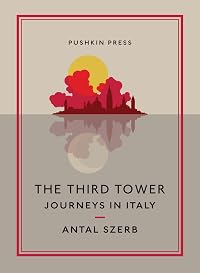
“A lot of people feel at home in Venice,” a character informs us. Certainly Szerb himself felt “more completely myself” there, as he tells us in his travelogue The Third Tower. It is here that ‘Oscar’, the incognito Oliver, has ended up with his faithful aide-de-camp Major Milán Mawiras-Tendal (posing as a ‘Mr Meyer’). Unfortunately Oscar has also fallen in with a group of confidence tricksters led by the unforgettable Oubalde Hippolyte Théramene, Count Saint-Germain (presumably a descendant of one or other of the historical Comtes de Saint-Germain). Into the mix stumbles Sandoval, the painter whom we first met at the beginning of the novel. And it is here in Venice that, after more misunderstandings and confusion, Oliver finds himself faced with the possibility of pretending to be himself.
This is a splendid spin on the usual doppelganger theme that so many novels are based on, not least The Prisoner of Zenda. Along the way this comedy (very Shakespearean, there’s even some cross-dressing) also touches on duty and responsibility, expectations and misdirection, masks and identities. Of course, Venice is the place to have a masquerade, where virtually everyone plays a role, and while — as in many Shakespearean comedies — almost all the disguises are lifted for the audience (though not necessarily for the participants) Szerb still manages to forestall us in at least one instance: one character, about whom lots of ‘clues’ are dropped to suggest she may be other than she appears to be, not only turns out to be exactly what she claimed but also unexpectedly pairs off with another major player. I love the way Szerb plays with our preconceptions, displaying them as possible misconceptions.
I must here also heap praise on Szerb’s translator, Len Rix, who as well as providing a text that reads as though English was the novel’s original language also supplies a commendable and illuminating afterword. Here, for example, he draws attention to common themes in the Hungarian’s three novels, The Pendragon Legend, Journey by Moonlight and Oliver VII, especially the last two.
And now all that’s left to say is left to Rabelais, to whom is attributed this deathbed remark: Tirez le rideau, la farce est jouée.
http://wp.me/s2oNj1-oliver show less
Sandoval is a painter who, we soon find, is involved in a plot to dethrone the Catholic King of Alturia, Oliver VII. Alturia, financially insolvent, is on the brink of effectively selling itself to a tycoon from Norlandia, a neighbouring Protestant country. A ragbag of Alturian conspirators, owing allegiance to a mysterious figure called the Nameless Captain, infiltrate the palace on the eve of Oliver’s planned marriage to Ortrud, princess of Norlandia; they depose the hapless monarch (who then disappears into exile) whilst also demonstrating the king’s ministers to be incompetent fools and cowards. An aged cousin reluctantly becomes the new King Geront, but the country still slides down a slippery slope towards economic ruin as the treaty to save it remains unsigned.
Thus far the action all takes place in some central European Neverland. The golden sardines which decorate Alturia’s flag — representing one of the country’s remaining industries — however suggest that Szerb is telling us a fishy story. So many little details underline Alturia’s lack of luck over the years — Oliver’s predecessors include Balázs the Unfortunate and Philip the One-Eared — that I am reminded of the troubles in the kingdom of Ruritania in Anthony Hope’s The Prisoner of Zenda and, more recently, the seething unrest in Philip Pullman’s Razkavia in The Tin Princess (the capital of which he tell us he based on Prague). But events are about to take us to a more realistic setting, Venice.
“A lot of people feel at home in Venice,” a character informs us. Certainly Szerb himself felt “more completely myself” there, as he tells us in his travelogue The Third Tower. It is here that ‘Oscar’, the incognito Oliver, has ended up with his faithful aide-de-camp Major Milán Mawiras-Tendal (posing as a ‘Mr Meyer’). Unfortunately Oscar has also fallen in with a group of confidence tricksters led by the unforgettable Oubalde Hippolyte Théramene, Count Saint-Germain (presumably a descendant of one or other of the historical Comtes de Saint-Germain). Into the mix stumbles Sandoval, the painter whom we first met at the beginning of the novel. And it is here in Venice that, after more misunderstandings and confusion, Oliver finds himself faced with the possibility of pretending to be himself.
This is a splendid spin on the usual doppelganger theme that so many novels are based on, not least The Prisoner of Zenda. Along the way this comedy (very Shakespearean, there’s even some cross-dressing) also touches on duty and responsibility, expectations and misdirection, masks and identities. Of course, Venice is the place to have a masquerade, where virtually everyone plays a role, and while — as in many Shakespearean comedies — almost all the disguises are lifted for the audience (though not necessarily for the participants) Szerb still manages to forestall us in at least one instance: one character, about whom lots of ‘clues’ are dropped to suggest she may be other than she appears to be, not only turns out to be exactly what she claimed but also unexpectedly pairs off with another major player. I love the way Szerb plays with our preconceptions, displaying them as possible misconceptions.
I must here also heap praise on Szerb’s translator, Len Rix, who as well as providing a text that reads as though English was the novel’s original language also supplies a commendable and illuminating afterword. Here, for example, he draws attention to common themes in the Hungarian’s three novels, The Pendragon Legend, Journey by Moonlight and Oliver VII, especially the last two.
And now all that’s left to say is left to Rabelais, to whom is attributed this deathbed remark: Tirez le rideau, la farce est jouée.
http://wp.me/s2oNj1-oliver show less
Antal Szerb's prewar The Third Tower — Journeys in Italy (1936) was a book of foreboding, and even in beautiful places that a European traveller might visit, it was a grim warning to take heed of warning signs that social values were breaking down. Before it's too late.
But Oliver VII is not like that at all. Written in 1943 shortly before Szerb's murder in a Nazi labour camp, Oliver VII is a absurdist farce about a king who decamps from his responsibilities as the monarch of a failing state called Alturia, and in Venice, the artistic home of intrigue, he falls in with a gang of con-men who see his resemblance to the missing king and he ends up impersonating himself at their behest.
It's a strange book, and like any farce it's a bit show more hard to follow what's going on, and I turned to the Afterword by Len Rix to see if there were insights there to help me make sense of what I had read. My previous reading of The Tower made me reluctant to entertain the idea that Szerb had just written an 'entertainment' even though the perilous last years of his life might have meant that entertainment was just what was needed as a counter to misery. The publisher's description at Goodreads is not helpful (nor particularly enticing IMHO).
The Afterword, however, was enlightening, though not quite in the way that Len Rix expresses it. It was Max Cairnduff's review that helped me join the dots.
But when we read this in the context of Len Rix's Afterword, we can see that in these last years of his life under the Nazi regime, Szerb himself was learning to his great cost that his own identity was not what he thought it was. He was a liberal Christian Hungarian, but that was not the identity assigned to him by the Nazis. They re-classified him as a Jew and an alien in his own country, which made him subject to increasingly perilous circumstances.
Though Oliver's identity changes in the novella are entirely consistent with the traditions of farce, and make no reference whatsoever to contemporary events, the reader can see that Szerb is exploring the question: what happens to personal agency; status; and romantic, social and political relationships when identity is suddenly unstable? What happens to personality when legitimately exercised control over others is illegitimately reversed? And what happens to the sense of security that comes from being in control of your own life, when it is gone?
To read the rest of my review please visit https://anzlitlovers.com/2025/02/26/oliver-vii-1943-by-antal-szerb-translated-by... show less
But Oliver VII is not like that at all. Written in 1943 shortly before Szerb's murder in a Nazi labour camp, Oliver VII is a absurdist farce about a king who decamps from his responsibilities as the monarch of a failing state called Alturia, and in Venice, the artistic home of intrigue, he falls in with a gang of con-men who see his resemblance to the missing king and he ends up impersonating himself at their behest.
It's a strange book, and like any farce it's a bit show more hard to follow what's going on, and I turned to the Afterword by Len Rix to see if there were insights there to help me make sense of what I had read. My previous reading of The Tower made me reluctant to entertain the idea that Szerb had just written an 'entertainment' even though the perilous last years of his life might have meant that entertainment was just what was needed as a counter to misery. The publisher's description at Goodreads is not helpful (nor particularly enticing IMHO).
A witty reworking of one of the most interesting questions of existentialism, this is a playful work of comic philosophy.
The Afterword, however, was enlightening, though not quite in the way that Len Rix expresses it. It was Max Cairnduff's review that helped me join the dots.
The novel becomes an examination of identity, of how we become who we are and how who we are changes according to who others think we are. Oliver steps beyond convention, represented in part by the heavy and restrictive greatcoat the king is required to wear on all formal occasions, and changes from being a man who is given his part in life (for a king is born to be a king, and has no other options) to one who chooses it. (Max Cairnduff, Pechorin's Journal, The real test of life was uncertainty, 4 Oct 2012, underlining mine.)
But when we read this in the context of Len Rix's Afterword, we can see that in these last years of his life under the Nazi regime, Szerb himself was learning to his great cost that his own identity was not what he thought it was. He was a liberal Christian Hungarian, but that was not the identity assigned to him by the Nazis. They re-classified him as a Jew and an alien in his own country, which made him subject to increasingly perilous circumstances.
In October 1942, the questions of identity and loyalty that feature so strongly in Szerb’s fiction took a new and urgent form. A lifelong Catholic and a sincere if somewhat free-thinking Christian, he found himself reclassified as a Jew (by descent) and therefore an alien in the land of his birth. Religious affiliation was no longer a defence. Now it was his turn to choose: between living out the role he had been so cruelly allotted, and the chance to flee. At first he simply clung to hope, while his scholarly works were banned, and Oliver, passed off as a translation from the English of a supposed A H Redcliff, sank without trace. (His widow kept it in a drawer for the next twenty years). He lost the right to teach in his university; was summoned for periods of forced labour. Next came the yellow star and the ghetto. Ahead lay the death camps. (Kindle Edition p 204)
Though Oliver's identity changes in the novella are entirely consistent with the traditions of farce, and make no reference whatsoever to contemporary events, the reader can see that Szerb is exploring the question: what happens to personal agency; status; and romantic, social and political relationships when identity is suddenly unstable? What happens to personality when legitimately exercised control over others is illegitimately reversed? And what happens to the sense of security that comes from being in control of your own life, when it is gone?
To read the rest of my review please visit https://anzlitlovers.com/2025/02/26/oliver-vii-1943-by-antal-szerb-translated-by... show less
Having encountered Antal Szerb through his best-known work [b:Journey by Moonlight|158217|Journey by Moonlight|Antal Szerb|https://images.gr-assets.com/books/1450565112s/158217.jpg|152699] and its companion piece, the non-fiction travelogue [b:The Third Tower: Journeys in Italy|18528146|The Third Tower Journeys in Italy|Antal Szerb|https://images.gr-assets.com/books/1389672854s/18528146.jpg|26233782] I was initially surprised at the high spirits of this novel, especially since it was written whilst World War II was raging, changing Europe's landscape forever. True, there were humorous passages, as well as an underlying gentle irony, in "Journey by Moonlight", but Oliver VII is an all-out comic novel, with a convoluted plot worthy of show more opera buffa.
The eponymous protagonist is the monarch of the fictional European realm of Alturia, in an unspecified period "before the War". Rather than conclude a dubious treaty with a neighbouring state (which includes a royal marriage into the bargain), Oliver sets up a coup against himself and escapes from the country. Against the backdrop of a "stagey" Venice, described as a theatre set "where the whole scene sometimes seems to wobble", Oliver joins a group of seasoned conmen and, after several twists and turns, ends up impersonating himself. The novel is peopled by farcical characters, mistaken identities, hilarious set-pieces and even a walk-on part for a panto dame. At times, I felt that the book was midway between the old-world comedy of [a:P.G. Wodehouse|7963|P.G. Wodehouse|https://images.gr-assets.com/authors/1198684105p2/7963.jpg] and the more biting satire of [a:Evelyn Waugh|11315|Evelyn Waugh|https://images.gr-assets.com/authors/1357463949p2/11315.jpg] Perhaps it is no coincidence that the dialogue in Len Rix's brilliant translation contains a number of Bertie Wooster-ish exclamations, and that it is the appearance of a journalist on the scene (think [b:Scoop|30919|Scoop|Evelyn Waugh|https://images.gr-assets.com/books/1416017359s/30919.jpg|1001166]) which propels the plot to its upbeat denouement.
As the novel progresses, one starts to realise that it is closer to the darker "Journey by Moonlight" than appears at first glance. Surely it's no coincidence that, like Mihaly in the earlier novel, Oliver escapes to the back streets of La Serenissima in a bid to discover "real life". The parallels between the two books (and their autobiographical aspects) are explained in greater detail in the translator's afterword. The work acquires greater poignancy when one discovers discover that this work was the last written by Szerb before, as a Catholic with Jewish ancestry, he was murdered in a labour camp.
This book is another winner from the "Pushkin Collection" series and Szerb is fast becoming one of my favourite authors ever. show less
The eponymous protagonist is the monarch of the fictional European realm of Alturia, in an unspecified period "before the War". Rather than conclude a dubious treaty with a neighbouring state (which includes a royal marriage into the bargain), Oliver sets up a coup against himself and escapes from the country. Against the backdrop of a "stagey" Venice, described as a theatre set "where the whole scene sometimes seems to wobble", Oliver joins a group of seasoned conmen and, after several twists and turns, ends up impersonating himself. The novel is peopled by farcical characters, mistaken identities, hilarious set-pieces and even a walk-on part for a panto dame. At times, I felt that the book was midway between the old-world comedy of [a:P.G. Wodehouse|7963|P.G. Wodehouse|https://images.gr-assets.com/authors/1198684105p2/7963.jpg] and the more biting satire of [a:Evelyn Waugh|11315|Evelyn Waugh|https://images.gr-assets.com/authors/1357463949p2/11315.jpg] Perhaps it is no coincidence that the dialogue in Len Rix's brilliant translation contains a number of Bertie Wooster-ish exclamations, and that it is the appearance of a journalist on the scene (think [b:Scoop|30919|Scoop|Evelyn Waugh|https://images.gr-assets.com/books/1416017359s/30919.jpg|1001166]) which propels the plot to its upbeat denouement.
As the novel progresses, one starts to realise that it is closer to the darker "Journey by Moonlight" than appears at first glance. Surely it's no coincidence that, like Mihaly in the earlier novel, Oliver escapes to the back streets of La Serenissima in a bid to discover "real life". The parallels between the two books (and their autobiographical aspects) are explained in greater detail in the translator's afterword. The work acquires greater poignancy when one discovers discover that this work was the last written by Szerb before, as a Catholic with Jewish ancestry, he was murdered in a labour camp.
This book is another winner from the "Pushkin Collection" series and Szerb is fast becoming one of my favourite authors ever. show less
Having encountered Antal Szerb through his best-known work [b:Journey by Moonlight|158217|Journey by Moonlight|Antal Szerb|https://images.gr-assets.com/books/1450565112s/158217.jpg|152699] and its companion piece, the non-fiction travelogue [b:The Third Tower: Journeys in Italy|18528146|The Third Tower Journeys in Italy|Antal Szerb|https://images.gr-assets.com/books/1389672854s/18528146.jpg|26233782] I was initially surprised at the high spirits of this novel, especially since it was written whilst World War II was raging, changing Europe's landscape forever. True, there were humorous passages, as well as an underlying gentle irony, in "Journey by Moonlight", but Oliver VII is an all-out comic novel, with a convoluted plot worthy of show more opera buffa.
The eponymous protagonist is the monarch of the fictional European realm of Alturia, in an unspecified period "before the War". Rather than conclude a dubious treaty with a neighbouring state (which includes a royal marriage into the bargain), Oliver sets up a coup against himself and escapes from the country. Against the backdrop of a "stagey" Venice, described as a theatre set "where the whole scene sometimes seems to wobble", Oliver joins a group of seasoned conmen and, after several twists and turns, ends up impersonating himself. The novel is peopled by farcical characters, mistaken identities, hilarious set-pieces and even a walk-on part for a panto dame. At times, I felt that the book was midway between the old-world comedy of [a:P.G. Wodehouse|7963|P.G. Wodehouse|https://images.gr-assets.com/authors/1198684105p2/7963.jpg] and the more biting satire of [a:Evelyn Waugh|11315|Evelyn Waugh|https://images.gr-assets.com/authors/1357463949p2/11315.jpg] Perhaps it is no coincidence that the dialogue in Len Rix's brilliant translation contains a number of Bertie Wooster-ish exclamations, and that it is the appearance of a journalist on the scene (think [b:Scoop|30919|Scoop|Evelyn Waugh|https://images.gr-assets.com/books/1416017359s/30919.jpg|1001166]) which propels the plot to its upbeat denouement.
As the novel progresses, one starts to realise that it is closer to the darker "Journey by Moonlight" than appears at first glance. Surely it's no coincidence that, like Mihaly in the earlier novel, Oliver escapes to the back streets of La Serenissima in a bid to discover "real life". The parallels between the two books (and their autobiographical aspects) are explained in greater detail in the translator's afterword. The work acquires greater poignancy when one discovers discover that this work was the last written by Szerb before, as a Catholic with Jewish ancestry, he was murdered in a labour camp.
This book is another winner from the "Pushkin Collection" series and Szerb is fast becoming one of my favourite authors ever. show less
The eponymous protagonist is the monarch of the fictional European realm of Alturia, in an unspecified period "before the War". Rather than conclude a dubious treaty with a neighbouring state (which includes a royal marriage into the bargain), Oliver sets up a coup against himself and escapes from the country. Against the backdrop of a "stagey" Venice, described as a theatre set "where the whole scene sometimes seems to wobble", Oliver joins a group of seasoned conmen and, after several twists and turns, ends up impersonating himself. The novel is peopled by farcical characters, mistaken identities, hilarious set-pieces and even a walk-on part for a panto dame. At times, I felt that the book was midway between the old-world comedy of [a:P.G. Wodehouse|7963|P.G. Wodehouse|https://images.gr-assets.com/authors/1198684105p2/7963.jpg] and the more biting satire of [a:Evelyn Waugh|11315|Evelyn Waugh|https://images.gr-assets.com/authors/1357463949p2/11315.jpg] Perhaps it is no coincidence that the dialogue in Len Rix's brilliant translation contains a number of Bertie Wooster-ish exclamations, and that it is the appearance of a journalist on the scene (think [b:Scoop|30919|Scoop|Evelyn Waugh|https://images.gr-assets.com/books/1416017359s/30919.jpg|1001166]) which propels the plot to its upbeat denouement.
As the novel progresses, one starts to realise that it is closer to the darker "Journey by Moonlight" than appears at first glance. Surely it's no coincidence that, like Mihaly in the earlier novel, Oliver escapes to the back streets of La Serenissima in a bid to discover "real life". The parallels between the two books (and their autobiographical aspects) are explained in greater detail in the translator's afterword. The work acquires greater poignancy when one discovers discover that this work was the last written by Szerb before, as a Catholic with Jewish ancestry, he was murdered in a labour camp.
This book is another winner from the "Pushkin Collection" series and Szerb is fast becoming one of my favourite authors ever. show less
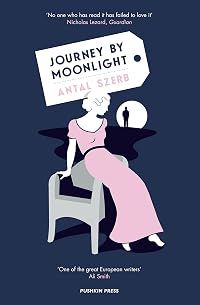
Antal Szerb should be read more often, but Journey By Moonlight is his great work. This is a light little romp of a book. But don't be fooled it deals with big subjects. In this case, the illusion of who we are, who we want to be, how we deal with real responsibilities, how easily we get caught up in the received drama of the day.
It's all about scams, a Belle Époque Oceans Eleven of a book set in a made up country and Venice - itself a place that looks like a backdrop to a historical drama.
A king escapes a plot to take over his country. A northern neighbour has struck a deal to take over the king's country and turn into something more illusory - a corporation. The only thing of value in this country is sardines and wine.
Plots, show more twists, in which we know who the perpetrators are, but still, it's fun watching it unfold. Who is anybody, which side are they on, does love really happen, or is part of the game, can anybody sort out the king's national finances which are labyrinthine inside a puzzle, inside a straight-jacket.
Bit of fun, great language of illusion, too.
My summer here has been spent on books to deal with illusion and reality. What is going on? Thank God for this digital reality. show less
It's all about scams, a Belle Époque Oceans Eleven of a book set in a made up country and Venice - itself a place that looks like a backdrop to a historical drama.
A king escapes a plot to take over his country. A northern neighbour has struck a deal to take over the king's country and turn into something more illusory - a corporation. The only thing of value in this country is sardines and wine.
Plots, show more twists, in which we know who the perpetrators are, but still, it's fun watching it unfold. Who is anybody, which side are they on, does love really happen, or is part of the game, can anybody sort out the king's national finances which are labyrinthine inside a puzzle, inside a straight-jacket.
Bit of fun, great language of illusion, too.
My summer here has been spent on books to deal with illusion and reality. What is going on? Thank God for this digital reality. show less
It is difficult to believe that Szerb could write such a light and witty novel in the dark dark days of 1942, but there is more depth to this book than appears on the surface. The story begins as farce, with the painter Sandoval "rescuing" the elderly Count Antas, enjoying drinks in a cafe with a very much younger lady, as his wife enters the same cafe. But things are not all they seem; Sandoval is in fact spiriting the count off to some rural castle to keep him out of the way when a revolution against the young King Oliver VII takes place. The country of Alturia is in economic disarray, and some of the king's advisers want him to sign a deal with businessman Coltor, of the neighboring country of Norlandia, to pay huge sums to Alturia show more to essentially take over its economy and run the country. It is this that the revolutionaries are protesting.
But all is not as it seems. It develops that Oliver himself is behind the plot, as he doesn't really want to be king and instead wants to explore what we would now call the world of the 99%. Winding up incognito as Oscar in Venice, he falls in with a group of international con men (and a con woman), and delightful complications ensue, as Oliver pretending to be Oscar pretends to be Oliver. In the course of this ever entertaining novel, Szerb confronts issues of identity, love, loyalty, and friendship, as well as what it means to be a ruler, but does this with such imagination and with such a deft touch that the reader is completely enthralled by the tale itself.
The afterword by the translator (who seems to me to have done an excellent job and who has translated all the Szerb books I've been reading) notes that this book was written after the one that is considered Szerb's masterpiece and further develops some of its themes, Journey by Moonlight. This gave me a little pause, as perhaps I should have read that one first, but at least I have it to look forward to. show less
But all is not as it seems. It develops that Oliver himself is behind the plot, as he doesn't really want to be king and instead wants to explore what we would now call the world of the 99%. Winding up incognito as Oscar in Venice, he falls in with a group of international con men (and a con woman), and delightful complications ensue, as Oliver pretending to be Oscar pretends to be Oliver. In the course of this ever entertaining novel, Szerb confronts issues of identity, love, loyalty, and friendship, as well as what it means to be a ruler, but does this with such imagination and with such a deft touch that the reader is completely enthralled by the tale itself.
The afterword by the translator (who seems to me to have done an excellent job and who has translated all the Szerb books I've been reading) notes that this book was written after the one that is considered Szerb's masterpiece and further develops some of its themes, Journey by Moonlight. This gave me a little pause, as perhaps I should have read that one first, but at least I have it to look forward to. show less
Far more lighthearted than 'Journey By Moonlight,' this fine novel by the Hungarian writer Antal Szerb sees a depressed king arrange for his own overthrow so that he might go out and experience life for himself. What happens next is always - just about - predictable, but the comedy comes through the errors and misunderstandings that the characters encounter along the way. Good fun and slightly frivolous, 'Oliver VII' is nonetheless is a very worthwhile read, and another reminder of the huge loss suffered by the literary world with Szerb's untimely death in 1944.
Members
- Recently Added By
Lists

Fictional European countries
58 works; 2 members
Author Information

28+ Works 2,498 Members
Some Editions
Series
Belongs to Publisher Series
Common Knowledge
- Canonical title
- Oliver VII
- Original title
- VII. Olivér
- Original publication date
- 1942
- People/Characters
- Sandoval; King Oliver VII (alias Oscar); Saint-Germain; Mawiras-Tendal; Coltor; Marcelle (show all 9); Count Antas; Harry Steel; Princess Ortrud
- Important places
- Alturia; Norlandia; Venice, Veneto, Italy
- Epigraph
- Duty is not a bed of roses.
- First words
- Sandoval the painter had tactfully left the young couple to themselves - the word 'young' being used here in a rather specialised sense. The dancer certainly was young. Officially seventeen, she could not in truth have been m... (show all)uch older. Count Antas, however, was more like sixty, at the very least.
- Last words
- (Click to show. Warning: May contain spoilers.)"You know, at first I thought he was a little bit stupid. But now I realise, he was always just a king."
- Blurbers
- Bailey, Paul; Lezard, Nicholas
- Original language
- Hungarian
Classifications
Statistics
- Members
- 183
- Popularity
- 179,310
- Reviews
- 8
- Rating
- (3.88)
- Languages
- 5 — English, French, German, Hungarian, Spanish
- Media
- Paper, Ebook
- ISBNs
- 12
- ASINs
- 3