On This Page
Description
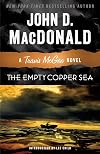
From a beloved master of crime fiction, The Empty Copper Sea is one of many classic novels featuring Travis McGee, the hard-boiled detective who lives on a houseboat.Asking for help is something a proud man like Van Harder would never do. So when he shows up at the Busted Flush, Travis McGee knows that he must be the man’s last resort. What Harder wants salvaged is his reputation. After a long career as a seaman, he was piloting a boat the night his employer fell overboard. Harder is show more certain he’s been set up, but to help him, McGee must prove that a dead man is actually alive.
“John D. MacDonald is a shining example for all us in the field. Talk about the best.”—Mary Higgins Clark
The fateful ride started with Harder at the helm of Hubbard Lawless’s luxury cruiser. It ends with him coming to, fuzzy and disoriented, and Hub lost to the water. Now everyone is saying that Harder got drunk, passed out, and is negligent in his boss’s death. The thing is, Van’s not a drinker . . . at least, not anymore.
Who would want to frame the good captain, and to what end? Dead or alive, Lawless is worth a lot of money. People are always eager to get a piece of that action—including some, as McGee soon finds, who are willing to take a piece out of anyone who gets in their way.
Features a new Introduction by Lee Child. show less
Tags
Recommendations













































Member Reviews
“I turned my head and saw, beyond the shoulder of my beloved, the empty copper sea, hushed and waiting, as if the world had paused between breaths. Perhaps it was like this in the beginning, and will be like this again, after man has slain every living thing. Sand, heat, and water. And death.”
Reading The Empty Copper Sea on the heels of the two previous entries, The Turquoise Lament and The Dreadful Lemon Sky, it is easy to see how all three are tied together by the restless introspection of Travis McGee some might call a mid-life crisis. The New York Times was already calling Travis McGee a mythic figure, and The Boston Globe had called MacDonald one of the most entertaining and probing writers in America. This was no small praise show more considering MacDonald was writing in the mystery/male adventure genre. But as the Washington Post Book World noted all those years ago:
“MacDonald is not to be taken lightly…without any pretensions he has serious things to say, and he says them uncommonly well.”
Vonnegut wasn’t kidding when he referred to MacDonald’s writings as treasures on a par with Tutankhamen. He captured a time and place, but he also captured the human condition, the mingling between the sexes, and societal decay, with an honest and unpretentious eye. Yes, in many ways the Travis McGee series was true to its origins, and it was the male fantasy version. But there was also great insight which MacDonald brought to bear on both society and the human condition. McGee feels real because he is an amalgam of men like him, and the women and girls, who ran the spectrum from free-loving beach bunnies to strong and independent women, and everything in between, felt real because they were girls and women the reader had known. The Empty Copper Sea, as much as any book in the series, shows MacDonald to be a serious novelist, despite his pulp background.
On a May morning as McGee is doing some much needed maintenance on the Busted Flush, Van Harder comes aboard to ask for McGee’s help. A born-again Christian who has left the bottle behind, MacDonald doesn’t take a swipe at that, as many of today’s writers would. It is simply part of the story. It’s been almost a year since the incident where a man named Hub Lawless was lost at sea, supposedly because Van Harder got drunk helming the Julie. Harder has lost his license, and his dignity. Even the money he offers McGee will have to be paid out over time, as he tries to salvage his reputation:
“Everything he had was wrapped up in that request; his pride, his dignity, his seafaring career, his worth as a man. And I sensed that this was the very last thing he’d been able to think of. Travis McGee, the last chance he had.”
So McGee and Meyer head to Timber Bay posing as potential buyers of Hub Lawless’s holdings. They are of course trying to figure out just what happened that night Van Harder took out Hub Lawless and his right hand John Tuckerman, with two young women aboard. There is almost a sense of fun initially to this one, with McGee and Meyer arriving in Timber Bay to con people, and poke around. Empty Copper Sea has a much different atmosphere than Dreadful Lemon Sky, despite the con.
McGee is still at loose ends personally, however, without realizing what’s wrong with him. One of the great sidekicks in this genre, Meyer, does know, and isn’t reticent to tell his old friend that he’s almost become a bore with his melancholy:
“You have felt that horrid rotten exhalation, Travis, that breath from the grave, that terminal sigh. You’ve been singing laments for yourself. Laments, regrets, remorses.”
Meyer goes even further:
“And you are walled, in an emotional sense. There is no genuine give-and-take. There is no real involvement, lately. You are going through the motions. As with the piano player. As with Nick Noyes. You are vaguely predatory lately. And irritable. And listless. You are getting no emotional feedback.”
This is all a carryover from a larger story-line which began with The Turquoise Lament and continued to a lesser degree in The Dreadful Lemon Sky. It is much easier to see when reading this one after Lament and Lemon Sky, that McGee’s wallowing in missed opportunities and regrets is sort of a soft underscore to these three mystery/adventures.
Sheriff Hack Ames, who literally kicked Van Harder when he was down, has photographic evidence that Hub Lawless is actually alive, and somewhere in Mexico with a boatload of money — the amount keeps growing until it’s close to a million. McGee discovers that bad investments and the very sexy architect named Kristin Peterson may have led Lawless to set up Van Harder:
“He was the innocent bystander who’d been run down by somebody else’s fun machine, and all I had to do was repair his reputation somehow. And stop moaning about myself.”
As McGee and Meyer poke around while waiting for the Sheriff’s man and the insurance investigator who went with him to Mexico to return, McGee gets more entangled with cute lounge piano player Billy Jean Bailey than he’d intended. The brief coupling which came about by nature, and McGee’s desire not to damage her pride, will eventually bring about tragedy for someone, and a moment of violence which almost touches Meyer.
The two young women who were aboard the boat, Felicia Amber, and Michelle Burns, are wonderfully drawn by MacDonald, giving the reader a vivid picture of the girls; one Honduran girl who speaks with an accent but thinks she doesn’t, and another who has the looks and personality of Doris Day but is what is commonly known among men as a semi-pro.
There is more going on in Timber Bay, however, than trying to figure out whether Hub Lawless is alive or not. While McGee ingratiates himself into the fabric of Timber Bay, we get the sharp and insightful social commentary for which MacDonald is known. Some of it, as is so often the case, involves Florida:
“Florida can never really come to grips with saving the environment because a very large percentage of the population at any given time just got here. So why should they fight to turn the clock back? It looks great the way it is. Two years later, as they are beginning to feel uneasy, a few thousand more people are just discovering it for the first time and wouldn’t change a thing. And meanwhile the people who knew what it was like twenty years ago are an ever-dwindling minority, a voice too faint to be heard.”
MacDonald also expounds on the biker culture:
“They are fading into history, like Pancho Villa’s irregulars. All the macho whiskers and the leather clothes and the dead eyes and their feral, abused little women.”
When McGee goes out to speak with the man Hub Lawless left behind, John Tuckerman, this very good story turns into something more, as the emotional feedback Meyer spoke about to McGee stares him in the face. It turns out she’s the sister of John Tuckerman, caring for a brother who has drunk himself into mental simplicity. McGee’s reaction to Gretel is visceral, and any man who’s ever had that reaction to a woman will appreciate the eloquence of MacDonald’s description:
“When she looked away, I had a very strange feeling. I felt as if I had shucked some kind of drab outer skin. It was old and brittle, and as I stretched and moved, it shattered and fell off. I could breathe more deeply. The Gulf was a sharper blue. There was wine in the air. I saw every grain of sand, every fragment of seashell, every movement of the beach grasses in the May breeze. It was an awakening. I was full of juices and thirsts, energies and hungers, and I wanted to laugh for no reason at all.”
Gretel snaps McGee out of his crisis, and being, as Meyer notes, a child of his times, he’ll have none of this nonsense about demeaning the feminine sex by using the term girl, rather than woman:
“Meyer, would it offend your sense of fitness if I called Gretel a girl?” — McGee
“Instead of person or a woman or some such? You want to be patronizing and chauvinistic, eh? Look down upon her?” — Meyer (perhaps facetiously)
“Cut it out, Meyer. I can go with all that approach right up to a point. When it doesn’t mean much one way or another. You know. But here we have one of the truly great, all-time, record-breaking, incomparable girls. And I want to call her a girl.” — McGee
Though it takes some time to get there, there is a terrific ending to this one I suspect some readers won’t see coming. It’s violent and exciting, and unexpected. It begins with a pair of binoculars, and leads to a moment of terror for McGee, a moment in which he finally, after all these years, grows up.
It’s all tied up neatly, with only the relationship between Gretel and McGee left up in the air. McGee loves her, but is Gretel ready? It is hardly as simplistic as her not wanting to be McGee’s solution, because she is more than that and knows it. Perhaps it’s because I know about The Green Ripper that I don’t feel Gretel’s reaction rings quite as genuine as Cindy Birdsong’s did in The Dreadful Lemon Sky. Both relationships have a rich mature feel to the male/female dynamic but Cindy’s reasons in Lemon Sky feel more grounded, and resonated with me more than Gretel’s.
Overall, a truly stellar entry in this great series. It’s probably a 4.5 for me, as Lemon Sky was, so I’ll round up as I did there. MacDonald captured the mood and spirit of his times and his location better than anyone, while still giving readers a thrilling and involving tale. The Empty Copper Sea is funny, insightful, suspenseful and resonating. A great writer at his very peak. show less
Reading The Empty Copper Sea on the heels of the two previous entries, The Turquoise Lament and The Dreadful Lemon Sky, it is easy to see how all three are tied together by the restless introspection of Travis McGee some might call a mid-life crisis. The New York Times was already calling Travis McGee a mythic figure, and The Boston Globe had called MacDonald one of the most entertaining and probing writers in America. This was no small praise show more considering MacDonald was writing in the mystery/male adventure genre. But as the Washington Post Book World noted all those years ago:
“MacDonald is not to be taken lightly…without any pretensions he has serious things to say, and he says them uncommonly well.”
Vonnegut wasn’t kidding when he referred to MacDonald’s writings as treasures on a par with Tutankhamen. He captured a time and place, but he also captured the human condition, the mingling between the sexes, and societal decay, with an honest and unpretentious eye. Yes, in many ways the Travis McGee series was true to its origins, and it was the male fantasy version. But there was also great insight which MacDonald brought to bear on both society and the human condition. McGee feels real because he is an amalgam of men like him, and the women and girls, who ran the spectrum from free-loving beach bunnies to strong and independent women, and everything in between, felt real because they were girls and women the reader had known. The Empty Copper Sea, as much as any book in the series, shows MacDonald to be a serious novelist, despite his pulp background.
On a May morning as McGee is doing some much needed maintenance on the Busted Flush, Van Harder comes aboard to ask for McGee’s help. A born-again Christian who has left the bottle behind, MacDonald doesn’t take a swipe at that, as many of today’s writers would. It is simply part of the story. It’s been almost a year since the incident where a man named Hub Lawless was lost at sea, supposedly because Van Harder got drunk helming the Julie. Harder has lost his license, and his dignity. Even the money he offers McGee will have to be paid out over time, as he tries to salvage his reputation:
“Everything he had was wrapped up in that request; his pride, his dignity, his seafaring career, his worth as a man. And I sensed that this was the very last thing he’d been able to think of. Travis McGee, the last chance he had.”
So McGee and Meyer head to Timber Bay posing as potential buyers of Hub Lawless’s holdings. They are of course trying to figure out just what happened that night Van Harder took out Hub Lawless and his right hand John Tuckerman, with two young women aboard. There is almost a sense of fun initially to this one, with McGee and Meyer arriving in Timber Bay to con people, and poke around. Empty Copper Sea has a much different atmosphere than Dreadful Lemon Sky, despite the con.
McGee is still at loose ends personally, however, without realizing what’s wrong with him. One of the great sidekicks in this genre, Meyer, does know, and isn’t reticent to tell his old friend that he’s almost become a bore with his melancholy:
“You have felt that horrid rotten exhalation, Travis, that breath from the grave, that terminal sigh. You’ve been singing laments for yourself. Laments, regrets, remorses.”
Meyer goes even further:
“And you are walled, in an emotional sense. There is no genuine give-and-take. There is no real involvement, lately. You are going through the motions. As with the piano player. As with Nick Noyes. You are vaguely predatory lately. And irritable. And listless. You are getting no emotional feedback.”
This is all a carryover from a larger story-line which began with The Turquoise Lament and continued to a lesser degree in The Dreadful Lemon Sky. It is much easier to see when reading this one after Lament and Lemon Sky, that McGee’s wallowing in missed opportunities and regrets is sort of a soft underscore to these three mystery/adventures.
Sheriff Hack Ames, who literally kicked Van Harder when he was down, has photographic evidence that Hub Lawless is actually alive, and somewhere in Mexico with a boatload of money — the amount keeps growing until it’s close to a million. McGee discovers that bad investments and the very sexy architect named Kristin Peterson may have led Lawless to set up Van Harder:
“He was the innocent bystander who’d been run down by somebody else’s fun machine, and all I had to do was repair his reputation somehow. And stop moaning about myself.”
As McGee and Meyer poke around while waiting for the Sheriff’s man and the insurance investigator who went with him to Mexico to return, McGee gets more entangled with cute lounge piano player Billy Jean Bailey than he’d intended. The brief coupling which came about by nature, and McGee’s desire not to damage her pride, will eventually bring about tragedy for someone, and a moment of violence which almost touches Meyer.
The two young women who were aboard the boat, Felicia Amber, and Michelle Burns, are wonderfully drawn by MacDonald, giving the reader a vivid picture of the girls; one Honduran girl who speaks with an accent but thinks she doesn’t, and another who has the looks and personality of Doris Day but is what is commonly known among men as a semi-pro.
There is more going on in Timber Bay, however, than trying to figure out whether Hub Lawless is alive or not. While McGee ingratiates himself into the fabric of Timber Bay, we get the sharp and insightful social commentary for which MacDonald is known. Some of it, as is so often the case, involves Florida:
“Florida can never really come to grips with saving the environment because a very large percentage of the population at any given time just got here. So why should they fight to turn the clock back? It looks great the way it is. Two years later, as they are beginning to feel uneasy, a few thousand more people are just discovering it for the first time and wouldn’t change a thing. And meanwhile the people who knew what it was like twenty years ago are an ever-dwindling minority, a voice too faint to be heard.”
MacDonald also expounds on the biker culture:
“They are fading into history, like Pancho Villa’s irregulars. All the macho whiskers and the leather clothes and the dead eyes and their feral, abused little women.”
When McGee goes out to speak with the man Hub Lawless left behind, John Tuckerman, this very good story turns into something more, as the emotional feedback Meyer spoke about to McGee stares him in the face. It turns out she’s the sister of John Tuckerman, caring for a brother who has drunk himself into mental simplicity. McGee’s reaction to Gretel is visceral, and any man who’s ever had that reaction to a woman will appreciate the eloquence of MacDonald’s description:
“When she looked away, I had a very strange feeling. I felt as if I had shucked some kind of drab outer skin. It was old and brittle, and as I stretched and moved, it shattered and fell off. I could breathe more deeply. The Gulf was a sharper blue. There was wine in the air. I saw every grain of sand, every fragment of seashell, every movement of the beach grasses in the May breeze. It was an awakening. I was full of juices and thirsts, energies and hungers, and I wanted to laugh for no reason at all.”
Gretel snaps McGee out of his crisis, and being, as Meyer notes, a child of his times, he’ll have none of this nonsense about demeaning the feminine sex by using the term girl, rather than woman:
“Meyer, would it offend your sense of fitness if I called Gretel a girl?” — McGee
“Instead of person or a woman or some such? You want to be patronizing and chauvinistic, eh? Look down upon her?” — Meyer (perhaps facetiously)
“Cut it out, Meyer. I can go with all that approach right up to a point. When it doesn’t mean much one way or another. You know. But here we have one of the truly great, all-time, record-breaking, incomparable girls. And I want to call her a girl.” — McGee
Though it takes some time to get there, there is a terrific ending to this one I suspect some readers won’t see coming. It’s violent and exciting, and unexpected. It begins with a pair of binoculars, and leads to a moment of terror for McGee, a moment in which he finally, after all these years, grows up.
It’s all tied up neatly, with only the relationship between Gretel and McGee left up in the air. McGee loves her, but is Gretel ready? It is hardly as simplistic as her not wanting to be McGee’s solution, because she is more than that and knows it. Perhaps it’s because I know about The Green Ripper that I don’t feel Gretel’s reaction rings quite as genuine as Cindy Birdsong’s did in The Dreadful Lemon Sky. Both relationships have a rich mature feel to the male/female dynamic but Cindy’s reasons in Lemon Sky feel more grounded, and resonated with me more than Gretel’s.
Overall, a truly stellar entry in this great series. It’s probably a 4.5 for me, as Lemon Sky was, so I’ll round up as I did there. MacDonald captured the mood and spirit of his times and his location better than anyone, while still giving readers a thrilling and involving tale. The Empty Copper Sea is funny, insightful, suspenseful and resonating. A great writer at his very peak. show less
All the familiar elements are in play in this 17th installment of MacDonald’s long-running Travis McGee series. There’s a friend in need, a mystery to be solved, skeptical law enforcement officers, and supporting characters who are not what they seem. There are South Florida locales being despoiled by greedy developers, and opportunities for both Travis and his best friend Meyer to do what they do best. It goes without saying, for fans of the series and the genre, that justice will, with Travis and Meyer’s help, triumph by satisfyingly unconventional means.
That all this fits together uncommonly well, and plays especially smoothly, is due -- in part -- to practice. It’s also, however, due to Travis’ introspection, which show more (mostly) takes the place of earlier books’ commentaries on the ills of the world . . . and wears better. It adds a layer of depth and complexity to Travis, and hints at his awareness that time is passing, all of which makes him more believable. The book, though written in 1978, thus feels contemporary, where a more outward-focused story like Dress Her in Indigo, written in 1969, shows every year of its age.
Travis’ self-assessment . . . his feeling of dissatisfaction with his life . . . plays out mostly through his relationships with the women in the story. The most significant of them, Gretel, is one of MacDonald’s best-drawn characters, and she, too, adds to the book’s sheen. Her scenes with Travis are a delight: Two people who have been there and done that, discovering (to their delighted surprise)that there’s still room for magic in the world.
The mystery in The Empty Copper Sea comes to a satisfying climax: one that surprises and thrills while staying true to everything that went before. Even more gratifyingly, so does the love story. show less
That all this fits together uncommonly well, and plays especially smoothly, is due -- in part -- to practice. It’s also, however, due to Travis’ introspection, which show more (mostly) takes the place of earlier books’ commentaries on the ills of the world . . . and wears better. It adds a layer of depth and complexity to Travis, and hints at his awareness that time is passing, all of which makes him more believable. The book, though written in 1978, thus feels contemporary, where a more outward-focused story like Dress Her in Indigo, written in 1969, shows every year of its age.
Travis’ self-assessment . . . his feeling of dissatisfaction with his life . . . plays out mostly through his relationships with the women in the story. The most significant of them, Gretel, is one of MacDonald’s best-drawn characters, and she, too, adds to the book’s sheen. Her scenes with Travis are a delight: Two people who have been there and done that, discovering (to their delighted surprise)that there’s still room for magic in the world.
The mystery in The Empty Copper Sea comes to a satisfying climax: one that surprises and thrills while staying true to everything that went before. Even more gratifyingly, so does the love story. show less
For once, McGee isn't trying to save a damsel in distress or investigate the murder of a former lover. Instead, an old acquaintance asks him to restore his reputation and enable him to get his license to run ships back after he was accused of drunkenness and negligence during an incident in which a small-town Florida business kingpin fell off a boat and drowned. So McGee and Meyer (thank goodness) head to the Florida Gulf Coast to see what they can do. Meyer has obtained a letter of introduction from a tycoon who owes him a favor, so he and McGee get cooperation from most of the town's key players, including the sheriff, banker, insurance salesman, lawyer, and so on. Restoring the reputation becomes a minor and almost peripheral part of show more the book, however, as they find themselves delving into the mystery of whether the drowned man is actually dead or whether he ran off to Mexico with his Scandinavian architect, with a million dollars stolen from his various businesses, while leaving his wife and two teenage daughters with a $2.2 million insurance policy. This book provides lots of neatly drawn character studies of the folks McGee and Meyer deal with, which are the highlights of the book. The observations about the changes to Florida as a result of the real estate boom are less emotional than usual. Other factors are also at play, including drugs, which have become a primary subject of the last few McGee books. McGee is on good behavior here. He only breaks one heart and there is far less emphasis on his sexual exploits than in the two previous volumes. What a relief, since MacDonald's sex scenes are laughable. Overall, this is a pretty good mystery. It still contains its quotient of violence and death, but it is far less gratuitous than usual. show less
The 17th entry in the Travis McGee series and the best yet. Travis travels to the west coast of Florida to help a fellow boatman regain his sullied reputation, and in the process experiences a revitalization of his own sense of life and purpose.
As usual, there is no shortage of quotable passages here. McGee is accompanied to Timber Bay by his stalwart friend, semi-retired economist Meyer Meyer, who supplements McGee’s brawn with an equal and opposite force of brains. Even as the pair begin to investigate what really happened two months ago that lost Van Harder his captain’s license, it becomes clear that Trav is not entirely invested in his friend’s problem, being somewhat preoccupied with thoughts of life and death and the true show more meanings of each. Meyer, of course, knows exactly what’s wrong with Trav, and it all has to do with the second law of thermodynamics.
”All organized systems tend to slide slowly into chaos and disorder{, Meyer says}. Energy tends to run down. The universe itself heads inevitably toward darkness and stasis.”
“Cheering thought.”
“The walled city, isolated from its surroundings, will run down, decay, and die. The open city will have an exchange of material and energy with its surroundings and will become larger and more complex, capable of dissipating energy even as it grows. I have been thinking that it would not warp the analogy too badly to extend it to a single individual.”
“Meyer, dammit, I have a lot more interchange of material and energy with my environment than most.”
“In a physical sense, but you are not decaying in any physical sense. Great Scott, look at you. You look as if you could get up and run right through that wall.”
“The decay is emotional?”
“And you are walled, in an emotional sense. There is no genuine give-and-take. There is no real involvement, lately. You are going through the motions. As with the piano player. As with Nick Noyes. You are vaguely predatory lately. And irritable. And listless. You are getting no emotional feedback.”
“Where do I go looking for some?”
“That’s the catch. You can’t. It isn’t that mechanical. You merely have to be receptive and hope it comes along.”
“Meanwhile, I am being ground down by the second law of thermodynamics?”
“In a sense, yes.”
“Thank you so much. I never would have known.”
“Like I said. Irritable.”
Of course, no sooner does Meyer diagnose the problem than possible salvation arrives, in the form of Gretel, a big girl (over six feet tall and nearly 150 pounds of meat, as Travis describes her) whose vitality leaps off the page. It is at this point that experienced readers of McGee’s previous adventures will mentally compose a fond farewell to Gretel, for to become Trav’s love interest is generally to succumb to a grim and gruesome end. Whether that is Gretel’s fate I leave to the next reader to discover. It’s safe to reveal that there is a final confrontation and outburst of violence, accompanied by Trav’s usual overflow of self-awareness.
The initial panic had settled into a reliable flow of adrenaline. It is my fate and my flaw to have learned too long ago that this is what I am about. This is when I am alive and know it most completely. Every sense is honed by the knowledge of the imminence of death. The juices flow. In the back of my mind I tried to tell myself that I had been turned into a murderous machine by the sight of Gretel. But it was rationalization. There was a hard joy in this acceptance of a total risk. I knew that if he got me — whoever he might be — he was going to have to be very damned good at it, and even then I was going to create some astonishment in him. I would live totally on this thin edge until it was over, and then I would either be dead for good or partially dead until the next time.
As always, MacDonald’s most vivid prose is reserved for his descriptions of his beloved Florida in all its natural and unnatural permutations:
Slowly, slowly the whole world was suffused with that strange orange glow which happens rarely toward sunset. The clouds turned to gold as the sun moved behind them, and the reflection of the clouds colored the earth. I have never seen the Gulf so quiet. There were no ripples, no birds, no sign of feeding fish, no offshore vessels moving across the horizon. I had seen this strange coppery light in Tahiti, in Ceylon (before it became Sri Lanka), and in Granada and the Grenadines. The world must have looked like that before the first creatures came crawling out of the salt water to spawn on the empty land. I turned my head and saw, beyond the shoulder of my beloved, the empty copper sea, hushed and waiting, as if the world had paused between breaths. Perhaps it was like this in the beginning, and will be like this again, after man has slain every living thing. Sand, heat, and water. And death.
There are only a handful of books left in this series for me to discover. I will be sad to say farewell to Travis when it's time for us to part. But not yet! Not just yet, please and thank you. For now, there is world enough and time, time for Travis McGee to continue tilting at windmills and righting wrongs. show less
As usual, there is no shortage of quotable passages here. McGee is accompanied to Timber Bay by his stalwart friend, semi-retired economist Meyer Meyer, who supplements McGee’s brawn with an equal and opposite force of brains. Even as the pair begin to investigate what really happened two months ago that lost Van Harder his captain’s license, it becomes clear that Trav is not entirely invested in his friend’s problem, being somewhat preoccupied with thoughts of life and death and the true show more meanings of each. Meyer, of course, knows exactly what’s wrong with Trav, and it all has to do with the second law of thermodynamics.
”All organized systems tend to slide slowly into chaos and disorder{, Meyer says}. Energy tends to run down. The universe itself heads inevitably toward darkness and stasis.”
“Cheering thought.”
“The walled city, isolated from its surroundings, will run down, decay, and die. The open city will have an exchange of material and energy with its surroundings and will become larger and more complex, capable of dissipating energy even as it grows. I have been thinking that it would not warp the analogy too badly to extend it to a single individual.”
“Meyer, dammit, I have a lot more interchange of material and energy with my environment than most.”
“In a physical sense, but you are not decaying in any physical sense. Great Scott, look at you. You look as if you could get up and run right through that wall.”
“The decay is emotional?”
“And you are walled, in an emotional sense. There is no genuine give-and-take. There is no real involvement, lately. You are going through the motions. As with the piano player. As with Nick Noyes. You are vaguely predatory lately. And irritable. And listless. You are getting no emotional feedback.”
“Where do I go looking for some?”
“That’s the catch. You can’t. It isn’t that mechanical. You merely have to be receptive and hope it comes along.”
“Meanwhile, I am being ground down by the second law of thermodynamics?”
“In a sense, yes.”
“Thank you so much. I never would have known.”
“Like I said. Irritable.”
Of course, no sooner does Meyer diagnose the problem than possible salvation arrives, in the form of Gretel, a big girl (over six feet tall and nearly 150 pounds of meat, as Travis describes her) whose vitality leaps off the page. It is at this point that experienced readers of McGee’s previous adventures will mentally compose a fond farewell to Gretel, for to become Trav’s love interest is generally to succumb to a grim and gruesome end. Whether that is Gretel’s fate I leave to the next reader to discover. It’s safe to reveal that there is a final confrontation and outburst of violence, accompanied by Trav’s usual overflow of self-awareness.
The initial panic had settled into a reliable flow of adrenaline. It is my fate and my flaw to have learned too long ago that this is what I am about. This is when I am alive and know it most completely. Every sense is honed by the knowledge of the imminence of death. The juices flow. In the back of my mind I tried to tell myself that I had been turned into a murderous machine by the sight of Gretel. But it was rationalization. There was a hard joy in this acceptance of a total risk. I knew that if he got me — whoever he might be — he was going to have to be very damned good at it, and even then I was going to create some astonishment in him. I would live totally on this thin edge until it was over, and then I would either be dead for good or partially dead until the next time.
As always, MacDonald’s most vivid prose is reserved for his descriptions of his beloved Florida in all its natural and unnatural permutations:
Slowly, slowly the whole world was suffused with that strange orange glow which happens rarely toward sunset. The clouds turned to gold as the sun moved behind them, and the reflection of the clouds colored the earth. I have never seen the Gulf so quiet. There were no ripples, no birds, no sign of feeding fish, no offshore vessels moving across the horizon. I had seen this strange coppery light in Tahiti, in Ceylon (before it became Sri Lanka), and in Granada and the Grenadines. The world must have looked like that before the first creatures came crawling out of the salt water to spawn on the empty land. I turned my head and saw, beyond the shoulder of my beloved, the empty copper sea, hushed and waiting, as if the world had paused between breaths. Perhaps it was like this in the beginning, and will be like this again, after man has slain every living thing. Sand, heat, and water. And death.
There are only a handful of books left in this series for me to discover. I will be sad to say farewell to Travis when it's time for us to part. But not yet! Not just yet, please and thank you. For now, there is world enough and time, time for Travis McGee to continue tilting at windmills and righting wrongs. show less
Don’t you feel you’ve come across a ruby in the grass when you find particularly fine passages in your reading? This is one of my favorites from The Empty Copper Sea by John D. MacDonald. It’s a Travis McGee mystery. A piece of newsprint has blown around an ankle as Travis walks, thinking of Gretel, with whom he’s newly smitten: “I wadded it to walnut size and threw it some fifteen feet at a trash container. The swing lid of the trash container was open about an inch and a half. If it went in, I would live forever. It didn’t even touch the edges as it disappeared inside. I wished it was all a sound stage, that the orchestra was out of sight. I wished I was Gene Kelly. I wished I could Dance.”
At the risk of show more English-teachering it to death, I’ll mention a few of the perfections in the quote. I love “walnut size.” Concise, visual, useful phrase. “Trash container” is used twice in close proximity, a writing-book no no, but it works and I like that MacDonald doesn’t fret over such trivialities. “If it went in, I would live forever.” Wow. Such a recognizable feeling over-stated without apology or explanation. The last two sentences of elaboration are pitch-perfect – all bringing to mind the magic of a Gene Kelly movie dance, maybe Singin in the Rain.
It’s been ten years since I read that book, but I haven’t forgotten this image. (I have a Bits I Admire book I write quotes in, but I don’t thing I’ll forget this one.) show less
At the risk of show more English-teachering it to death, I’ll mention a few of the perfections in the quote. I love “walnut size.” Concise, visual, useful phrase. “Trash container” is used twice in close proximity, a writing-book no no, but it works and I like that MacDonald doesn’t fret over such trivialities. “If it went in, I would live forever.” Wow. Such a recognizable feeling over-stated without apology or explanation. The last two sentences of elaboration are pitch-perfect – all bringing to mind the magic of a Gene Kelly movie dance, maybe Singin in the Rain.
It’s been ten years since I read that book, but I haven’t forgotten this image. (I have a Bits I Admire book I write quotes in, but I don’t thing I’ll forget this one.) show less
IF YOU READ ONE OF HIS BOOKS , THIS WOULD BE IT. GREAT WRITING STYLE.
HE INTRODUCES A LOVE NAMED GRETEL WHO IS PROMINENT IN THE PLOT THAT INVOLVES A MANS DISAPPEARANCE TO AVID BANKRUPTCY. IS HE DEAD FROM APPARENT SUICIDE?
HE INTRODUCES A LOVE NAMED GRETEL WHO IS PROMINENT IN THE PLOT THAT INVOLVES A MANS DISAPPEARANCE TO AVID BANKRUPTCY. IS HE DEAD FROM APPARENT SUICIDE?
This time round Travis is sought out by an old friend who has since lost his boat licence due to alleged negligence having lost nearly everything he hires Travis to investigate on the promise of a future IOU. Meyer & Travis travel down whilst the old friend brings Travis's houseboat The Busted Flush down. It would seem things are not quite how the official story states them to be and more digging reveals more secrets.
An excellent addition to the series, plenty of fast talk and fisticuffs. Good ending.
An excellent addition to the series, plenty of fast talk and fisticuffs. Good ending.
Members
- Recently Added By
Lists

A Rainbow of Books: Colors in the Title
570 works; 24 members
Author Information

230+ Works 31,898 Members
John D. MacDonald was born in Sharon, Pennsylvania on July 24, 1916. He received a B.S. from Syracuse University in 1938 and an M.B.A. from the Harvard Graduate School of Business Administration in 1939. During World War II, he served in the Army. His first novel, Brass Cupcake, was published in 1950. He wrote about 70 books during his lifetime show more including the Travis McGee series, Condominium, No Deadly Drug, Nothing Can Go Wrong, and A Friendship: The Letters of Dan Rowan and John Dann MacDonald. A Flash of Green was adapted into a movie by the same name and The Excuse was adapted into a movie entitled Cape Fear. He received numerous awards including the Ben Franklin Award for the best American short story in 1955, the Grand Prix de Litterature Policiere for A Key to the Suite in 1964, the Mystery Writers of America's Grand Master Award in 1972, the American Book Award for The Green Ripper in 1980. He died from complications of an earlier heart bypass surgery on December 28, 1986 at the age of 70. (Bowker Author Biography) show less
Some Editions
Awards and Honors
Distinctions
Series

Work Relationships
Is contained in
Common Knowledge
- Original title
- The Empty Copper Sea
- Original publication date
- 1978
- People/Characters
- Travis McGee; Meyer the economist; Haggermann Ames "Hack"; Michele Burns "Mishy"; Eleanor Ann Harder; Van Harder (show all 12); Gretel Howard; Julia Lawless; Nick Noyes; Walter Olivera; Kristin Petersen; John Tuckerman
- Important places
- Florida, USA; Fort Lauderdale, Florida, USA; Timber Bay, Florida, USA; Broward County, Florida, USA
- Related movies
- Travis McGee (1983 | IMDb)
- Epigraph
- A man needs only to be turned around once with his eyes shut in this world to be lost. - Thoreau
- Dedication
- Dedicated to all of the shining memories of those last two passenger ships which flew the United States Flag, the Monterey and the Mariposa, and to the mariners who sailed aboard them.
- First words
- Van Harder came aboard The Busted Flush on a hot bright May morning.
- Quotations
- I played all the games of What If. I counted the ladies I have known. I replayed the hard shots - given and taken. Remembered grief, remembered pleasure. I thought of all the choices made, the doors I've slammed shut, the sea... (show all)sons which have closed down on me, games called on account of pain.
- Last words
- (Click to show. Warning: May contain spoilers.)When the first big drops did come, they fell splatting unheeded and almost unnoticed upon my bare back and on her upturned face, vivid in the first stroke of lightning.
Classifications
Statistics
- Members
- 945
- Popularity
- 27,906
- Reviews
- 11
- Rating
- (3.93)
- Languages
- 6 — Danish, English, German, Norwegian (Bokmål), Portuguese (Portugal), Swedish
- Media
- Paper, Audiobook, Ebook
- ISBNs
- 28
- UPCs
- 1
- ASINs
- 18