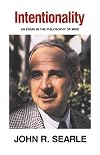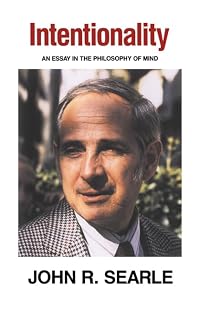
Intentionality: An Essay in the Philosophy of Mind (Cambridge Paperback Library)
by John R. Searle
On This Page
Description
John Searle's Speech Acts (1969) and Expression and Meaning (1979) developed a highly original and influential approach to the study of language. But behind both works lay the assumption that the philosophy of language is in the end a branch of the philosophy of the mind: speech acts are forms of human action and represent just one example of the mind's capacity to relate the human organism to the world. The present book is concerned with these biologically fundamental capacities, and, show more though third in the sequence, in effect it provides the philosophical foundations for the other two. Intentionality is taken to be the crucial mental phenomenon, and its analysis involves wide-ranging discussions of perception, action, causation, meaning, and reference. In all these areas John Searle has original and stimulating views. He ends with a resolution of the 'mind-body' problem. show lessTags
Recommendations



























Member Reviews
I picked up this book out of a specific interest in the concept of intentions, how and why we form them, how we act on them, and how we share them. Searle’s contribution to the discussion is to see Intentionality as a quality of a mental state. As I see it, Intentionality is a stance, a way that our perception, actions, thoughts, communication is directed at the world or is “about” the world that we share with others.
In some ways I see a connection between GEM Anscombe’s understanding of intention as an essential part of a practical syllogism by which we articulate a belief or desire and then identify in the local circumstances the means for acting on that belief/desire. Searle also intimately connects intentions to beliefs and show more desires (i.e., things that we believe to be true about the world and things that we want to be true about the world). The realization or articulation of those beliefs and desires express conditions of satisfaction by which they can be true (i.e., world matches our beliefs, the world is altered to match our desires) and we choose ways of meeting those conditions of satisfaction by taking actions and saying things.
Searle’s overarching objective is to talk about a philosophy of mind that bridges the gulf between mental states of individuals and the world that we live in. Intentionality is that bridge because it is a kind of directness that the mind gives to our actions. It begins with a mental state with physiological causes that we realize in the form of intentions toward the world that are fulfilled through perceptions that we make, actions that we taken, causes that we bring about. There is no awkward middle state in which we form a realization of our intentions and apply them to a perception of the world. Instead, our mental states are realized as intentions directly in the world.
Searle’s argument is satisfyingly direct and commonsensical. It works well for understanding individual actions and the fulfillment of individual intentions. The step that Searle takes in connecting our intentions to other people who share the world with us is to set intentions against the backdrop of a Background (the abilities and conditions needed to satisfy intentions) and Networks of other intentions that also mediate the realization of our intentions. Language is one mediator of our intentions in this world where it is important to share and coordinate. What follows from this consideration is an interesting discussion of language and how intentionality in meaning requires a kind of intensionality (with an s) whereby our intentions are put into the world as shareable thoughts (in the sense that I understand Frege to use the term) that are positioned relative to other agents, times, places, and possible worlds that set the conditions of their satisfaction in local circumstances.
This move takes Searle into the realm of discourse and rhetoric but his methodology of examining intension-with-an-s falls a bit short for me because he limits his investigation to the sentence, assuming that sentences contain the conditions of satisfaction in them. I would say that they don’t because sentences, as ways of interactiong with others and sharing thoughts do not exist in isolation either. He needs a more molar unit of language to see intentions in action. To assume that sentences alone would carry the conditions of their satisfaction overlooks that spoken sentences occur in streams of discourse and written sentences appear in paragraphs that appear in documents that are structured by conventional, genres that support social interactions. I believe this point about the the importance of establishing intensional meaning but the notion of language and discourse in which this occurs is too flat to work for me. show less
In some ways I see a connection between GEM Anscombe’s understanding of intention as an essential part of a practical syllogism by which we articulate a belief or desire and then identify in the local circumstances the means for acting on that belief/desire. Searle also intimately connects intentions to beliefs and show more desires (i.e., things that we believe to be true about the world and things that we want to be true about the world). The realization or articulation of those beliefs and desires express conditions of satisfaction by which they can be true (i.e., world matches our beliefs, the world is altered to match our desires) and we choose ways of meeting those conditions of satisfaction by taking actions and saying things.
Searle’s overarching objective is to talk about a philosophy of mind that bridges the gulf between mental states of individuals and the world that we live in. Intentionality is that bridge because it is a kind of directness that the mind gives to our actions. It begins with a mental state with physiological causes that we realize in the form of intentions toward the world that are fulfilled through perceptions that we make, actions that we taken, causes that we bring about. There is no awkward middle state in which we form a realization of our intentions and apply them to a perception of the world. Instead, our mental states are realized as intentions directly in the world.
Searle’s argument is satisfyingly direct and commonsensical. It works well for understanding individual actions and the fulfillment of individual intentions. The step that Searle takes in connecting our intentions to other people who share the world with us is to set intentions against the backdrop of a Background (the abilities and conditions needed to satisfy intentions) and Networks of other intentions that also mediate the realization of our intentions. Language is one mediator of our intentions in this world where it is important to share and coordinate. What follows from this consideration is an interesting discussion of language and how intentionality in meaning requires a kind of intensionality (with an s) whereby our intentions are put into the world as shareable thoughts (in the sense that I understand Frege to use the term) that are positioned relative to other agents, times, places, and possible worlds that set the conditions of their satisfaction in local circumstances.
This move takes Searle into the realm of discourse and rhetoric but his methodology of examining intension-with-an-s falls a bit short for me because he limits his investigation to the sentence, assuming that sentences contain the conditions of satisfaction in them. I would say that they don’t because sentences, as ways of interactiong with others and sharing thoughts do not exist in isolation either. He needs a more molar unit of language to see intentions in action. To assume that sentences alone would carry the conditions of their satisfaction overlooks that spoken sentences occur in streams of discourse and written sentences appear in paragraphs that appear in documents that are structured by conventional, genres that support social interactions. I believe this point about the the importance of establishing intensional meaning but the notion of language and discourse in which this occurs is too flat to work for me. show less
Excelente livro sobre intencionalidade, que serve como ponto de partida para discussões sobre o assunto, mesmo se com abordagens que diferem radicalmente em alguns aspectos (penso em R. Brandom). Enfim, o direcionamento da mente para as coisas é segundo o autor, algo que animais possuem; a linguagem complexifica tal fenômeno, sendo derivada da intencionalidade, e acaba por explicá-la (Searle é um "naturalista biológico" e um "realista ingênuo"). Partindo da teoria dos atos de fala (condições de satisfação e direção de ajuste do mundo para a mente, o contrário etc), o autor aborda a diferenciação da intensão e intenção, trata a experiência visual como intencional, a partir da percepção, mas com condições de show more satisfação bem definidas (que um objeto cause a experiência visual). Nisso aborda a causação e introduz uma discussão sobre direção de causação e a causalidade como ligada a um realismo de base. Passa por sua teoria da intenção em ação como estado intermediário entre intenção e ação, e resolve problemas e críticas invocando a ideia de background (pano de fundo de capacidades não representacionais) e de rede intencional (que especifica melhor situações que em uma olhada rápida parecem paradoxais). Um adendo: impressionante como pelos exemplos politicamente republicanos, Searle mostra um lado ideológico completamente paralelo à discussão. show less
Ratings
Members
- Recently Added By
Lists

Books in the Bibliography of The Illusion of Conscious Will by Daniel Wegne
273 works; 1 member
Author Information

49+ Works 4,810 Members
John R. Searle is Mills Professor in the Department of Philosophy, University of California, Berkeley.
Series
Belongs to Publisher Series
Common Knowledge
- Canonical title*
- Intentionality: An Essay in the Philosophy of Mind
- Original title
- Intentionality
- Original publication date
- 1983, Cambridge University Press
- Dedication
- A DAGMAR
- Original language
- Filosofia
*Some information comes from Common Knowledge in other languages. Click "Edit" for more information.
Classifications
Statistics
- Members
- 229
- Popularity
- 141,700
- Reviews
- 2
- Rating
- (3.87)
- Languages
- 5 — English, French, German, Portuguese (Brazil), Spanish
- Media
- Paper, Ebook
- ISBNs
- 12
- ASINs
- 2