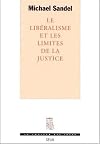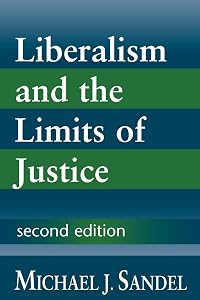
Liberalism and the Limits of Justice
by Michael J. Sandel
On This Page
Description
A liberal society seeks not to impose a single way of life, but to leave its citizens as free as possible to choose their own values and ends. It therefore must govern by principles of justice that do not presuppose any particular vision of the good life. But can any such principles be found? And if not, what are the consequences for justice as a moral and political ideal? These are the questions Michael Sandel takes up in this penetrating critique of contemporary liberalism. Sandel locates show more modern liberalism in the tradition of Kant, and focuses on its most influential recent expression in the work of John Rawls. In the most important challenge yet to Rawls' theory of justice, Sandel traces the limits of liberalism to the conception of the person that underlies it, and argues for a deeper understanding of community than liberalism allows. show lessTags
Recommendations











Member Reviews
Got 10 or so pages in, realized that I wasn't up to the work that was going to be required to read this book. Not indecipherable but I guess I'm getting a little lazy.
Ensayo crítico de la teoría de la justicia de Rawls, hecha con mucha altura, discrepando pero reconociendole avances e ideas, fertil dialogo de corrientes jurídicas
Nov 25, 2018Spanish
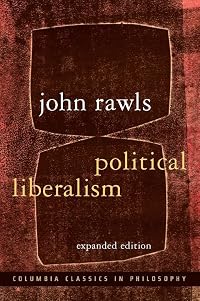
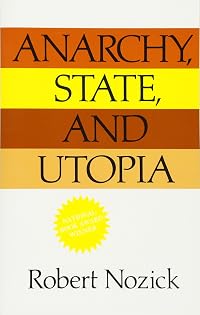
Sandel criticizes the social democratic liberals John Rawls and Ronald Dworkin, arguing that their views rest on anti-liberal collectivist foundations and are incompatible with the elements of liberal individualism they espouse. He offers a communitarian critique of liberalism, arguing that individuals are constituted by their communities and the obligations that follow from being part of them.[2] Sandel discusses and criticizes Rawls' A Theory of Justice (1971), examining Rawls' claim for the primacy of justice.[3] Partly inspired by Robert Nozick's Anarchy, State, and Utopia (1974), Sandel argues that Rawls bases his political philosophy on an untenable metaphysics of the self.[4] In his view, Rawls' philosophy shares the metaphysical show more assumptions of Kantian ethics, in which a purely noumenal self that is detached from all empirical constraints somehow retains motives that enable it to make choices.[5]
Scholarly reception[edit]
The philosopher Will Kymlicka wrote that Liberalism and the Limits of Justice is Sandel's best-known book, and helped start the liberalism-communitarianism debate that dominated Anglo-American political philosophy in the 1980s.[6] The philosopher Jonathan Wolff wrote that Sandel provides the fullest development of the argument, which other writers have also made, that Rawls bases his political philosophy on an untenable metaphysics of the self show less
Scholarly reception[edit]
The philosopher Will Kymlicka wrote that Liberalism and the Limits of Justice is Sandel's best-known book, and helped start the liberalism-communitarianism debate that dominated Anglo-American political philosophy in the 1980s.[6] The philosopher Jonathan Wolff wrote that Sandel provides the fullest development of the argument, which other writers have also made, that Rawls bases his political philosophy on an untenable metaphysics of the self show less
Jan 29, 2018Dutch
Ratings
Members
- Recently Added By
Author Information

33+ Works 6,198 Members
Michael J. Sandel is the Anne T. and Robert M. Bass Professor of Government at Harvard University and the author of the New York Times bestseller Justice: What's the Right Thing to Do? His work has been the subject of television series on PBS and the BBC.
Series
Belongs to Publisher Series
Common Knowledge
- Canonical title*
- Le libéralisme et les limites de la justice
- Original publication date
- 1982; 1998 (2nd ed.) (2nd ed.)
*Some information comes from Common Knowledge in other languages. Click "Edit" for more information.
Classifications
- Genres
- Politics and Government, Philosophy, Nonfiction, General Nonfiction
- DDC/MDS
- 320.01 — Society, government, & culture Political science Types of Government Political Science Philosophy and Theory
- LCC
- JC578 .S26 — Political Science Political theory Political theory. The state. Theories of the state Purpose, functions, and relations of the state
- BISAC
Statistics
- Members
- 342
- Popularity
- 92,982
- Reviews
- 3
- Rating
- (3.94)
- Languages
- 7 — English, French, Italian, Japanese, Portuguese, Spanish, Turkish
- Media
- Paper, Ebook
- ISBNs
- 14
- ASINs
- 1