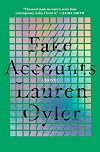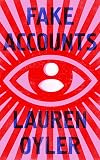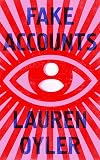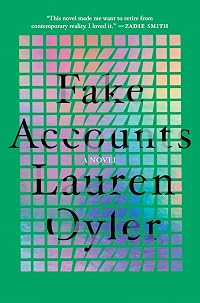
Fake Accounts
by Lauren Oyler
On This Page
Description
Ending her relationship with a man who she discovers is a popular anonymous internet conspiracy theorist, a woman activist travels from Washington, DC, to Berlin, where she struggles with increasingly manipulative dynamics in her online, business, and social circles.Tags
Recommendations





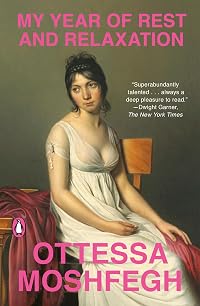


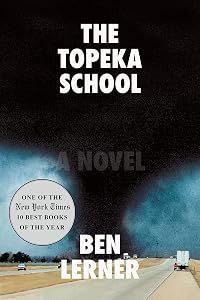
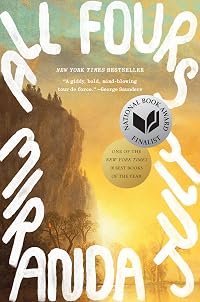

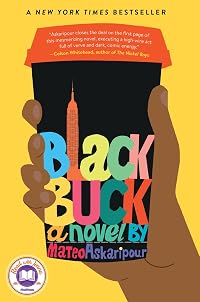





Member Reviews
Quite a book. Very well written, extremely self-referential. A seemless alchemy of the *new now* effortlessly writing in a voice of our very present: online news and information, social media, texting, emailing, online dating. It’s a jarringly accurate commentary on the fractured narcissism of our present online state of affairs seeping into our quotidian. For an unlikable protagonist, she was pretty likable. Which seems a neat trick. Like how one can loath and exalt oneself. It was dense in a way—The sentences were good enough not to rush through, but I still had a feeling of gobbling it down. But then left a bit empty and befuddled at the end. I’m not sure if I was supposed to understand something more of it. Maybe, to quote the show more final sentence, that was a part of the point? show less
When the unnamed narrator seizes the chance to snoop through her boyfriend’s phone – which he normally does not let out of his sight – she discovers that he has a large Instagram account on which he spreads conspiracy theories. She is confused but admittedly, she was already thinking about splitting up and now she’s got a good reason. However, her plan – telling him after returning from the women’s march against Trump – fails totally because when she’s still in Washington, his mother informs her of his fatal bike accident. Even though she already was detached emotionally, this hits her hard and literally throws her out of her life. She quits her job and travels to Berlin, the city where they first met and where she hopes show more to find out what she expects from life and what she actually wants to do professionally.
Lauren Oyler’s novel is a portrait of a somehow lost generation who lives a double life: one in the real world, where many of them are lost and orbiting around aimlessly, and one in the online world, where they can create an idea of themselves, a person they would like to be and play a role according to their likes. Yet, the more followers they generate, the more narcissistic they become and inevitably, the fake life in the world-wide web has an impact on reality, too. Slowly, they also start to create fake personalities there and increasingly lack the necessary authenticity and sincerity it needs to have serious relationship with others.
The narrator lives such a life in both spheres at the same time, her job involves roaming the net for good stories she can re-use and pimp for the magazine she works at. After leaving her old life behind and moving to Europe, she does not even start to create a new life in Berlin, neither does she try to learn German nor does she really make acquaintances. She dates people she gets to know online simply to tell each one a different story about who she is – she successfully transfers the possibility of a fake online account into real life. However, this does not make her any happier.
In a certain way, this is funny and ironic since it is so much over the top that it cannot be real. But is it really? Are people still able to make a distinction between the two? And which consequences does this have for us? We are all aware of how photos can be photoshopped, how information online can be embellished or simply wrong and we pay attention when we are approached by someone online whom we don’t know. In real life however, don’t we expect that people tell us the truth at least to a certain extent? And especially in a relationship, aren’t sincerity and truthfulness necessary foundations to build trust in each other?
An interesting study in how far our online behaviour may fire back – not something we can really wish for. Even though the tone is light and often funny, is leaves you somehow with a bad aftertaste. show less
Lauren Oyler’s novel is a portrait of a somehow lost generation who lives a double life: one in the real world, where many of them are lost and orbiting around aimlessly, and one in the online world, where they can create an idea of themselves, a person they would like to be and play a role according to their likes. Yet, the more followers they generate, the more narcissistic they become and inevitably, the fake life in the world-wide web has an impact on reality, too. Slowly, they also start to create fake personalities there and increasingly lack the necessary authenticity and sincerity it needs to have serious relationship with others.
The narrator lives such a life in both spheres at the same time, her job involves roaming the net for good stories she can re-use and pimp for the magazine she works at. After leaving her old life behind and moving to Europe, she does not even start to create a new life in Berlin, neither does she try to learn German nor does she really make acquaintances. She dates people she gets to know online simply to tell each one a different story about who she is – she successfully transfers the possibility of a fake online account into real life. However, this does not make her any happier.
In a certain way, this is funny and ironic since it is so much over the top that it cannot be real. But is it really? Are people still able to make a distinction between the two? And which consequences does this have for us? We are all aware of how photos can be photoshopped, how information online can be embellished or simply wrong and we pay attention when we are approached by someone online whom we don’t know. In real life however, don’t we expect that people tell us the truth at least to a certain extent? And especially in a relationship, aren’t sincerity and truthfulness necessary foundations to build trust in each other?
An interesting study in how far our online behaviour may fire back – not something we can really wish for. Even though the tone is light and often funny, is leaves you somehow with a bad aftertaste. show less
About as interesting as a Twitter account. Extra points for making the main character insufferable but owning it.
This book was nearly insufferable. It starts out with a strong plot, and I was drawn into the documentary-level detail, but I didn't foresee how off the rails it would go. After part 1, where heroine discovered her boyfriend is a secret conspiracy theorist, and part 2, which flashes back to their meet-cute, super plot twist comes along and twists the plot so severely there is no longer any plot. Then we get an absolutely interminable section where heroine just wanders around. At one point she decides to go on a series of 12 fake dates, during each of which she pretends to be a different stereotyped sign of the zodiac. I felt like I was reading some Japanese fiction where any random thing might happen next, and when things get like that, show more I just get like WHY!?!?!
And yes, you can totally convince me that I'm reading it on entirely the wrong level, and that all my complaints are "the point." Nevertheless, complaints they are. show less
And yes, you can totally convince me that I'm reading it on entirely the wrong level, and that all my complaints are "the point." Nevertheless, complaints they are. show less
A great, knowing narrative tone, interesting plot, quick and sharp characterisations of the characters, even incidental ones.
The huge quantities of introspection and app-using occasionally made me want to throw my phone out the window and go look at a tree, but I guess that's my fault for reading a book about the internet.
The huge quantities of introspection and app-using occasionally made me want to throw my phone out the window and go look at a tree, but I guess that's my fault for reading a book about the internet.
The blurb is super misleading and the book isn't really about conspiracy theories or the early days of the Trump presidency, but is definitely worth a read despite that. Oyler is a great writer, and while some people won't like the stream-of-consciousness-y, self-aware style, I found it engaging and certainly unique.
Sometimes brilliant, oftentimes tedious. Definitely not the type of book that you can recommend to just anyone since most people won't have the patience for it. Unfortunately, I made the mistake of recommending this book to a patron before I encountered the tedious parts, so I'm pretty sure that person now thinks I have terrible taste and will never ask me for a book recommendation again.
Members
- Recently Added By
Lists

Female Author
1,234 works; 67 members

Anticipated 2021 Reads
231 works; 7 members

Books Read in 2020
4,379 works; 124 members

Our digital age
79 works; 5 members

Books Read in 2021
5,361 works; 114 members

Global Reads: Books Set in Western Europe
186 works; 10 members
Author Information

2+ Works 486 Members
Some Editions
Awards and Honors
Common Knowledge
- Important places
- Berlin, Germany
- First words
- CONSENSUS WAS THE WORLD WAS ENDING, OR WOULD BEGIN TO end soon, if not by exponential environmental catastrophe then by some combination of nuclear war, the American two-party system, patriarchy, white supremacy, gentrificati... (show all)on, globalization, data breaches, and social media.
- Last words
- (Click to show. Warning: May contain spoilers.)“That’s part of the point.”
- Canonical DDC/MDS
- 813.6
- Canonical LCC
- PS3615.Y54
Classifications
Statistics
- Members
- 428
- Popularity
- 72,052
- Reviews
- 18
- Rating
- (2.82)
- Languages
- English, German
- Media
- Paper, Audiobook, Ebook
- ISBNs
- 11
- ASINs
- 4