On This Page
Description
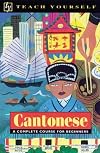
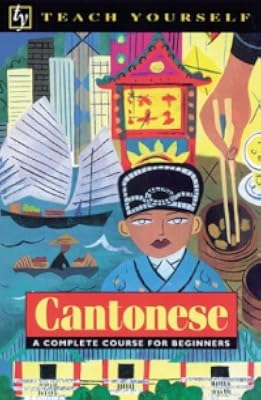
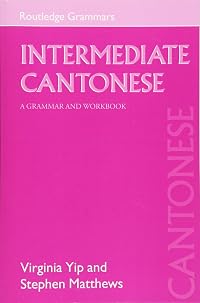
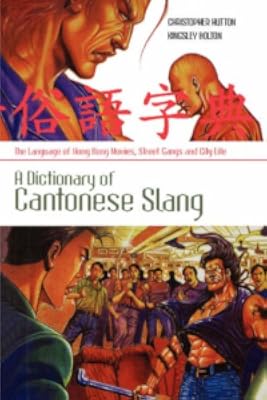
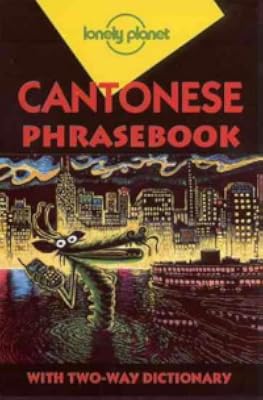
Cantonese is a vital living language spoken by upwards of a hundred million people in south-east China (including Hong Kong and Macau), Malaysia, Europe, Australia, Fiji, North America and many other parts of the world where the adventurous Cantonese people have settled. It is one of a large family of Chinese languages and retains many more traces of its ancient roots than do most of the other languages. On the other hand it is a language which seems unafraid to adopt or adapt, notably from show more English in the past century or so, and it invents, evolves and discards slang at a frenetic rate. As a result it is a very rich language. show lessTags
Recommendations














Member Reviews
This one of the few helpful books on learning Cantonese (The local dialect of Chinese from Hong Kong, Macau, Canton and Shenzhen).
I found the coursebook easy to learn because I am fluent in Mandarin and Hookien - and some Cantonese words have similar sounds to the other two languages. I think a person with zero knowledge in Chinese would have a harder time grasping the concept of the Cantonese lessons in this book.
Every lesson has a dialogue and script which the student must learn from. I think these dialogues are essential to learning the language. However, the scripts are written in Chinese and there are no reference material in the book on how to write or read these characters. (Hence it would be much more difficult for people who show more have no knowledge in Chinese to understand the scripts).
What I found useful with the coursebook and CD is the fact that the audio materials helped me identify the various tones and pronounciations of the Cantonese language. There are eight tones in Cantonese, twice as many as Mandarin. The CD helped me a lot in deciphering the langauge. The CD is essential in learning the language - I doubt if you can learn the language with the book alone. show less
I found the coursebook easy to learn because I am fluent in Mandarin and Hookien - and some Cantonese words have similar sounds to the other two languages. I think a person with zero knowledge in Chinese would have a harder time grasping the concept of the Cantonese lessons in this book.
Every lesson has a dialogue and script which the student must learn from. I think these dialogues are essential to learning the language. However, the scripts are written in Chinese and there are no reference material in the book on how to write or read these characters. (Hence it would be much more difficult for people who show more have no knowledge in Chinese to understand the scripts).
What I found useful with the coursebook and CD is the fact that the audio materials helped me identify the various tones and pronounciations of the Cantonese language. There are eight tones in Cantonese, twice as many as Mandarin. The CD helped me a lot in deciphering the langauge. The CD is essential in learning the language - I doubt if you can learn the language with the book alone. show less
Ratings
Members
- Recently Added By
Author Information
8 Works 159 Members
Series

Belongs to Publisher Series
Teach Yourself Languages (Cantonese)
Common Knowledge
- Canonical title
- Teach Yourself Languages: Cantonese
Classifications
- Genres
- Nonfiction, General Nonfiction
- DDC/MDS
- 495.17 — Language Other languages Languages of east and southeast Asia Chinese Historical and geographic variations, modern nongeographic variations of Chinese
- LCC
- PL1733 .B27 — Language and Literature Languages and literatures of Eastern Asia, Africa, Oceania Languages of Eastern Asia, Africa, Oceania Chinese language and literature Chinese language
- BISAC
Statistics
- Members
- 101
- Popularity
- 320,622
- Reviews
- 1
- Rating
- (3.30)
- Languages
- Chinese, English
- Media
- Paper
- ISBNs
- 13
- UPCs
- 1