On This Page
Description
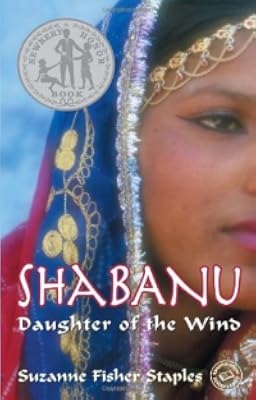
When eleven-year old Shabanu, the daughter of a nomad in the Cholistan Desert of present-day Pakistan, is pledged in marriage to an older man whose money will bring prestige to the family, she must either accept the decision, as is the custom, or risk the consequences of defying her father's wishes.Tags
Recommendations





Member Recommendations

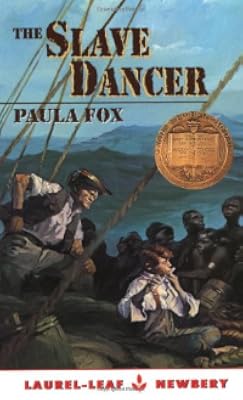
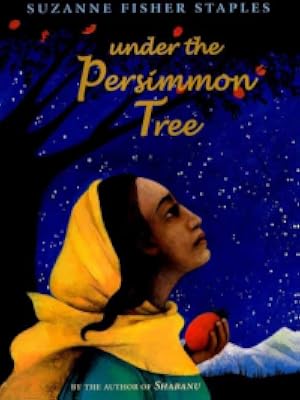
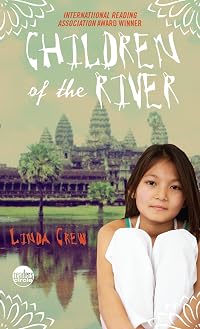
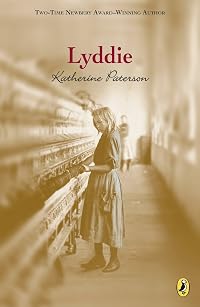
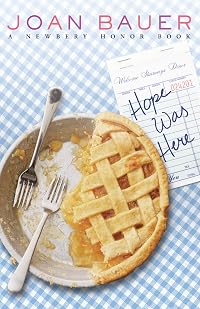
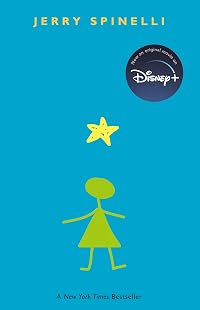
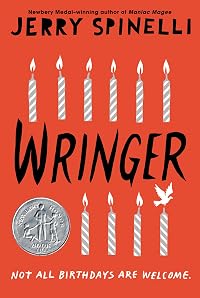
amyblue This is a fiction book but it is set in roughly the same area and very engaging. The sequel to Shabanu is Haveli
Member Reviews
I was convinced by this moving story of a young teenage girl, Shabanu, raised in a nomadic desert family. Her account of her daily life - it's written in the first person - gave me some real insight into her life, and its real differences from 21st century European life. But her emotions as she confronts the marriage choices made for her as circumstances change around her are ones it's easy to identify with too. She has some very hard lessons to learn which are not the kind of lesson it would be palatable for a young western girl to accept. But as her mother warns, 'Shabanu, you are wild as the wind. You must learn to obey. Otherwise . . . I am afraid for you.'
Finally done with this Newbery notable.
Important book, teaching us about the desert people of Pakistan, near the Afghanistan border (iiuc. no map). But young me would have despised it. Not just because the awful things that happen to women and girls, but by the fact that in between episodes of intensity it was boring. In my opinion, it's better for teens, maybe even adults, even though Shabanu is pre-pubescent when it begins and it only covers about a year.
Btw, there is a sequel, but the ambiguous ending is a good stopping place because real-life always has loose ends.
Important book, teaching us about the desert people of Pakistan, near the Afghanistan border (iiuc. no map). But young me would have despised it. Not just because the awful things that happen to women and girls, but by the fact that in between episodes of intensity it was boring. In my opinion, it's better for teens, maybe even adults, even though Shabanu is pre-pubescent when it begins and it only covers about a year.
Btw, there is a sequel, but the ambiguous ending is a good stopping place because real-life always has loose ends.
This is a surprising Newbery honor book. The author attempts to be neutral about child marriages in the Muslim world, and ends up wth a confusing ending for a sympathetic protagonist.
Tending camels. Arranged marriages. Living in thatched mud huts. Thirst. Moving from place to place. Monsoon rains. Enter the world of Shabanu, a world in which parking lots and pollution are replaced by stretches of sand and desert winds. Set in present-day Pakistan's Cholistan Desert, a twelve-year-old girl's nomadic existence is minutely chronicled in this 1990 Newbery Honor book. As first-person narrator, Shabanu is an intimate observer and recorder of images and events, and it is through her eyes that we, as readers, witness the beauty of a breath-taking opal sunset, the graphic birth of a camel, and the fineness of a gossamer shatoosh (shawl). Also through her we experience a wide range of emotions--fear in being forced to marry a show more man four times her age whom she does not know, grief over the loss of a beloved camel, the death of a grandfather. Hand in hand with Shabanu's joy goes pain, cruelty, and disappointment in a society that permits women to be beaten for disobedience, enslaved in marriage, or stoned to death for looking at another man. Setting is predominant here, and first-time novelist Staples is masterful at evoking scenery. Strange, exotic surroundings become familiar, even captivating. Clear, descriptive writing is the author's hallmark, and the integration of indigenous words, names, and phrases lends a realistic quality to the language. A helpful glossary is appended, as well as a map and list of characters' names with pronunciations, increasing the story's accessibility. The novel is not highly plotted, and young adults readers accustomed to plenty of action and drama may find the first half slow-moving. Although the pacing is different, patient readers will be rewarded. The shocking death of Shabanu's sister's betrothed comes late but quickly propels the plot toward its crucial outcome. Will Shabanu surrender her independence and accept the marriage dictated by family and society, or will she choose her own freedom even at the penalty of death? Her painful decision could not be more difficult nor more deeply felt, as Shabanu grapples with following her own heart and learning "the strength of [her] will and its limits." Self-reflective beyond her years, Shabanu is an intense, sensitive girl who feels "like a child struggling to know what it is to be grown." Shabanu's situation, surroundings, and story, while completely foreign, will stretch readers beyond limitations of their own geography. But it is her universal struggle to find inner strength and beauty, despite the odds around her, that hits home. (Megan McDonald, The Five Owls, March/April 1990 (Vol. 4, No. 4))
John Newberry Medal Honorbook, 1990
Joan G. Sugarman Children's Book Award Winner, 1989 show less
John Newberry Medal Honorbook, 1990
Joan G. Sugarman Children's Book Award Winner, 1989 show less
Though I wasn't expecting young adult fiction, I gave this a read anyway and am so glad I did. Shabanu is a child in a nomadic Pakistani family, younger sister to a beauty who is to be married soon. The story is of what comes to pass in the year before the wedding. There is great detail about daily life, social customs, clothes, camels, living in the desert and more. We are able to follow as Shabanu grows from child to young woman within the confines of the customs of her family. We see her falling in love, teaching her camel to dance, grieving, comforting her aged grandfather, and taking her punishment like an adult. She is a strong voice for a woman in that part of the world. I enjoyed every moment of the book.
I will admit that I had a really hard time getting into it. The pace was extremely slow until about page 150, when the action started. I also wonder if American teenagers would really be able to relate in any way to this book. Though some might be able to make the connection of Shabanu's desire for freedom to their own lives, so many of the details seemed a little difficult to relate to. After all, we're talking about a culture where girls get married as soon as they get their first period and are expected to bear children as teenagers. It's a culture where fathers beat their daughters and it's considered normal, and children have no say in their own lives. It certainly is eye-opening to read about this sort of culture. I'm just not show more sure if teenagers would really appreciate it. As far as whether it is authentic or realistic - I personally don't know this culture very well, so that's a very hard thing for me to judge.
I suppose the thing that bothers me a little is that I’m not sure how we are supposed to interpret the culture based on this book. Are we supposed to like and appreciate it? Or are we supposed to dislike the culture because of how it robs Shabanu of her freedom and most of her happiness? There were certain, maybe I'd say stereotypes, that were unsettling to read. Many people do have the idea that Muslims are very strict, the women are obedient, and the men cruel. While we saw some great men in this story, I'm not so sure about some of the other implications for other characters. Phulan is portrayed as a girl that is stupid and empty headed, but she is also the obedient one that does what her culture wants of her. Auntie is portrayed as a mean character, and she is also the one who is described as fat - and people are cruel to her because of it. I worry that this book almost puts this culture in a bad light. I'm not sure. I just know that it really had me thinking about this way of life. show less
I suppose the thing that bothers me a little is that I’m not sure how we are supposed to interpret the culture based on this book. Are we supposed to like and appreciate it? Or are we supposed to dislike the culture because of how it robs Shabanu of her freedom and most of her happiness? There were certain, maybe I'd say stereotypes, that were unsettling to read. Many people do have the idea that Muslims are very strict, the women are obedient, and the men cruel. While we saw some great men in this story, I'm not so sure about some of the other implications for other characters. Phulan is portrayed as a girl that is stupid and empty headed, but she is also the obedient one that does what her culture wants of her. Auntie is portrayed as a mean character, and she is also the one who is described as fat - and people are cruel to her because of it. I worry that this book almost puts this culture in a bad light. I'm not sure. I just know that it really had me thinking about this way of life. show less
Shabanu, daughter of a camel herder, has grown up with more freedom than many girls in Pakistan. However, changes are coming for Shabanu. Her older sister is soon to be married, and Shabanu herself is approaching womanhood. When a frightening encounter changes everything for her family, Shabanu must make a difficult choice.
It took me a little while to get into this book, but by the time I was halfway in, I could hardly put it down. I do wonder how accurate it is in its portrayal of the culture it represents.
It took me a little while to get into this book, but by the time I was halfway in, I could hardly put it down. I do wonder how accurate it is in its portrayal of the culture it represents.
Members
- Recently Added By
Lists

Newbery Honor Books By year - II - 1981-2035
143 works; 4 members

Childhood: Books for or about children in different cultures around the wor
345 works; 18 members

KayStJ's to-read list
1,616 works; 11 members

Books Read in 2024
4,727 works; 128 members
Author Information

10+ Works 3,889 Members
Some Editions
Awards and Honors
Awards
Distinctions
Series

Work Relationships
Has as a student's study guide
Has as a teacher's guide
Common Knowledge
- Canonical title
- Shabanu: Daughter of the Wind
- Original publication date
- 1989
- People/Characters
- Shabanu; Phulan; Murad; Hamir; Nazir Mohammed; Rahim
- Important places
- Cholistan Desert (Pakistan); Pakistan
Classifications
- Genres
- Fiction and Literature, Tween, Kids, Children's Books, Teen, Young Adult
- DDC/MDS
- 813.54 — Literature & rhetoric American literature in English American fiction in English 1900-1999 1945-1999
- LCC
- PZ7 .S79346 .S — Language and Literature Fiction and juvenile belles lettres Fiction and juvenile belles lettres Juvenile belles lettres
- BISAC
Statistics
- Members
- 1,724
- Popularity
- 12,885
- Reviews
- 40
- Rating
- (3.80)
- Languages
- 7 — Chinese, Danish, Dutch, English, French, German, Norwegian (Bokmål)
- Media
- Paper, Audiobook, Ebook
- ISBNs
- 40
- ASINs
- 10