How Do You Live?
by Genzaburō Yoshino
On This Page
Description
Told in two voices, fifteen-year-old Copper struggles to confront inevitable and enormous change after his father's death and his uncle writes to him in a journal, sharing knowledge and advice in 1937 Japan.Tags
Recommendations









Member Reviews
This is a lovely, lyrical book on personal discovery, inner growth, and humanity that combines a gentle tale with the heartfelt commentary of a doting uncle; while targeting a middle-school audience as much today as when published, the discussions aren't at all wasted on an adult reader either. Actually, there are textual clues that suggest "How Do You Live?" is meant to be read aloud (i.e., on p. 241 where the narrative interrupts itself with, "When you hear about it, you will see that it was indeed a great big fuss."), and I think it would really _rock_ as a shared experience between a grown-up and child/grandchild. In fact, when Copper's mother relates a story from her youth to him, that story and her aside would be a fantastic show more starting point for an away-from-text chat!
The writing does lean a bit thick into pedantry at places (not least, the last line), making the whole feel a bit more like a lesson than "The Little Prince" ever does, and that struck a bit distractingly. The setting and social environment feel dated too, but in a very comfortable way, the way you want a good 'once upon a time' to feel. And we can all hope to feel more like Copper every day. show less
The writing does lean a bit thick into pedantry at places (not least, the last line), making the whole feel a bit more like a lesson than "The Little Prince" ever does, and that struck a bit distractingly. The setting and social environment feel dated too, but in a very comfortable way, the way you want a good 'once upon a time' to feel. And we can all hope to feel more like Copper every day. show less
This lovely novel was both complicated and very simple. It combines a lot of things that may not seem related at all—philosophical musings on morality, intelligence, poverty, and bravery; a story of a boy's school days in the 1930s; the effects of globalization on humans and production; really detailed descriptions of the process of making tofu; a kind of in-depth overview of the life and works of Napoleon... there's a lot going on but it all works! It kept my interest, and reading this now with a historical perspective certain things jumped out as really fascinating, for example: the words highlighting fairness, justice, the need to end poverty worldwide, and respect for laborers—all issues we are still, still struggling with show more today—from an author who would shortly be ostracized by his increasingly militarized government; and the parallels between the ideas and actions of the bullying older boys at Copper's school and the hallmarks of the way that fascism would shortly rise, and continues to rise, in many societies. This all makes it sound really intense, but really the feeling of the book is primarily coziness. It has a sweet, profound quality that would appeal to those who enjoy works like The Little Prince. show less
'You and I, too, because we are human, must live with only our value as human beings in mind, not thinking we are unimportant if we happen to be poor or that we are great because we lead a wealthy life.'
I can understand why some reviews talk about the book being quite slow, and that for a younger reader it might be a struggle to keep interested. But I am reviewing this as an adult, and by God everyone should read this.
A tale of a boy named Jun'ichi, nicknamed Copper by his uncle, whose life experiences make up the basis for the moral lessons that the book teaches us. Alternately with his story is the journal kept by his uncle in which he expands on the life lessons and leaves behind a legacy for Copper to follow in his future years. It show more is a story of boys growing up and playing games, of outsiders being befriended and of cowardice in the face of bullying. Sounds preachy? It's not.
I found it endearing, profoundly affecting and just a joy to read. Given the universal awfulness of everything that has been and is going on in the world, we all need a book to live by. This is a book to believe in, which gives me hope that maybe, just maybe, the best of the human spirit will prevail. show less
I can understand why some reviews talk about the book being quite slow, and that for a younger reader it might be a struggle to keep interested. But I am reviewing this as an adult, and by God everyone should read this.
A tale of a boy named Jun'ichi, nicknamed Copper by his uncle, whose life experiences make up the basis for the moral lessons that the book teaches us. Alternately with his story is the journal kept by his uncle in which he expands on the life lessons and leaves behind a legacy for Copper to follow in his future years. It show more is a story of boys growing up and playing games, of outsiders being befriended and of cowardice in the face of bullying. Sounds preachy? It's not.
I found it endearing, profoundly affecting and just a joy to read. Given the universal awfulness of everything that has been and is going on in the world, we all need a book to live by. This is a book to believe in, which gives me hope that maybe, just maybe, the best of the human spirit will prevail. show less
What an absolutely delightful book, a snapshot of a time and place but also timeless and universal; a book full of kindness and warmth; book for children and for adults to remember and relearn and refocus. Lovely. I will probably get a copy of this for myself. Knowing that the world and people just like those of this book, people just like those of the book were headed, mostly unknowing, to the catastrophe of World War Two only heightens the book’s impact for me, especially in these increasingly unstable times which in many ways resemble the 1930s.
Highest recommendation.
Highest recommendation.
Creo que es un libro muy valioso del que se pueden extraer muchas enseñanzas. Escrito con una limpieza y una sencillez muy cálidas, te consigue acercar tanto a los primeros pinitos de madurez de Koperu, como a las reflexiones llenas de sabiduría de su tío. Koperu y Kitami, Urokawa o Mizutani, así como la hermana de Mizutani o la madre de Koperu, serán personajes que no podré olvidar. Esta novela entra de lleno a mis libros favoritos. Ha sido tan agradable como comprometido con hacer de la madurez un valor alcanzable para todos, lejos del rechazo a la responsabilidad de esa mirada reflexiva y valiosa que existe en nuestros días, donde se diluyen aquellos valores que demuestran la altura moral que debería ser aspiración para show more cualquier persona que se precie de serlo. show less
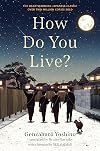
How Do You Live? is a classic Japanese middle-grades novel written by Genzaburo Yoshino and translated into English by Bruno Navasky.
The story has two narrators, Copper and his uncle. As young Copper notices things about the world around him, his uncle encourages him with love and care, gently guiding him to become a good person. Copper’s childhood experiences and his thoughts about them are followed with reflections in Uncle’s Notebook, meant for a slightly older Copper to read. This is what makes it such a charming story — Uncle constantly encourages Copper to think about the world and his place in it.
There’s not really a conflict and resolution here. As Copper has typical school boy experiences, the resolution is just him show more learning more about himself. He learns about friendship and bullying, as well as coming to awareness of social structure. At one point, he realizes that a classmate isn’t lazy or slacking, instead he’s tired at school after doing an adult’s job in the family tofu shop. Copper compares the home above the tofu shop to his own own, and discovers his own luxuries and advantages. He’s also excited, in a sweet, boyish way, when he gets to try some of the equipment for making pressed tofu. Copper’s growing awareness of his place and privileges is touching and effective.
The pacing of How Do You Live? quite slow. There is attention to description, often mentioning clothes and weather to set the scene. The slow pace works with the overall book being less about what happens next in the plot and more about, well, how to live. (Well, there’s one section, about Napoleon, that dragged a bit, but in general I was on board with a gentle unfolding.) I liked Copper considering events and feelings, and I especially liked when his mother and uncle told him stories instead of directly instructing him. Readers are often shown hints, rather than being directly told. show less
The story has two narrators, Copper and his uncle. As young Copper notices things about the world around him, his uncle encourages him with love and care, gently guiding him to become a good person. Copper’s childhood experiences and his thoughts about them are followed with reflections in Uncle’s Notebook, meant for a slightly older Copper to read. This is what makes it such a charming story — Uncle constantly encourages Copper to think about the world and his place in it.
There’s not really a conflict and resolution here. As Copper has typical school boy experiences, the resolution is just him show more learning more about himself. He learns about friendship and bullying, as well as coming to awareness of social structure. At one point, he realizes that a classmate isn’t lazy or slacking, instead he’s tired at school after doing an adult’s job in the family tofu shop. Copper compares the home above the tofu shop to his own own, and discovers his own luxuries and advantages. He’s also excited, in a sweet, boyish way, when he gets to try some of the equipment for making pressed tofu. Copper’s growing awareness of his place and privileges is touching and effective.
The pacing of How Do You Live? quite slow. There is attention to description, often mentioning clothes and weather to set the scene. The slow pace works with the overall book being less about what happens next in the plot and more about, well, how to live. (Well, there’s one section, about Napoleon, that dragged a bit, but in general I was on board with a gentle unfolding.) I liked Copper considering events and feelings, and I especially liked when his mother and uncle told him stories instead of directly instructing him. Readers are often shown hints, rather than being directly told. show less
Very sweet book. I’m trying to get over the irony of a book about ethics forwarded by a serial rapist but maybe that’s just me.
Members
- Recently Added By
Lists

Japanese Literature
230 works; 40 members

Favourite Books
1,819 works; 316 members

1001 Children's Books You Must Read Before You Grow Up
774 works; 100 members

Books Read in 2021
5,361 works; 114 members

Youth: DEI
296 works; 2 members

ghibli
12 works; 1 member

Youth: Personal Values
252 works; 1 member

books that have been adapted for film or stage
27 works; 1 member

Favorite Kids Books (chapter, middle grade)
170 works; 4 members
Author Information

2 Works 592 Members
Some Editions
Awards and Honors
Awards
Distinctions
Work Relationships
Has the adaptation
Common Knowledge
- Original title
- 君たちはどう生きるか
- Original publication date
- 1937
- Original language
- Japanese
Classifications
- Genres
- Fiction and Literature, General Fiction
- DDC/MDS
- 895.6344 — Literature & rhetoric Literatures of other languages Literatures of East and Southeast Asia Japanese Japanese fiction Meiji/Taishō periods 1868–1945 1912–1945
- LCC
- PZ7.1 .Y7 .H — Language and Literature Fiction and juvenile belles lettres Fiction and juvenile belles lettres Juvenile belles lettres
- BISAC
Statistics
- Members
- 591
- Popularity
- 49,688
- Reviews
- 19
- Rating
- (3.94)
- Languages
- 5 — English, French, Italian, Japanese, Spanish
- Media
- Paper, Audiobook, Ebook
- ISBNs
- 21
- ASINs
- 2