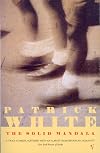
The Solid Mandala
by Patrick White
On This Page
Description
This is the story of two people living one life. Arthur and Waldo Brown were born twins and destined never to to grow away from each other. They spent their childhood together. Their youth together. Middle-age together. Retirement together. They even shared the same girl. They shared everything - except their view of things. Waldo, with his intelligence, saw everything and understood little. Arthur was the fool who didn't bother to look. He understood.Tags
Recommendations


















Member Reviews
The Mandala is a symbol of totality. It is believed to be the ‘dwelling of the Gods’,. Its protective circle is a pattern of order super-imposed on-psychic-chaos. Sometimes it’s geometric form is seen as a vision (either waking or in a dream) or danced…..”
The simple minded Arthur Brown keeps four solid mandalas in his pocket in the shape of marbles (children's toys), which take on an extraordinary significance as the novel progresses.
There was a a five year gap between the appearance of White’s last novel Riders in the Chariot and The Solid Mandala and during that time Patrick White had become stage struck. He had tried his hand at writing plays much earlier in his career when based in London, but now he wanted to become a show more successful Australian playwright. Success for White was not just getting a play performed with good box office returns it was to produce a play that would satisfy the critics to such an extent he would be considered the greatest living playwright. After some struggles in getting his plays performed there was some success with both the critics and the public, but problems started to emerge. White insisted on maintaining an iron grip on his material and would not agree to changes in the scripts, he had never been a team player and his insistence on attending rehearsals soon led to violent arguments with directors and stage managers. The play that he considered his best “A Cheery Soul” was panned by the critics and shunned by the public. White was mortified complaining that the critics considered him to be “without wit, humour, love or any kind of liking for human beings” White poured out his vitriol into one of the central characters of his new novel; Waldo Brown, who was similarly without wit, humour, love or any kind of liking for human beings.
Other aspects of White’s experiences in the theatre are also apparent in The Solid Mandala. There is far more dialogue than in previous novels and the words used have more crispness and sharpness about them and seem more naturally come from the mouths of his characters. It would seem also that the more confined nature of a stage play has influenced White in his choice of subject matter. The grand themes of Riders in the Chariot with settings in Europe and Australia have been restricted to a small suburb of Sydney where the characters hardly venture out of Terminus Road; the street where they live. White has concentrated his novel on a few characters leading uneventful lives in a turn of the century suburb, but from such paltry material a fine novel eventually breaks out.
The very short first part introduces us to the central characters the nonidentical twins Waldo and Arthur Brown. They are seen from the top of a bus by Mrs Poulter; out for their daily walk. They are both retired with Waldo the taller of the two leading by the hand his shambling thick set brother. Part two by far the largest section of the book tells the lives of the brothers from Waldo’s point of view. It becomes obvious that Waldo is the cleverer of the two and sees his twin brother as a burden that he now longs to be rid of. Arthur is simple minded, but with an idiot savants grasp of figures which had allowed him to hold down a job at the local general store. Neither of the brothers had married and still live in their parent’s house sharing the same bed and carrying out the daily tasks of keeping themselves alive that they have always done. Waldo Brown must be one of the most dispiriting characters in all of White’s literature (and there are plenty of them). He is timid, fragile totally unforgiving, a man who is afraid to live his life and falls back on the duty of protecting his twin brother whom he blames for his inability to do his life’s work, which he thinks is to become a writer. Waldo is totally selfish entirely wrapped up in himself with all other family and acquaintances barely impinging on his radar. His major concern is that Arthur should not show him up or create “a scene”. He is jealous of Arthur’s attachment to Mrs Poulter who lives across the road and is shocked when he discovers that Arthur has a closer relationship with Dulcie the one girl that Waldo thinks he could marry.
The world through Waldo’s eyes is unrelentingly mean spirited and White does such a good job of conjuring up these feelings that the novel becomes claustrophobic and depressing. People are ugly, lack compassion and are just plain mean; I struggled to read to the end of this section, becoming almost as unreceptive as Waldo, however I am glad that I did because part three sees the story open out through the eyes of Arthur. Some of the events that seem slightly puzzling are clarified through Arthur’s more simple viewpoint.. The twins could hardly be more different; Arthur is trusting outgoing, liked by many people and has the ability to form relationships with those around him. Although he sees well enough the kind of man his brother is, he does not fail to love him and is willing to sacrifice his own needs to protect his brother. This third section with an outlook, that is both loving and kind provides such a contrast to Waldo’s thoughts and actions in the previous part that it is as though White has magically produced a shaft of light to illuminate his novel and on all that has gone before. It is a masterly performance. The short final section that brings the tragic life of the twins to a close is again told through the viewpoint of Mrs Poulter and so completes the circle..
The Mandala represents a totality or protective circle that can only work when the twins are seen as one. Together they might make a more acceptable whole, when both sides of the human psyche are displayed in their thoughts and actions. There is also the feeling of the man woman relationship with Waldo turning on his brother accusing him of being like a woman. They share a bed and Arthur is able to provide comfort there to Waldo when he is at his most perplexed. Their relationship in their years of retirement is curiously similar to a couple rather than brothers.
It is Arthur who has the four solid mandalas in his pocket, he is the positive force that can influence other lives. He is able to give one to Mrs Poulter and one to Dulcie, but Waldo will not take his when it is offered and it rolls away lost, near the end of the novel. Waldo however is White’s portrait of the young Australian intellectual, afraid to live, frightened to pick up his pen and do some real work, content to pass away his time as an underling in the Library service, he can only criticise others and hardly has a good word to say about anybody. No wonder the critics did not like White’s plays. This is not a comfortable read, he pares too close to the bones of his characters for that, but once again the writing is superb and he pulls off the brilliant trick of providing a totality of experience in the lives of his characters. A four star read. show less
The simple minded Arthur Brown keeps four solid mandalas in his pocket in the shape of marbles (children's toys), which take on an extraordinary significance as the novel progresses.
There was a a five year gap between the appearance of White’s last novel Riders in the Chariot and The Solid Mandala and during that time Patrick White had become stage struck. He had tried his hand at writing plays much earlier in his career when based in London, but now he wanted to become a show more successful Australian playwright. Success for White was not just getting a play performed with good box office returns it was to produce a play that would satisfy the critics to such an extent he would be considered the greatest living playwright. After some struggles in getting his plays performed there was some success with both the critics and the public, but problems started to emerge. White insisted on maintaining an iron grip on his material and would not agree to changes in the scripts, he had never been a team player and his insistence on attending rehearsals soon led to violent arguments with directors and stage managers. The play that he considered his best “A Cheery Soul” was panned by the critics and shunned by the public. White was mortified complaining that the critics considered him to be “without wit, humour, love or any kind of liking for human beings” White poured out his vitriol into one of the central characters of his new novel; Waldo Brown, who was similarly without wit, humour, love or any kind of liking for human beings.
Other aspects of White’s experiences in the theatre are also apparent in The Solid Mandala. There is far more dialogue than in previous novels and the words used have more crispness and sharpness about them and seem more naturally come from the mouths of his characters. It would seem also that the more confined nature of a stage play has influenced White in his choice of subject matter. The grand themes of Riders in the Chariot with settings in Europe and Australia have been restricted to a small suburb of Sydney where the characters hardly venture out of Terminus Road; the street where they live. White has concentrated his novel on a few characters leading uneventful lives in a turn of the century suburb, but from such paltry material a fine novel eventually breaks out.
The very short first part introduces us to the central characters the nonidentical twins Waldo and Arthur Brown. They are seen from the top of a bus by Mrs Poulter; out for their daily walk. They are both retired with Waldo the taller of the two leading by the hand his shambling thick set brother. Part two by far the largest section of the book tells the lives of the brothers from Waldo’s point of view. It becomes obvious that Waldo is the cleverer of the two and sees his twin brother as a burden that he now longs to be rid of. Arthur is simple minded, but with an idiot savants grasp of figures which had allowed him to hold down a job at the local general store. Neither of the brothers had married and still live in their parent’s house sharing the same bed and carrying out the daily tasks of keeping themselves alive that they have always done. Waldo Brown must be one of the most dispiriting characters in all of White’s literature (and there are plenty of them). He is timid, fragile totally unforgiving, a man who is afraid to live his life and falls back on the duty of protecting his twin brother whom he blames for his inability to do his life’s work, which he thinks is to become a writer. Waldo is totally selfish entirely wrapped up in himself with all other family and acquaintances barely impinging on his radar. His major concern is that Arthur should not show him up or create “a scene”. He is jealous of Arthur’s attachment to Mrs Poulter who lives across the road and is shocked when he discovers that Arthur has a closer relationship with Dulcie the one girl that Waldo thinks he could marry.
The world through Waldo’s eyes is unrelentingly mean spirited and White does such a good job of conjuring up these feelings that the novel becomes claustrophobic and depressing. People are ugly, lack compassion and are just plain mean; I struggled to read to the end of this section, becoming almost as unreceptive as Waldo, however I am glad that I did because part three sees the story open out through the eyes of Arthur. Some of the events that seem slightly puzzling are clarified through Arthur’s more simple viewpoint.. The twins could hardly be more different; Arthur is trusting outgoing, liked by many people and has the ability to form relationships with those around him. Although he sees well enough the kind of man his brother is, he does not fail to love him and is willing to sacrifice his own needs to protect his brother. This third section with an outlook, that is both loving and kind provides such a contrast to Waldo’s thoughts and actions in the previous part that it is as though White has magically produced a shaft of light to illuminate his novel and on all that has gone before. It is a masterly performance. The short final section that brings the tragic life of the twins to a close is again told through the viewpoint of Mrs Poulter and so completes the circle..
The Mandala represents a totality or protective circle that can only work when the twins are seen as one. Together they might make a more acceptable whole, when both sides of the human psyche are displayed in their thoughts and actions. There is also the feeling of the man woman relationship with Waldo turning on his brother accusing him of being like a woman. They share a bed and Arthur is able to provide comfort there to Waldo when he is at his most perplexed. Their relationship in their years of retirement is curiously similar to a couple rather than brothers.
It is Arthur who has the four solid mandalas in his pocket, he is the positive force that can influence other lives. He is able to give one to Mrs Poulter and one to Dulcie, but Waldo will not take his when it is offered and it rolls away lost, near the end of the novel. Waldo however is White’s portrait of the young Australian intellectual, afraid to live, frightened to pick up his pen and do some real work, content to pass away his time as an underling in the Library service, he can only criticise others and hardly has a good word to say about anybody. No wonder the critics did not like White’s plays. This is not a comfortable read, he pares too close to the bones of his characters for that, but once again the writing is superb and he pulls off the brilliant trick of providing a totality of experience in the lives of his characters. A four star read. show less
White seems to have a small but enthusiastic following. After reading this I immediately went out and liberated three second-hand Whites for the price of five Euro which had been lying undisturbed for months in a prominent shop. So he's not fashionable with the general reader. But Oh the riches contained in his works! You don't read him for the plot, though the story is there, it just takes a full reading to discover it. But there are powerful scenes described. However it's really the complex writing and character studies that draw you in. It tells the story of twins who are opposites. Waldo, the rational and intellectual type and Arthur the more sensuous or physical one who nevertheless has more insight and is more connected to his show more fellow man and woman than the repressed Waldo. There's the obvious symbol for wholeness of the Mandala which Arthur is attached to and which Waldo sorely lacks.There's Christian symbolism in the bread Arthur makes and feeds to Waldo as a form of communion. Although Waldo is an aspiring writer I don't think he's representative of White, as he stated in interviews he was an intuitive rather than intellectual writer. Perhaps it's no surprise the Twitter generation hasn't embraced White as it takes a bit of application to understand his work, but for me he's one of my best discoveries of recent years. This one is a bit more straight-forward than Riders in the Chariot but it's such a boon to experience poetry on every page of a long novel. White's style gets compared to Joyce and Woolf a lot. I enjoy it as much as Joyce though I never got on terms with Woolf so far so it's an interesting comparison. I would say though that he's one of the subtlest writers there's been, maybe a little too subtle at times. show less
Patrick White era crítico de la sociedad australiana y satirizaba muchos aspectos de ella, en particular su hostilidad a la vida intelectual. En un nivel, Las esferas del mandala es una historia perfectamente realista sobre la vida íntima de dos hermanos de estructura psicológica muy diferente, hijos de inmigrantes británicos que nunca se integran en Australia. Las esferas del mandala puede leerse como un minucioso relato del destino de un cierto tipo de familia de clase media, en el entorno social en constante evolución de la Australia del siglo xx. En su nivel más abstracto, Las esferas del mandala es un libro sobre la psique humana y, en la psique humana, según lo ve White, los dos principios en guerra, llamados por algunos el show more consciente y el inconsciente, por otros lo masculino y lo femenino, por otros, todavía, lo húmedo y lo seco, son en rigor proteiformes debido a los disfraces que pueden asumir. Gran parte de la obra de Patrick White, incluida Las esferas del mandala, se ocupa de hacer visibles las sombras que hay sobre y dentro de Australia." show less
In this novel, White's characters are again outsiders, living on the edge of society. Waldo and Arthur are non-identical twins. The short first part of the novel has a suburban matron gossiping with a companion about the men when they pass by, holding hands, inappropriately dressed, hurrying, unseeing in a race to nowhere. After this first exterior glimpse, the novel then proceeds in a long section narrated from the pov of Waldo, and then a long section narrated from the pov of Arthur. Despite their being twins, they are polar opposites.
Waldo for most of his life has worked in a library, and is constantly concerned with how the world perceives him. He is Arthur's intellectual superior, and he bitterly blames all his failures and show more shortcomings on Arthur. He looks down on Arthur for his menial position as a grocery clerk.
Arthur is the "idiot savant." He knows Waldo is unhappy, and tries to do whatever he can to make Waldo content. Unlike Waldo, he relates to people, and people like him. He is Waldo's opposite--empathetic, naive and loving to Waldo's calculating hatred.
As in his other works, White's prose style is unique and stellar. This is a book of character study rather than a book of plot, and it requires close reading, but it was nevertheless difficult to put down. show less
Waldo for most of his life has worked in a library, and is constantly concerned with how the world perceives him. He is Arthur's intellectual superior, and he bitterly blames all his failures and show more shortcomings on Arthur. He looks down on Arthur for his menial position as a grocery clerk.
Arthur is the "idiot savant." He knows Waldo is unhappy, and tries to do whatever he can to make Waldo content. Unlike Waldo, he relates to people, and people like him. He is Waldo's opposite--empathetic, naive and loving to Waldo's calculating hatred.
As in his other works, White's prose style is unique and stellar. This is a book of character study rather than a book of plot, and it requires close reading, but it was nevertheless difficult to put down. show less
I 'read' this at Uni, and it's fair to say it was a bit over my head. All I remember is generally not liking Waldo, and thinking for many, many years that this novel was in fact the movie Rain Man, or vice versa. As my wife pointed out, if it was, every Patrick White book ever would have had 'From the mind behind Rain Man!' stickers on it, so even fifteen years ago, and having never read any Patrick White, she could have told me that there was no connection. Touche.
I was rather disappointed by it to begin with, and now, a day after finishing it, I'm disappointed again, but as I read the last chapter, I was lifted into a higher reality. So there's that.
I was disappointed, first of all, because we're pushed so strongly to love Arthur show more and to hate Waldo; well, it worked when I was younger, but not this time, since I over-identify with Waldo (self-conceived intellectual, artistic pretensions, always blaming something other than himself for his failures), and think that holy innocents are more likely to destroy the world than give out feeling-infused marbles. I was disappointed, part two, because Arthur, despite being a holy innocent, is also prone to some pretty witty and intellectual statements. In fact, I can't help thinking that Arthur is 'dull,' not because of anything natural in him, but simply because everyone treated him as such. That would make this a very different book, and I'm pretty sure that's not what White intended; instead, it's a failure of art. Intelligent people like to think they can write unintelligent people, without being condescending. By and large, I don't think they can. As soon as you like the character, the intelligence slips into his or her mouth.
There was also a lot of dialogue, which limited the amount of fantastically dense, weird White writing, and really I come to his work for the prose, and the satire, and not the ideas. The satire here, by the way, is great. show less
I was rather disappointed by it to begin with, and now, a day after finishing it, I'm disappointed again, but as I read the last chapter, I was lifted into a higher reality. So there's that.
I was disappointed, first of all, because we're pushed so strongly to love Arthur show more and to hate Waldo; well, it worked when I was younger, but not this time, since I over-identify with Waldo (self-conceived intellectual, artistic pretensions, always blaming something other than himself for his failures), and think that holy innocents are more likely to destroy the world than give out feeling-infused marbles. I was disappointed, part two, because Arthur, despite being a holy innocent, is also prone to some pretty witty and intellectual statements. In fact, I can't help thinking that Arthur is 'dull,' not because of anything natural in him, but simply because everyone treated him as such. That would make this a very different book, and I'm pretty sure that's not what White intended; instead, it's a failure of art. Intelligent people like to think they can write unintelligent people, without being condescending. By and large, I don't think they can. As soon as you like the character, the intelligence slips into his or her mouth.
There was also a lot of dialogue, which limited the amount of fantastically dense, weird White writing, and really I come to his work for the prose, and the satire, and not the ideas. The satire here, by the way, is great. show less
The Solid Mandala - by Patrick White
review by Gabriel
The Solid Mandala tells the story of the Brown brothers, Waldo and Arthur, non-identical twins living in the small Australian town of Sarsaparilla. It's a novel about lost souls and everyday saints, and what they do to find a place in the world, told with all the beauty and poignancy one can expect of White.
Not much happens in the novel. The brothers lives are mundane. Their childhood and adolescents are recounted in detail, and then they are suddenly old men, with no marriage of children to mark the intervening years. I’m not ruining anything by telling you this. White isn’t read for edge of your seat thrills and plot twists, but for his skill with language, his exploration of show more characters and his epic themes.
For a longer review, please go to: http://writeronwriter.wordpress.com/2009/09/27/the-solid-mandala/ show less
review by Gabriel
The Solid Mandala tells the story of the Brown brothers, Waldo and Arthur, non-identical twins living in the small Australian town of Sarsaparilla. It's a novel about lost souls and everyday saints, and what they do to find a place in the world, told with all the beauty and poignancy one can expect of White.
Not much happens in the novel. The brothers lives are mundane. Their childhood and adolescents are recounted in detail, and then they are suddenly old men, with no marriage of children to mark the intervening years. I’m not ruining anything by telling you this. White isn’t read for edge of your seat thrills and plot twists, but for his skill with language, his exploration of show more characters and his epic themes.
For a longer review, please go to: http://writeronwriter.wordpress.com/2009/09/27/the-solid-mandala/ show less
"A novel of twin brothers by Nobel-winner Patrick White. Waldo is smaller, dominant, the "intellectual one", and takes care of his brother. Arthur is the bigger "simple" one, the innocent visionary. Arthur treasures beautiful marbles and gives them to his special friends. From a book he has picked up the idea of the mandala, the Oriental symbol of totality, and his own prize marble with its curious inner markings is his solid mandala, embodying the universe. The novel is narrated twice, once from Waldo's point of view and again from Arthur's. The outcome of their lifelong unacknowledged struggle is revealed in an epilogue, in a remarkable climax. Arthur and Waldo are bound together in conflict, and together they represent the totality show more of man." - cover blurb.
Patrick White won the Nobel Prize for literature.
The book however is depressing, as Waldo is a mean-spirited and depressing character and the view of Arthur is not very favourable either. show less
Patrick White won the Nobel Prize for literature.
The book however is depressing, as Waldo is a mean-spirited and depressing character and the view of Arthur is not very favourable either. show less
Members
- Recently Added By
Lists

Australia, New Zealand and Oceania
88 works; 20 members

My favourite books
96 works; 3 members
Talk Discussions
Past Discussions
The Solid Mandala in Patrick White 100th Anniversary Challenge (May 2012)
Author Information

42+ Works 7,682 Members
Patrick White was born on May 28, 1912 in Knightsbridge, London, to Australian parents. He studied modern languages at King's College, Cambridge. During World War II, he served in the Royal Air Force. His first novel, Happy Valley, was published in 1939. His other works include The Tree of Man, Voss, Riders in the Chariot, The Solid Mandala, The show more Twyborn Affair, and The Hanging Garden. He also wrote several plays including The Season at Sarsaparilla, Night on Bald Mountain, and Signal Driver. They never met with the success his fiction had and have not been produced outside Australia. He won the Nobel Prize for Literature in 1973. He died on September 30, 1990. (Bowker Author Biography) show less
Common Knowledge
- Canonical title*
- Las esferas del Mandala
- Original publication date
- 1966
- People/Characters
- Arthur; Waldo
- Epigraph
- There is another world, but it is in this one.
Paul Eluard
It is not outside, it is inside: wholly within.
Meister Eckhart
...yet still I long
for my twin in the sun...
Patrick A... (show all)nderson
It was an old and rather poor church, many of the
ikons were without settings, but such churches are
the best for praying in.
Dostoyevsky - Dedication
- For Gwen and David Moore
- First words
- 'There's more life up this end,' Mrs Poulter said.
- Last words
- (Click to show. Warning: May contain spoilers.)Then she turned, to do the expected things, before re-entering her actual sphere of life.
*Some information comes from Common Knowledge in other languages. Click "Edit" for more information.
Classifications
Statistics
- Members
- 394
- Popularity
- 79,526
- Reviews
- 9
- Rating
- (4.03)
- Languages
- 5 — Catalan, English, Norwegian (Bokmål), Spanish, Swedish
- Media
- Paper, Audiobook, Ebook
- ISBNs
- 18
- ASINs
- 10