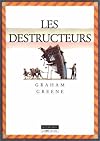
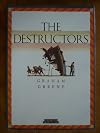
The Destructors
by Graham Greene 
On This Page
Description
The childish pranks of the Wormsley Common Gang turn serious when the newest member suggests destroying an old man's house.Tags
Recommendations


























Member Reviews
Deconstructing the Destructors:
Upon the surreal landscape demarcating the aftermath (carnage) of great wars, antagonisms paused for effect more than paucity of affront, a charismatic leader arises out of the rubble to lead the rabble. As in most origins, he is prophetically versed and vested in the ways of the world, even as a child.
It is not merely the dearth and death of the overtly developed man - no mere coincidence, that the renewed resistance stems from the youth, as surely as they are innately prepared to arise from the ashes of adolescence, likewise to the constraining strictures and structures of communal confinement.
Quiescent days of leisure dictated nominally by the pillars of the monetary artifice only enable the antithesis show more as idle hands become the devil’s workshop. Ah, but “destruction is a form of creation,” as the author famously inscribes.
It begins with the underground; movement, furtive stabs in the dark, gradually unravelling in the enveloping enclosure, contained yet unconstrained, like the stairway, propped up by the moral mythos as much as mortar. They partake with an inner fire burning crisper than the notes alit, consuming all man’s artifacts and constructs. Quintessentially elemental factors are at play: fire, water, earth, and the winds of change. Eventually inevitable collapse will ensue; once the framework to unlay is laid, the skeleton muscles forth, revealing the inner workings, before their vanquishment to nether regions, now flooded with the mouldering residual excreted from stagnated distribution cisterns and systems.
Eclosure of the chrysalis necessitates ruining of the enclosure. The rising tides have subdued the vestiges of decorum. Eventually the masses become constrained or complicit to the conspiracy and a tipping point is realized. Nothing left. Nothing left but to revel in the revelations. The revolution of generations. show less
Upon the surreal landscape demarcating the aftermath (carnage) of great wars, antagonisms paused for effect more than paucity of affront, a charismatic leader arises out of the rubble to lead the rabble. As in most origins, he is prophetically versed and vested in the ways of the world, even as a child.
It is not merely the dearth and death of the overtly developed man - no mere coincidence, that the renewed resistance stems from the youth, as surely as they are innately prepared to arise from the ashes of adolescence, likewise to the constraining strictures and structures of communal confinement.
Quiescent days of leisure dictated nominally by the pillars of the monetary artifice only enable the antithesis show more as idle hands become the devil’s workshop. Ah, but “destruction is a form of creation,” as the author famously inscribes.
It begins with the underground; movement, furtive stabs in the dark, gradually unravelling in the enveloping enclosure, contained yet unconstrained, like the stairway, propped up by the moral mythos as much as mortar. They partake with an inner fire burning crisper than the notes alit, consuming all man’s artifacts and constructs. Quintessentially elemental factors are at play: fire, water, earth, and the winds of change. Eventually inevitable collapse will ensue; once the framework to unlay is laid, the skeleton muscles forth, revealing the inner workings, before their vanquishment to nether regions, now flooded with the mouldering residual excreted from stagnated distribution cisterns and systems.
Eclosure of the chrysalis necessitates ruining of the enclosure. The rising tides have subdued the vestiges of decorum. Eventually the masses become constrained or complicit to the conspiracy and a tipping point is realized. Nothing left. Nothing left but to revel in the revelations. The revolution of generations. show less
I didn't get it. It wasn't funny. :) Listened to audio book.
Haunting
Ratings
Members
- Recently Added By
Author Information

356+ Works 87,436 Members
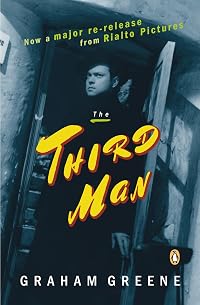
Born in 1904, Graham Greene was the son of a headmaster and the fourth of six children. Preferring to stay home and read rather than endure the teasing at school that was a by-product of his father's occupation, Greene attempted suicide several times and eventually dropped out of school at the age of 15. His parents sent him to an analyst in show more London who recommended he try writing as therapy. He completed his first novel by the time he graduated from college in 1925. Greene wrote both entertainments and serious novels. Catholicism was a recurring theme in his work, notable examples being The Power and the Glory (1940) and The End of the Affair (1951). Popular suspense novels include: The Heart of the Matter, Our Man in Havana and The Quiet American. Greene was also a world traveler and he used his experiences as the basis for many books. One popular example, Journey Without Maps (1936), was based on a trip through the jungles of Liberia. Greene also wrote and adapted screenplays, including that of the 1949 film, The Third Man, which starred Orson Welles. He died in Vevey, Switzerland in 1991. (Bowker Author Biography) show less
Graham Greene has a Legacy Library. Legacy libraries are the personal libraries of famous readers, entered by LibraryThing members from the Legacy Libraries group.
Work Relationships
Is contained in
Has as a student's study guide
Common Knowledge
- Canonical title
- The Destructors
Classifications
Statistics
- Members
- 61
- Popularity
- 506,722
- Reviews
- 3
- Rating
- (4.11)
- Languages
- English, French
- Media
- Paper
- ISBNs
- 2
- ASINs
- 1