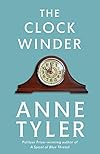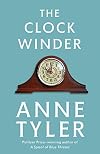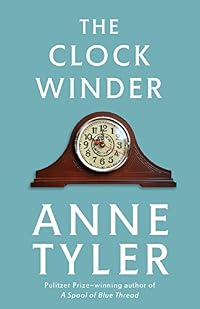
The Clock Winder
by Anne Tyler
On This Page
Description
Mrs. Emerson, widowed with seven adult children, lives alone in crumbling Victorian mansion outside Baltimore with only a collection of antique clocks to keep her company. Elizabeth Abbott - twenty-three years old, aimless, bohemian, and beautiful - leads a vagabond lifestyle until she happens upon Mrs. Emerson's home and convinces the older woman to hire her as a handyman. When three of the strange, idiosyncratic Emerson children return to their childhood home for a visit, they are show more irresistibly drawn to Elizabeth. With wondrous observations and bittersweet humor, Tyler shows how this unsuspecting young woman becomes the North star that helps a stumbling, dysfunctional family find its footing. show lessTags
Recommendations









Member Reviews
Noting the relationship between my goodreads friends and acquaintances, and Anne Tyler makes me wonder. Is Jane Austen some sort of token? We have to like somebody who writes about domesticity, so...
Is that it? Tyler does indeed write about domesticity. Ordinary people living ordinary lives, mostly in their very ordinary houses. She does this fantastically well and I can't really imagine a more important job a writer could have.
But maybe it is despised precisely for being the things I think are so important. I am astonished by how many people I think should know better who have never read anything by Tyler. She describes ordinary cares and heart break, ordinary despair and ordinary hope with a light touch that makes you realise that she show more loves all that she brings to the page. She is all-knowing and all-understanding with a modesty that makes her slip by unnoticed by those that need literature to be brash, experimental, obscure or difficult. I am tempted to define the thing people call literature, whilst scorning that which they see as not falling into the genre, as something that IS putdownable. If that is so, then Tyler most dismally fails to make the grade. What a relief.
---------------------
I've given up trying to understand why it is that the amount that this author moves me is inversely proportioned to what I have to say about her. I have no idea how to do justice to her way of making ordinary failed people quicken one's heart.
Let me quote a little instead.
Matthew, whose mother is a dreadful piece of work, asked if Elizabeth finds her hard to put up with.
And there I sat, as I read this, in my quite small life, and resolved to dress better. Though I rather think I draw the line at holding my tummy in.
Matthew recalls his brother, Tim, who shot himself as Elizabeth attempted to take away the gun - well, I think it was all his own work.
I am appalled to report that I once had to defend Anne Tyler against the charge that she was like Jane Austen. P-leeassse. It isn't just that Austen is a vastly inferior writer technically, and a less careful observer of life, but Austen is a social critic, a judge. She has an opinion which is the whole point of what she does. Tyler couldn't be more the opposite, I don't think I've ever read anything as moving as Tyler, which never gives you the least teensiest inkling into what the author thinks. She strikes me as God-like in this sense and more so than any writer I've read. Isn't that something? show less
Is that it? Tyler does indeed write about domesticity. Ordinary people living ordinary lives, mostly in their very ordinary houses. She does this fantastically well and I can't really imagine a more important job a writer could have.
But maybe it is despised precisely for being the things I think are so important. I am astonished by how many people I think should know better who have never read anything by Tyler. She describes ordinary cares and heart break, ordinary despair and ordinary hope with a light touch that makes you realise that she show more loves all that she brings to the page. She is all-knowing and all-understanding with a modesty that makes her slip by unnoticed by those that need literature to be brash, experimental, obscure or difficult. I am tempted to define the thing people call literature, whilst scorning that which they see as not falling into the genre, as something that IS putdownable. If that is so, then Tyler most dismally fails to make the grade. What a relief.
---------------------
I've given up trying to understand why it is that the amount that this author moves me is inversely proportioned to what I have to say about her. I have no idea how to do justice to her way of making ordinary failed people quicken one's heart.
Let me quote a little instead.
Matthew, whose mother is a dreadful piece of work, asked if Elizabeth finds her hard to put up with.
'No, I like her,' she said. 'Think what a small life she has, but she still dresses up every day and holds her stomach in. Isn't that something?'
And there I sat, as I read this, in my quite small life, and resolved to dress better. Though I rather think I draw the line at holding my tummy in.
Matthew recalls his brother, Tim, who shot himself as Elizabeth attempted to take away the gun - well, I think it was all his own work.
Then a new picture slid in, clicking up from the back of his head: Timothy quarreling with Elizabeth. Only what was it about? Had she broken a date? Refused one? Shown up late for something? All he remembered was the it had happened on the sunporch, over the noise of a TV western. 'If you persist,' Timothy said, 'in seeing life as some kind of gimmicky guided tour where everyone signs up for a surprise destination -' and Elizabeth said, 'What?' Seeing what?' 'Life,' said Timothy, and Elizabeth said, 'Oh, life,' and smiled as fondly and happily as if he had mentioned her favourite acquaintance. Timothy stopped speaking, and his face took on a puzzled look. Wispy lines crossed his forehead. And Matthew, listening from across the room, had thought: It isn't Timothy she loves, then. He hadn't bothered wondering how he reached that conclusion. He sat before the television watching Marshall Dillion, holding his happiness close to his chest and forgetting, for once, all the qualities in Timothy that were hard to take....He forgot them again now, and with them the picture of Timothy triumphantly cocking his pistol and laughing in his family's face. All he saw was that puckered, defeated forehead. He cleared his throat. He felt burdened by new sorrows that he regretted having invited.
I am appalled to report that I once had to defend Anne Tyler against the charge that she was like Jane Austen. P-leeassse. It isn't just that Austen is a vastly inferior writer technically, and a less careful observer of life, but Austen is a social critic, a judge. She has an opinion which is the whole point of what she does. Tyler couldn't be more the opposite, I don't think I've ever read anything as moving as Tyler, which never gives you the least teensiest inkling into what the author thinks. She strikes me as God-like in this sense and more so than any writer I've read. Isn't that something? show less
Noting the relationship between my goodreads friends and acquaintances, and Anne Tyler makes me wonder. Is Jane Austen some sort of token? We have to like somebody who writes about domesticity, so...
Is that it? Tyler does indeed write about domesticity. Ordinary people living ordinary lives, mostly in their very ordinary houses. She does this fantastically well and I can't really imagine a more important job a writer could have.
But maybe it is despised precisely for being the things I think are so important. I am astonished by how many people I think should know better who have never read anything by Tyler. She describes ordinary cares and heart break, ordinary despair and ordinary hope with a light touch that makes you realise that she show more loves all that she brings to the page. She is all-knowing and all-understanding with a modesty that makes her slip by unnoticed by those that need literature to be brash, experimental, obscure or difficult. I am tempted to define the thing people call literature, whilst scorning that which they see as not falling into the genre, as something that IS putdownable. If that is so, then Tyler most dismally fails to make the grade. What a relief.
---------------------
I've given up trying to understand why it is that the amount that this author moves me is inversely proportioned to what I have to say about her. I have no idea how to do justice to her way of making ordinary failed people quicken one's heart.
Let me quote a little instead.
Matthew, whose mother is a dreadful piece of work, asked if Elizabeth finds her hard to put up with.
And there I sat, as I read this, in my quite small life, and resolved to dress better. Though I rather think I draw the line at holding my tummy in.
Matthew recalls his brother, Tim, who shot himself as Elizabeth attempted to take away the gun - well, I think it was all his own work.
I am appalled to report that I once had to defend Anne Tyler against the charge that she was like Jane Austen. P-leeassse. It isn't just that Austen is a vastly inferior writer technically, and a less careful observer of life, but Austen is a social critic, a judge. She has an opinion which is the whole point of what she does. Tyler couldn't be more the opposite, I don't think I've ever read anything as moving as Tyler, which never gives you the least teensiest inkling into what the author thinks. She strikes me as God-like in this sense and more so than any writer I've read. Isn't that something? show less
Is that it? Tyler does indeed write about domesticity. Ordinary people living ordinary lives, mostly in their very ordinary houses. She does this fantastically well and I can't really imagine a more important job a writer could have.
But maybe it is despised precisely for being the things I think are so important. I am astonished by how many people I think should know better who have never read anything by Tyler. She describes ordinary cares and heart break, ordinary despair and ordinary hope with a light touch that makes you realise that she show more loves all that she brings to the page. She is all-knowing and all-understanding with a modesty that makes her slip by unnoticed by those that need literature to be brash, experimental, obscure or difficult. I am tempted to define the thing people call literature, whilst scorning that which they see as not falling into the genre, as something that IS putdownable. If that is so, then Tyler most dismally fails to make the grade. What a relief.
---------------------
I've given up trying to understand why it is that the amount that this author moves me is inversely proportioned to what I have to say about her. I have no idea how to do justice to her way of making ordinary failed people quicken one's heart.
Let me quote a little instead.
Matthew, whose mother is a dreadful piece of work, asked if Elizabeth finds her hard to put up with.
'No, I like her,' she said. 'Think what a small life she has, but she still dresses up every day and holds her stomach in. Isn't that something?'
And there I sat, as I read this, in my quite small life, and resolved to dress better. Though I rather think I draw the line at holding my tummy in.
Matthew recalls his brother, Tim, who shot himself as Elizabeth attempted to take away the gun - well, I think it was all his own work.
Then a new picture slid in, clicking up from the back of his head: Timothy quarreling with Elizabeth. Only what was it about? Had she broken a date? Refused one? Shown up late for something? All he remembered was the it had happened on the sunporch, over the noise of a TV western. 'If you persist,' Timothy said, 'in seeing life as some kind of gimmicky guided tour where everyone signs up for a surprise destination -' and Elizabeth said, 'What?' Seeing what?' 'Life,' said Timothy, and Elizabeth said, 'Oh, life,' and smiled as fondly and happily as if he had mentioned her favourite acquaintance. Timothy stopped speaking, and his face took on a puzzled look. Wispy lines crossed his forehead. And Matthew, listening from across the room, had thought: It isn't Timothy she loves, then. He hadn't bothered wondering how he reached that conclusion. He sat before the television watching Marshall Dillion, holding his happiness close to his chest and forgetting, for once, all the qualities in Timothy that were hard to take....He forgot them again now, and with them the picture of Timothy triumphantly cocking his pistol and laughing in his family's face. All he saw was that puckered, defeated forehead. He cleared his throat. He felt burdened by new sorrows that he regretted having invited.
I am appalled to report that I once had to defend Anne Tyler against the charge that she was like Jane Austen. P-leeassse. It isn't just that Austen is a vastly inferior writer technically, and a less careful observer of life, but Austen is a social critic, a judge. She has an opinion which is the whole point of what she does. Tyler couldn't be more the opposite, I don't think I've ever read anything as moving as Tyler, which never gives you the least teensiest inkling into what the author thinks. She strikes me as God-like in this sense and more so than any writer I've read. Isn't that something? show less
Noting the relationship between my goodreads friends and acquaintances, and Anne Tyler makes me wonder. Is Jane Austen some sort of token? We have to like somebody who writes about domesticity, so...
Is that it? Tyler does indeed write about domesticity. Ordinary people living ordinary lives, mostly in their very ordinary houses. She does this fantastically well and I can't really imagine a more important job a writer could have.
But maybe it is despised precisely for being the things I think are so important. I am astonished by how many people I think should know better who have never read anything by Tyler. She describes ordinary cares and heart break, ordinary despair and ordinary hope with a light touch that makes you realise that she show more loves all that she brings to the page. She is all-knowing and all-understanding with a modesty that makes her slip by unnoticed by those that need literature to be brash, experimental, obscure or difficult. I am tempted to define the thing people call literature, whilst scorning that which they see as not falling into the genre, as something that IS putdownable. If that is so, then Tyler most dismally fails to make the grade. What a relief.
---------------------
I've given up trying to understand why it is that the amount that this author moves me is inversely proportioned to what I have to say about her. I have no idea how to do justice to her way of making ordinary failed people quicken one's heart.
Let me quote a little instead.
Matthew, whose mother is a dreadful piece of work, asked if Elizabeth finds her hard to put up with.
And there I sat, as I read this, in my quite small life, and resolved to dress better. Though I rather think I draw the line at holding my tummy in.
Matthew recalls his brother, Tim, who shot himself as Elizabeth attempted to take away the gun - well, I think it was all his own work.
I am appalled to report that I once had to defend Anne Tyler against the charge that she was like Jane Austen. P-leeassse. It isn't just that Austen is a vastly inferior writer technically, and a less careful observer of life, but Austen is a social critic, a judge. She has an opinion which is the whole point of what she does. Tyler couldn't be more the opposite, I don't think I've ever read anything as moving as Tyler, which never gives you the least teensiest inkling into what the author thinks. She strikes me as God-like in this sense and more so than any writer I've read. Isn't that something? show less
Is that it? Tyler does indeed write about domesticity. Ordinary people living ordinary lives, mostly in their very ordinary houses. She does this fantastically well and I can't really imagine a more important job a writer could have.
But maybe it is despised precisely for being the things I think are so important. I am astonished by how many people I think should know better who have never read anything by Tyler. She describes ordinary cares and heart break, ordinary despair and ordinary hope with a light touch that makes you realise that she show more loves all that she brings to the page. She is all-knowing and all-understanding with a modesty that makes her slip by unnoticed by those that need literature to be brash, experimental, obscure or difficult. I am tempted to define the thing people call literature, whilst scorning that which they see as not falling into the genre, as something that IS putdownable. If that is so, then Tyler most dismally fails to make the grade. What a relief.
---------------------
I've given up trying to understand why it is that the amount that this author moves me is inversely proportioned to what I have to say about her. I have no idea how to do justice to her way of making ordinary failed people quicken one's heart.
Let me quote a little instead.
Matthew, whose mother is a dreadful piece of work, asked if Elizabeth finds her hard to put up with.
'No, I like her,' she said. 'Think what a small life she has, but she still dresses up every day and holds her stomach in. Isn't that something?'
And there I sat, as I read this, in my quite small life, and resolved to dress better. Though I rather think I draw the line at holding my tummy in.
Matthew recalls his brother, Tim, who shot himself as Elizabeth attempted to take away the gun - well, I think it was all his own work.
Then a new picture slid in, clicking up from the back of his head: Timothy quarreling with Elizabeth. Only what was it about? Had she broken a date? Refused one? Shown up late for something? All he remembered was the it had happened on the sunporch, over the noise of a TV western. 'If you persist,' Timothy said, 'in seeing life as some kind of gimmicky guided tour where everyone signs up for a surprise destination -' and Elizabeth said, 'What?' Seeing what?' 'Life,' said Timothy, and Elizabeth said, 'Oh, life,' and smiled as fondly and happily as if he had mentioned her favourite acquaintance. Timothy stopped speaking, and his face took on a puzzled look. Wispy lines crossed his forehead. And Matthew, listening from across the room, had thought: It isn't Timothy she loves, then. He hadn't bothered wondering how he reached that conclusion. He sat before the television watching Marshall Dillion, holding his happiness close to his chest and forgetting, for once, all the qualities in Timothy that were hard to take....He forgot them again now, and with them the picture of Timothy triumphantly cocking his pistol and laughing in his family's face. All he saw was that puckered, defeated forehead. He cleared his throat. He felt burdened by new sorrows that he regretted having invited.
I am appalled to report that I once had to defend Anne Tyler against the charge that she was like Jane Austen. P-leeassse. It isn't just that Austen is a vastly inferior writer technically, and a less careful observer of life, but Austen is a social critic, a judge. She has an opinion which is the whole point of what she does. Tyler couldn't be more the opposite, I don't think I've ever read anything as moving as Tyler, which never gives you the least teensiest inkling into what the author thinks. She strikes me as God-like in this sense and more so than any writer I've read. Isn't that something? show less
When Mrs. Emerson is widowed, she is at a loss. Her seven children rarely visit, and her clocks all need to be wound. She fires her handyman, and needs help. Elizabeth Abbott, on her way to an interview, stops by, and Mrs. Emerson hires her. Elizabeth is beautiful and unique, and 2 of Emerson's sons fall in love with her. This causes a family problem, and Elizabeth is in the middle of it.
This book is an examination of family, relationships, mental health, and elder care. As usual, the ending is bittersweet.
This book is an examination of family, relationships, mental health, and elder care. As usual, the ending is bittersweet.
My first foray into Anne Tyler's books was [Digging to America], which I gave a very generous 2 stars, and promptly decided to never read another Anne Tyler book. Thanks to a certain warbler's author challenge, I decided to give Tyler one more chance. I scoured the local library's offerings and did not like any of the story summaries until I stumbled across the one for [The Clock Winder], which gave me a fleeting nostalgic reminder of another quirky family story I had read years ago, the author and title of that story alludes me at the moment. Dysfunctional families make for wonderful storytelling, provided one doesn't go overboard or leave the reading hanging half off of cliff of expectation. Tyler has created a somewhat believable show more family in the Emersons - although I have to admit that Andrew is one character that seems like a random wildcard thrown in to the mix of otherwise more-or-less normal family members. I felt more of a connection with Mrs. Emerson than with Elizabeth... Elizabeth as a character did strike me as too secretive (Tyler chooses to allow Elizabeth to remain a bit of an enigma) and the ending was one of those "Say what?" moments but for the most part I was intrigued by the interaction of the various characters. As one reviewer here on LT put it, "The Clock Winder is what happens when people make lasting impressions." Favorite quote from the book:
"Maybe they're right," he said. "You shouldn't hope for anything from someone that much different from your family."Overall, I am glad to have had the opportunity to give Tyler another chance, even if a number of Anne Tyler fans feels that this is one of her poorer works. For me, it is a rough diamond that with some polish, could be quite a gem. show less
"You should if your family doesn't have it," said Gillespie.
1960s Baltimore. Mr. Emerson had clocks in every room and had a schedule for when to wind them so that they all rang out at the same time. When he died, his widow, Pamela, was at a loss as to how to keep the clocks wound and chiming simultaneously and also how to take care of everything else in her huge house, especially after firing all of her help. Then along came Elizabeth, easygoing, friendly, a klutz, but who suddenly turns into an ace handyman/woman when working for Mrs. Emerson, surprising even herself, and she enjoys it. There are 7 Emerson children, all grown, and two of the boys, Timothy and Matthew, are attracted to Elizabeth and enjoy her company, which leads to tragedy but also, eventually, healing. Nobody does quirky show more characters like Anne Tyler, and Elizabeth and the Emersons don't disappoint, but it is a lovable and humorous quirkiness. An enjoyable book with memorable characters and situations. show less
This novel starts from an archetypal premise - that of an outsider of lower social class entering the world of a large upper-middle-class family, and the effect each has on the other - and it took me a while to warm to it; one plot twist in particular was all too predictable. But with that exception, the book veers off in some unexpected directions, and by the end, I was very happy that I'd read it. As a bonus, it is also extremely well written.
Members
- Recently Added By
Talk Discussions
Past Discussions
Detached woman works for family, brother commits suicide, but a happy ending. in Name that Book (October 2011)
Author Information

63+ Works 56,074 Members
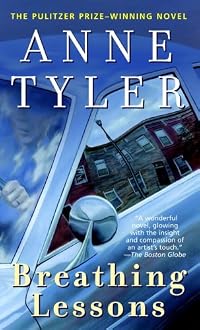
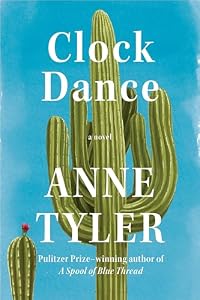
Anne Tyler was born in Minneapolis, Minnesota on October 25, 1941. She graduated from Duke University at the age of 19 and completed graduate work in Russian studies at Columbia University. Before becoming a full-time author, she worked as a librarian and bibliographer. Her first novel, If Morning Ever Comes, was published in 1964. Her other works show more include Saint Maybe, Back When We Were Grownups, Digging to America, Noah's Compass, The Beginner's Goodbye, A Spool of Blue Thread, and Vinegar Girl. She has won several awards including the PEN Faulkner Award in 1983 for Dinner at the Homesick Restaurant, the 1985 National Book Critics Circle Award for The Accidental Tourist, and the 1988 Pulitzer Prize for Breathing Lessons. The Accidental Tourist was adapted into a 1988 movie starring William Hurt and Geena Davis. In 2018 her title, Clock Dance, made the bestsellers list. (Bowker Author Biography) Anne Tyler was born in Minneapolis, Minnesota, and grew up in Raleigh, North Carolina. "Back When We Were Grownups" is her 15th novel; her 11th, "Breathing Lessons", won the Pulitzer Prize in 1988. She is a member of the American Academy of Arts & Letters. She lives in Baltimore, Maryland. (Publisher Provided) show less
Work Relationships
Is contained in
Is abridged in
Common Knowledge
- Original publication date
- 1972
- People/Characters
- Elizabeth 'Gillespie' Abbott; Mrs Pamela Emerson; Timothy Emerson; Andrew Emerson; Matthew Emerson; Melissa (show all 11); Margaret; Mary; Peter Emerson; P.J.; Emmeline
- Important places
- Maryland, USA; Baltimore, Maryland, USA
- First words
- The house had outlived its usefulness.
- Last words
- (Click to show. Warning: May contain spoilers.)By the time they had reached the main road again, she was asleep with her head in his lap.
- Publisher's editor
- Jones, Judith
Classifications
Statistics
- Members
- 914
- Popularity
- 29,164
- Reviews
- 24
- Rating
- (3.58)
- Languages
- 5 — Dutch, English, German, Italian, Russian
- Media
- Paper, Audiobook, Ebook
- ISBNs
- 32
- ASINs
- 18