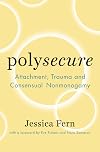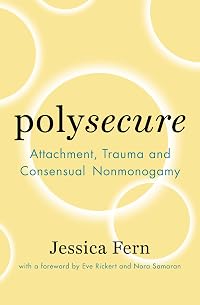
Polysecure: Attachment, Trauma and Consensual Nonmonogamy
by Jessica Fern
On This Page
Description
Attachment theory has entered the mainstream, but most discussions focus on how we can cultivate secure monogamous relationships. What if, like many people, you're striving for secure, happy attachments with more than one partner? Polyamorous psychotherapist Jessica Fern breaks new ground by extending attachment theory into the realm of consensual non-monogamy. Using her nested model of attachment and trauma, she expands our understanding of how emotional experiences can influence our show more relationships. Then, she sets out six specific strategies to help you move toward secure attachments in your multiple relationships. Polysecure is both a trailblazing theoretical treatise and a practical guide. show lessTags
Recommendations










Member Reviews
This is a book about attachment theory—a branch of psychology focused on relationship and sense-of-self. It is the first book that I have read on attachment theory.
I find the branding inferred in the title and subtitle to button-hole the book into polyamory. It is not a book that is only relevant to polyrati; it is relevant for any humans looking to reflect on how they connect with those who are important in their lives.
As it happens, I consider myself a friendship expert. I spent five years as a professional "good friend," (although my income came in gift, as friendship doesn't have price). This being the case, I've read a number of books and resources on friendship. That said, I'm a little surprised this book is the first time I've show more come across attachment theory, as friendships very much cover the same territory.
The book covers the history of the development of attachment theory—from its origins in 1950s and 1960s childhood development research, to its application more recently with adult relationships in the context of monogamy, then moving into the polyamorous community.
I find the frameworks in the book useful. I've already started working with them in my close relationship, and look forward to continuing to look at how they inform my relationships.
Later in the book, the author looks at how attachment theory applies to self care. This reminds me of the Healing and Holing work of the Animas Valley Institute and Bill Plotkin. In order to care for others, we must first care for ourselves—as any first responder knows.
The author also briefly considers how attachment theory applies to non-human relationships—such as those with bioregions. I think this is a subject that demands further research and attention—especially in the methods it infers for treatment of climate apocalypse anxiety. Essentially, it sounds like those with strong climate anxiety would do well to build more intimate relationships with the non-humans of their places, and learn what it feels like to rely on and trust in them.
Another arena that is related but not covered in the book is interoception. At times, the author says things like "psychological violence can be more persistent than physical violence." But this classification is incomplete; any psychological violence physically alters the function of our organs. Actually, the discipline of interoception has revealed that all feelings are related to perception of shifts in internal systems. It may be a false causality to infer that internal physical shifts "cause," feelings, but there is certainly a relationship. Therefore, there is no such this as psychological violence without physical violence.
This book is short and approachable. It doesn't get deeply into case studies and applications, but does give examples. show less
I find the branding inferred in the title and subtitle to button-hole the book into polyamory. It is not a book that is only relevant to polyrati; it is relevant for any humans looking to reflect on how they connect with those who are important in their lives.
As it happens, I consider myself a friendship expert. I spent five years as a professional "good friend," (although my income came in gift, as friendship doesn't have price). This being the case, I've read a number of books and resources on friendship. That said, I'm a little surprised this book is the first time I've show more come across attachment theory, as friendships very much cover the same territory.
The book covers the history of the development of attachment theory—from its origins in 1950s and 1960s childhood development research, to its application more recently with adult relationships in the context of monogamy, then moving into the polyamorous community.
I find the frameworks in the book useful. I've already started working with them in my close relationship, and look forward to continuing to look at how they inform my relationships.
Later in the book, the author looks at how attachment theory applies to self care. This reminds me of the Healing and Holing work of the Animas Valley Institute and Bill Plotkin. In order to care for others, we must first care for ourselves—as any first responder knows.
The author also briefly considers how attachment theory applies to non-human relationships—such as those with bioregions. I think this is a subject that demands further research and attention—especially in the methods it infers for treatment of climate apocalypse anxiety. Essentially, it sounds like those with strong climate anxiety would do well to build more intimate relationships with the non-humans of their places, and learn what it feels like to rely on and trust in them.
Another arena that is related but not covered in the book is interoception. At times, the author says things like "psychological violence can be more persistent than physical violence." But this classification is incomplete; any psychological violence physically alters the function of our organs. Actually, the discipline of interoception has revealed that all feelings are related to perception of shifts in internal systems. It may be a false causality to infer that internal physical shifts "cause," feelings, but there is certainly a relationship. Therefore, there is no such this as psychological violence without physical violence.
This book is short and approachable. It doesn't get deeply into case studies and applications, but does give examples. show less
A lot of therapists see attachment theory and polyamory as incompatible, but Fern very nicely brings them together. This book provides a good overview of attachment theory, and then describes the particular ways that attachment styles function (or don't) within polyamorous relationships.
The main takeaway from this book is the same main takeaway from other books about relationships I have read, including The Power of Now: you have to be able to love yourself and find security in your relationship with yourself before you can truly be in a healthy relationship with other people.
One thing I think is missing from this book is a discussion of how some people turn to polyamory because of their attachment issues. I know some people who fear show more getting to close to their partners, and resort to polyamory as a way of keeping a relationship from getting to close. I also know people who are very insecure in relationships, and become polyamorous out of a need for lots of validation. That's not to say that these people might not be poly if they didn't have these attachment problems, but it is to say that sometimes people don't have healthy reasons for being poly, and that is worth examining.
This is a very useful book for anyone encountering challenges in polyamorous relationships. show less
The main takeaway from this book is the same main takeaway from other books about relationships I have read, including The Power of Now: you have to be able to love yourself and find security in your relationship with yourself before you can truly be in a healthy relationship with other people.
One thing I think is missing from this book is a discussion of how some people turn to polyamory because of their attachment issues. I know some people who fear show more getting to close to their partners, and resort to polyamory as a way of keeping a relationship from getting to close. I also know people who are very insecure in relationships, and become polyamorous out of a need for lots of validation. That's not to say that these people might not be poly if they didn't have these attachment problems, but it is to say that sometimes people don't have healthy reasons for being poly, and that is worth examining.
This is a very useful book for anyone encountering challenges in polyamorous relationships. show less
This was a genuinely helpful book.It introduced me to a number of concepts I hadn't encountered before and explained them in a way that felt approachable rather than condescending.Sure, most of the same information can probably be found scattered throughout poly subreddits, forums, and blogs. The difference is that I left this book feeling informed. I often leave those spaces feeling talked down to.A thoughtful and accessible introduction to the subject.
This is a really useful book, and I'd definitely recommend it to anyone who's in a polyamorous relationship or thinking about it. Even aside from the polyamory angle, the discussion of attachment and trauma is worthwhile. But the relationship advice about how to form a more secure attachment with your partner, presented in a way that doesn't assume everyone's monogamous, is also quite good. I borrowed this book from a friend, but I might want to get my own copy!
Overall very informative/useful in terms of attachment styles and the self-work I can do. But largely not suited to my specific situation, so I was left wishing for that "ah ha" moment for me. The writing is clear and engaging and not frilly, so definitely a worthwhile read. It's just not what I think I'm searching for.
wish I read this book years ago. Even though, where I am now, I didn't find everything in the book relevant, the parts that were, really were. This is one of the few books that will stay on my desk instead of my bookshelf.
It you’re not familiar with attachment theory, it’s a great in, and it’s an absolute must if you’re wanting to explore your relationship with yourself and non-monogamy.
Members
- Recently Added By
Lists

Trans/Queer Lit
48 works; 5 members

Books Read in 2022
5,166 works; 114 members
Author Information
13 Works 675 Members
Jessica Fern is a psychotherapist, public speaker and trauma and relationship expert. In her international private practice, Jessica works with individuals, couples and people in multiple-partner relationships who no longer want to be limited by their reactive patterns, cultural conditioning, insecure attachment styles and past traumas, helping show more them to embody new possibilities in life and love. Learn more at JessicaFern.com. show less
Classifications
- Genres
- Nonfiction, General Nonfiction
- DDC/MDS
- 306.84 — Society, government, & culture Social sciences, sociology & anthropology Social Behavior - Dating, Marriage, Divorce Marriage, partnerships, unions; family Specific types of marriages, partnerships, unions
- LCC
- HQ980 .F47 — Social sciences The family. Marriage, Women and Sexuality The Family. Marriage. Women The family. Marriage. Home
- BISAC
Statistics
- Members
- 479
- Popularity
- 63,264
- Reviews
- 7
- Rating
- (4.34)
- Languages
- English
- Media
- Paper, Audiobook, Ebook
- ISBNs
- 5
- ASINs
- 4