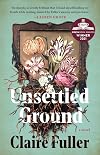
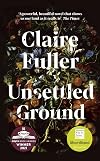
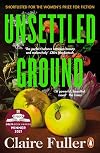
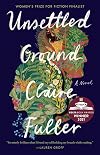
Unsettled Ground
by Claire Fuller
On This Page
Description
"At fifty-one years old, twins Jeanie and Julius still live with their mother, Dot, in rural isolation in the English countryside. The cottage they have shared their entire lives is their only protection against the modernizing world around them. Inside its walls, they make music, and in its garden, they grow everything they need to survive. To an outsider, it looks like poverty; to them, it is home. But when Dot dies unexpectedly, the world they've so carefully created begins to fall apart. show more The cottage they love, and the security it offered, is taken back by their landlord, exposing the twins to harsh truths and even harsher realities. Seeing a new future, Julius becomes torn between the loyalty he feels towards his sister and his desire for independence, while Jeanie struggles to find work and a home for them both. And just when it seems there might be a way forward, a series of startling secrets from their mother's past come to the surface, forcing the twins to question who they are, and everything they know of their family's history. In this stunning novel, award-winning author Claire Fuller masterfully builds a tale of sacrifice and hope, of homelessness and hardship, of love and survival, in which two marginalized and remarkable people uncover long-held family secrets and, in their own way, repair, recover, and begin again"-- show lessTags
Recommendations










Member Reviews
Shortlisted for the Women's Prize 2020
A book for anyone who has a too sentimental view of life in the British countryside - Fuller's vision is most realistic where it is furthest from rural idyll.
The story opens with a death. Dot has been scraping a living in a run-down cottage on the edge of a farm since the death of her husband, and her 51-year old twins Jeanie and Julius still live there too - Jeanie helps with running the house and growing vegetables, her ambition limited after being told in childhood that she has a weak heart, and Julius is a casual labourer and dreamer. When Dot dies suddenly after a stroke, the twins have to fend for themselves almost unprepared, as Dot has not told them enough about what underpins their living show more arrangements.
Most of the story is told in the third person from the perspective of Jeanie, as everything her life depends on is taken from her in a series of horrific episodes - first they find that Dot has left them no money, so they can't afford to have her decently buried, then their farmer landlord has them evicted for non-payment of rent they believed they did not owe, and they are forced to move to a dilapidated old caravan on a patch of common woodland, where they are defenceless against local troublemakers.
Jeanie's troubles reach a nadir when Julius is left paralysed after being shot in the dark, but the final part set a year later shows her achieving a tentative state of fulfilment.
Fuller's command of her story is impressive, and for all of the dark subject matter there is plenty to enjoy in the book, particularly its musical elements. I did feel that the ending was a little hard to believe after the rest of the book, but without it the story might be too dark for many readers to stomach. show less
A book for anyone who has a too sentimental view of life in the British countryside - Fuller's vision is most realistic where it is furthest from rural idyll.
The story opens with a death. Dot has been scraping a living in a run-down cottage on the edge of a farm since the death of her husband, and her 51-year old twins Jeanie and Julius still live there too - Jeanie helps with running the house and growing vegetables, her ambition limited after being told in childhood that she has a weak heart, and Julius is a casual labourer and dreamer. When Dot dies suddenly after a stroke, the twins have to fend for themselves almost unprepared, as Dot has not told them enough about what underpins their living show more arrangements.
Most of the story is told in the third person from the perspective of Jeanie, as everything her life depends on is taken from her in a series of horrific episodes - first they find that Dot has left them no money, so they can't afford to have her decently buried, then their farmer landlord has them evicted for non-payment of rent they believed they did not owe, and they are forced to move to a dilapidated old caravan on a patch of common woodland, where they are defenceless against local troublemakers.
Fuller's command of her story is impressive, and for all of the dark subject matter there is plenty to enjoy in the book, particularly its musical elements. I did feel that the ending was a little hard to believe after the rest of the book, but without it the story might be too dark for many readers to stomach. show less
Twins Julius and Jeanie are 51 and still living at home with their mother, Dot. Now, I realize this premise raises a lot of questions, most notably why two mature adult siblings would remain together in their childhood home. But this is an important part of the story that is better experienced than explained. When Dot dies, their lives are thrown into disarray. They soon learn that Dot was barely making ends meet, and left some outstanding debt. There is no money for funeral and burial services, and their jobs are not enough to support them let alone pay off the debts.
The reader soon realizes that the twins’ lives were heavily influenced by a web of family secrets, and their sheltered existence led them to accept things most adult show more children would question and discard. Both are somewhat in denial of their financial situation, and make vain attempts to earn money. While Jeanie can barely scrape together enough to buy food, Julius skims a bit off his earnings for tobacco and pints in the pub. As their lives spiral downward, there are some who try to help and others who cause further trouble. And then the family secrets gradually come to light. The twins’ journey through these extremely rough waters is well told, realistic, and ultimately moving. show less
The reader soon realizes that the twins’ lives were heavily influenced by a web of family secrets, and their sheltered existence led them to accept things most adult show more children would question and discard. Both are somewhat in denial of their financial situation, and make vain attempts to earn money. While Jeanie can barely scrape together enough to buy food, Julius skims a bit off his earnings for tobacco and pints in the pub. As their lives spiral downward, there are some who try to help and others who cause further trouble. And then the family secrets gradually come to light. The twins’ journey through these extremely rough waters is well told, realistic, and ultimately moving. show less
Beautifully written drama on the margins of Brexit Britain that won the Orange prize. When their old mom, Dot, dies of a heart attack in their remote cottage, the twins Jeanie and Julius have to finally engage with the world in their early fifties. They live a cosy, but frugal, life in a rent free cottage of the farm owner Rowland, a deal supposedly struck out of guilt of the land lord over the tragic death of their father during a farm accident on a tractor, way back.
But then adversity strikes: electricity has been cut off, Dot has incurred debts everywhere, and the cottage is not rent-free as was their understanding. There is not even money to give their mom a proper funeral. Julius does odd jobs, but Jeanie who cannot read or write, show more has to use her cunning, and she does. Dot ends up buried beneath the apple tree in the back yard, Jeanie manages to find a new job as gardener with a kind single mom. Jeanie’s (twisted) sense of justice (panning out in favour of ‘the other’ time and again) made me wanna cry out in anguish at times: she is abused by all sorts of folks, who appear to be helping (beautiful stroke, painting the ‘invisible hand of greed’ of neo-liberal, Tory England). There is all kinds of support on offer, but this hardly ever materializes when you do not have a smart phone, access to internet, a bank account or have difficulties reading. Their mom’s best friend who works at the local GP helps out when the twins are evicted from their cottage, but things go from bad to worse when Julius secures a dilapidated caravan on a patch of wasteland as their new home, and three local youths go on the rampage bullying Jeanie and shooting Julius.
Meanwhile, touching signs of humanity keep the twins going as they discover that their mom Dot has presented them with quite a twisted version of the truth to keep them close in the face of devastating cruelty: the twins understand each other as no other pair, they sing beautiful folk songs and Julius even pulls off a gig at the local pub, Jeanie nurtures everything alive around her (not just vegi’s, also her dog), Julius manages to engage in a little love affair with a big busted beauty at the fish and chips shop. Fuller is an accomplished writer, who knows how to paint a humane tapestry of poverty and greed in Brexit England. Her Orange prize is both timely and well-deserved. show less
But then adversity strikes: electricity has been cut off, Dot has incurred debts everywhere, and the cottage is not rent-free as was their understanding. There is not even money to give their mom a proper funeral. Julius does odd jobs, but Jeanie who cannot read or write, show more has to use her cunning, and she does. Dot ends up buried beneath the apple tree in the back yard, Jeanie manages to find a new job as gardener with a kind single mom. Jeanie’s (twisted) sense of justice (panning out in favour of ‘the other’ time and again) made me wanna cry out in anguish at times: she is abused by all sorts of folks, who appear to be helping (beautiful stroke, painting the ‘invisible hand of greed’ of neo-liberal, Tory England). There is all kinds of support on offer, but this hardly ever materializes when you do not have a smart phone, access to internet, a bank account or have difficulties reading. Their mom’s best friend who works at the local GP helps out when the twins are evicted from their cottage, but things go from bad to worse when Julius secures a dilapidated caravan on a patch of wasteland as their new home, and three local youths go on the rampage bullying Jeanie and shooting Julius.
Meanwhile, touching signs of humanity keep the twins going as they discover that their mom Dot has presented them with quite a twisted version of the truth to keep them close in the face of devastating cruelty: the twins understand each other as no other pair, they sing beautiful folk songs and Julius even pulls off a gig at the local pub, Jeanie nurtures everything alive around her (not just vegi’s, also her dog), Julius manages to engage in a little love affair with a big busted beauty at the fish and chips shop. Fuller is an accomplished writer, who knows how to paint a humane tapestry of poverty and greed in Brexit England. Her Orange prize is both timely and well-deserved. show less
This novel tells the story of two middle-aged siblings, Julius and Jeanie. They've lived their entire lives isolated in a small, increasingly run-down cottage in rural England. One morning, they awaken to find their mother dead and from there their lives rapidly fall apart. As Jeanie tries desperately to maintain the routines she's lived with her entire life, Julius, who is out in the world more often to pick up jobs as a casual laborer, begins to see a future different from his past. But their poverty, lack of education and lack of exposure to other people may take them down despite their best efforts.
So this isn't a cheerful book, but neither is it full of misery. Jeanie is a wonderful character, stubborn in ways that make sense to show more her, wary but also curious and inventive. There's some lovely character studies here, an exploration of what poverty looks like and excellent writing. I'll be reading more by this author. show less
So this isn't a cheerful book, but neither is it full of misery. Jeanie is a wonderful character, stubborn in ways that make sense to show more her, wary but also curious and inventive. There's some lovely character studies here, an exploration of what poverty looks like and excellent writing. I'll be reading more by this author. show less
“and in the end, didn’t she get exactly that?”
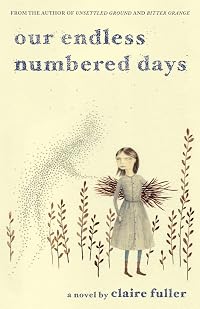
I enjoyed ‘Our Endless Numbered Days’ by the same author, but this had more plot holes than Mickey Mouse cheese. There were too many questions left unanswered with very flat, one-dimensional characters. In what world would a mother of that age really leave her children in a situation where there could not survive in the real world? Exactly how did these very adult children seriously not know how to be adults? It was infuriating.
I understand this was meant to represent class, poverty and family secrets, but it was too unbelievable. It was also incredibly slow with no rewarding twist or outcome.
I enjoyed ‘Our Endless Numbered Days’ by the same author, but this had more plot holes than Mickey Mouse cheese. There were too many questions left unanswered with very flat, one-dimensional characters. In what world would a mother of that age really leave her children in a situation where there could not survive in the real world? Exactly how did these very adult children seriously not know how to be adults? It was infuriating.
I understand this was meant to represent class, poverty and family secrets, but it was too unbelievable. It was also incredibly slow with no rewarding twist or outcome.
This novel grabbed my interest from its first sentences, describing a snowfall in luminous prose, and wouldn’t let go.
Jeanie and Julius Seeder are 51-year-old fraternal twins living with their mother Dot in a dilapidated cottage in rural England. Though isolated and poor, they are content. Then Dot dies suddenly, and the outside world intrudes and threatens their sanctuary. They must learn to adapt and fend for themselves as they quickly learn that the world Dot had constructed for them was built on deception and manipulation.
Just as the ground unsettles beneath the twins’ lives, the reader will find the book unsettling. The twins are hampered in their ability to deal with the outside world. Julius suffers from travel sickness so show more being in a motorized vehicle is untenable; with limited education, he can take only menial jobs and only those which he can reach by bicycle. Because of a heart condition which left her frail, Jeanie attended school only sporadically and is functionally illiterate. They are vulnerable, and there are people who move in quickly to exploit their vulnerability. As they are repeatedly victimized, I felt like I was reading a Thomas Hardy novel.
This is very much a novel of character. Though both Julius and Jeanie’s perspectives are included, Jeanie is more of a focus. Because of her educational limitations and her lack of contact with the outside world, she lacks some basic life skills needed in the modern world and is uncomfortable outside her home: Jeanie “craves home, quiet and security.” Nonetheless, she engages with others as she must and fights to maintain her dignity and become more independent. Though trapped by circumstances, she doesn’t let herself succumb to the increasingly hopeless situation in which she finds herself and shows herself to be both strong and brave. The reader cannot but cheer for Jeanie even while sometimes being frustrated with her actions.
Another character who is developed is Dot. From the beginning it is made clear that she has secrets; as she suffers a stroke in the first chapter, she thinks about “that unmentionable-at-home man” who occasionally sleeps with her and her last thought is about “the biggest lie of all.” The reader will certainly guess many of her secrets before her children learn them, but it’s not the nature of the secrets but her motivation that is of most interest. I found myself increasingly angry with Dot for limiting her children’s opportunities. Her conversation with Jeanie about the risks of pregnancy for someone with her heart condition and her casual mentioning to her son that she saw a friend of his kissing a man outside the pub do not portray Dot in a positive light. A book club could have a great discussion about Dot’s choices: Does her love for her children excuse her manipulation? Does her pride keep her from taking actions that would have made her children’s lives easier? What role do selfishness and a fear of loneliness play in her behaviour? Was Dot the good woman everyone says she was?
Music is a very important source of comfort to both Julius and Jeanie and serves as a bond between them. Dot also played an instrument and the twins fondly remember the home concerts with the three of them. It becomes obvious that Jeanie is especially musically talented, and it is in this area that we see the harm that can be done by parents.
Suspense is built slowly but there is little doubt that something terrible is going to happen. For example, the visitors to the cottage and spinney become more and more threatening, and Jeanie and Julius’ situation becomes more and more dire. And then when a confrontation does happen, what will the long-term outcome be?
The book is slow-paced and generally bleak and oppressive, but the development of characters is exceptional and, fortunately, the ending offers some hope. The novel certainly inspires one to think of the long-term impact of secrets and lies.
Note: I received a digital galley from the publisher via NetGalley.
Please check out my reader's blog (https://schatjesshelves.blogspot.com/) and follow me on Twitter (@DCYakabuski). show less
Jeanie and Julius Seeder are 51-year-old fraternal twins living with their mother Dot in a dilapidated cottage in rural England. Though isolated and poor, they are content. Then Dot dies suddenly, and the outside world intrudes and threatens their sanctuary. They must learn to adapt and fend for themselves as they quickly learn that the world Dot had constructed for them was built on deception and manipulation.
Just as the ground unsettles beneath the twins’ lives, the reader will find the book unsettling. The twins are hampered in their ability to deal with the outside world. Julius suffers from travel sickness so show more being in a motorized vehicle is untenable; with limited education, he can take only menial jobs and only those which he can reach by bicycle. Because of a heart condition which left her frail, Jeanie attended school only sporadically and is functionally illiterate. They are vulnerable, and there are people who move in quickly to exploit their vulnerability. As they are repeatedly victimized, I felt like I was reading a Thomas Hardy novel.
This is very much a novel of character. Though both Julius and Jeanie’s perspectives are included, Jeanie is more of a focus. Because of her educational limitations and her lack of contact with the outside world, she lacks some basic life skills needed in the modern world and is uncomfortable outside her home: Jeanie “craves home, quiet and security.” Nonetheless, she engages with others as she must and fights to maintain her dignity and become more independent. Though trapped by circumstances, she doesn’t let herself succumb to the increasingly hopeless situation in which she finds herself and shows herself to be both strong and brave. The reader cannot but cheer for Jeanie even while sometimes being frustrated with her actions.
Another character who is developed is Dot. From the beginning it is made clear that she has secrets; as she suffers a stroke in the first chapter, she thinks about “that unmentionable-at-home man” who occasionally sleeps with her and her last thought is about “the biggest lie of all.” The reader will certainly guess many of her secrets before her children learn them, but it’s not the nature of the secrets but her motivation that is of most interest. I found myself increasingly angry with Dot for limiting her children’s opportunities. Her conversation with Jeanie about the risks of pregnancy for someone with her heart condition and her casual mentioning to her son that she saw a friend of his kissing a man outside the pub do not portray Dot in a positive light. A book club could have a great discussion about Dot’s choices: Does her love for her children excuse her manipulation? Does her pride keep her from taking actions that would have made her children’s lives easier? What role do selfishness and a fear of loneliness play in her behaviour? Was Dot the good woman everyone says she was?
Music is a very important source of comfort to both Julius and Jeanie and serves as a bond between them. Dot also played an instrument and the twins fondly remember the home concerts with the three of them. It becomes obvious that Jeanie is especially musically talented, and it is in this area that we see the harm that can be done by parents.
Suspense is built slowly but there is little doubt that something terrible is going to happen. For example, the visitors to the cottage and spinney become more and more threatening, and Jeanie and Julius’ situation becomes more and more dire. And then when a confrontation does happen, what will the long-term outcome be?
The book is slow-paced and generally bleak and oppressive, but the development of characters is exceptional and, fortunately, the ending offers some hope. The novel certainly inspires one to think of the long-term impact of secrets and lies.
Note: I received a digital galley from the publisher via NetGalley.
Please check out my reader's blog (https://schatjesshelves.blogspot.com/) and follow me on Twitter (@DCYakabuski). show less
This was a lovely family story. Fifty-something twins Jeanie and Julius live with their mother in a cottage on the grounds of an estate. They eke out a living with Julius doing odd jobs in the neighborhood (he becomes ill riding in motor vehicles, and can only work within biking distance). Jeanie and her mother grow veggies and other goodies to sell at an upscale market/deli. Jeanie and Julius have always been told that the owner of the estate has granted their family the use of the cottage and garden "rent-free" for life due to the mysterious and tragic death of their father while working for the landowner when they were children.
When their mother dies suddently, Jeanie and Julius learn that she may have been hiding things from them, show more many things. They can't afford a funeral, the electricity is turned off, and they learn that they are many months behind on the rent for the cottage. They don't even have enough money to buy food. Then things start to go from bad to worse.
I loved this book. Jeanie and Julius are unusual people, and I've rarely encountered characters in books like them Yet they are so real and brilliantly imagined. It's hard to read everything they go through and not despair, but they keep at it, and in the end you love them. Highly recommended.
4 stars show less
When their mother dies suddently, Jeanie and Julius learn that she may have been hiding things from them, show more many things. They can't afford a funeral, the electricity is turned off, and they learn that they are many months behind on the rent for the cottage. They don't even have enough money to buy food. Then things start to go from bad to worse.
I loved this book. Jeanie and Julius are unusual people, and I've rarely encountered characters in books like them Yet they are so real and brilliantly imagined. It's hard to read everything they go through and not despair, but they keep at it, and in the end you love them. Highly recommended.
4 stars show less
Members
- Recently Added By
Published Reviews
ThingScore 100
Every small town (and every neighborhood in every city) has its oddballs, the people who live on the fringes, a little out of step with everyone else. Fairy tales sometimes cast them as witches, or as beautiful young royals cursed to live as beasts. Children's books often redeem them with some lesson about how outsiders are just like everyone else, despite their strange appearances or show more ramshackle houses or mysterious actions.
But how often, in our stories, are oddballs allowed to remain exactly who they are? How often do they take center stage as main characters and reorient our view of what is "normal"? How often are such characters given rich, complex, and interior lives, complete with sorrows, talents, opinions, and flaws? Claire Fuller's new novel, Unsettled Ground, does just that.,,,Dot, a 70-year-old woman, dies in the first chapter, and the rest of the novel is concerned with her twin children who are 51...Unsettled Ground is a terribly beautiful book, and although its premise may seem quiet, it is full of dramatic twists and turns right up until its moving, beautiful end. show less
But how often, in our stories, are oddballs allowed to remain exactly who they are? How often do they take center stage as main characters and reorient our view of what is "normal"? How often are such characters given rich, complex, and interior lives, complete with sorrows, talents, opinions, and flaws? Claire Fuller's new novel, Unsettled Ground, does just that.,,,Dot, a 70-year-old woman, dies in the first chapter, and the rest of the novel is concerned with her twin children who are 51...Unsettled Ground is a terribly beautiful book, and although its premise may seem quiet, it is full of dramatic twists and turns right up until its moving, beautiful end. show less
added by vancouverdeb
Claire Fuller’s impressive new novel opens by documenting, in fine and gravely moving detail, the last moments of an elderly woman, Dot, early one snowy morning in the isolated, run-down cottage she has shared with her children, the middle-aged twins Jeanie and Julius, since the violent death of their father in an accident almost 40 years earlier..... Within days, Jeanie and Julius find show more themselves facing eviction and a fabric of secrets constructed over a lifetime begins to unravel....But it is exactly this note of astringency, combined with Fuller’s skill at evoking both the ineradicable animal pleasures – from sex to the smell of a garden after rain – and the squalid misery of sleeping rough, that gives the narrative its fierce, angry energy. show less
added by vancouverdeb
Lists

2021 Women's Prize for Fiction Longlist
16 works; 7 members

Favourite Women's Prize for Fiction, Orange & Bailey's Prize contenders
132 works; 52 members

Pleasant Surprises: Books That Exceeded Our Expectations
418 works; 143 members

Top Five Books of 2021
604 works; 181 members

Baileys Women's Prize for Fiction Winners and Shortlisted Books
61 works; 11 members

Open Book 2021
17 works; 2 members

Books with Twins
175 works; 12 members

Radio 4 Book at Bedtime
12 works; 1 member

Netgalley Reads
468 works; 3 members

Books Read in 2022
5,226 works; 112 members

Books Read in 2021
5,361 works; 113 members

Llibres que he llegit el 2026
41 works; 2 members
Author Information

9+ Works 3,426 Members
Claire Fuller is the author of Our Endless Numbered Days which won the £10,000 (A$20,438) Desmond Elliott Prize for new fiction. This was her debut novel. (Bowker Author Biography)
Some Editions
Awards and Honors
Awards
Distinctions
Common Knowledge
- Canonical title
- Unsettled Ground
- Original publication date
- 2021
- People/Characters
- Jeanette "Jeanie" Seeder; Julius Seeder; Dorothy "Dot" Seeder; Spencer Rawson; Caroline May Rawson; Bridget Clements (show all 16); Stu Clements; Shelley Swift; Frank Seeder; Nathan Clements; Saffron; Angel; Ed; Tom; Lewis; Dr. Holloway
- Important places
- England, UK; Inkbourne, Wiltshire, England; The Plough
- Epigraph
- O, will you find me an acre of land,
Savoury sage, rosemary and thyme,
Between the sea foam, and the sea sand,
Or never be a true love of mine.
"Scarborough Fair," traditional English ballad - Dedication
- For my parents
Ursula Pitcher
and Stephen Fuller - First words
- The morning sky lightens, and snow falls on the cottage.
- Quotations
- It is hard to rewrite your own history.
Sometimes, I reckon, we need something to come along and trip us up when we 're not expecting it. Otherwise, one day we're kids playing with the hose pipe, and the next we're laid out on an old door in the parlor. (44%)
She is the pot of water on the stove, bubbles forming on the bottom, coming to a boil. (72%)
She likes Saffron but she is from a different world where lost things are found and ill people survive. (89%)
But at some low point she told Jeanie she had something wrong with her heart in order to keep her home. The lie grew and could not be undone, Jeanie -- and Julian too -- would remain the the cottage with her. (98%)
Jeanie knows that, like her mother, she is a woman with strong opinions , a woman with interesting ideas. (98 %) - Last words
- (Click to show. Warning: May contain spoilers.)Jeanie leaves the garden, goes around the cottage and out the front gate. She turns right, along the track towards the farm, where Spencer Rawson is waiting.
- Blurbers
- Groff, Lauren; Tan, Lucy; Paull, Laline; Atkins, Lucy; Mackintosh, Clare
- Canonical DDC/MDS
- 823.92
- Canonical LCC
- PR6106.U45
Classifications
Statistics
- Members
- 605
- Popularity
- 48,407
- Reviews
- 37
- Rating
- (3.87)
- Languages
- 5 — Catalan, Dutch, English, French, Spanish
- Media
- Paper, Audiobook, Ebook
- ISBNs
- 18
- ASINs
- 7