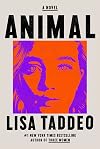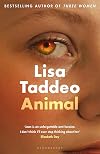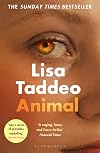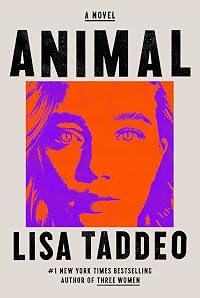
Animal
by Lisa Taddeo
On This Page
Description
Joan has spent a lifetime enduring the cruelties of men. But when one of them commits a shocking act of violence in front of her, she flees New York City in search of Alice, the only person alive who can help her make sense of her past. In the sweltering hills above Los Angeles, Joan unravels the horrific event she witnessed as a child--that has haunted her every waking moment--while forging the power to finally strike back.--Tags
Recommendations













Member Reviews
I'm not sure I expected to like this book as much as I did. But it's such a unique narrative voice that I was captivated from the beginning and read it through in just a couple days. It definitely has dark moments, but I love characters who are both the protagonist and antagonist, often at the same time, even within the same sentence. Taddeo wonderfully captures that contradictory complexity in Joan with a story that, to my interpretation, is not "anti-male" but a nuanced study of the frequently dysfunctional relationships between men and women -- and, consequently, each of us with ourselves. Characters and commentary like this is something I strive for in my own work.
This was equal parts brilliant and horrifying. I've grown fond of this genre of feminist novels with highly traumatised women reflecting on their lives and working through the damaged done to them. Raised by an overly indulgent father who was compensating for an affair and an emotionally distant mother, Joan developed an insatiable narcissistic drive to feel wanted at all costs when both her parents died when she was 10. The story telling is very engaging with great pacing, revealing little twists during the flashbacks that kept adding depth to the character. Joan is fuelled by rage and sexual depravity in her need to be desired or to destroy male violence. It's dark and gritty but very human. Great read.
A disturbing yet fascinating novel. It was impossible to really like any of the characters or to admire any of their actions, yet I did feel sympathy for Joan, certainly. There was a lot here about families: parents, children, siblings, spouses, and how we love them and still let them down. But overall, a lot of the story deals with female anger at their relative lack of power compared to men and how some women ultimately rebel.
I was totally engaged with the author's writing style.
I was totally engaged with the author's writing style.
Though I understand the author’s intention, this book just didn’t work for me because it comes across as unrestrained in several ways.
Joan drives from New York City to Los Angeles to track down Alice, a celebrity yoga instructor who has some mysterious connection to Joan’s past. Her developing relationship with Alice serves as the catalyst for Joan’s slowly revealing the traumas which have left her “depraved.” Joan describes her life as ending at the age of 10 when traumas occurred which defined the intervening 25+ years. A recent event sends her over the edge: a scorned lover recently shot himself in front of her while she was having dinner with another man. Though she describes herself as a survivor, she is filled with a show more rage which has destroyed her human self so that her animal nature takes control.
Joan is the narrator. Periodically she directly addresses someone using the second person pronoun; the reader can guess the identity of this person being addressed, and the mystery is eventually clarified. The problem is that, given the identity of her intended audience, what Joan reveals is almost too honest and borders on inappropriate because, though this is not Joan’s intention, what she tells would be traumatizing to the listener.
Joan is not a likeable character. Initially, I had some sympathy for her, especially when she demonstrated some positive qualities like generosity, but her negative traits are so dominant that my sympathy waned. She is devious and ruthless. She uses her beauty and sexuality to manipulate everyone she meets. One-night stands and affairs with married men are routine for her. She sexualizes every interaction with men. Even her memories of her parents are sexualized: when she is sexually aroused, she thinks of her father, and she seems unusually focused on her mother’s breasts so that even when she has a gun pointed at her, she thinks of her mother’s enormous nipples. She has few interests apart from sex; Joan spends her time not reading, listening to music, or even watching television, but drinking and taking pills. She says, “There was no way to hear my story and still hate me.” I didn’t hate her, but her despicable acts didn’t make me like her.
The plot becomes increasingly far-fetched and unbelievable. The lack of an investigation into one man’s death is totally unrealistic. The book includes rapes, suicides, and murders. The piling on of trauma, often graphically described, becomes almost pornographic. In Joan’s opinion, men are always degenerates: “All my life, all the men taking what they wanted and leaving when it was over.” She despises men who are guilty of infidelity, yet she never experiences guilt for her role in infidelities? The author becomes almost didactic as she stacks the deck to illustrate her theme.
I can applaud the writer’s wanting to show the effects of trauma; however, I found the constant descriptions of men’s depravity excessive. The plot becomes almost grotesque. Also, I was unable to connect with the main character and so didn’t feel invested in the story. Writing a book that has so many over-the-top elements is not the way to convince me of the relevance of its theme.
Note: Please check out my reader's blog (https://schatjesshelves.blogspot.com/) and follow me on Twitter (@DCYakabuski). show less
Joan drives from New York City to Los Angeles to track down Alice, a celebrity yoga instructor who has some mysterious connection to Joan’s past. Her developing relationship with Alice serves as the catalyst for Joan’s slowly revealing the traumas which have left her “depraved.” Joan describes her life as ending at the age of 10 when traumas occurred which defined the intervening 25+ years. A recent event sends her over the edge: a scorned lover recently shot himself in front of her while she was having dinner with another man. Though she describes herself as a survivor, she is filled with a show more rage which has destroyed her human self so that her animal nature takes control.
Joan is the narrator. Periodically she directly addresses someone using the second person pronoun; the reader can guess the identity of this person being addressed, and the mystery is eventually clarified. The problem is that, given the identity of her intended audience, what Joan reveals is almost too honest and borders on inappropriate because, though this is not Joan’s intention, what she tells would be traumatizing to the listener.
Joan is not a likeable character. Initially, I had some sympathy for her, especially when she demonstrated some positive qualities like generosity, but her negative traits are so dominant that my sympathy waned. She is devious and ruthless. She uses her beauty and sexuality to manipulate everyone she meets. One-night stands and affairs with married men are routine for her. She sexualizes every interaction with men. Even her memories of her parents are sexualized: when she is sexually aroused, she thinks of her father, and she seems unusually focused on her mother’s breasts so that even when she has a gun pointed at her, she thinks of her mother’s enormous nipples. She has few interests apart from sex; Joan spends her time not reading, listening to music, or even watching television, but drinking and taking pills. She says, “There was no way to hear my story and still hate me.” I didn’t hate her, but her despicable acts didn’t make me like her.
The plot becomes increasingly far-fetched and unbelievable. The lack of an investigation into one man’s death is totally unrealistic. The book includes rapes, suicides, and murders. The piling on of trauma, often graphically described, becomes almost pornographic. In Joan’s opinion, men are always degenerates: “All my life, all the men taking what they wanted and leaving when it was over.” She despises men who are guilty of infidelity, yet she never experiences guilt for her role in infidelities? The author becomes almost didactic as she stacks the deck to illustrate her theme.
I can applaud the writer’s wanting to show the effects of trauma; however, I found the constant descriptions of men’s depravity excessive. The plot becomes almost grotesque. Also, I was unable to connect with the main character and so didn’t feel invested in the story. Writing a book that has so many over-the-top elements is not the way to convince me of the relevance of its theme.
Note: Please check out my reader's blog (https://schatjesshelves.blogspot.com/) and follow me on Twitter (@DCYakabuski). show less
A fierce and fearsome narrative voice--Joan, a woman who's bulldozed through one toxic relationship after another. She has her reasons. The book is being touted for its feminist stance, but underestimate Joan as driver of her own fate at your peril.
Joan flees New York to California after he lover Victor shot himself publicly in front of her. With little money left, she finds a small place to stay and she also finds the woman she was looking for. Alice, whom she had tracked online over all those years. She thinks back to what her life had to offer so far, her mother who was unable to love her, her father whom she admired childishly. Both have long been gone. Joan can run, but somehow her bad luck follows her, she seems prone to attracting all kind of evil and so it does not take too long until it comes back to her.
Lisa Taddeo made her debut with “Three women“ which I already liked a lot. In her latest novel, too, complicated relationships between men and women are central to show more the story’s development. The narrator herself is unable to love unconditionally, she needs to have the upper hand over her lovers, yet, this presumed precaution measure fires back and somehow she is stuck in the role of the kid who is longing for being loved. She is addressing her account of the events to somebody, yet it takes until the end for the reader to understand whom she tells about her life.
From a psychological point of view, Taddeo has created quite interesting characters. Violence and love are constantly opposed and they seem not to able to exist without each other. Joan’s grandmother has been raped, a dramatic experience of violence, yet, we do never learn about what this did to the woman. On the other hand, Joan’s mother does not seem to be a direct victim, yet, she reacts quite strongly and refuses her daughter the love she craves for. The women in her family are no good role models, yet, her father, too, does not provide a good example of how to behave, especially at critical moments in his life. As a consequence, Joan is unable to lead a relationship at eye level and feels the need to protect herself from the things that might happen.
Thus, as a grown up, Joan replicates what she has seen as a kid and ignores the effect this might have on others, only when she is confronted with a kind of mirror, her genuine feelings offer her another way.
“Animal” is all but an easy read, yet, it offers a lot of food for thought and raises important questions concerning central human emotions and behaviour. I am not an expert, however, I would classify Joan’s thinking with all those flashbacks as symptoms of post-traumatic stress disorder which is highly likely from her family’s history. In this respect, the author very successfully displays the impact of traumatic events on untreated children. show less
Lisa Taddeo made her debut with “Three women“ which I already liked a lot. In her latest novel, too, complicated relationships between men and women are central to show more the story’s development. The narrator herself is unable to love unconditionally, she needs to have the upper hand over her lovers, yet, this presumed precaution measure fires back and somehow she is stuck in the role of the kid who is longing for being loved. She is addressing her account of the events to somebody, yet it takes until the end for the reader to understand whom she tells about her life.
From a psychological point of view, Taddeo has created quite interesting characters. Violence and love are constantly opposed and they seem not to able to exist without each other. Joan’s grandmother has been raped, a dramatic experience of violence, yet, we do never learn about what this did to the woman. On the other hand, Joan’s mother does not seem to be a direct victim, yet, she reacts quite strongly and refuses her daughter the love she craves for. The women in her family are no good role models, yet, her father, too, does not provide a good example of how to behave, especially at critical moments in his life. As a consequence, Joan is unable to lead a relationship at eye level and feels the need to protect herself from the things that might happen.
Thus, as a grown up, Joan replicates what she has seen as a kid and ignores the effect this might have on others, only when she is confronted with a kind of mirror, her genuine feelings offer her another way.
“Animal” is all but an easy read, yet, it offers a lot of food for thought and raises important questions concerning central human emotions and behaviour. I am not an expert, however, I would classify Joan’s thinking with all those flashbacks as symptoms of post-traumatic stress disorder which is highly likely from her family’s history. In this respect, the author very successfully displays the impact of traumatic events on untreated children. show less
“May you not go around the world looking to fill what you fear you lack with the flesh of another human being.”
I'm torn. There were so many great lines in this one. So many profound statements. I can't say I loved, or even liked the main character, but I didn't hate her. The books seems like her soul searching. She tries to name what she feels, what she's been through, and why she made the choices along the way that she did.
But somewhere around midway, it got a bit confusing. There were so many characters - the current timeframe, the previous ones, the ones from her stories. Maybe this was a downfall of doing the audiobook, but I started to mix-up which was who.
I did like the sharp, short sentences. I think it made the lines more show more potent. I liked the other women in the the story - Alice, the wife, the daughter. They each played off the mc and made point more defined.
I might read this one again, as a physical or ebook. I'll definitely read more from this author.
A huge thank you to the author and publisher for providing an e-ARC via Netgalley. This does not affect my opinion regarding the book. show less
I'm torn. There were so many great lines in this one. So many profound statements. I can't say I loved, or even liked the main character, but I didn't hate her. The books seems like her soul searching. She tries to name what she feels, what she's been through, and why she made the choices along the way that she did.
But somewhere around midway, it got a bit confusing. There were so many characters - the current timeframe, the previous ones, the ones from her stories. Maybe this was a downfall of doing the audiobook, but I started to mix-up which was who.
I did like the sharp, short sentences. I think it made the lines more show more potent. I liked the other women in the the story - Alice, the wife, the daughter. They each played off the mc and made point more defined.
I might read this one again, as a physical or ebook. I'll definitely read more from this author.
A huge thank you to the author and publisher for providing an e-ARC via Netgalley. This does not affect my opinion regarding the book. show less
Members
- Recently Added By
Published Reviews
ThingScore 75
Taddeo’s prose glitters with all the dark wit and flashes of insight that readers and critics admired in Three Women [...]
added by Nevov
Lists

Books Read in 2023
5,547 works; 145 members

Anticipated 2021 Reads
231 works; 7 members

Top Five Books of 2023
767 works; 317 members
Author Information

14+ Works 2,930 Members
Some Editions
Awards and Honors
Distinctions
The Guardian Book of the Day (2021-06-17)
Notable Lists
Common Knowledge
- Canonical title
- Animal
- Original publication date
- 2021
- Original language
- English
- Canonical DDC/MDS
- 813.6
Classifications
Statistics
- Members
- 699
- Popularity
- 40,830
- Reviews
- 13
- Rating
- (3.84)
- Languages
- 7 — Catalan, Dutch, English, German, Portuguese (Portugal), Romanian, Spanish
- Media
- Paper, Audiobook, Ebook
- ISBNs
- 22
- ASINs
- 5