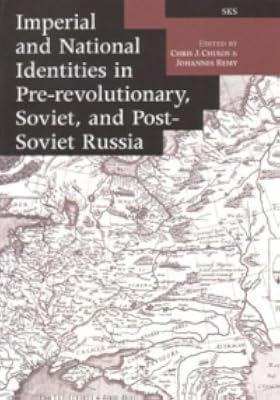
Imperial and national identities in pre-revolutionary, Soviet, and post-Soviet Russia
by Chris J. Chulos
On This Page
Description
As Russia's rulers have searched for meaningful ways to unify their diverse and widely scatteres population, they have resorted to the twin ideas of empire and nation. In medieval times, the Orthodox population of Rus' rallied around warrior saints who led the strategic and spiritual fight against infidels and heretics. Peter the Great turned Russia away from the middle ages when he created the image of a modern secular state to which all subjects of the realm were to be subordinated, show more regarless of ethnisity or creed. The last tsars attempted to restore Orthodoxy and ethnicity to their imperial model which the early Soviets replaced with the ideals of multiculturalism and multinationalism. The articles in this book consider how the ideas of empire and nation have led to national identities that both encouraged interaction with the rest of Europe and have erected obstacles to freedom and full membership in the Western European tradition. show lessTags
Members
- Recently Added By
Author Information
3+ Works 5 Members
Classifications
- Genres
- Nonfiction, History
- DDC/MDS
- 948.97 — History & geography History of Europe Northern Europe: Norway, Sweden, Denmark, Finland, Iceland Denmark and Finland Finland
- LCC
- DK49 .I47 — History of Europe, Asia, Africa and Oceania Russia. Soviet Union. Former Soviet Republics – Poland History of Russia. Soviet Union. Former Soviet Republics History
Statistics
- Members
- 1
- Popularity
- 8,853,317
- Languages
- English
- Media
- Paper
- ISBNs
- 1