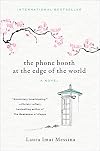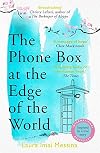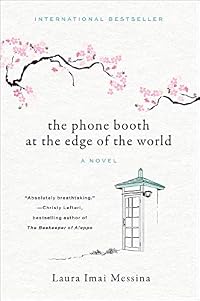
The Phone Box at the Edge of the World
by Laura Imai Messina
On This Page
Description
The international bestselling novel sold in 21 countries, about grief, mourning, and the joy of survival, inspired by a real phone booth in Japan with its disconnected "wind" phone, a place of pilgrimage and solace since the 2011 tsunami When Yui loses both her mother and her daughter in the tsunami, she begins to mark the passage of time from that date onward: Everything is relative to March 11, 2011, the day the tsunami tore Japan apart, and when grief took hold of her life. Yui struggles show more to continue on, alone with her pain. Then, one day she hears about a man who has an old disused telephone booth in his garden. There, those who have lost loved ones find the strength to speak to them and begin to come to terms with their grief. As news of the phone booth spreads, people travel to it from miles around. Soon Yui makes her own pilgrimage to the phone booth, too. But once there she cannot bring herself to speak into the receiver. Instead she finds Takeshi, a bereaved husband whose own daughter has stopped talking in the wake of her mother's death. Simultaneously heartbreaking and heartwarming, The Phone Booth at the Edge of the World is the signpost pointing to the healing that can come after. Laura Imai Messina has made her home in Japan for the last 15 years and works between Tokyo and Kamakura, where she lives with her Japanese husband and two children. She has master's and doctorate degrees from Tokyo University. Translated from the Italian by Lucy Rand, The Phone Booth at the Edge of the World is Laura Imai Messina's English-language debut. show lessTags
Recommendations


















































Member Recommendations

PuddinTame This a picture book inspired by the story of the Wind Phone at Bell Gardia Kujira-yama, although the phone booth in this case is in a village.
Member Reviews
I loved this book - drawn in by the cover and title and its true premise based on the Wind Phone in Japan near the city of Otsuchi where those who lost loved ones (18,500 people from the wave and resulting earthquake and fires) can speak to them via a single phone booth with a disconnected phone. The fictional part follows Yui, who lost her mother and 3-yr. old daughter, and has immersed herself in her work as a radio show host to try to contain her grief. A caller/guest mentions the phone and Yui begins a journey back to herself and living life. Her first visit, after a 6 hour drive from Tokyo connects her with Takeshi, also a first-time pilgrim who lost his wife and is struggling to parent his own 3-yr. old daughter who stopped show more speaking after the disaster. The two become friends, and support each other, and begin monthly trips together to visit the garden where the phone resides, and its keeper Suzuki. They get to know some of the other grieving people - some briefly, some repeatedly and between community and communication, they begin to heal. It is beautifully written, poignant, full of hope and speaks to both collective grief and individual grief and the intersection of the two. A lovely twist is that chapters alternate with narration and short little 'extras' that give us another peek inside the people and their stories. For example, one of the inter-chapters is the playlist Yui listens to on her drive to the mountain. They add a little humor to a hard topic, which never feels too heavy, thanks to the writer's skill and poetic language. show less
One Sentence Summary: When the tsunami on March 11, 2011 took her mother and young daughter, Yui struggles to move forward, until she hears of a disconnected phone booth people use to speak to those they have lost and meets Takeshi, a man with a young daughter who lost his wife.
In an attempt to get myself reading more Asian and Asian-inspired books, I requested this one from NetGalley, and was approved! I thought it might be interesting and was intrigued by the idea of people using a disconnected phone booth to talk to the people they had lost as a way of dealing with grief. I did not expect for this book to make me feel so deeply, to look at my children and treasure their lives any more than I already do, and find a place of hope and show more healing.
The Plot: Rooted in Grief
Yui lost her mother and daughter in the March 11, 2011 tsunami that struck part of Japan. Afterwards, she does little more than go through the motions of life, only coming alive when hosting her radio show. Until a man calls in and talks about the disconnected phone booth at Bell Gardia that offers a way for people to speak to their loved ones. There, the winds carry their messages to those that have been lost.
On her way from Tokyo to Bell Gardia, Yui encounters a man who has lost his wife and whose young daughter hasn't spoken since her mother died. Takeshi has decided to travel to the phone booth to speak with his wife, and they decide to go together.
Yui and Takeshi begin to travel to Bell Gardia together every month, forming a friendship that goes a long way to healing both of them.
I really enjoyed The Phone Booth at the Edge of the World, but it also felt like it was split between two different kinds of stories. The first half focused on Yui and Takeshi and their grief at losing their loved ones. It felt heavy and sad, but the blooming friendship between the two provided a sweet counterpoint and a flourish of hope. I loved that it introduced other minor characters, some who recur and some who are only mentioned in passing later in the story, but they all had grief and the phone booth in common. It highlighted the many ways people deal with grief and how the loss affects them. The second half, though, read more like a love story and I was disappointed the heavy grief themes were overridden by it. I couldn't help the feeling that the second half was trying to erase or mute the first half in favor of simply moving on. At the same time, it does highlight the need to move on, the hope of finding something good to love again, the joy that comes after the pain. I just wish the second half had felt more like a continuation and evolution of the first half instead of a turn around the corner.
This book was written in a really interesting way. Between each chapter was something of a little bite of life. There were mundane lists, an item on exhibit, a short conversation between characters. They were in some way related to the story and I loved how they helped bring the characters to life a little more, showcased how normal they were. At first they were a little weird, but I came to enjoy and appreciate them. They were good reminders that people actually lived through the many losses detailed throughout the first half of the book and that their lives aren't that different from our own.
The Characters: Polite and Restrained
As The Phone Booth at the Edge of the World is set in Japan, all of the main characters are Japanese. They all had some measure of emotional restraint, which made it a little difficult to get to know them. They felt almost sleek and too polite and proper, but, reading deeper, there were bits and pieces almost like wisps that spoke to deeper emotions. The second half especially deep dived into Yui and a bit into Takeshi, but it also made them feel like they took a sudden turn as the first half focused more on their grief than really developing them. Then the second half hits and the reader really jumps into what they think and feel.
Most of the story is told from Yui's perspective, so it's her the reader gets to know the most. She's restrained, polite, quiet, but she thinks deeply and constantly. Often, her thoughts run away from her, but she seems almost incapable of voicing them, so prefers to find something to run off to. While she seemed kind of cold and distant during the first half, the reader gets to see a woman with deep worries and insecurities in the second half that really make the story roll.
The Setting: Japan
I loved The Phone Booth at the Edge of the World because it's set in Japan and so unapologetically drops the reader straight into the Japanese culture. No time is taken to introduced the reader to this Eastern culture, which is quite different from Western cultures. Being from an East Asian culture myself, it was almost comforting to find similarities, to find a book that I felt like I got and that got me.
On one hand, it might be a bit alienating to readers who don't understand Eastern cultures. It is absolutely a full immersion in the Japanese culture, not how various media sources portray it, but as how life actually operates. On the other, it almost felt like home. Close to home as I'm Chinese, but, still, it's rare when I read a book that just screams Asian and wraps me in a comforting blanket. I felt like I got it and was actually thankful the author didn't take time out of the story to fully orient the reader to the world.
Overall: Beautiful Despite Revolving Around Grief
The Phone Booth at the Edge of the World is not a light read. It deals very heavily and very deeply with grief. It really affected me as Yui loses her three-year-old daughter, and I couldn't help but look at my own three-year-old daughter and want to hug her closer. Her memory of the last time she saw her daughter really struck and stayed with me. Overall, this is a beautiful story. It's heartbreaking, it's sometimes hard to read, but it also speaks to moving forward while still remembering, of having hope and finding the drive to live again.
Thank you to NetGalley and the publisher for a review copy. All opinions expressed are my own. show less
In an attempt to get myself reading more Asian and Asian-inspired books, I requested this one from NetGalley, and was approved! I thought it might be interesting and was intrigued by the idea of people using a disconnected phone booth to talk to the people they had lost as a way of dealing with grief. I did not expect for this book to make me feel so deeply, to look at my children and treasure their lives any more than I already do, and find a place of hope and show more healing.
The Plot: Rooted in Grief
Yui lost her mother and daughter in the March 11, 2011 tsunami that struck part of Japan. Afterwards, she does little more than go through the motions of life, only coming alive when hosting her radio show. Until a man calls in and talks about the disconnected phone booth at Bell Gardia that offers a way for people to speak to their loved ones. There, the winds carry their messages to those that have been lost.
On her way from Tokyo to Bell Gardia, Yui encounters a man who has lost his wife and whose young daughter hasn't spoken since her mother died. Takeshi has decided to travel to the phone booth to speak with his wife, and they decide to go together.
Yui and Takeshi begin to travel to Bell Gardia together every month, forming a friendship that goes a long way to healing both of them.
I really enjoyed The Phone Booth at the Edge of the World, but it also felt like it was split between two different kinds of stories. The first half focused on Yui and Takeshi and their grief at losing their loved ones. It felt heavy and sad, but the blooming friendship between the two provided a sweet counterpoint and a flourish of hope. I loved that it introduced other minor characters, some who recur and some who are only mentioned in passing later in the story, but they all had grief and the phone booth in common. It highlighted the many ways people deal with grief and how the loss affects them. The second half, though, read more like a love story and I was disappointed the heavy grief themes were overridden by it. I couldn't help the feeling that the second half was trying to erase or mute the first half in favor of simply moving on. At the same time, it does highlight the need to move on, the hope of finding something good to love again, the joy that comes after the pain. I just wish the second half had felt more like a continuation and evolution of the first half instead of a turn around the corner.
This book was written in a really interesting way. Between each chapter was something of a little bite of life. There were mundane lists, an item on exhibit, a short conversation between characters. They were in some way related to the story and I loved how they helped bring the characters to life a little more, showcased how normal they were. At first they were a little weird, but I came to enjoy and appreciate them. They were good reminders that people actually lived through the many losses detailed throughout the first half of the book and that their lives aren't that different from our own.
The Characters: Polite and Restrained
As The Phone Booth at the Edge of the World is set in Japan, all of the main characters are Japanese. They all had some measure of emotional restraint, which made it a little difficult to get to know them. They felt almost sleek and too polite and proper, but, reading deeper, there were bits and pieces almost like wisps that spoke to deeper emotions. The second half especially deep dived into Yui and a bit into Takeshi, but it also made them feel like they took a sudden turn as the first half focused more on their grief than really developing them. Then the second half hits and the reader really jumps into what they think and feel.
Most of the story is told from Yui's perspective, so it's her the reader gets to know the most. She's restrained, polite, quiet, but she thinks deeply and constantly. Often, her thoughts run away from her, but she seems almost incapable of voicing them, so prefers to find something to run off to. While she seemed kind of cold and distant during the first half, the reader gets to see a woman with deep worries and insecurities in the second half that really make the story roll.
The Setting: Japan
I loved The Phone Booth at the Edge of the World because it's set in Japan and so unapologetically drops the reader straight into the Japanese culture. No time is taken to introduced the reader to this Eastern culture, which is quite different from Western cultures. Being from an East Asian culture myself, it was almost comforting to find similarities, to find a book that I felt like I got and that got me.
On one hand, it might be a bit alienating to readers who don't understand Eastern cultures. It is absolutely a full immersion in the Japanese culture, not how various media sources portray it, but as how life actually operates. On the other, it almost felt like home. Close to home as I'm Chinese, but, still, it's rare when I read a book that just screams Asian and wraps me in a comforting blanket. I felt like I got it and was actually thankful the author didn't take time out of the story to fully orient the reader to the world.
Overall: Beautiful Despite Revolving Around Grief
The Phone Booth at the Edge of the World is not a light read. It deals very heavily and very deeply with grief. It really affected me as Yui loses her three-year-old daughter, and I couldn't help but look at my own three-year-old daughter and want to hug her closer. Her memory of the last time she saw her daughter really struck and stayed with me. Overall, this is a beautiful story. It's heartbreaking, it's sometimes hard to read, but it also speaks to moving forward while still remembering, of having hope and finding the drive to live again.
Thank you to NetGalley and the publisher for a review copy. All opinions expressed are my own. show less
This is one of those "right book, right time" kind of reads, especially in these days of pandemic. It is a quietly contemplative, hopeful story of family, loss, grief, love and hope. At the heart of this story is a simple premise: that every person will find a place - be it real or somewhere deep within themselves - where they can tend to their emotional pain, loss, suffering and heal their wounds. This place can take on a different meaning and purpose for each person, but the end result is the same: the ability we all have to go from a place of darkness, pain and suffering to one of sunlight, healing and hope. Beautifully written, I love the idea of a Wind Phone to connect with our loved ones, when normal communication channels are not show more available, or not working. This book, for me anyways, really was a balm for my soul... soothing and nurturing with a calming, meditative pace. A place of solace in these crazy times.
I would like to thank NetGalley and Overlook Press for providing me with a copy of this book in exchange for an honest review. show less
I would like to thank NetGalley and Overlook Press for providing me with a copy of this book in exchange for an honest review. show less
'When nobody is there to see the miracle, the miracle happens.'
Moving and uplifting, this is an emotional novel of loss and redemption, based around the true existence of the Wind Phone in Japan. Yui, who lost her mother and daughter in the 2011 tsunami, and Takeshi, who has lost his wife and is having to cope with his young daughter who has refused to speak ever since, are our two main characters who make the long journey from Tokyo to the isolated phone box together regularly. A whole host of other side characters, each of whom in their own way are dealing with the loss of a loved one, appear in the book, all looking for some peace in simply speaking to the dead.
The book is full of small moments of insight, and the relationship show more between Yui, Takeshi and his daughter, Hana, is beautifully handled. It is a quiet book, reflective and raw at times, but ultimately gives a space for loss and grief to be engaged with. A small gem of a book in dark times. show less
Moving and uplifting, this is an emotional novel of loss and redemption, based around the true existence of the Wind Phone in Japan. Yui, who lost her mother and daughter in the 2011 tsunami, and Takeshi, who has lost his wife and is having to cope with his young daughter who has refused to speak ever since, are our two main characters who make the long journey from Tokyo to the isolated phone box together regularly. A whole host of other side characters, each of whom in their own way are dealing with the loss of a loved one, appear in the book, all looking for some peace in simply speaking to the dead.
The book is full of small moments of insight, and the relationship show more between Yui, Takeshi and his daughter, Hana, is beautifully handled. It is a quiet book, reflective and raw at times, but ultimately gives a space for loss and grief to be engaged with. A small gem of a book in dark times. show less
What an absolutely lovely novel! Based on the actual establishment of the Wind Phone (https://www.thisamericanlife.org/597/one-last-thing-before-i-go-2016), this is a love story, a disaster story, a loss story, a healing story, and a spiritual story. Two main characters, Yui and Takeshi, meet while seeking relief from their grief over losses which occurred due to the typhoon of March 11, 2011 in Japan. I love that it highlights the infinite number of ways people grieve and heal. Just beautiful!
Well written and well constructed homage to the people lost in the Japanese tsunami of 2011, and more especially, to those left grieving.
Not an easy topic to write about, and not one I would have expected to enjoy reading, but the author has crafted something very special here.
Not an easy topic to write about, and not one I would have expected to enjoy reading, but the author has crafted something very special here.
After the tsunami of March 11, 2011, many lives were lost in Japan. There is a phone booth there which houses the Wind Phone. It is not connected to a network, it is there for people to connect with loved ones they lost. Yui lost her mother and her young daughter. She goes to the Wind Phone, but cannot pick it up. She meets Takeshi, a widower, and Hana, an orphaned child. Together the three of them deal with their grief. The Wind Phone is real, and it helps carry conversations into the wind. A beautiful story of loss, grief, and love.
Members
- Recently Added By
Lists

Favorite Books in Translation
320 works; 133 members
Author Information

18 Works 859 Members
Some Editions
Awards and Honors
Awards
Notable Lists
Common Knowledge
- Canonical title
- The Phone Box at the Edge of the World
- Original title
- Quel che affidiamo al vento
- Alternate titles
- The Phone Booth at the Edge of the World
- Original publication date
- 2020
- People/Characters
- Yui Hasegawa; Yui; Takeshi; Takeshi Fujita; Hana Fujita; Itaru Sasaki (show all 9); Keita; Shiori, "Shio"; Kengō's father
- Important places
- Bell Gardia Kujira-yama, Ōtsuchi, Iwate Prefecture, Japan
- Important events
- Tōhoku earthquake (and tsunami, Japan, 11 March 2011)
- Epigraph
- It is a passing of forms from one life
to another.
A concert in which
only the orchestra changes.
but the music remains, it's there.
-- Mariangela Gualtieri
Awake, O north wind; and
Come thou south
blow, upon my garden,
that the spices thereof may flow out.
Let my beloved come into his garden
and eat his pleasant fruits,
[. . .]
Come with me from Lebanon, my... (show all) bride . . .
-- Song of Songs, 4: 16, 8
So speak not too lovingly.
-- Kojiki - Dedication
- To Kyōsuke, Sōsuke, and Emilio,
to the voices that will
always be with you - First words
- In the vast, steep garden of Bell Gardia, great gusts of wind lashed the plants. (Prologue)
The first time she heard about it was on the radio. - Quotations
- This story was inspired by a real place, in the northwest of Japan, in Iwate Prefecture.
On day a man installed a telephone booth in the garden of his house at the foot of Kujiri-Yama, the Mountain of the Whale, just n... (show all)ext to the city of Ōtsuchi, one of the places worst hit by the tsunami of March 11, 2011.
Inside there is an old black telephone, disconnected, that carries voices into the wind.
Thousands of people make the pilgrimage there every year. - Last words
- (Click to show. Warning: May contain spoilers.)That place would be different for each one of them.
(Click to show. Warning: May contain spoilers.)"I'm here, it's Mommy." (epilogue) - Blurbers
- Lefteri, Christy; Mackintosh, Clare
- Canonical DDC/MDS
- 895.636; 853.92
- Canonical LCC
- PQ4909.M34
Classifications
- Genres
- General Fiction, Fiction and Literature
- DDC/MDS
- 895.636 — Literature & rhetoric Literatures of other languages Literatures of East and Southeast Asia Japanese Japanese fiction 2000–
- LCC
- PQ4909 .M34 — Language and Literature French, Italian, Spanish and Portuguese literatures Italian literature Individual authors, 2001-
- BISAC
Statistics
- Members
- 607
- Popularity
- 47,844
- Reviews
- 21
- Rating
- (3.87)
- Languages
- 7 — Dutch, English, French, German, Italian, Slovenian, Spanish
- Media
- Paper, Audiobook, Ebook
- ISBNs
- 24
- ASINs
- 9