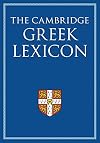
The Cambridge Greek lexicon
by James Diggle
131 Members (4.33)
On This Page
Description
The Cambridge Greek Lexicon is based upon principles differing from those of existing Greek lexica. Entries are organised according to meaning, with a view to showing the developing senses of words and the relationships between those senses. Other contextual and explanatory information, all expressed in contemporary English, is included, such as the typical circumstances in which a word may be used, thus giving fresh insights into aspects of Greek language and culture. The editors have show more systematically re-examined the source material (including that which has been discovered since the end of the nineteenth century) and have made use of the most recent textual and philological scholarship. The Lexicon, which has been twenty years in the making, is written by an editorial team based in the Faculty of Classics in Cambridge, consisting of Professor James Diggle (Editor-in-Chief), Dr Bruce Fraser, Dr Patrick James, Dr Oliver Simkin, Dr Anne Thompson, and Mr Simon Westripp. show lessTags
Recommendations

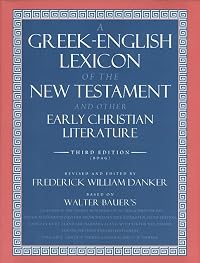
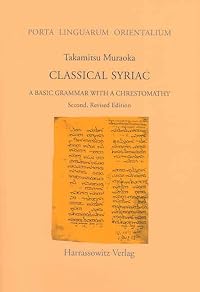
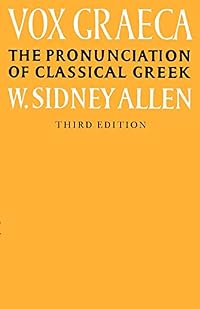
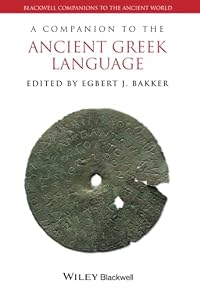


Member Reviews
Members
- Recently Added By
Published Reviews
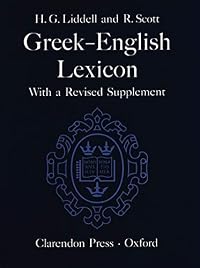
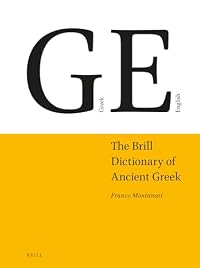
The publication of The Cambridge Greek Lexicon (henceforth CGL) has been eagerly awaited. First conceived of by the late John Chadwick in 1997, CGL has been brought to fruition by an editorial team based in the University of Cambridge, consisting of James Diggle (acting as editor-in-chief), Bruce Fraser, Patrick James, Oliver Simkin, Anne Thompson, and Simon Westripp (p. vii of the Preface show more briefly discusses the history of the entire project and details the involvement of each of the editors). The back cover (see also Preface, vii – viii, and the publisher’s blurb) explains that CGL aims ‘primarily to meet the needs of modern students, but is also designed to be of interest to scholars’. Thus, this is not a full-length dictionary intended to replace LSJ, or indeed Montanari’s The Brill Dictionary of Ancient Greek (which is not mentioned in the Preface), the two large-scale Greek–English dictionaries currently on the market. The editors have from the start set their sights on a different target: CGL was originally conceived of as a revision of the abridged version of LSJ (the ‘Middle Liddell’), until it became apparent that this template was too antiquated and the decision was made to compile a new and independent lexicon. CGL should now certainly replace the ‘Middle Liddell’ on the bookshelves of students and scholars alike. Yet comparison with the full-length lexica is inevitable, given that CGL has turned into a much more substantial work than the ‘Middle Liddell’ and that it has been so long in the making. Furthermore, it boasts being ‘based upon principles differing from those of existing Greek lexica’ (including LSJ and Montanari), with entries being organised ‘according to meaning, with a view to showing the developing senses of words and the relationships between those senses’ (back cover). Finally, the editors of CGL aim for up-to-date coverage, as they ‘have systematically re-examined the source material (including that which has been discovered since the end of the nineteenth century) and have made use of the most recent textual and philological scholarship’. show less
added by cinaedus
Lists

The ESOTERICA Library by Dr. Justin Sledge (Languages)
13 works; 1 member
Author Information
13+ Works 289 Members
Classifications
- Genres
- Reference, Nonfiction
- DDC/MDS
- 480.3 — Language Classical Greek and related Hellenic languages Classical Greek and related Hellenic languages Encyclopedias, concordances of classical Greek [class dictionaries in 483]
- LCC
- PA445 .E5 .C36 — Language and Literature Greek language and literature. Latin language and literature Greek philology and language
- BISAC
Statistics
- Members
- 131
- Popularity
- 248,239
- Rating
- (4.33)
- Languages
- English
- Media
- Paper, Ebook
- ISBNs
- 4
- ASINs
- 1