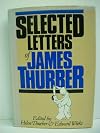
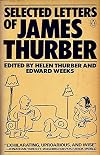
Selected Letters of James Thurber
by James Thurber
On This Page
Description
Letters covering the period of 1935 to 1961, from Thurber's confident prime as a writer and artist, to his last days when blindness and infirmity failed to quench the exuberance of his spirit or his prose.Tags
Recommendations





































Member Reviews
So far this is for completists only. If one does not feel a connection with his milieu, one is lost. But there are bits that make it worth the kind of sporadic reading I'm doing, because I am such a fan. One such bit is a letter written by his ophthalmologist. From Dr. Gordon Bruce, serving in WWII, to Jim:
The U.S. Marine is a wonder.... I love the dirty, profane, loyal, brutal little reprobate.... If we could only get him to take prisoners, the little perfectionist! -- or sadist, or hedonist, what you will! To me, one of his most attractive features is that he is scared -- but there are no external signs permitted to appear, ever!"
Ok done. Yup, only if one is a special fan of Thurber's context (E.B. White, Harold Ross, NYC in the 30s show more and 40s, etc.) can one fully appreciate this. I read it just a couple of letters at a time, and found one or two turns of phrase or wry barbs each time to enable me to keep going, but I'm relieved I'm done." show less
The U.S. Marine is a wonder.... I love the dirty, profane, loyal, brutal little reprobate.... If we could only get him to take prisoners, the little perfectionist! -- or sadist, or hedonist, what you will! To me, one of his most attractive features is that he is scared -- but there are no external signs permitted to appear, ever!"
Ok done. Yup, only if one is a special fan of Thurber's context (E.B. White, Harold Ross, NYC in the 30s show more and 40s, etc.) can one fully appreciate this. I read it just a couple of letters at a time, and found one or two turns of phrase or wry barbs each time to enable me to keep going, but I'm relieved I'm done." show less
Ratings
Members
- Recently Added By
Author Information

136+ Works 18,310 Members
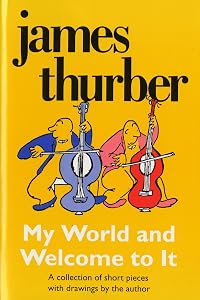
Born in Columbus, Ohio, Thurber was blinded in one eye in a childhood accident. He attended Ohio State University but left without earning a degree. In 1925 he moved to New York City, where he joined the staff of the New Yorker in 1927 at the urging of his friend E. B. White. For the rest of his lifetime, Thurber contributed to the magazine his show more highly individual pieces and those strange, wry, and disturbing pen-and-ink drawings of "huge, resigned dogs, the determined and sometimes frightening women, the globular men who try so hard to think so unsuccessfully." The period from 1925, when the New Yorker was founded, until the death of its creator-editor, Harold Ross, in 1951, was described by Thurber in delicious and absorbing detail in The Years with Ross (1959). Of his two great talents, Thurber preferred to think of himself primarily as a writer, illustrating his own books. He published "fables" in the style of Aesop (see Vol. 2) and La Fontaine (see Vol. 2)---usually with a "barbed tip of contemporary significance"---children's books, several plays (two Broadway hits, one successful musical revue), and endless satires and parodies in short stories or full-length works. "The Secret Life of Walter Mitty," included in My World---and Welcome to It (1942), is probably his best-known story and continues to be frequently anthologized. T. S. Eliot described Thurber's work as "a form of humor which is also a way of saying something serious." (Bowker Author Biography) show less
All Editions
Common Knowledge
- People/Characters
- James Thurber
- First words
- James Thurber was a letter writer of the type that is now completely extinct.
Classifications
- Genres
- Biography & Memoir, Fiction and Literature
- DDC/MDS
- 818.5209 — Literature & rhetoric American literature in English American miscellaneous writings in English 20th Century 1900-1945 Biography
- LCC
- PS3539 .H94 .Z48 — Language and Literature American literature American literature Individual authors 1900-1960
- BISAC
Statistics
- Members
- 196
- Popularity
- 167,534
- Reviews
- 1
- Rating
- (3.19)
- Languages
- English
- Media
- Paper
- ISBNs
- 4
- ASINs
- 6