On This Page
Description
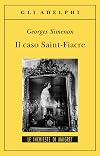
Maigret's past comes to life in this vivid new translation of this evocative novel, set in the Inspector's home town. The last time Maigret went home to the village of his birth was for his father's funeral. Now an anonymous note predicting a crime during All Souls' Day mass draws him back there, where troubling memories resurface and hidden vices are revealed.Tags
Recommendations
















































Member Reviews
In the 1932 novel The Saint-Fiacre Affair (also published as Maigret Goes Home, Maigret on Home Ground and Maigret and the Countess), Detective Chief Inspector Maigret returns to his birthplace, Saint-Fiacre in northern France, the town where Maigret’s father was the estate manager for a count. He remembered the Countess of Saint-Fiacre as a beautiful, elegant woman; however, in the decades since Maigret moved to Paris, the Countess has widowed and taken a series of boy-toy secretaries as lovers.
When the police receive a warning that a crime will be committed during the first Mass on All Souls’ Day in Saint-Fiacre, Maigret goes home and attends the Mass. At the Mass’ conclusion, the Countess is dead, apparently of a heart attack. show more But, of course, Maigret knows differently, despite the Countess long having had a weak heart. And, in fact, in the Countess’ Roman missal, Maigret discovers a faked notice of the Countess’ son’s death by suicide. So now the game is afoot.
Georges Simenon has crafted another delightful Maigret page-turner. As in Agatha Christie’s 1950 novel, A Murder Is Announced, the murderer announces the crime beforehand. Did Dame Agatha glen the idea from Simenon? No matter. In both novels, readers puzzle over not only why a murderer would announce his intentions in advance but why the victim should be killed at all. And not to take away from Dame Agatha, but The Saint-Fiacre Affair proves just as entertaining — especially the shocking ending. Highly recommended. show less
When the police receive a warning that a crime will be committed during the first Mass on All Souls’ Day in Saint-Fiacre, Maigret goes home and attends the Mass. At the Mass’ conclusion, the Countess is dead, apparently of a heart attack. show more But, of course, Maigret knows differently, despite the Countess long having had a weak heart. And, in fact, in the Countess’ Roman missal, Maigret discovers a faked notice of the Countess’ son’s death by suicide. So now the game is afoot.
Georges Simenon has crafted another delightful Maigret page-turner. As in Agatha Christie’s 1950 novel, A Murder Is Announced, the murderer announces the crime beforehand. Did Dame Agatha glen the idea from Simenon? No matter. In both novels, readers puzzle over not only why a murderer would announce his intentions in advance but why the victim should be killed at all. And not to take away from Dame Agatha, but The Saint-Fiacre Affair proves just as entertaining — especially the shocking ending. Highly recommended. show less
Maigret, in my view, doesn't actually do a great deal of detecting in this early entry in the series, though the characters are quite interesting, and the setting (Maigret's home village, and even the chateau where he grew up) very interesting. A good read.
Maigret returns to his childhood home and is, as a reader of crime fiction would expect, disillusioned by what has happened to his village and the local estate, while investigating a crime that cannot be prosecuted. The story has superb atmosphere and the pleasurable sadness called melancholy.
Early Maigret. Very much enjoyed the early part of the book- descriptions of Maigret's childhood home and father's profession. The powerful evocation of memory of taste and location- fantastic. However, the story itself is rather so-so, building to a climax of "Walter Scott" proportions with 7 lead characters in a room with the dead mother upstairs and the master of the house describing the many defects of the people there (plus Maigret who is an accidental presence). Dramatic ending and sentimental. Maigret does not solve and no one is arrested although the guilty party is revealed. Just a bit too blown up for me ...
Summary: Maigret receives an anonymous note of a crime to take place in his home town, and though present, cannot prevent it.
“A crime will be committed at the church of Saint-Fiacre during the first mass of the Day of the Dead.”
Maigret received this anonymous message in Paris. Why does he go to Saint-Fiacre when no one else is available? Saint-Fiacre is his childhood home. Like many of us who visit childhood homes, the visit evokes memories, but also the sad awareness that so much has changed, and not for the better.
Maigret is present for Mass, with a small crowd, among whom is the Countess of Saint-Fiacre. When she opens her missal, it is obvious that something has disturbed her. She collapses…and is dead of a heart attack. No show more one had been near. Was this “of natural causes” since she had been in frail health? Or was this the crime?
After recovering the missal, which a young altar boy had secreted away, Simenon discovers what had disturbed the countess. There was a clipping announcing the death of Maurice de Saint-Fiacre. We soon learn this report is false when Maurice arrives to borrow money from his mother to keep his creditors at bay.
As Maigret investigates, along with the local police, he discovers the estate of Saint-Fiacre is in sad shape. At one time, his father had been estate manager. Now, the estate has been nearly all sold off. Jean Métayer was not only the Countesses secretary but her lover. Gautier, the current manager has been putting in his own money to keep things afloat. His son, Emile, who works at the local bank confirms the sad state of the accounts, nearly exhausted and insufficient to meet bills that are due. For various reasons, both the doctor and parish priest are suspects, as is Maurice himself.
The denouement is a classic dinner party with all the suspects present. Simenon is there as well, but he hasn’t called this gathering. And it is not he who solves the crime after a dramatic climax.
Maigret seems overcome with a curious passivity that seems to be a commentary on his disillusionment with what has become of his childhood home, a sad and tawdry place. Yet it is the manager’s son who is police commissioner and this wealthy house that is now destitute.
I still have one question. Why the anonymous note to Maigret in Paris? Was it hubris on the part of the murderer, or simply a device to get him to Saint-Fiacre? This did not strike me as one of Simenon’s best, perhaps because of the lassitude (possibly attributable to an incipient cold) that characterizes Maigret throughout. But perhaps everyone is entitled to their “off” day. show less
“A crime will be committed at the church of Saint-Fiacre during the first mass of the Day of the Dead.”
Maigret received this anonymous message in Paris. Why does he go to Saint-Fiacre when no one else is available? Saint-Fiacre is his childhood home. Like many of us who visit childhood homes, the visit evokes memories, but also the sad awareness that so much has changed, and not for the better.
Maigret is present for Mass, with a small crowd, among whom is the Countess of Saint-Fiacre. When she opens her missal, it is obvious that something has disturbed her. She collapses…and is dead of a heart attack. No show more one had been near. Was this “of natural causes” since she had been in frail health? Or was this the crime?
After recovering the missal, which a young altar boy had secreted away, Simenon discovers what had disturbed the countess. There was a clipping announcing the death of Maurice de Saint-Fiacre. We soon learn this report is false when Maurice arrives to borrow money from his mother to keep his creditors at bay.
As Maigret investigates, along with the local police, he discovers the estate of Saint-Fiacre is in sad shape. At one time, his father had been estate manager. Now, the estate has been nearly all sold off. Jean Métayer was not only the Countesses secretary but her lover. Gautier, the current manager has been putting in his own money to keep things afloat. His son, Emile, who works at the local bank confirms the sad state of the accounts, nearly exhausted and insufficient to meet bills that are due. For various reasons, both the doctor and parish priest are suspects, as is Maurice himself.
The denouement is a classic dinner party with all the suspects present. Simenon is there as well, but he hasn’t called this gathering. And it is not he who solves the crime after a dramatic climax.
Maigret seems overcome with a curious passivity that seems to be a commentary on his disillusionment with what has become of his childhood home, a sad and tawdry place. Yet it is the manager’s son who is police commissioner and this wealthy house that is now destitute.
I still have one question. Why the anonymous note to Maigret in Paris? Was it hubris on the part of the murderer, or simply a device to get him to Saint-Fiacre? This did not strike me as one of Simenon’s best, perhaps because of the lassitude (possibly attributable to an incipient cold) that characterizes Maigret throughout. But perhaps everyone is entitled to their “off” day. show less
A note stating that a crime will be committed on All Souls' Day in the churche at Saint-Fiacre during first mass. The police departments laugh and ignore it. Maigret cannot; it is his birthplace. He knows many of the people there.
Returning to the town, Maigret witnesses the murder, but there is nothing to see, so how did it happen? His journey to solve the murder uncovers many back stories and changes his image of some of the people of his home town.
A bit of a cerebreal read, as Maigret tends to anaylze people and happenings. Not a quick read, but a good read.
Returning to the town, Maigret witnesses the murder, but there is nothing to see, so how did it happen? His journey to solve the murder uncovers many back stories and changes his image of some of the people of his home town.
A bit of a cerebreal read, as Maigret tends to anaylze people and happenings. Not a quick read, but a good read.
In this case, Maigret goes home, to his hometown of Saint-Fiacre. He’s not there for a cosy family visit, though; his family doesn’t live there anymore. Instead, he’s there because he received a note stating that a crime would be committed in the church during the first Mass of All Saints’ Day. So he goes—and the dowager countess of Saint-Fiacre dies of what appears to be a heart attack as she sits in her reserved pew. Who wanted her dead, and why?
I found this one hard to get into. Most of the characters were male, and they sounded the same when they talked, and dialogue tags were in short supply. I would routinely be confused as to who was talking when. And I’m still not entirely sure who actually dunnit. Part of this show more confusion could be traced to the language barrier, given that I was reading in my second language, but it would have been nice if the book had made more of an effort to ensure that I could keep track of the proceedings.
I did giggle at the chapter where the Count of Saint-Fiacre likened a dinner conversation to a scene from a Walter Scott novel, because I just recently finished a Scott novel (Kenilworth). That’s what the extra half-star is for.
This is probably not the best Maigret to start out with. show less
I found this one hard to get into. Most of the characters were male, and they sounded the same when they talked, and dialogue tags were in short supply. I would routinely be confused as to who was talking when. And I’m still not entirely sure who actually dunnit. Part of this show more confusion could be traced to the language barrier, given that I was reading in my second language, but it would have been nice if the book had made more of an effort to ensure that I could keep track of the proceedings.
I did giggle at the chapter where the Count of Saint-Fiacre likened a dinner conversation to a scene from a Walter Scott novel, because I just recently finished a Scott novel (Kenilworth). That’s what the extra half-star is for.
This is probably not the best Maigret to start out with. show less
Members
- Recently Added By
Lists

Books mentioned in Julian Symons’ Bloody Murder
438 works; 6 members

Reading LIst
648 works; 1 member
Author Information

1,336+ Works 63,366 Members
The prolific Belgian-born writer Georges Simenon produced hundreds of fictional works under his own name and 17 pseudonyms, in addition to more than 70 books about Inspector Maigret, long "the favorite sleuth of highbrow detective-story readers" (SR). More than 50 "Simenons" have been made into films. In addition to his mystery stories, he wrote show more what he called "hard" books, the serious psychological novels numbering well over 100. The autobiographical Pedigree, set in his native town of Liege, is perhaps his finest work. The publication of Simenon's intimate memoirs also attracted considerable attention. Simenon himself once said that he would never write a "great novel." Yet Gide called him "a great novelist, perhaps the greatest and truest novelist we have in French literature today," and Thornton Wilder (see Vol. 1) found that Simenon's narrative gift extends "to the tips of his fingers." The following are some of Simenon's novels, exclusive of the Maigret detective stories, that are in print. (Bowker Author Biography) Georges Simenon was born on February 13, 1903 in Liege, Belgium. He wrote more than 200 fiction works under 16 different pseudonyms. His first book, The Case of Peter the Lent led to 80 more of the like including the main character, Inspector Maigret. He published over 400 books that were translated into 50 different languages and sold by the millions. He also wrote psychological novels, including The Man Who Watched the Train Go By. He died on September 4, 1989 in Lausanne. (Bowker Author Biography) show less
Some Editions
Awards and Honors
Series

Belongs to Publisher Series
Work Relationships
Common Knowledge
- Canonical title
- The Saint-Fiacre Affair
- Original title
- L’Affaire Saint-Fiacre
- Alternate titles
- Maigret Goes Home
- Original publication date
- 1932 (original French) (original French); 1942 (in English) (in English); 2014 (English: Whiteside) (English: Whiteside)
- People/Characters
- Jules Maigret; Marie Tatin; Maurice de Saint-Fiacre; Countess de Saint-Fiacre; Dr Bouchardon; Marie Vassiliev (show all 9); Jean Metayer; Emile Gautier; Monsieur Gautier (estate manager)
- Important places*
- Ranska: Saint-Fiacre
- Related movies*
- Maigret ei anna armoa (Maigret et l'affaire Saint Fiacre/Ranska 1959) O: Jean Delannoy. N: Jean Gabin (Maigret et l'affaire Saint Fiacre/Ranska 1959)
- First words
- A timid knock at the door; the sound of something being set down on the floor; a furtive voice:
'It's half past five! The first bell has just rung for mass...' - Last words
- (Click to show. Warning: May contain spoilers.)During mass, everyone could hear the blaring horn of a taxi; a little scoundrel fleeing with a lawyer whose brain was dulled by a hangover.
- Original language
- French
- Disambiguation notice
- In the French original, L'affaire Saint-Fiacre (1932).
Variously published in English as:
(i) Maigret and the Countess (1940) (trans. Margaret Ludwig);
(ii) "The Saint-Fiacre Affair... (show all)," in Maigret Keeps a Rendezvous (1940), in Philadelphia Inquirer (1942), and The Saint-Fiacre Affair (1942);
(iii) "Death of a Countess," in Triple Detective (Spring, 1951; abridged);
(iv) Maigret Goes Home (1967) (trans. Robert Baldick), and in Maigret (1992); and
(v) Maigret on Home Ground (1992); and
(vi)The Saint-Fiacre Affair (2014) (trans. Shaun Whiteside).
*Some information comes from Common Knowledge in other languages. Click "Edit" for more information.
Classifications
Statistics
- Members
- 846
- Popularity
- 32,552
- Reviews
- 25
- Rating
- (3.40)
- Languages
- 12 — Danish, Dutch, English, Finnish, French, German, Italian, Polish, Portuguese, Spanish, Swedish, Welsh
- Media
- Paper, Audiobook, Ebook
- ISBNs
- 53
- ASINs
- 32