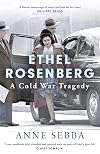
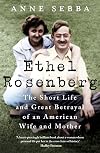
Ethel Rosenberg: A Cold War Tragedy
by Anne Sebba
On This Page
Description
"New York Times bestselling author Anne Sebba's moving biography of Ethel Rosenberg, the wife and mother whose execution for espionage-related crimes defined the Cold War and horrified the world. In June 1953, Julius and Ethel Rosenberg, a couple with two young sons, were led separately from their prison cells on Death Row and electrocuted moments apart. Both had been convicted of conspiracy to commit espionage for the Soviet Union, despite the fact that the US government was aware that the show more evidence against Ethel was shaky at best and based on the perjury of her own brother. This book is the first to focus on one half of that couple for more than thirty years, and much new evidence has surfaced since then. Ethel was a bright girl who might have fulfilled her personal dream of becoming an opera singer, but instead found herself struggling with the social mores of the 1950's. She longed to be a good wife and perfect mother to her two small boys, while battling the political paranoia of the McCarthy era, anti-Semitism, misogyny, and a mother who never valued her. Because of her profound love for and loyalty to her husband, she refused to incriminate him, despite government pressure on her to do so. Instead, she courageously faced the death penalty for a crime she hadn't committed, orphaning her two young sons. Seventy years after her trial, this is the first time Ethel's story has been told with the full use of the dramatic and tragic prison letters she exchanged with her husband, her lawyer and her psychotherapist over a three-year period, two of them in solitary confinement. Hers is the resonant story of what happens when a government motivated by fear tramples on the rights of its citizens"-- show lessTags
Recommendations





Member Reviews
Anne Sebba recounts the circumstances that led to the execution of a thirty-seven-year-old housewife and mother—her children were ten and six years old at the time of her death—on June 19, 1953. Like many of her compatriots, Ethel embraced Communism as a means of making society more equitable. After marrying Julius Rosenberg, whom she adored, Ethel gave up her dreams of pursuing a singing and acting career. Julius, whose business ventures never amounted to much, eventually became a spy who passed on classified information to the Russians. Sebba suggests that "the case against Ethel was weak and unsubstantiated." According to this reasoning, the authorities arrested Ethel as a means of pressuring Julius to confess and reveal his show more accomplices' names. Even now, some historians maintain that Ethel was innocent, while others insist that she supported or even masterminded a Communist spy ring.
One fact is incontrovertible: Ethel was devoted to Julius and their sons, Michael and Robert. When she found life stressful, she was enlightened enough to seek therapy for herself and Michael, who was a high-strung and willful youngster. In 1950, federal authorities took Julius and Ethel into custody and charged them "with conspiracy to commit espionage." During their trial that began on March 6, 1951, the prosecutors argued that Ethel assisted Julius in his efforts to betray his country. The jury found Julius and Ethel guilty as charged, and approximately one week later, Judge Irving Kaufman sentenced them to death.
This heartbreaking work of non-fiction is based on interviews with Ethel and Julius's sons and acquaintances, secondary sources, letters, and a transcript of the Rosenberg trial. Sebba does not pretend to be objective. She admits that certain facts remain elusive to this day and, when she is unsure about something, she speculates about what she thinks may have occurred. Whether or not it is accurate in all respects, this book is a well-researched and powerful indictment of America's history of anti-Semitism, sexist attitudes, judicial corruption, and Cold War paranoia. "Ethel Rosenberg" is billed as an American tragedy, which it certainly was. It is also a gripping sociological and psychological study of an era when hysteria, fear, and prejudice prevailed over truth, common sense, and compassion. show less
One fact is incontrovertible: Ethel was devoted to Julius and their sons, Michael and Robert. When she found life stressful, she was enlightened enough to seek therapy for herself and Michael, who was a high-strung and willful youngster. In 1950, federal authorities took Julius and Ethel into custody and charged them "with conspiracy to commit espionage." During their trial that began on March 6, 1951, the prosecutors argued that Ethel assisted Julius in his efforts to betray his country. The jury found Julius and Ethel guilty as charged, and approximately one week later, Judge Irving Kaufman sentenced them to death.
This heartbreaking work of non-fiction is based on interviews with Ethel and Julius's sons and acquaintances, secondary sources, letters, and a transcript of the Rosenberg trial. Sebba does not pretend to be objective. She admits that certain facts remain elusive to this day and, when she is unsure about something, she speculates about what she thinks may have occurred. Whether or not it is accurate in all respects, this book is a well-researched and powerful indictment of America's history of anti-Semitism, sexist attitudes, judicial corruption, and Cold War paranoia. "Ethel Rosenberg" is billed as an American tragedy, which it certainly was. It is also a gripping sociological and psychological study of an era when hysteria, fear, and prejudice prevailed over truth, common sense, and compassion. show less
"Ah yes, the Rosenbergs, spies weren't they?"
I knew very little of the Rosenbergs before cracking this story. For having the distinction of being one of the only people put to death for espionage during a nonwartime, you'd think there'd be more information about them. Sadly, even now there is little.
I liked the way the author presented the case mainly for Ethel. It's good to separate the two because it seems everyone else just puts them as one entity - The Rosenbergs. I'm not sure I 100% agree with the author and the explanations, it was compelling enough I'd like to know more and have a few more POV before I'm completely sold on whether Ethel was innocent or guilty.
But the argument in here is compelling. It paints a very vivid picture show more of how the prosecution, Ethel's own family and even her refusal to do anything but plead the 5th - all damned her in different ways to the outcome that ultimately played out. The story is in easier to digest chapters that tackle each part of the story in chronological order. It's compelling and fascinating and I'm really glad I read this one.
A huge thank you to the author and publisher for providing an e-ARC via Netgalley. This does not affect my opinion regarding the book. show less
I knew very little of the Rosenbergs before cracking this story. For having the distinction of being one of the only people put to death for espionage during a nonwartime, you'd think there'd be more information about them. Sadly, even now there is little.
I liked the way the author presented the case mainly for Ethel. It's good to separate the two because it seems everyone else just puts them as one entity - The Rosenbergs. I'm not sure I 100% agree with the author and the explanations, it was compelling enough I'd like to know more and have a few more POV before I'm completely sold on whether Ethel was innocent or guilty.
But the argument in here is compelling. It paints a very vivid picture show more of how the prosecution, Ethel's own family and even her refusal to do anything but plead the 5th - all damned her in different ways to the outcome that ultimately played out. The story is in easier to digest chapters that tackle each part of the story in chronological order. It's compelling and fascinating and I'm really glad I read this one.
A huge thank you to the author and publisher for providing an e-ARC via Netgalley. This does not affect my opinion regarding the book. show less
I wanted to read this book when I heard of it because I've wanted to know more about the story of Julius and Ethel Rosenberg, executed in 1953 for espionage for many years This book focuses on the life of Ethel and the trial which led to her conviction and death. I wasn't sure to expect, as I was a little bit disappointed by the other Anne Sebba book which I've read, The Parisiennes, and Sebba's previous writing CV involved Britain's more conservative broadsheet newspapers and magazines and books about wealthy and rather right wing socialites.
I was particularly interested in Sebba's portrait of Ethel Greenglass's early life, her Jewish immigrant family, schooling and life as a factory worker, trade union activist and talented show more singer/musician. However, after marrying Julius Rosenberg, she seems to have settled into a very traditional wife and mother role, reading child rearing and psychology books for guidance on the best way to bring up a challenging young son and deal with the issues they faced. I found this quite sad and frustrating, as I think the author perhaps did from a 20th century feminist perspective. Other 50s leftist American women perhaps pushed the boundaries of traditional roles more, but then, that may just be the women whose lives and experiences are better documented (by themselves or others) because they wrote or were reported on. Of course Ethel Rosenberg attracted lots of newspaper coverage but it was mostly extremely hostile. I was also interested in the Rosenbergs' story in the context of antisemitism and anti- immigrant community prejudice in the US after WWII.
Overall, this is a very interesting exploration of how Ethel Rosenberg came to be executed for espionage in favour of the Soviet Union, including research into her husband and family, the difficult issues of how the children might be raised by a family who didn't hate their parents. In this case at least they were adopted together by a supportive and loving couple - their adoptive father was the author of the poem Strange Fruit, best known as a Billie Holiday song about lynching which was itself banned for some years.
Sad, thought provoking and highly recommended, whether your views are broadly liberal in a US sense, liberal feminist (like the author), socialist feminist and even Communist influenced (mine) or something else.
(19.05.22)
19.10.24
This book was originally published here in the UK with the title Ethel Rosenberg: A Cold War Tragedy, and I am a bit disappointed by an apparent change in subtitle to Ethel Rosenberg: American Wife and Mother. Yes, this is the story of an American wife and mother but it was very much in the context of the Cold War, and the original title gives Ethel Rosenberg's story an important context and resonates better beyond the US. show less
I was particularly interested in Sebba's portrait of Ethel Greenglass's early life, her Jewish immigrant family, schooling and life as a factory worker, trade union activist and talented show more singer/musician. However, after marrying Julius Rosenberg, she seems to have settled into a very traditional wife and mother role, reading child rearing and psychology books for guidance on the best way to bring up a challenging young son and deal with the issues they faced. I found this quite sad and frustrating, as I think the author perhaps did from a 20th century feminist perspective. Other 50s leftist American women perhaps pushed the boundaries of traditional roles more, but then, that may just be the women whose lives and experiences are better documented (by themselves or others) because they wrote or were reported on. Of course Ethel Rosenberg attracted lots of newspaper coverage but it was mostly extremely hostile. I was also interested in the Rosenbergs' story in the context of antisemitism and anti- immigrant community prejudice in the US after WWII.
Overall, this is a very interesting exploration of how Ethel Rosenberg came to be executed for espionage in favour of the Soviet Union, including research into her husband and family, the difficult issues of how the children might be raised by a family who didn't hate their parents. In this case at least they were adopted together by a supportive and loving couple - their adoptive father was the author of the poem Strange Fruit, best known as a Billie Holiday song about lynching which was itself banned for some years.
Sad, thought provoking and highly recommended, whether your views are broadly liberal in a US sense, liberal feminist (like the author), socialist feminist and even Communist influenced (mine) or something else.
(19.05.22)
19.10.24
This book was originally published here in the UK with the title Ethel Rosenberg: A Cold War Tragedy, and I am a bit disappointed by an apparent change in subtitle to Ethel Rosenberg: American Wife and Mother. Yes, this is the story of an American wife and mother but it was very much in the context of the Cold War, and the original title gives Ethel Rosenberg's story an important context and resonates better beyond the US. show less
Ethel Rosenberg is a biography about the woman executed for treason by the U.S. government in 1953. For many people, when they think of her, they see Meryl Streep sitting at Roy Cohn’s bedside as he lay dying of AIDS. People who think about the Rosenbergs range from those who think they got what they deserved to people like my parents who believed they were both innocent, persecuted by corrupt partisans stoking anti-Semitism and promoting a Red Scare. The truth is more nuanced.
You might think that the passage of time would make biographies less accurate, but since 1953, the Soviet Union fell and many documents were released to the public. The U.S. government also releases documents after several decades. Anne Sebba, the author of show more Ethel Rosenberg, has the advantage of more documentary evidence and the prison letters Ethel Rosenberg wrote. What emerges is the story of a strong and determined woman whose love for her husband was stronger than her fear of death.
Sebba effectively brings Ethel Rosenberg to life. I found myself in tears more than once while reading her book. I learned a lot that I did not know even though I heard plenty about the Rosenbergs when I grew up. My dad was investigated as a possible Communist sympathizer during the Red Scare, something my siblings said was very frightening for the whole family. His own aggrieved innocence fed his certainty the Rosenbergs were both innocent and both my parents talked about how even if secrets were passed, it could not be treason because the Soviet Union and the US were allies at the time.
What emerges from Sebba’s book is a complicated woman whose potential was undercut first by her mother who never hesitated to belittle and disparage her and then by herself as she dedicated herself to her mediocrity of a husband, giving up her career to follow him and raise their children. She dedicated herself to being a mother in the same way she did to her career in the past, reading books, seeking mentorship, and always wanting to do better.
What is shocking is how thoroughly corrupted the prosecution of this case was. The government knew she was innocent and not only allowed but encouraged, perjury to convict her in hopes of getting her husband to name names. The misogyny and anti-Semitism that drove this miscarriage of justice should be shocking, but after the exposure of the depths of white nationalism still roiling America, it isn’t.
I recommend this book highly. Ethel Rosenberg is a sympathetic woman who deserved better from her family, her husband, and her country. And yet, she seemed to resist bitterness and anger as best she could.
I received an ARC of Ethel Rosenberg from the publisher through Shelf Awareness.
Ethel Rosenberg at St. Martin’s Press | Macmillan
Anne Sebba author site
https://tonstantweaderreviews.wordpress.com/2021/07/09/9781250198631/ show less
You might think that the passage of time would make biographies less accurate, but since 1953, the Soviet Union fell and many documents were released to the public. The U.S. government also releases documents after several decades. Anne Sebba, the author of show more Ethel Rosenberg, has the advantage of more documentary evidence and the prison letters Ethel Rosenberg wrote. What emerges is the story of a strong and determined woman whose love for her husband was stronger than her fear of death.
Sebba effectively brings Ethel Rosenberg to life. I found myself in tears more than once while reading her book. I learned a lot that I did not know even though I heard plenty about the Rosenbergs when I grew up. My dad was investigated as a possible Communist sympathizer during the Red Scare, something my siblings said was very frightening for the whole family. His own aggrieved innocence fed his certainty the Rosenbergs were both innocent and both my parents talked about how even if secrets were passed, it could not be treason because the Soviet Union and the US were allies at the time.
What emerges from Sebba’s book is a complicated woman whose potential was undercut first by her mother who never hesitated to belittle and disparage her and then by herself as she dedicated herself to her mediocrity of a husband, giving up her career to follow him and raise their children. She dedicated herself to being a mother in the same way she did to her career in the past, reading books, seeking mentorship, and always wanting to do better.
What is shocking is how thoroughly corrupted the prosecution of this case was. The government knew she was innocent and not only allowed but encouraged, perjury to convict her in hopes of getting her husband to name names. The misogyny and anti-Semitism that drove this miscarriage of justice should be shocking, but after the exposure of the depths of white nationalism still roiling America, it isn’t.
I recommend this book highly. Ethel Rosenberg is a sympathetic woman who deserved better from her family, her husband, and her country. And yet, she seemed to resist bitterness and anger as best she could.
I received an ARC of Ethel Rosenberg from the publisher through Shelf Awareness.
Ethel Rosenberg at St. Martin’s Press | Macmillan
Anne Sebba author site
https://tonstantweaderreviews.wordpress.com/2021/07/09/9781250198631/ show less
Sebba's moving biography of Ethel Rosenberg, the wife and mother whose execution for espionage-related crimes defined the Cold War and horrified the world. It has been described as “a tragic and gripping tale with unnerving echoes in the modern world”. Ethel, and her husband Julius, had been convicted of conspiracy to commit espionage for the Soviet Union. The evidence against them was shaky and based on the perjury of Ethel’s own brother. This book focuses on Ethel who gave up her own personal dreams of becoming an opera singer to become a good wife and mother while battling the political paranoia of the McCarthy era, anti-Semitism, misogyny, and a mother who never valued her. This is a painful and deeply moving tale of a show more miscarriage of justice. show less
I was absorbed from the first page of reading this book. The author sets the stage with the weather as being sultry in New York on June 19, 1953 as Ethel Rosenberg knows this is the day she will be executed with her husband, Julius, first. The crowd nearby continues to protest - along with those in Europe - for the harsh punishment of a woman with two young boys: Michael is 10 years old and Robby is 6 - a woman who claims her innocence. She was convicted with her husband of being a spy and passing information about the American atomic secrets to the Soviet Union.
While this happened almost 70 years ago, it's still being discussed how the government reacted from fear which created a tragic, regretful case in the U.S. history. As time show more moved forward before his death, Ethel's brother, David Greenglass, admitted that he did not tell the truth in court. He was aware that his words would convict his sister only to save his family.
Anne Sebba spent five years writing this book and it feels like her heart and soul went into every chapter with some parts repeating itself to stress the importance of this case. The question is: "What can happen when fear turns into hysteria and justice is willfully ignored?" A lot of people are aware of the execution but the book gives you a full account of what happened - much that cannot be ignored.
It's more than a documentary about the life of Ethel Rosenberg. It gives the reader the full story of what happened and how it related to her family, friends and many who reached out trying to help. Pablo Picasso was one that showed his anger over a drawing with a couple in the electric chair. He notes: "The hours count. The minutes count. Do not let this crime against humanity take place." Others told the NY Times and other publications that this would be an embarrassment to execute two innocent people. Still the fear was real and no one stopped it including the President and Supreme Court Justices.
This will be a book I will remember and review with others. My thanks to Anne Sebba, St. Martin's Press and NetGallery for allowing me to read this advanced copy to be released on June 8, 2021. show less
While this happened almost 70 years ago, it's still being discussed how the government reacted from fear which created a tragic, regretful case in the U.S. history. As time show more moved forward before his death, Ethel's brother, David Greenglass, admitted that he did not tell the truth in court. He was aware that his words would convict his sister only to save his family.
Anne Sebba spent five years writing this book and it feels like her heart and soul went into every chapter with some parts repeating itself to stress the importance of this case. The question is: "What can happen when fear turns into hysteria and justice is willfully ignored?" A lot of people are aware of the execution but the book gives you a full account of what happened - much that cannot be ignored.
It's more than a documentary about the life of Ethel Rosenberg. It gives the reader the full story of what happened and how it related to her family, friends and many who reached out trying to help. Pablo Picasso was one that showed his anger over a drawing with a couple in the electric chair. He notes: "The hours count. The minutes count. Do not let this crime against humanity take place." Others told the NY Times and other publications that this would be an embarrassment to execute two innocent people. Still the fear was real and no one stopped it including the President and Supreme Court Justices.
This will be a book I will remember and review with others. My thanks to Anne Sebba, St. Martin's Press and NetGallery for allowing me to read this advanced copy to be released on June 8, 2021. show less
A well researched biography on half of the notorious spy couple executed for espionage at the height of the Cold War (the Rosenbergs). The author argues that without details (false) supplied by her brother and sister in law (who were also under investigation) she might not have been convicted let alone executed. Her Jewishness entered into this as the judge and several prosecutors were Jewish, Many Jews in the Cold War wanted to show loyalty to the country by being extra tough on Jewish Leftists. Many others wanted Ethel's sentence reduced including J. Edgar Hoover but it was not to be. Very thought provoking.
Members
- Recently Added By
Lists

Anticipated 2021 Reads
231 works; 7 members

Maybe This Year? Books to Look Forward To
412 works; 9 members

Books Read in 2022
5,168 works; 114 members

History & Political Science: US
158 works; 1 member
Author Information

15+ Works 1,545 Members
Anne Sebba is a biographer, lecturer, journalist, and former Reuters foreign correspondent. She has written eight books, including acclaimed biographies of Jennie Churchill and Mother Teresa, as well as the New York Times bestseller That Woman about the life of Wallis Simpson. She is a member of the Society of Authors Management Committee. Visit show more her website at annesebba.com. show less
Awards and Honors
Awards
Distinctions
Common Knowledge
- Canonical title
- Ethel Rosenberg: A Cold War Tragedy
- Alternate titles
- Ethel Rosenberg: An American Tragedy
- Original publication date
- 2021-06-08
- People/Characters
- Ethel Rosenberg
- Important events
- Cold War
- Epigraph
- "This country is so heated up about communism at the present moment that the public temper identifies as a friend of the United States any person who is a foe of Stalin" Robert Jackson, US Supreme Court Justice, 1941-1954
"Personal relations are despised today. They are regarded as bourgeois luxuries, as products of a time of fair weather which is now past, and we are urged to get rid of them, and to dedicate ourselves to some movement or caus... (show all)e instead. I hate the idea of causes, and if I had to choose between betraying my country and betraying my friend I hope I should have the guts to betray my country" E.M. Forster
"Loyalty means nothing unless it has at its heart the absolute principle of self-sacrifice" Woodrow Wilson, twenty-eighth US president - Dedication
- In memory of Mark Jonathan Sebba, 1948-2018, whose encouragement to write this book has sustained me.
For Sam and Evelyn Sebba, whose future has also sustained me. - First words
- Friday, June 19, 1953, dawned typically hot and humid in New York, the sort of day later memorably described by the poet Sylvia Plath as sultry.
- Blurbers
- Tomalin, Claire; Greenspan, Nancy Thorndike; Horowitz, Anthony; Callil, Carmen; Purnell, Sonia; Moorehead, Caroline (show all 10); Neumann, Ariana; Shakespeare, Nicholas; Sands, Philippe; Anand, Anita
Classifications
- Genres
- Nonfiction, Biography & Memoir, General Nonfiction, Politics and Government, History
- DDC/MDS
- 320.53 — Society, government, & culture Political science Types of Government Political ideologies Radicalism, collectivism, fascism
- LCC
- HX84 .R578 .S426 — Social sciences Socialism. Communism. Anarchism Socialism. Communism. Anarchism
- BISAC
Statistics
- Members
- 232
- Popularity
- 140,455
- Reviews
- 14
- Rating
- (3.99)
- Languages
- English, French
- Media
- Paper, Audiobook, Ebook
- ISBNs
- 12
- ASINs
- 4