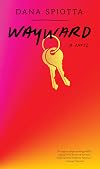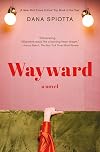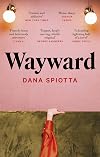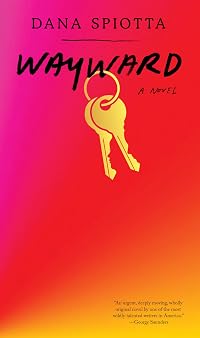
Wayward
by Dana Spiotta
On This Page
Description
"A moving, funny, engrossing novel about mothers and daughters, and one woman's midlife reckoning, from the renowned author of Stone Arabia and Eat the Document On the heels of the election of 2016, Samantha Raymond's life begins to come apart: her mother is ill, her teenage daughter is increasingly remote, and at 52, she finds herself staring into "the Mids"--that hour of supreme wakefulness between three and four in the morning in which women of a certain age suddenly find themselves show more contemplating motherhood, mortality, and, in this case, the state of our unraveling nation. When she falls in love with a beautiful, decrepit house in a hardscrabble neighborhood in Syracuse, she buys it on a whim and flees her suburban life--and her family--as she grapples with how to be a wife, a mother, and a daughter, in a country that is coming apart at the seams. Dana Spiotta's Wayward is a stunning novel about aging, about the female body, and about female difficulty--female complexity--in the age of Trump. Probing and provocative, brainy and sensual, it is a testament to our weird, off-kilter America, to reforms and resistance and utopian wishes, and to the beauty of ruins. Tremendous new work from one of the most gifted writers of her generation"-- show lessTags
Recommendations









Member Reviews
Samantha Raymond cannot say what it was exactly that lead her to buy a house and to move out of the suburban comfort zone with her husband Matt and their teenage daughter Ally. Maybe Trump’s election, maybe the feeling of menopause hitting her or just the fact that she spends her nights awake pondering about her life and all that is connected to it: motherhood, mortality and the country she lives in. Via the Internet, she connects with some radical women whose notions are new to her. But sorting out her new life also means getting more and more away from her old life and her daughter. Has she ever been a good mom? Didn’t she do all that was necessary to bring Ally up? And what did she use her one life for actually?
In her novel show more “Wayward”, Dana Spiotta portrays a woman at a crucial point of her life. She made some decisions that now come under scrutiny. It is not only the outer, visible elements of her life but much more her inner convictions that have to stand the test. Her first move sets in motion a chain of events that bring her further away from all she has known for so many years and it remains to be seen where this will lead her.
What I liked most was the combination of metaphors the author uses. The old house that Sam finds and is attracted to immediately mirrors her body. Just like the cosy new home, life also has left traces on her body. Just like she renovates the house, she starts to train to get stronger. However, all the renovation cannot hide that the years have left their marks on it and some things simply cannot be redone.
Just as she analyses her complicated relationship with her own mother and also with her daughter, she analyses the state the country is in. The opposing parts become obvious through the segregation between the white and better-off parts of town and her new place which is quite the opposite. Coming from a protected life, she is now confronted with crime which has always been a reality for other parts of society, but not the suburban housewives she has known for so long.
The novel has a clear feminist perspective. Sam volunteers at a small museum that was the home of a 19th century feminist who ignored societal constraints and followed her ideals, also Sam’s mother is an independent woman, whereas she herself had given in to a life that she now is running from. Her daughter also tries to rebel against Sam’s life choices and wants to free herself - in her very own way. All women make choices that have consequences, all woman have to decide between conformity and rebellion, they want their life to be meaningful – but what does that mean and what is the price for it?
An interesting read from a point of view that is slowly expanded to show the bigger picture. show less
In her novel show more “Wayward”, Dana Spiotta portrays a woman at a crucial point of her life. She made some decisions that now come under scrutiny. It is not only the outer, visible elements of her life but much more her inner convictions that have to stand the test. Her first move sets in motion a chain of events that bring her further away from all she has known for so many years and it remains to be seen where this will lead her.
What I liked most was the combination of metaphors the author uses. The old house that Sam finds and is attracted to immediately mirrors her body. Just like the cosy new home, life also has left traces on her body. Just like she renovates the house, she starts to train to get stronger. However, all the renovation cannot hide that the years have left their marks on it and some things simply cannot be redone.
Just as she analyses her complicated relationship with her own mother and also with her daughter, she analyses the state the country is in. The opposing parts become obvious through the segregation between the white and better-off parts of town and her new place which is quite the opposite. Coming from a protected life, she is now confronted with crime which has always been a reality for other parts of society, but not the suburban housewives she has known for so long.
The novel has a clear feminist perspective. Sam volunteers at a small museum that was the home of a 19th century feminist who ignored societal constraints and followed her ideals, also Sam’s mother is an independent woman, whereas she herself had given in to a life that she now is running from. Her daughter also tries to rebel against Sam’s life choices and wants to free herself - in her very own way. All women make choices that have consequences, all woman have to decide between conformity and rebellion, they want their life to be meaningful – but what does that mean and what is the price for it?
An interesting read from a point of view that is slowly expanded to show the bigger picture. show less
I couldn't put it down-- the descriptions of the marital disconnect, the impulsive rightness of a totally different life path, all of it was pitch perfect in the moments the story focused on the central protagonist. Reading through the negative reviews, it seems women will always be condemned --or called spoiled and self-indulgent-- for making audacious independent choices.
Sam is a middle-aged, comfortably-off woman living in a suburb of Syracuse, New York. She has a job, but the hours and pay mean it's almost volunteer work, giving tours of the house of a local suffragette. Her daughter is in the middle of college applications and extracurricular involvement in an entrepreneurial student group and her husband loves her but doesn't really pay attention to her when she's talking. Then she tours an open house for a run down arts and crafts home in a blighted neighborhood and falls in love. As she puts down earnest money, she realizes that she's leaving her husband for a house.
As someone who has, upon occasion, browsed Zillow for run-down Victorian houses and craftsman bungalows, I was all in with the show more opening chapter. And I've loved a previous book of Dana Spiotta's, the wonderful Innocents and Others. Spiotta writes complex, problematic women so well. But as this book went on, I liked it less. Partly, it's the setting - the US in the aftermath of Trump's election, and partly it's how Sam isn't ever portrayed as complex so much as she is just annoying and self-involved. This isn't a bad book, so much as it is ham-fisted. Maybe I need more time before I'm ready for a novel about the Trump years and maybe this just isn't Spiotta's best. show less
As someone who has, upon occasion, browsed Zillow for run-down Victorian houses and craftsman bungalows, I was all in with the show more opening chapter. And I've loved a previous book of Dana Spiotta's, the wonderful Innocents and Others. Spiotta writes complex, problematic women so well. But as this book went on, I liked it less. Partly, it's the setting - the US in the aftermath of Trump's election, and partly it's how Sam isn't ever portrayed as complex so much as she is just annoying and self-involved. This isn't a bad book, so much as it is ham-fisted. Maybe I need more time before I'm ready for a novel about the Trump years and maybe this just isn't Spiotta's best. show less
Sam is a woman my age who makes an impulse buy - a house. An adorable old house in the middle of Syracuse; she will live there alone. I.e., she will leave her husband. For the house. For the chance to live in this lovable house alone.
Intrigued by this appealing dream-I-will-never-actually-live, I picked up this novel eagerly, but was disappointed. Sam is just so unlikeable. I mean, I'm unlikeable too, but she is super vitriolic, self-pitying, and self-aware only to the extent that she realizes she's self-pitying and it makes her more self-pitying. C'mon, I'm not THIS bad, am I?
Also, it turned out to be heavy on the mother-daughter stuff that doesn't interest me.
My weird predilections aside, being as objective as I can be, I think the show more book really does suffer from its central character's unlikability, and weird digressive way of wrapping things up. Thumbs down. show less
Intrigued by this appealing dream-I-will-never-actually-live, I picked up this novel eagerly, but was disappointed. Sam is just so unlikeable. I mean, I'm unlikeable too, but she is super vitriolic, self-pitying, and self-aware only to the extent that she realizes she's self-pitying and it makes her more self-pitying. C'mon, I'm not THIS bad, am I?
Also, it turned out to be heavy on the mother-daughter stuff that doesn't interest me.
My weird predilections aside, being as objective as I can be, I think the show more book really does suffer from its central character's unlikability, and weird digressive way of wrapping things up. Thumbs down. show less
I had a somewhat mixed reaction to this. On one hand, Sam's dissatisfaction with married, suburban life now that her role as mother has been cast off by her teenage daughter is very authentic. But her reactions, involvements with fringe groups, weight lifting, etc. are just absurd, rather than comic, as I believe they are intended. I would just lose patience with the ramble into eccentric fixations. On the other hand, the overall structure, flipping POV between mother and daughter, made for interesting parallels about being "Wayward." Even the grandmother, Lilly, is wayward in her unwillingness to behave as might have been expected in the face of her illness. The historic character added another, unexpected dimension. The Clara Loomis show more the reader and main character knows from the historic home is quite different from the character revealed by her journals. It poses the question, "you think you know someone." show less
This is basically a story about mothers and daughters and how they find their way on their own, mistakes and flaws and all. It starts out as if it is a light humorous take on a middle aged woman liberating herself from her boring suburban life. But then it gets more real, somewhat depressing, but also honest and then ultimately ends not being depressing at all. I like how the characters are flawed. All of them. And yet everything turns out… fine. And that’s good enough
As a privileged, middle-aged white woman who lived through the Trump presidency, I saw myself, often uncomfortably so, in the feelings and flaws of the main character. But the book didn't quite take off after a promising beginning, and it also felt bogged down in Syracuse history/architecture. Nice to know that I'm not the only woman who is angry at the world most of the time though.
Members
- Recently Added By
Lists

Anticipated 2021 Reads
231 works; 7 members
Author Information

6+ Works 1,726 Members
Some Editions
Awards and Honors
Common Knowledge
- Canonical title
- Wayward
- Epigraph
- A kind of wild forest blood runs in your veins.
Mary Ruefle, "Pause" - Dedication
- For Agnes and Emy
- First words
- One way to understand what had happened to her (what she had made happen, what she had insisted upon): it began with the house.
- Last words
- (Click to show. Warning: May contain spoilers.)In the morning, as her consciousness streamed in with the sun, a vision came to her, unbidden but not unwelcome: of the ends of things, the time between now and then, the world without her.
- Blurbers
- Saunders, George; Offill, Jenny; Li, Yiyun
Classifications
Statistics
- Members
- 306
- Popularity
- 104,890
- Reviews
- 18
- Rating
- (3.61)
- Languages
- English, French, German, Italian
- Media
- Paper, Audiobook, Ebook
- ISBNs
- 13
- ASINs
- 4