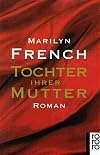
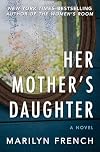
Her Mother's Daughter
by Marilyn French
On This Page
Description
Famed feminist Marilyn French's life-affirming saga celebrates the love and sacrifices of four generations of Polish-American mothers and daughters. With Bella Dabrowski close to death, her daughter Anastasia, who has reinvented herself as Stacey Stevens, is trying to penetrate the longstanding barriers between them to understand the woman who gave her life. Through the eyes of Stacey, a divorced, feminist New York photographer, we get to know Bella, a remarkable woman, wife, and mother. show more The daughter of Polish immigrants, Bella, who renamed herself Belle, clawed her way out of poverty and settled into a middle-class existence. Shifting perspectives between the two women, the reader is drawn into Belle's life through the lean years of the Depression as well as Stacey's recollections of her youthful marriage, a lesbian affair, and her tempestuous relationship with her own daughter, Arden. From the groundbreaking author of The Women's Room, Her Mother's Daughter explores past and present to reveal the complex, indestructible bonds between daughters and mothers. show lessTags
Recommendations






















Member Reviews
Poor, poor Anastasia. She was born a female- thus, from her own perspective destined to be used, abused, and trod upon not only by all the men in her life but also by her mother and children. Born in the early 1930s she became an adult just in time to lead the way in the feminist movement.
Anastasia is the primary character in this dark, messy novel and this is her personal story. As the novel begins she is in her early 50s, divorced twice, estranged from two of her children, and feeling like the best years of her life are over.
It takes a lot of patience on the readers part to wade through this 686 page narrative because the structure is extremely difficult to follow. It is a parallel story of Anastasia’s life, her mother’s life, show more and her grandmother’s life - intermittently dropping back and forth in time - moving from character to character, generation to generation. Besides jumping back and forth in time the author continuously shifts abruptly from telling the story in first person to third person and portions are told through Anastasia’s old private journal entries.
All the women share similar fates - being stuck in unhappy marriages, some worse than others- involving physical abuse, and knowing if they somehow found a way to leave, they would get no financial support from their children’s fathers.
I found several things infuriating about the story. All the men were either abusive or embarrassingly inept and hardly worth mentioning. There was no such thing as a “good man” in Marilyn French’s assessment. And all the men were terrible fathers. And because Anastasia’s mother suffered so terribly, Anastasia also suffers guilt; guilt for her mothers pain, guilt for not wanting to be a subservient wife and dedicated mother. Guilt for having her own personal goals. And she is always angry throughout her entire life’s journey.
Yet, for all her sensitivity and profound feelings, Anastasia is not a likable character. She takes no responsibly for her actions and thinks she is always the victim. She claims to have lived life on her own terms with her divorces (before this was acceptable social behavior), and having a career (when women were rarely accepted in the work place), and cheating on her second husband every chance she gets with no regret or remorse. But then why is she always so angry! No surprise she becomes gay at the end. However, she is a hypocrite. She hates men, yet acts just like the men she detests.
Nevertheless, there were things I loved about the story. Marilyn French gives many detailed descriptions of life from the perspective of a house-wife throughout the years - especially in her mother’s lifetime. The tedious job of doing laundry in washtubs and hand starching shirts and hanging the wash on lines to dry and ironing everything - an all day job once a week for most women. The kitchen chores of preparing daily meals when women made everything from scratch including home made bread and desserts. And then taking a minimum wage job to help with the family finances when her husband’s income was just not enough to put food on the table. And all three generations of women dealing with teen-aged rebellious children. And the disappointment of treasured traditions being tossed aside by younger generations. And women being treated like a second-rate citizen in the work environment. So many issues pondered- some still relevant today - others not so much. It’s just a shame that the story is told in such an eternally negative and extremely biased “anti-male” point of view. show less
Anastasia is the primary character in this dark, messy novel and this is her personal story. As the novel begins she is in her early 50s, divorced twice, estranged from two of her children, and feeling like the best years of her life are over.
It takes a lot of patience on the readers part to wade through this 686 page narrative because the structure is extremely difficult to follow. It is a parallel story of Anastasia’s life, her mother’s life, show more and her grandmother’s life - intermittently dropping back and forth in time - moving from character to character, generation to generation. Besides jumping back and forth in time the author continuously shifts abruptly from telling the story in first person to third person and portions are told through Anastasia’s old private journal entries.
All the women share similar fates - being stuck in unhappy marriages, some worse than others- involving physical abuse, and knowing if they somehow found a way to leave, they would get no financial support from their children’s fathers.
I found several things infuriating about the story. All the men were either abusive or embarrassingly inept and hardly worth mentioning. There was no such thing as a “good man” in Marilyn French’s assessment. And all the men were terrible fathers. And because Anastasia’s mother suffered so terribly, Anastasia also suffers guilt; guilt for her mothers pain, guilt for not wanting to be a subservient wife and dedicated mother. Guilt for having her own personal goals. And she is always angry throughout her entire life’s journey.
Yet, for all her sensitivity and profound feelings, Anastasia is not a likable character. She takes no responsibly for her actions and thinks she is always the victim. She claims to have lived life on her own terms with her divorces (before this was acceptable social behavior), and having a career (when women were rarely accepted in the work place), and cheating on her second husband every chance she gets with no regret or remorse. But then why is she always so angry! No surprise she becomes gay at the end. However, she is a hypocrite. She hates men, yet acts just like the men she detests.
Nevertheless, there were things I loved about the story. Marilyn French gives many detailed descriptions of life from the perspective of a house-wife throughout the years - especially in her mother’s lifetime. The tedious job of doing laundry in washtubs and hand starching shirts and hanging the wash on lines to dry and ironing everything - an all day job once a week for most women. The kitchen chores of preparing daily meals when women made everything from scratch including home made bread and desserts. And then taking a minimum wage job to help with the family finances when her husband’s income was just not enough to put food on the table. And all three generations of women dealing with teen-aged rebellious children. And the disappointment of treasured traditions being tossed aside by younger generations. And women being treated like a second-rate citizen in the work environment. So many issues pondered- some still relevant today - others not so much. It’s just a shame that the story is told in such an eternally negative and extremely biased “anti-male” point of view. show less
Her Mother's Daughter is a 1987 novel from Marilyn French, the author of the acclaimed Women's Room, a book that had a great influence on me when I was growing up, and which I recently reread.
At first, Her Mother's Daughter appears primarily to be a work of historical fiction, as it recounts the life stories and miseries of the narrator Anastasia's immediate ancestors, particularly her grandmother Frances and mother Isabella. Much of this part held the same fascination for me as A Tree Grows in Brooklyn by Betty Smith: it takes place in the same time period, the first couple decades of the twentieth century; and in the same place, Brooklyn and other immigrant neighborhoods of New York City. While I marveled at the hardships and show more survival skills it took to raise a family on pennies a day, I was often confused during the first third of the book, as the time frame continually shifts between adult Anastasia, sometimes narrating in first person, sometimes in third; child Anastasia, always in third person; and her mother, usually in third but sometimes first. I was sometimes a page into a section before I was clear who was speaking.
The middle section of the book is at times even muddier, as other characters get a voice: Anastasia's sister Joy, for example. French experiments here, playing with several different narrative techniques: that of an objective sociologist, for example, cataloging family photos.
Finally, however, the novel shifted into the mode I remembered and loved from The Women's Room: realistic characters orbiting around a strong first-person narrator, enacting personal dramas that reveal so much about American culture.
French asks hard questions about women's struggle for equality: Why were (are?) men so willing to give up custody of their children during divorce? Why do women sacrifice so much for children? Why are some women never happy? Why do so many men and women give up on their dreams? She paints an unflinching picture of the sexism that prevailed (and perhaps still prevails) in professional fields like journalism. Novels like hers are valuable reminders to twenty-first century women to be grateful for the improvements we have gained, and remain vigilant about keeping them. show less
At first, Her Mother's Daughter appears primarily to be a work of historical fiction, as it recounts the life stories and miseries of the narrator Anastasia's immediate ancestors, particularly her grandmother Frances and mother Isabella. Much of this part held the same fascination for me as A Tree Grows in Brooklyn by Betty Smith: it takes place in the same time period, the first couple decades of the twentieth century; and in the same place, Brooklyn and other immigrant neighborhoods of New York City. While I marveled at the hardships and show more survival skills it took to raise a family on pennies a day, I was often confused during the first third of the book, as the time frame continually shifts between adult Anastasia, sometimes narrating in first person, sometimes in third; child Anastasia, always in third person; and her mother, usually in third but sometimes first. I was sometimes a page into a section before I was clear who was speaking.
The middle section of the book is at times even muddier, as other characters get a voice: Anastasia's sister Joy, for example. French experiments here, playing with several different narrative techniques: that of an objective sociologist, for example, cataloging family photos.
Finally, however, the novel shifted into the mode I remembered and loved from The Women's Room: realistic characters orbiting around a strong first-person narrator, enacting personal dramas that reveal so much about American culture.
French asks hard questions about women's struggle for equality: Why were (are?) men so willing to give up custody of their children during divorce? Why do women sacrifice so much for children? Why are some women never happy? Why do so many men and women give up on their dreams? She paints an unflinching picture of the sexism that prevailed (and perhaps still prevails) in professional fields like journalism. Novels like hers are valuable reminders to twenty-first century women to be grateful for the improvements we have gained, and remain vigilant about keeping them. show less
Forget the chick lit and romance novels. This is a brilliant read about womens' lives and the relationship of mother and daghter.
Inspired me to want to write about the tensions between mothers and daughters and the easier relationship to grandmothers.
Library Journal Review: Ten years after The Women's Room , French gives us another captivating and lengthy novel on women''s lives. Here, Anastasia narrates her life experiences by blending them with those of her grandmother, mother, and daughter. Each woman has been determined not to make the sacrifices her mother made, instead seeking joy, freedom, and independence. And in doing so, each has become like her motheremotionally drained, alienated from her children, and alone. By probing the past and living the present, Anastasia comes to understand the silent bond between mothers and daughters. Highly recommended.
Ten years after The Women's Room , French gives us another captivating and lengthy novel on women's lives. Here, Anastasia narrates her life experiences by blending them with those of her grandmother, mother, and daughter. Each woman has been determined not to make the sacrifices her mother made, instead seeking joy, freedom, and independence. And in doing so, each has become like her motheremotionally drained, alienated from her children, and alone. By probing the past and living the present, Anastasia comes to understand the silent bond between mothers and daughters. Highly recommended. Jeris Cassell, Rutgers Univ. Libs., New Brunswick, N.J.
Copyright 1987 Reed Business Information, Inc. --
Copyright 1987 Reed Business Information, Inc. --
Members
- Recently Added By
Author Information

39+ Works 5,314 Members
Writer and feminist activist Marilyn French was born in Brooklyn, New York on November 21, 1929. She studied philosophy and English literature at Hofstra College, earning a bachelor's degree in 1951 and a master's in 1964. Before earning her doctorate from Harvard University, she taught English at Hofstra from 1964 to 1968. She was an assistant show more professor of English at the College of the Holy Cross from 1972 to 1976. She wrote numerous books throughout her lifetime including The Women's Room (1977), The War against Women (1992), and Season in Hell: A Memoir (1998). She died of heart failure on May 2, 2009 at the age of 79. (Bowker Author Biography) show less
Series
Belongs to Publisher Series
rororo (3011)
Work Relationships
Common Knowledge
- Canonical title*
- Tochter ihrer Mutter
- Original title
- Her Mother's Daughter
- Original publication date
- 1987
- First words*
- Meine Mutter ist alt geworden, obwohl sie immer behauptet hat, sie werde jung sterben.
- Last words*
- (Click to show. Warning: May contain spoilers.)Es muss genügen.
*Some information comes from Common Knowledge in other languages. Click "Edit" for more information.
Classifications
Statistics
- Members
- 570
- Popularity
- 51,519
- Reviews
- 15
- Rating
- (3.50)
- Languages
- 9 — Danish, Dutch, English, French, German, Italian, Norwegian (Bokmål), Spanish, Swedish
- Media
- Paper, Audiobook, Ebook
- ISBNs
- 37
- ASINs
- 7