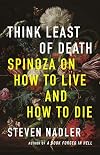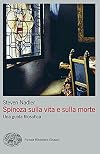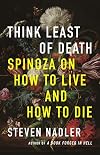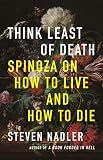
Think Least of Death: Spinoza on How to Live and How to Die
by Steven Nadler
On This Page
Description
"The seventeenth-century Dutch-Jewish philosopher Baruch Spinoza has long been known - and vilified - for his heretical view of God and for the radical determinism he sees governing the cosmos and human freedom. Only recently, however, has he begun to be considered seriously as a moral philosopher. In his philosophical masterpiece, the Ethics, after establishing some metaphysical and epistemological foundations, he turns to the "big questions" that so often move one to reflect on, and even show more change, the values that inform their life: What is truly good? What is happiness? What is the relationship between being a good or virtuous person and enjoying happiness and human flourishing? The guiding thread of the book, and the source of its title, is a claim that comes late in the Ethics: "The free person thinks least of all of death, and his wisdom is a meditation not on death but on life." The life of the free person, according to Spinoza, is one of joy, not sadness. He does what is "most important" in life and is not troubled by such harmful passions as hate, greed and envy. He treats others with benevolence, justice and charity. And, with his attention focused on the rewards of goodness, he enjoys the pleasures of this world, but in moderation. Nadler makes clear that these ethical precepts are not unrelated to Spinoza's metaphysical views. Rather, as Nadler shows, Spinoza's views on how to live are intimately connected to and require an understanding of his conception of human nature and its place in the cosmos, his account of values, and his conception of human happiness and flourishing. Written in an engaging style this book makes Spinoza's often forbiddingly technical philosophy accessible to contemporary readers interested in knowing more about Spinoza's views on morality, and who may even be looking to this famous "atheist", who so scandalized his early modern contemporaries, as a guide to the right way of living today"-- show lessTags
Recommendations























Member Reviews
Think Least of Death is philosopher Steven Nadler’s attempt to present the entire philosophical system of Spinoza to the lay reader. Spinoza’s philosophy covers everything from the ultimate nature of reality to the best way to live, with the underlying theme of achieving individual freedom from external influences and irrational ideas. For Spinoza, the free human follows the dictates of reason and achieves the highest form of happiness through intellectual independence and the development of virtue.
While the philosophical system developed by Spinoza is impressive, and the reader will discover a unique way of picturing the universe, there is an obvious contradiction the reader may notice within the first chapter, one that is not show more adequately addressed by the author.
As Nadler explains, for Spinoza, nature is an eternal, infinite substance that encompasses all that exists and all that can exist. Nature is self-caused, self-contained, and has existence as a necessary property. Nature has no ultimate purpose and could not be any other way than it is; Spinoza would not say that this is the best of all possible worlds, but is the only possible world. Further, the familiar objects of the world that we experience are simply modes or expressions of nature, and mind and matter are different attributes of the same substance (nature) expressed in two different ways.
Since the human mind and body are modes of nature, and nature cannot be any way other than it is, human beings cannot think or behave any other way than they do, and freedom of the will is simply an illusion. Spinoza could not be more clear about this strict determinism. As Nadler writes:
“The inviolable necessity of Nature governs not only the world of physical bodies—where apples fall from trees and rocks roll down hills—but also the domain of human activity, including whatever happens in the human mind. Thoughts, ideas, intentions, feelings, judgements, desires, even volitions—our everyday acts of willing and choosing—are all as strictly necessitated by the laws of thought as bodies in motion are by the laws of physics...In the mind, no less than among bodies, a strict causal determinism rules, and nothing could have been otherwise than it is.”
This is certainly an odd view for a book about ethics and self-improvement. If nothing can be otherwise than it is—and I cannot will my own thoughts or actions to be otherwise than they are—then what is the point of continuing on with a book that prescribes certain ethical principles that I have no capacity to implement? (Whether I do or not is not my choice anyway, apparently.)
After telling us about Spinoza’s strict determinism, on the very next page, Nadler writes:
“There is, to be sure, a kind of freedom available to human beings, and it is in our best interest to strive to attain it; this is what the Ethics is all about.”
Notice the action verb “strive.” According to Spinoza’s own philosophy, I cannot strive to do or think anything; my thoughts and actions arise out of the same causal necessity as an apple falling out of a tree. So what is up with all of the action verbs throughout the rest of the book suggesting that I think or act in certain ways? It’s quite clear that I’m either already what Spinoza calls a “free person,” or I am not.
And here’s the other problem: Spinoza discusses the “best” way of living, along with “rational” versus “irrational” ideas, but if nature can only be one way, and nothing could be otherwise than it is, and nature is perfect in the sense that it is necessary just as it is, then in what sense can we talk about right or wrong or about which actions and thoughts are superior to others? If I’m part of nature, and I have no choice but to act exactly as I do, and nature is perfect, then whatever my actions are, they are perfect in the sense that they are an unalterable expression of nature.
This to me is the fatal contradiction in the philosophy; Spinoza presents a picture of strict determinism but then suggests how we should act, as if this were possible within his own philosophical system that claims that nature can be only one way and that humanity is part of nature.
The ethical parts of the book, where they were useful and interesting, reminded me of Stoicism, and the reader, in my mind, would be better served reading Epictetus or Seneca rather than Spinoza. There is, of course, the possibility that I’m missing something, but I have never been as impressed by the philosophy of Spinoza as others seem to be.
Nadler does, however, present the philosophy clearly, if not a little redundantly. You’ll learn a great deal about the philosophy of Spinoza and will perhaps come to a different conclusion than I have. But the primary contradictions I’ve outlined above were not adequately addressed by Nadler, at least to my satisfaction. Further, it strains credibility to believe that Spinoza has unlocked the secrets of the universe once and for all, and that one can become enlightened simply by working through Spinoza’s Ethics. As Nadler writes:
“We pick up the text [Ethics], slowly make our way through its propositions and their demonstrations, and lo and behold, we come to see the truth about the cosmos, about ourselves, and about the pursuits that have so occupied our lives.”
If this sounds too good to be true, that’s because it probably is. show less
While the philosophical system developed by Spinoza is impressive, and the reader will discover a unique way of picturing the universe, there is an obvious contradiction the reader may notice within the first chapter, one that is not show more adequately addressed by the author.
As Nadler explains, for Spinoza, nature is an eternal, infinite substance that encompasses all that exists and all that can exist. Nature is self-caused, self-contained, and has existence as a necessary property. Nature has no ultimate purpose and could not be any other way than it is; Spinoza would not say that this is the best of all possible worlds, but is the only possible world. Further, the familiar objects of the world that we experience are simply modes or expressions of nature, and mind and matter are different attributes of the same substance (nature) expressed in two different ways.
Since the human mind and body are modes of nature, and nature cannot be any way other than it is, human beings cannot think or behave any other way than they do, and freedom of the will is simply an illusion. Spinoza could not be more clear about this strict determinism. As Nadler writes:
“The inviolable necessity of Nature governs not only the world of physical bodies—where apples fall from trees and rocks roll down hills—but also the domain of human activity, including whatever happens in the human mind. Thoughts, ideas, intentions, feelings, judgements, desires, even volitions—our everyday acts of willing and choosing—are all as strictly necessitated by the laws of thought as bodies in motion are by the laws of physics...In the mind, no less than among bodies, a strict causal determinism rules, and nothing could have been otherwise than it is.”
This is certainly an odd view for a book about ethics and self-improvement. If nothing can be otherwise than it is—and I cannot will my own thoughts or actions to be otherwise than they are—then what is the point of continuing on with a book that prescribes certain ethical principles that I have no capacity to implement? (Whether I do or not is not my choice anyway, apparently.)
After telling us about Spinoza’s strict determinism, on the very next page, Nadler writes:
“There is, to be sure, a kind of freedom available to human beings, and it is in our best interest to strive to attain it; this is what the Ethics is all about.”
Notice the action verb “strive.” According to Spinoza’s own philosophy, I cannot strive to do or think anything; my thoughts and actions arise out of the same causal necessity as an apple falling out of a tree. So what is up with all of the action verbs throughout the rest of the book suggesting that I think or act in certain ways? It’s quite clear that I’m either already what Spinoza calls a “free person,” or I am not.
And here’s the other problem: Spinoza discusses the “best” way of living, along with “rational” versus “irrational” ideas, but if nature can only be one way, and nothing could be otherwise than it is, and nature is perfect in the sense that it is necessary just as it is, then in what sense can we talk about right or wrong or about which actions and thoughts are superior to others? If I’m part of nature, and I have no choice but to act exactly as I do, and nature is perfect, then whatever my actions are, they are perfect in the sense that they are an unalterable expression of nature.
This to me is the fatal contradiction in the philosophy; Spinoza presents a picture of strict determinism but then suggests how we should act, as if this were possible within his own philosophical system that claims that nature can be only one way and that humanity is part of nature.
The ethical parts of the book, where they were useful and interesting, reminded me of Stoicism, and the reader, in my mind, would be better served reading Epictetus or Seneca rather than Spinoza. There is, of course, the possibility that I’m missing something, but I have never been as impressed by the philosophy of Spinoza as others seem to be.
Nadler does, however, present the philosophy clearly, if not a little redundantly. You’ll learn a great deal about the philosophy of Spinoza and will perhaps come to a different conclusion than I have. But the primary contradictions I’ve outlined above were not adequately addressed by Nadler, at least to my satisfaction. Further, it strains credibility to believe that Spinoza has unlocked the secrets of the universe once and for all, and that one can become enlightened simply by working through Spinoza’s Ethics. As Nadler writes:
“We pick up the text [Ethics], slowly make our way through its propositions and their demonstrations, and lo and behold, we come to see the truth about the cosmos, about ourselves, and about the pursuits that have so occupied our lives.”
If this sounds too good to be true, that’s because it probably is. show less
Overall a good primer on Spinoza, but it strikes me as an odd choice to not go into Spinoza's metaphysics and how the resulting pantheism confounds and distinguishes him from his early modern peers.
Put another way: Spinoza was delightfully weird and contextualizing that would go a long way towards making his his work further accessible and appreciated.
Put another way: Spinoza was delightfully weird and contextualizing that would go a long way towards making his his work further accessible and appreciated.
this is a friendly sorta-intro to spinoza's ethics in the form of a self help book. it is an amusing concept for a book but the effort is 100% earnest, not ironic in the least. there is good advice for living in here, and some deep discussion of our predicament in being alive and wanting to be good. the author's academic scruples weigh down some sections with textual interpretive disputes: it is a bit of a puzzle what spinoza really thought about suicide, eg. Would recommend if you have some acquaintance with spinoza and want to revisit ideas from his great work in ethics in a new and friendly form.
The author makes a connection between Spinoza's ideas and his life and times, demonstrating their relevance to modern life.
Ratings
Members
- Recently Added By
Author Information

37+ Works 1,903 Members
Steven Nadler is Vilas Research Professor and the William H. Hay II Professor of Philosophy at the University of Wisconsin-Madison. His many books include Rembrandt's Jews, which was a finalist for the Pulitzer Prize, Spinoza: A Life, and (with Lawrence Shapiro) When Bad Thinking Happens to Good People: How Philosophy Can Save Us from Ourselves show more (Princeton). show less
Awards and Honors
Notable Lists
Classifications
Statistics
- Members
- 109
- Popularity
- 296,878
- Reviews
- 4
- Rating
- (3.55)
- Languages
- English, Italian
- Media
- Paper, Audiobook, Ebook
- ISBNs
- 6
- ASINs
- 2