Vagabondnoveller
by Maxim Gorky
73 Members (3.38)
On This Page
Description
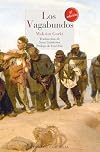
Entre 1895 y 1899, Gorki escribio? relatos y novelas cortas donde recogi?a su propia experiencia personal como vagabundo por la ge?lida Rusia, arrastrando una vida miserable y trabajando ocasionalmente para conseguir un mendrugo de pan con el que engan?ar al hambre y un harapo para burlar el fri?o. Las historias de vagabundos, a los que describe como seres libres que se oponen individualmente a las enormes diferencias de clases de las sociedad rusa, le fueron llevando desde el realismo hacia show more un romanticismo reivindicativo que marcari?a en el futuro su literatura y le llevari?a a apoyar abiertamente la revolucio?n de 1917. Sara Gutie?rez ha seleccionado y traducido seis de las piezas ma?s brillantes dedicadas por Gorki a los vagabundos, algunas de ellas ine?ditas en espan?ol y otras que dejaron de editarse hace an?os. show lessTags
Recommendations


















Member Reviews
Members
- Recently Added By
Author Information

923+ Works 8,218 Members
Alexei Maximovich Peshkov, better known as Maxim (Maksim) Gorky, was born on March 28th, 1968. Until the recent collapse of the Soviet state, Gorky was officially viewed as the greatest Russian writer of the twentieth century---an evaluation far above the true measure of his nevertheless considerable talent. Proclaimed the founder of socialist show more realism, he significantly influenced many Soviet writers, as well as others in Europe and in the developing world, and his works were for decades part of the Soviet school curriculum. His formal education was minimal. From the age of 11, he fended for himself with a variety of jobs. Self-taught, he published his first story, "Makar Chudra," in 1892. His first collection, Sketches and Stories (1898), is a romantic celebration of society's strong outcasts---the hobos and the drifters---and helped to popularize such literary protagonists. Foma Gordeyev (1899), Gorky's first novel, depicts generational conflict within the Russian bourgeoisie. A popular public figure on the left, Gorky was often in trouble with the tsarist government. During the 1900s, he was the central figure in the Znanie publishing house, which produced realist prose with a social conscience. Some of his own works were extremely successful. The play The Lower Depths (1902), set in a poorhouse and a strong indictment of social injustice, was not only a staple of Soviet theater but also influential in the United States. Eugene O'Neill's The Iceman Cometh was influenced by it. The propagandistic, extraordinarily influential novel Mother (1906) presents an iconic working-class woman who is transformed into a saint of the Revolution; its optimism in the ultimate triumph of the cause made it a prototype of socialist-realist fiction. During the years prior to 1917, Gorky published a number of autobiographical stories: All Over Russia (1912--18) (also Through Russia) and his memoirs; My Childhood (1913--14), My Apprenticeship (1915--16), and My Universities (1923). This trilogy shows his art at its best and includes some very lively reminiscences of such writers as Tolstoy and Chekhov. Although a Bolshevik party member since 1905, Gorky strongly criticized the new regime after the October Revolution: His collected articles from 1917-18, Untimely Thoughts, remained unpublished in the Soviet Union until recently. A cultural activist, he helped to save the lives of many writers, artists, and scholars during the cold and hungry years of the civil war. In 1921 he left Russia for Italy but returned permanently a decade later, recognized as the grand old man of Soviet literature. He then worked for Stalin's economic policies and presided over the institutionalization of socialist realism. At his death, he left unfinished a major novel of considerable interest, The Life of Klim Samgin, which he had been working on since 1925. (Bowker Author Biography) show less
Some Editions
Series
Belongs to Publisher Series
Common Knowledge
- Original publication date
- c. 1895-1916
Classifications
- Genres
- Fiction and Literature, General Fiction, Romance
- DDC/MDS
- 891.7 — Literature & rhetoric Asian Literature East Indo-European and Celtic literatures Russian and East Slavic languages
- LCC
- PG3464 .S5 — Language and Literature Slavic languages and literatures. Baltic languages. Albanian language Slavic. Baltic. Albanian Russian literature Individual authors and works 1870-1917 Gorky
- BISAC
Statistics
- Members
- 73
- Popularity
- 435,132
- Rating
- (3.38)
- Languages
- 7 — Catalan, English, Finnish, French, Portuguese, Spanish, Swedish
- Media
- Paper, Ebook
- ISBNs
- 13
- ASINs
- 3