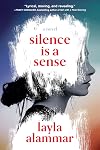
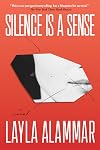
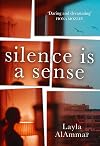
Silence Is a Sense
by Layla AlAmmar
On This Page
Description
"A woman sits in her apartment in an unnamed English city, absorbed in watching the dramas of her neighbors through their windows. Traumatized into muteness after a long, devastating trip from war-torn Syria to the UK, she believes that she wants to sink deeper into isolation, moving between memories of her absent boyfriend and family and her homeland, dreams, and reality. At the same time, she begins writing for a magazine under the pseudonym "the Voiceless," trying to explain the refugee show more experience without sensationalizing it-or revealing anything about herself. Gradually, as the boundaries of her world expand, she has to make a choice: Will she remain a voiceless observer, or become an active participant in her own life and in a community that, despite her best efforts, is quickly becoming her own?"-- show lessTags
Recommendations






















Member Reviews
"I don't know how to explain to her that I am cornered by memories, caged in my recollection. I feel persecuted by the things I remember and by what my mind chooses to hide from me.~from Silence is a Sense by Layla AlAmmar
Everyone wants a story. A narrative with meaning. The doctors. The officials. The contact at a magazine who publishes her writing.
She is recognized as 'other', Arab, Muslim. She is a refugee in England. People fear her. Or, they want to know things she holds close, the people lost and the atrocities of war and her escape across Europe. The experiences that left her enveloped by silence.
Trauma took her voice. Communicating only in the written word, she becomes "The Voiceless."
The only reasonable response was to fill show more myself up with silence.~from Silence is a Sense by Layla AlAmmar
She looks out the windows of her apartment and observes the occupants of the other apartments. She knows their secrets. But she keeps apart until a horrendous crime evokes a response that frees her.
Layla AlAmmar's novel Silence is a Sense brilliantly delves into the soul of a woman who has lost everything, first by the war that destroyed her world, and then by her harrowing flight across borders, only to find there is no safe harbor even in freedom.
Edgar Allan Poe's fable Silence informs the work, the narrator committing it to memory. "My heart pounds to the rhythm of his cadence," she thinks as she recites it in her head.
Front-piece in Vol. Seven of the 1904 Commemorative Edition of The Works of Edgar Allan Poe
I picked up my grandfather's set of Poe to read the fable and noted images that appear in AlAmmar's novel. Poe describes a place where giant water lilies shriek in a yellow river, and forests quake in windless skies, and a crimson moon lights the view. A being in desolation is subjected to beating rain and roaring hippopotami, then by a profound silence by the Demon who tells the tale. The man hurriedly flees in terror.
The fable speaks to the narrator who has also been terrorized and left in silence.
For AlAmmar's protagonist, silence is the only sane reaction to atrocity. We don't need detailed descriptions of what she endured, for her reaction tells us all we need to know.
What do we see when we look at refugees, immigrants, people who look different from us, or who worship differently from us? Do we think of their legacy of losses?
Our immigrant ancestors kept their stories quiet, they did not tell us of the death camps or the burned villages, the rape and torture when they were powerless. We wrap these things in silence.
We demand stories and hope to hear pretty tales, happy endings.
At the end of the novel, our heroine speaks her name, has found her voice. There is hope of healing.
I received a free ARC from the publisher in exchange for a fair and unbiased review. show less
Everyone wants a story. A narrative with meaning. The doctors. The officials. The contact at a magazine who publishes her writing.
She is recognized as 'other', Arab, Muslim. She is a refugee in England. People fear her. Or, they want to know things she holds close, the people lost and the atrocities of war and her escape across Europe. The experiences that left her enveloped by silence.
Trauma took her voice. Communicating only in the written word, she becomes "The Voiceless."
The only reasonable response was to fill show more myself up with silence.~from Silence is a Sense by Layla AlAmmar
She looks out the windows of her apartment and observes the occupants of the other apartments. She knows their secrets. But she keeps apart until a horrendous crime evokes a response that frees her.
Layla AlAmmar's novel Silence is a Sense brilliantly delves into the soul of a woman who has lost everything, first by the war that destroyed her world, and then by her harrowing flight across borders, only to find there is no safe harbor even in freedom.
Edgar Allan Poe's fable Silence informs the work, the narrator committing it to memory. "My heart pounds to the rhythm of his cadence," she thinks as she recites it in her head.
Front-piece in Vol. Seven of the 1904 Commemorative Edition of The Works of Edgar Allan Poe
I picked up my grandfather's set of Poe to read the fable and noted images that appear in AlAmmar's novel. Poe describes a place where giant water lilies shriek in a yellow river, and forests quake in windless skies, and a crimson moon lights the view. A being in desolation is subjected to beating rain and roaring hippopotami, then by a profound silence by the Demon who tells the tale. The man hurriedly flees in terror.
The fable speaks to the narrator who has also been terrorized and left in silence.
For AlAmmar's protagonist, silence is the only sane reaction to atrocity. We don't need detailed descriptions of what she endured, for her reaction tells us all we need to know.
What do we see when we look at refugees, immigrants, people who look different from us, or who worship differently from us? Do we think of their legacy of losses?
Our immigrant ancestors kept their stories quiet, they did not tell us of the death camps or the burned villages, the rape and torture when they were powerless. We wrap these things in silence.
We demand stories and hope to hear pretty tales, happy endings.
At the end of the novel, our heroine speaks her name, has found her voice. There is hope of healing.
I received a free ARC from the publisher in exchange for a fair and unbiased review. show less
The narrator is a young Syrian woman living in an unnamed English city. Traumatized by her journey across Europe from war-torn Syria, she has been diagnosed with psychogenic mutism. She isolates herself from the outside world; she admits, “I can go months without contact.” She spends her time watching the residents of the apartment towers near hers. She does write articles for a magazine in which she describes the refugee experience, but she is known only by a pseudonym “The Voiceless”. Though she thinks “I was supposed to be safe here,” anti-Muslim sentiments appear in her neighbourhood and she has to decide whether to remain passive and voiceless or become an active participant in her community.
This can best be described show more as a fragmented narrative. We learn about the young woman’s daily life and her thoughts and feelings but we also read parts of her articles; in addition, her memories and nightmares serve as flashbacks to her past in Syria and her travels as a refugee. These flashbacks are not in chronological order but move back and forth through time. The narrator understands that people “try to construct narratives . . . [into] a structure that makes sense . . . trying to stitch it all together into a coherent pattern – a beginning, a middle and an end,” but she cannot mold her memories “into something easy to digest . . . [because] The structure of narrative has collapsed; imprecise in my own mind, with jagged pieces it takes so much to screw together.” The fragmented narrative, therefore, is appropriate.
This fragmentation, however, challenges the reader to piece together the different components of the story to make sense of it. Personally, I had difficulty with three chapters, all entitled “The Eye.” I understand that the Syrian government had sophisticated surveillance systems which were used against its citizens: “There are eyes everywhere.” The actions described in the chapters, however, are not clearly explained. Are they just symbolic nightmares?
Much is not fully explained. Exactly what trauma the narrator endured is not described in great detail but sufficient information is given that the reader can infer what happened to her and people she loved: “friends shot on their way to work . . . babies going to school and bombs falling from the sky . . . Desperate voices in dark basements. Confined spaces. Ahmed, tiny hands bound, eyes and mouth taped shut, a bullet in the head. . . . Cold, hungry, always thirsty.” Of the trip to England she writes: “the hot and overcrowded bus through Turkey and the camps in Greece and the little toe that became so infected I thought it would fall off like a rotten piece of fruit. I wrote about guns to my head in front of the open backs of freezing trucks and that afternoon when we swallowed tear gas and dodged rubber bullets on the Macedonian border.” For me, the most chilling is her mentioning that “between my legs . . . I can no longer distinguish pain from pleasure” and waking up “in dark, cold town squares in Germany or by railway tracks in Austria . . . sore with a taste like sewage in my mouth and a few euros in my pocket or stuffed down my shirt.” More description would be overwhelming.
Considering what she has experienced, it is not surprising that the narrator has retreated from the world and has difficulty coping. She wonders “if there was anywhere in the world that I belonged.” She describes herself as “cornered by memories, caged in by recollections. I feel persecuted by the things I remember and by what my mind chooses to hide from me.” She doubts that “there could possibly be anyone in the world I can rely on.” She feels danger is everywhere: “We are not safe anywhere. Not really. From the moment you’re born, the moment they slap your bottom and you draw breath, the vigil begins. Whether it’s bombs . . . or bullets . . . or a man telling you to just relax and it won’t be that bad, there is peril everywhere. Peril for men. Peril for women. For children and fighters and lovers. Peril everywhere, for everyone.” It is not difficult to understand why she believes, “’There is only fear . . . There’s nothing else in life.’” A medical report about the narrator when she first arrived in England is telling; it mentions her lack of trust, imagining everyone has malicious intent. The final sentence of that report is chilling: “Physical examination and medical history indicate that this is not an entirely irrational response.”
Clearly, the reader cannot be a passive reader. And that ties in with the message that people must not remain passive but be like one man who befriends the refugee: “’No one is truly voiceless, he whispered, either they silence you, or you silence yourself.’” The narrator is amazed at this man’s actions: “Who is this man, defending people he has no personal connection to, defending them simply because it is the right thing to do?”
The one thing that bothered me is that the narrator seems to make little effort to find her family. She wonders if her family arrived in Alexandria as planned: “Did they all make it? Do they know I think of them even though I don’t want to? Do they think of me?” Because she hides behind an alias, she doesn’t think family members could recognize her and find her through her articles. Yet in the same breath, she acknowledges that “you’d be surprised where you can get a wifi signal” so why doesn’t she use the internet to try and contact family members like “cousin Mahmoud in Belfast” and try to find her parents? She knows that her sister Nada arrived safely in Alexandria even before she left Syria, but she was given no contact information for Nada?
This book is an intense read, but one that should be read. The book will stay with the reader long after it’s finished.
Please check out my reader's blog (https://schatjesshelves.blogspot.com/) and follow me on Twitter (https://twitter.com/DCYakabuski). show less
This can best be described show more as a fragmented narrative. We learn about the young woman’s daily life and her thoughts and feelings but we also read parts of her articles; in addition, her memories and nightmares serve as flashbacks to her past in Syria and her travels as a refugee. These flashbacks are not in chronological order but move back and forth through time. The narrator understands that people “try to construct narratives . . . [into] a structure that makes sense . . . trying to stitch it all together into a coherent pattern – a beginning, a middle and an end,” but she cannot mold her memories “into something easy to digest . . . [because] The structure of narrative has collapsed; imprecise in my own mind, with jagged pieces it takes so much to screw together.” The fragmented narrative, therefore, is appropriate.
This fragmentation, however, challenges the reader to piece together the different components of the story to make sense of it. Personally, I had difficulty with three chapters, all entitled “The Eye.” I understand that the Syrian government had sophisticated surveillance systems which were used against its citizens: “There are eyes everywhere.” The actions described in the chapters, however, are not clearly explained. Are they just symbolic nightmares?
Much is not fully explained. Exactly what trauma the narrator endured is not described in great detail but sufficient information is given that the reader can infer what happened to her and people she loved: “friends shot on their way to work . . . babies going to school and bombs falling from the sky . . . Desperate voices in dark basements. Confined spaces. Ahmed, tiny hands bound, eyes and mouth taped shut, a bullet in the head. . . . Cold, hungry, always thirsty.” Of the trip to England she writes: “the hot and overcrowded bus through Turkey and the camps in Greece and the little toe that became so infected I thought it would fall off like a rotten piece of fruit. I wrote about guns to my head in front of the open backs of freezing trucks and that afternoon when we swallowed tear gas and dodged rubber bullets on the Macedonian border.” For me, the most chilling is her mentioning that “between my legs . . . I can no longer distinguish pain from pleasure” and waking up “in dark, cold town squares in Germany or by railway tracks in Austria . . . sore with a taste like sewage in my mouth and a few euros in my pocket or stuffed down my shirt.” More description would be overwhelming.
Considering what she has experienced, it is not surprising that the narrator has retreated from the world and has difficulty coping. She wonders “if there was anywhere in the world that I belonged.” She describes herself as “cornered by memories, caged in by recollections. I feel persecuted by the things I remember and by what my mind chooses to hide from me.” She doubts that “there could possibly be anyone in the world I can rely on.” She feels danger is everywhere: “We are not safe anywhere. Not really. From the moment you’re born, the moment they slap your bottom and you draw breath, the vigil begins. Whether it’s bombs . . . or bullets . . . or a man telling you to just relax and it won’t be that bad, there is peril everywhere. Peril for men. Peril for women. For children and fighters and lovers. Peril everywhere, for everyone.” It is not difficult to understand why she believes, “’There is only fear . . . There’s nothing else in life.’” A medical report about the narrator when she first arrived in England is telling; it mentions her lack of trust, imagining everyone has malicious intent. The final sentence of that report is chilling: “Physical examination and medical history indicate that this is not an entirely irrational response.”
Clearly, the reader cannot be a passive reader. And that ties in with the message that people must not remain passive but be like one man who befriends the refugee: “’No one is truly voiceless, he whispered, either they silence you, or you silence yourself.’” The narrator is amazed at this man’s actions: “Who is this man, defending people he has no personal connection to, defending them simply because it is the right thing to do?”
The one thing that bothered me is that the narrator seems to make little effort to find her family. She wonders if her family arrived in Alexandria as planned: “Did they all make it? Do they know I think of them even though I don’t want to? Do they think of me?” Because she hides behind an alias, she doesn’t think family members could recognize her and find her through her articles. Yet in the same breath, she acknowledges that “you’d be surprised where you can get a wifi signal” so why doesn’t she use the internet to try and contact family members like “cousin Mahmoud in Belfast” and try to find her parents? She knows that her sister Nada arrived safely in Alexandria even before she left Syria, but she was given no contact information for Nada?
This book is an intense read, but one that should be read. The book will stay with the reader long after it’s finished.
Please check out my reader's blog (https://schatjesshelves.blogspot.com/) and follow me on Twitter (https://twitter.com/DCYakabuski). show less
Thought-provoking. Eye-opening. An intense look at what it means to be an asylum seeker and their associated traumas.
I became a part of the unnamed Syrian refugee narrator’s life and her attempts to connect with her new community. The traumas she encountered along her journey led to her inability to speak (hysterical mutism). Dealing with Post Traumatic Stress Disorder, the reader is given flashbacks to her home and family in Aleppo and the atrocities experienced along her route to England. From a distance, she observes the daily activities of her neighbors, giving them names such as “No-Lights-Man” and “The Juicer”. But her voice is heard in the articles she writes for a London news magazine under the pseudonym of The show more Voiceless. She writes about her neighbors and the life in Aleppo that she left behind. She writes of the injustices they continue to face.
The author touches upon behavior toward immigrants not just in England but behavior we experience here in the US, such as the tendency to blame an entire group of people for an attack. Refugees deserve fair and equal treatment no matter what country they come from. They did not flee their countries because they wanted to; they fled because it was too dangerous to remain there. Yet they are often forced to remain silent when discriminated against. We do not know what horrors and mistreatment they have been through. They remain silent.
The narrator sadly comes to realize that the safety she fled her country for has yet to be found. Fear continues to be a large part of her life. But when attacks are made upon the local mosque and members of her community, she is forced to decide whether she is going to remain in the shadows or step out and do what is right for the community.
I loved the way AlAmmar took the main character from being an anonymous someone distant from her neighbors (and the reader) and gradually allowed us to enter her life as she allowed her neighbors into her life.
My favorite quote from the book:
“It’s not so difficult to know what people want. At the root of it we all want the same things: freedom, happiness, safety. I want to write what I want to write without the fear of a knock at the door and an interrogation room. I want to love who I want to love without the fear of death or corrective rape. I want to wear what I want to wear without the worry that men will see my skirt or the buttons on my shirt as an invitation. That is it. The freedom to live how we want to live.”
I received an advance e-galley from Algonquin Books. All opinions are my own. show less
I became a part of the unnamed Syrian refugee narrator’s life and her attempts to connect with her new community. The traumas she encountered along her journey led to her inability to speak (hysterical mutism). Dealing with Post Traumatic Stress Disorder, the reader is given flashbacks to her home and family in Aleppo and the atrocities experienced along her route to England. From a distance, she observes the daily activities of her neighbors, giving them names such as “No-Lights-Man” and “The Juicer”. But her voice is heard in the articles she writes for a London news magazine under the pseudonym of The show more Voiceless. She writes about her neighbors and the life in Aleppo that she left behind. She writes of the injustices they continue to face.
The author touches upon behavior toward immigrants not just in England but behavior we experience here in the US, such as the tendency to blame an entire group of people for an attack. Refugees deserve fair and equal treatment no matter what country they come from. They did not flee their countries because they wanted to; they fled because it was too dangerous to remain there. Yet they are often forced to remain silent when discriminated against. We do not know what horrors and mistreatment they have been through. They remain silent.
The narrator sadly comes to realize that the safety she fled her country for has yet to be found. Fear continues to be a large part of her life. But when attacks are made upon the local mosque and members of her community, she is forced to decide whether she is going to remain in the shadows or step out and do what is right for the community.
I loved the way AlAmmar took the main character from being an anonymous someone distant from her neighbors (and the reader) and gradually allowed us to enter her life as she allowed her neighbors into her life.
My favorite quote from the book:
“It’s not so difficult to know what people want. At the root of it we all want the same things: freedom, happiness, safety. I want to write what I want to write without the fear of a knock at the door and an interrogation room. I want to love who I want to love without the fear of death or corrective rape. I want to wear what I want to wear without the worry that men will see my skirt or the buttons on my shirt as an invitation. That is it. The freedom to live how we want to live.”
I received an advance e-galley from Algonquin Books. All opinions are my own. show less
I've never read a book that does a better job of putting the reader inside the mind of the narrator than Layla AlAmmar's novel Silence Is A Sense.
The unnamed narrator is a 24 year-old Syrian refugee who has resettled in Great Britain. The novel opens with her narrating the sights she sees looking from her apartment into the windows of other tenants in the complex.
There is Juice Man, a very fit man who has a stringent exercise program and entertains several women and a few men in his apartment. There is an elderly man who also lives alone, a family where the father beats the mother, while their teenage daughter sits in her room with headphones on and their teenage son has anger issues, and Tom and his wife Ruth, who keeps tabs on show more activities in the complex. We see them so clearly through her eyes.
Our narrator doesn't speak, leaving her neighbors to believe her deaf. She doesn't disabuse them of this notion, it makes it easier to avoid any type of relationship with them. She is too fragile.
We learn that she fled the violence and bombings in Syria, losing contact with her family in the process.
She made her way through Europe, through horrific conditions in refugee settlements, and a young woman on her own in this situation suffers physical, sexual and emotional violence that causes unbearable trauma.
The narrator gives us glimpses of her previous life- her parents and siblings, life at university protesting the brutal Syrian regime of Al-Assad, the daily barrage of bombings that killed so many thousands of innocent people.
She writes essays under the name The Voiceless, and her editor pressures her to reveal more of her life fleeing Syria, something she is unable to do as she is "cornered by memories, caged in by recollections". Her pieces become more controversial as she is critical of the people who are marching with their posters, willing to speak up but not actually do anything to help the humans fleeing their homeland.
A violent attack on a Muslim forces the people in the neighborhood to face up to the racism and religious intolerance amongst them. The Imam of the mosque said of it:
"No god you believe in will be okay with this. You must do unto others as you want them to do to you. That is it. That is all of it. There is nothing else which matters. That is what all the great religions of the world tell us."
That resonated so much with me.
I can tell how much I get from a book by how many highlights I make. Silence Is A Sense is covered with highlights, with insights into the plight of refugees, how memories can be deceiving, how dangerous it is for us to blame "the other" because we don't want to face up to our fears that the world is changing, and how "we all want the same things- freedom, happiness, safety".
The writing is deeply affecting, and looking at the world through our narrator's eyes is enlightening. I will be thinking about her and Silence Is A Sense for a long time to come. I give it my highest recommendation.
Thanks to Algonquin Books for putting me on Layla AlAmmar's book tour. show less
The unnamed narrator is a 24 year-old Syrian refugee who has resettled in Great Britain. The novel opens with her narrating the sights she sees looking from her apartment into the windows of other tenants in the complex.
There is Juice Man, a very fit man who has a stringent exercise program and entertains several women and a few men in his apartment. There is an elderly man who also lives alone, a family where the father beats the mother, while their teenage daughter sits in her room with headphones on and their teenage son has anger issues, and Tom and his wife Ruth, who keeps tabs on show more activities in the complex. We see them so clearly through her eyes.
Our narrator doesn't speak, leaving her neighbors to believe her deaf. She doesn't disabuse them of this notion, it makes it easier to avoid any type of relationship with them. She is too fragile.
We learn that she fled the violence and bombings in Syria, losing contact with her family in the process.
She made her way through Europe, through horrific conditions in refugee settlements, and a young woman on her own in this situation suffers physical, sexual and emotional violence that causes unbearable trauma.
The narrator gives us glimpses of her previous life- her parents and siblings, life at university protesting the brutal Syrian regime of Al-Assad, the daily barrage of bombings that killed so many thousands of innocent people.
She writes essays under the name The Voiceless, and her editor pressures her to reveal more of her life fleeing Syria, something she is unable to do as she is "cornered by memories, caged in by recollections". Her pieces become more controversial as she is critical of the people who are marching with their posters, willing to speak up but not actually do anything to help the humans fleeing their homeland.
A violent attack on a Muslim forces the people in the neighborhood to face up to the racism and religious intolerance amongst them. The Imam of the mosque said of it:
"No god you believe in will be okay with this. You must do unto others as you want them to do to you. That is it. That is all of it. There is nothing else which matters. That is what all the great religions of the world tell us."
That resonated so much with me.
I can tell how much I get from a book by how many highlights I make. Silence Is A Sense is covered with highlights, with insights into the plight of refugees, how memories can be deceiving, how dangerous it is for us to blame "the other" because we don't want to face up to our fears that the world is changing, and how "we all want the same things- freedom, happiness, safety".
The writing is deeply affecting, and looking at the world through our narrator's eyes is enlightening. I will be thinking about her and Silence Is A Sense for a long time to come. I give it my highest recommendation.
Thanks to Algonquin Books for putting me on Layla AlAmmar's book tour. show less
One of the most profound statements in Layla AlAmmar’s second novel is “the thing is, when you can’t speak, people assume you can’t hear either.” Told in first person, a young mute woman has left her family and war-torn Aleppo, Syria to become one of the many refugees looking for a safe place to live. Ending up in an unnamed British city, she is living alone and writing The Voiceless column for an e-magazine. We never learn whether her mutism is by choice or because of the physical and mental hardships she has had to overcome to get to Britain. Her world is small. She lives in “West Tower, fourth floor, flat three.” Much of her life is spent watching her neighbors. In bits and pieces, the reader comes to know the narrator show more as an educated woman, studying literature at a Damascus university only to flee to survive. We learn the cost of having to leave her family, the sexual and physical abuse she suffered as an asylum seeker and what it is like to be one of the voiceless refugees living in a place where even surrounded by people, you live in solitude with your own thoughts. show less
Distressing, yet enlightening read. I don’t see how anyone could possibly look at immigrants the same way after they read this powerful book. It should be required reading for all. The references to Poe’s work were so appropriate for this tale of a woman who has lost her voice due to extreme trauma. Most highly recommended.
A young Syrian refugee, traumatised by her recent life in Syria, the loss of contact with her boyfriend and her family, and by her journey of horror to relative safety in the UK is an elective mute. From her tower block sanctuary she observes the lives of her neighbours in their homes. As 'The Voiceless', she writes magazine articles trying to explain and make sense of her experiences. Gradually, silently, she begins to venture out, and discovers, through visiting the local mosque, a bookstore and the local corner shop whose owner becomes the victim of a racist murder, that she in becoming inexorably connected to her community. This book engagingly explores what it means to be a refugee and to need asylum, and how fundamental human show more connection is to survival. show less
Members
- Recently Added By
Lists

Middle East Fiction
179 works; 16 members

Anticipated 2021 Reads
231 works; 7 members

Middle Eastern Literature & Non-Fiction
99 works; 3 members

Islam & the Middle East
127 works; 1 member

Muslim Women Write: A Year of Fiction
12 works; 1 member
Author Information
2 Works 100 Members
Awards and Honors
Common Knowledge
- Original publication date
- 2021-03-16
- Blurbers
- Chevalier, Tracy
Classifications
Statistics
- Members
- 75
- Popularity
- 421,023
- Reviews
- 10
- Rating
- (4.29)
- Languages
- English
- Media
- Paper, Audiobook, Ebook
- ISBNs
- 11
- ASINs
- 3