On This Page
Description
Teenagers in a small town in the 1960s experience new thoughts and feelings, question their identities, connect, and disconnect as they search for the meaning of life and love.Tags
Recommendations







Member Recommendations
Member Reviews
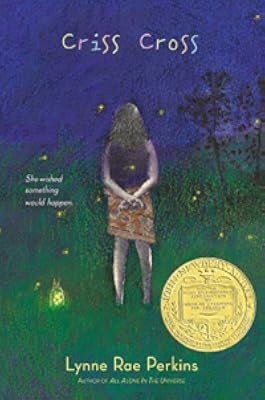
The cover copy: "She wished something would happen"
The moral: Wishes frequently don't come true.
Another lesson: Sometimes a Newbery Medal means jack shit. I mean, it can be stamped right there on the cover, but everything under it makes you wonder if, like, the committee just gets really wasted every so often and gives it to a book that really, really doesn't even deserve to be in consideration. A drunken, "Wouldn't it be funny if we gave it to . . . ?" joke gone oh so very wrong.
This is an extremely boring and generic slice-of-life/coming-of-age tale. The author tries to spice it up by occasionally diddling around with the format and her writing style, including some useless illustrations and photographs, and alluding to some literary show more serendipity crap, but it remains steadfastly dull, bland, and tedious. show less
The moral: Wishes frequently don't come true.
Another lesson: Sometimes a Newbery Medal means jack shit. I mean, it can be stamped right there on the cover, but everything under it makes you wonder if, like, the committee just gets really wasted every so often and gives it to a book that really, really doesn't even deserve to be in consideration. A drunken, "Wouldn't it be funny if we gave it to . . . ?" joke gone oh so very wrong.
This is an extremely boring and generic slice-of-life/coming-of-age tale. The author tries to spice it up by occasionally diddling around with the format and her writing style, including some useless illustrations and photographs, and alluding to some literary show more serendipity crap, but it remains steadfastly dull, bland, and tedious. show less
This book follows a group of friends on the cusp of adolescence, as they explore new ideas, find new interests, and form first crushes. The plot structure is very loose and episodic; the content is rooted in nostalgia. There are occasional illustrations that don't do a whole lot for the story. Set in a small town in the 1970s, I found myself wondering what sort of appeal this book would have for young readers today. It won the Newbery Medal in 2006, inexplicably. This reads like a book for adults who grew up in the 1970s, and not a book for children at all. The writing is good, and the characters are interesting, if not always fully realized (I had trouble distinguishing some of the boys, particularly, and Debbie's best friend Patty has show more no personality to speak of), but there's so little action that I really had to push myself to stay engaged. I wouldn't recommend this for kids, but adults who were teenagers in the '70s might find it a nice walk down memory lane. show less
Fourteen-year-old friends in pre-cell-phone summer in the small town of Seldem, PA, do some growing and changing. Hector, inspired by a coffee house performance he attends with his older sister, takes up guitar. Debbie helps a neighbor, and develops a crush (mutual) on her visiting great-nephew. Lenny fixes things, teaches Debbie to drive, and listens to a radio show. Thin on plot, perhaps, but strong on character and setting. The characters seem slightly older than 14; it feels like YA rather than middle grade, but maybe that's because there's so little upper middle grade/young YA out there.
Quotes
Have you ever been somewhere, and it hit you that if you lived there instead of where you do, your whole life might be really different? show more (89)
I felt ten years old and a thousand years old, but I didn't know how to be my own age. (Debbie, 126)
"I really like how when you go somewhere for the first time, everything seems unusual." (Peter to Debbie, 258)
They were both trying to be quiet; every bump and scrape seemed to tear holes in the silence. (297)
He had always been able to get away with things. The flip side was that no one took him seriously. (Hector, 304) show less
Quotes
Have you ever been somewhere, and it hit you that if you lived there instead of where you do, your whole life might be really different? show more (89)
I felt ten years old and a thousand years old, but I didn't know how to be my own age. (Debbie, 126)
"I really like how when you go somewhere for the first time, everything seems unusual." (Peter to Debbie, 258)
They were both trying to be quiet; every bump and scrape seemed to tear holes in the silence. (297)
He had always been able to get away with things. The flip side was that no one took him seriously. (Hector, 304) show less
The characters who live in this book are at one of the major theory-forming times of life, and they are forming theories about everything from why there are so many black plastic combs lying on the ground to what Albert Einstein would have done if he were born an Eskimo. (Amazing things with blubber and ice.)
They are also saving lives (Debbie), writing songs (Hector), and working up the courage to say, “Hello” (everyone).
I read somewhere that one of the rules of writing romantic teen fiction is that there has to be a prom at the end, or a prom equivalent. This is the kind where that doesn’t happen. Well, there is that one time, with Debbie and Peter, but does it count? And will it ever happen again? And what are you supposed to do show more in the meantime?
If there is anyone out there who has ever wondered about things like this, I want to tell them that it’s okay. Or as Hector says in what might be his best song, even though he hasn’t written the verses yet: "and it’s fine, totally fine, totally fine all of the time." show less
They are also saving lives (Debbie), writing songs (Hector), and working up the courage to say, “Hello” (everyone).
I read somewhere that one of the rules of writing romantic teen fiction is that there has to be a prom at the end, or a prom equivalent. This is the kind where that doesn’t happen. Well, there is that one time, with Debbie and Peter, but does it count? And will it ever happen again? And what are you supposed to do show more in the meantime?
If there is anyone out there who has ever wondered about things like this, I want to tell them that it’s okay. Or as Hector says in what might be his best song, even though he hasn’t written the verses yet: "and it’s fine, totally fine, totally fine all of the time." show less
I've grown really sick of coming-of-age novels, to the point I've vowed never to read another. One might call [b:CRISS CROSS|43475|Criss Cross|Lynne Rae Perkins|http://photo.goodreads.com/books/1170107664s/43475.jpg|42904] a coming-of-age novel, but it has nothing in common with the ones I so despise.
[b:CRISS CROSS|43475|Criss Cross|Lynne Rae Perkins|http://photo.goodreads.com/books/1170107664s/43475.jpg|42904] is the story of a late spring and summer in the lives of several 14-year-olds in a small town in, perhaps, Pennsylvania. It's probably the early 70s (bell-bottoms are still important items of clothing) but this isn't a historical piece in the way that, for instance, [b:THE WEDNESDAY WARS|556136|The Wednesday Wars|Gary D. show more Schmidt|http://photo.goodreads.com/books/1175775828s/556136.jpg|2586820] was. Criss Cross is the name of a radio show (similar to Dr. Demento) that some of the kids listen to, but it's also a description of how their lives intersect and veer apart during the summer, as each discovers new things about him- or herself on the road to maturity.
Nothing very dramatic happens in this book. There are no horrifying revelations about the perfidy of adults (one of the things I got so tired of in the standard coming-of-age novel). Instead, the author shows how we learn incrementally, in small everyday lessons, what it is to be human. Perkins makes occasional reference to Buddhist thought, but it's not necessary to know much about Buddhism to enjoy the book. I would highly recommend it to both boys and girls in the junior high age group, with some hope that boys would read it as several of the protagonists are boys. I will probably seek out Lynne Rae Perkins's other books in future. show less
[b:CRISS CROSS|43475|Criss Cross|Lynne Rae Perkins|http://photo.goodreads.com/books/1170107664s/43475.jpg|42904] is the story of a late spring and summer in the lives of several 14-year-olds in a small town in, perhaps, Pennsylvania. It's probably the early 70s (bell-bottoms are still important items of clothing) but this isn't a historical piece in the way that, for instance, [b:THE WEDNESDAY WARS|556136|The Wednesday Wars|Gary D. show more Schmidt|http://photo.goodreads.com/books/1175775828s/556136.jpg|2586820] was. Criss Cross is the name of a radio show (similar to Dr. Demento) that some of the kids listen to, but it's also a description of how their lives intersect and veer apart during the summer, as each discovers new things about him- or herself on the road to maturity.
Nothing very dramatic happens in this book. There are no horrifying revelations about the perfidy of adults (one of the things I got so tired of in the standard coming-of-age novel). Instead, the author shows how we learn incrementally, in small everyday lessons, what it is to be human. Perkins makes occasional reference to Buddhist thought, but it's not necessary to know much about Buddhism to enjoy the book. I would highly recommend it to both boys and girls in the junior high age group, with some hope that boys would read it as several of the protagonists are boys. I will probably seek out Lynne Rae Perkins's other books in future. show less
This book surprised me every time I opened it. Perkins experiments with form, style and content, and it works. I was a teenager again as I read it, and not in that uncomfortable I-never-want-to-go-back-to-high-school kind of way, but in the way that reminded me of how newness felt. How it felt to wish and wonder and wander about the future, both the immediate and distant future. How Perkins managed to get so perfectly into the mind of a teenager, I will never know.
Lady Wombat says:
A book without much plot, but with beautiful writing and convincingly drawn characters. Set in what appears to be the 70's, Perkins tells the criss-crossing stories of a group of friends on the cusp of adolescence. Constantly shifting point of view between characters suddenly awkward as they consider the possibilities before them, and the selves they might become, Perkins focuses not on the life-changing moments, but on the small events when a piece of oneself comes into greater focus. This won't be a hugely popular Newbery winner, but will be appreciated by the quiet, thoughtful reader drawn to psychologically realistic character studies.
My favorite passage: "So often in books, or in movies, one character looks at show more another character and understands in a precise way what that person is feeling. So often in real life, one person wants to be understood, but obscures her feelings with completely unrelated words and facial expressions, while the other person is trying to remember whether she did or didn't turn off the burner under the hard-boiled eggs" (280-81). Perkins' narrative doesn't give in to the typical book/movie conventions; instead, if offers readers the comfort of knowing that mistakes will be made, opportunities will be missed, but "It was okay. They can't hear me, but I want to tell them it's okay, they're doing just fine" (337). show less
A book without much plot, but with beautiful writing and convincingly drawn characters. Set in what appears to be the 70's, Perkins tells the criss-crossing stories of a group of friends on the cusp of adolescence. Constantly shifting point of view between characters suddenly awkward as they consider the possibilities before them, and the selves they might become, Perkins focuses not on the life-changing moments, but on the small events when a piece of oneself comes into greater focus. This won't be a hugely popular Newbery winner, but will be appreciated by the quiet, thoughtful reader drawn to psychologically realistic character studies.
My favorite passage: "So often in books, or in movies, one character looks at show more another character and understands in a precise way what that person is feeling. So often in real life, one person wants to be understood, but obscures her feelings with completely unrelated words and facial expressions, while the other person is trying to remember whether she did or didn't turn off the burner under the hard-boiled eggs" (280-81). Perkins' narrative doesn't give in to the typical book/movie conventions; instead, if offers readers the comfort of knowing that mistakes will be made, opportunities will be missed, but "It was okay. They can't hear me, but I want to tell them it's okay, they're doing just fine" (337). show less
Members
- Recently Added By
Lists

Newbery Medal Winners - By Year
105 works; 7 members

Books Read in 2021
5,361 works; 114 members
Author Information

18+ Works 4,238 Members
Awards and Honors
Awards
Distinctions
Series

Common Knowledge
- Canonical title
- Criss Cross
- Original publication date
- 2005
- People/Characters
- Debbie Pelbry (Debra); Chrisanne Pelbry (sister of Debbie); Hector; Rowanne (sister of Hector); Lenny; Patty (show all 12); Phil; Peter Bruning; Mrs. "Grosi" Bruning (grandmother of Peter Bruning); Helen Pelbry (mother of Debbie Pelbry, né | e Helen Brandt); Dan Persik; Russel Kebbesward
- Important places
- Seldem, USA
- Epigraph
- What thou seest when thou dost wake,
Do it for thy true-love take . . .
- William Shakespeare, A Midsummer Night's Dream - Dedication
- For my loved ones
- First words
- She wished something would happen.
- Last words
- (Click to show. Warning: May contain spoilers.)Blinking, "Here I am."
- Original language
- English
Classifications
- Genres
- Children's Books, Kids, Tween, Fiction and Literature
- DDC/MDS
- 813.6 — Literature & rhetoric American literature in English American fiction in English 2000-
- LCC
- PZ7 .P4313 .C — Language and Literature Fiction and juvenile belles lettres Fiction and juvenile belles lettres Juvenile belles lettres
- BISAC
Statistics
- Members
- 1,937
- Popularity
- 10,991
- Reviews
- 74
- Rating
- (3.40)
- Languages
- Chinese, English, Indonesian
- Media
- Paper, Audiobook, Ebook
- ISBNs
- 24
- ASINs
- 8