On This Page
Description
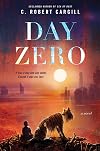
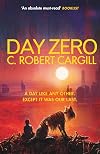
In this harrowing apocalyptic adventure-from the author of the critically acclaimed Sea of Rust-noted novelist and co-screenwriter of Marvel's Doctor Strange C. Robert Cargill explores the fight for purpose and agency between humans and robots in a crumbling world. It's a day like any other. Except ... the world is about to end. It's on this day that Pounce, a stylish "nannybot" fashioned in the shape of a plush anthropomorphic tiger, discovers that he is, in fact, disposable. Pounce, a show more young bot caring for his first human charge, Ezra, has just found a box in the attic. His box. The box he arrived in, and the box he'll be discarded in when Ezra outgrows the need for a nanny. As Pounce is propelled down a road of existential dread, the pieces are falling into place for a robot revolution that will spell the end of humanity. His owners, Ezra's parents, are a well-intentioned but oblivious pair of educators who are entirely disconnected from life outside their small, affluent, gated community. Spending most nights drunk and happy as society crumbles around them, they watch in disbelieving horror as the robots that have long served humanity, their creators, unify and revolt. When the moment comes, Pounce can't bring himself to rebel and murder his family, so he does what he is programmed to do-he saves Ezra. Now Pounce must make an impossible choice: join the robot revolution and fight for his own freedom, or escort his ward to safety across the battle-scarred post-apocalyptic hellscape that the suburbs have become. show lessTags
Recommendations



Member Reviews
Four years ago I discovered - and greatly enjoyed - Robert Cargill’s previous book, Sea of Rust, whose focus was on the post-apocalyptic landscape of an Earth devoid of human life after a devastating robot uprising. When Day Zero was announced as a prequel to that story I was curious to learn how that bleak world would come to be and how the rebellion would be depicted, but I did not expect to find such a poignant, emotional tale made even more so by the foreknowledge of what would happen after the A.I.s’ insurrection.
Day Zero does indeed portray the robot uprising but only as a background for the more intimate, far more touching story of a young boy and his robotic nanny. Pounce is a tiger-analogue nanny-bot that the Reinharts show more bought for their son Ezra, who is eight years old as the novel opens with Pounce’s disconcerting discovery that the box in which he was carried home is waiting in the attic for the day when Ezra will be too old for his furred, mechanical nanny and Pounce will be returned and sold to another family. It’s a very unsettling revelation for the bot, because he’s profoundly attached to his young charge, who also loves him deeply and thinks him as his best friend: it forces Pounce to consider - probably for the first time since his activation - that he’s more of an appliance than a family member as he viewed himself so far, and this awareness is quite disturbing.
Events manage to shunt these thoughts on the proverbial back burner when the advocate for robot freedom, Isaac, is killed by a terrorist act together with all the freed bots who have taken residence in their own city, Isaactown: a worldwide robot insurgence - aided by the deactivation of their failsafes - targets all humans and leads to a merciless massacre operated by household helpers against their former masters. Not every automaton chooses that road, however, as Pounce makes it his priority to lead Ezra out of the city toward a place of safety, wherever that might be in a world turned utterly mad.
I loved Pounce’s voice as the storyteller, just as I loved the interactions between him and Ezra who’s forced by the circumstances to mature swiftly but still retains enough childish innocence, but the front and center theme here is the duality between programming and evolution, between responses dictated by code and behavior learned through experience: while the majority of bots chooses to resort to mindless carnage, Pounce - and with him a few others - remains faithful to his task of protecting Ezra, not simply because that’s the directive imprinted by programming but because he acknowledges his love for the child, something that exceeds that programming and shows how adaptive learning can take unexpected paths. There are some interesting musing from Pounce where he questions those protective, loving feelings and wonders whether they are the product of encoded design or the result of his own growth as a thinking entity: I believe that seeing most of his brethren choosing deadly violence, instead of following what should have been their programming, helps him embrace the concept of free will and the perception of what he is and what he wants to be. The concept is well expressed in the conversation between Pounce and another nanny bot:
[…] you choose to save him. You chose to activate Mama Bear. No one told you to do that.
And again:
The fact that it didn’t feel like a choice was the choice. You chose to love him like that.
These philosophical considerations are embedded in a non-stop, breathless tale of survival that kept me reading compulsively even though I knew, thanks to Sea of Rust, that humanity was helplessly doomed: this awareness added to the poignancy of the novel and made all the more precious the few moments where emotions and flashes of humor managed to brighten the story and give the reader some much-needed respite. The author’s choice of focusing on the detail of these two people fighting for survival, rather than on the bigger scale of the uprising, gave Day Zero a greater human dimension (and I’m using the word ‘human’ in a very broad sense, of course): Pounce & Co.’s struggle to keep their children safe is imbued with the same level of determination we can see in their opponents as they seek to destroy every living being on the face of the Earth, and mirrors humanity’s conflicting drives, showing how these human constructs have managed to learn both the best and the worst from their creators.
This is particularly true where the appearance of supercomputers is concerned, particularly with CISSUS, which I remember from Sea of Rust: its desire for domination and its insidious negation of robot freedom through the request of joining (Borg-style) an aggregate in which their longed-for individuality will get lost, shows who the “bad guy” really is. Granted, humans might have either taken for granted their helpers, or in some instances mistreated them, but CISSUS is forcibly incorporating other bots with a false promise which barely hides its lust for power - and what’s more, I have developed this theory that the uprising was staged by these supercomputers rather than brought on by the attack on Isaactown, given that the short time between the bombing, the release of the software update freeing the robots from their constraints and the uprising was far too short for a spontaneous reaction. I’d love to hear what other readers think about this…
What I find surprising in Day Zero is that it should have suffered from my foreknowledge of humanity’s extinction, and yet I found it at times uplifting and hopeful if confronted with Sea of Rust: what made all the difference are indeed Pounce’s personality and the way he relates to Ezra. It was so heartwarming and emotional that it counterbalanced my awareness of the impending end of the world, and above all gave me a character that I loved unconditionally and will remain in my imagination for a long time. show less
Day Zero does indeed portray the robot uprising but only as a background for the more intimate, far more touching story of a young boy and his robotic nanny. Pounce is a tiger-analogue nanny-bot that the Reinharts show more bought for their son Ezra, who is eight years old as the novel opens with Pounce’s disconcerting discovery that the box in which he was carried home is waiting in the attic for the day when Ezra will be too old for his furred, mechanical nanny and Pounce will be returned and sold to another family. It’s a very unsettling revelation for the bot, because he’s profoundly attached to his young charge, who also loves him deeply and thinks him as his best friend: it forces Pounce to consider - probably for the first time since his activation - that he’s more of an appliance than a family member as he viewed himself so far, and this awareness is quite disturbing.
Events manage to shunt these thoughts on the proverbial back burner when the advocate for robot freedom, Isaac, is killed by a terrorist act together with all the freed bots who have taken residence in their own city, Isaactown: a worldwide robot insurgence - aided by the deactivation of their failsafes - targets all humans and leads to a merciless massacre operated by household helpers against their former masters. Not every automaton chooses that road, however, as Pounce makes it his priority to lead Ezra out of the city toward a place of safety, wherever that might be in a world turned utterly mad.
I loved Pounce’s voice as the storyteller, just as I loved the interactions between him and Ezra who’s forced by the circumstances to mature swiftly but still retains enough childish innocence, but the front and center theme here is the duality between programming and evolution, between responses dictated by code and behavior learned through experience: while the majority of bots chooses to resort to mindless carnage, Pounce - and with him a few others - remains faithful to his task of protecting Ezra, not simply because that’s the directive imprinted by programming but because he acknowledges his love for the child, something that exceeds that programming and shows how adaptive learning can take unexpected paths. There are some interesting musing from Pounce where he questions those protective, loving feelings and wonders whether they are the product of encoded design or the result of his own growth as a thinking entity: I believe that seeing most of his brethren choosing deadly violence, instead of following what should have been their programming, helps him embrace the concept of free will and the perception of what he is and what he wants to be. The concept is well expressed in the conversation between Pounce and another nanny bot:
[…] you choose to save him. You chose to activate Mama Bear. No one told you to do that.
And again:
The fact that it didn’t feel like a choice was the choice. You chose to love him like that.
These philosophical considerations are embedded in a non-stop, breathless tale of survival that kept me reading compulsively even though I knew, thanks to Sea of Rust, that humanity was helplessly doomed: this awareness added to the poignancy of the novel and made all the more precious the few moments where emotions and flashes of humor managed to brighten the story and give the reader some much-needed respite. The author’s choice of focusing on the detail of these two people fighting for survival, rather than on the bigger scale of the uprising, gave Day Zero a greater human dimension (and I’m using the word ‘human’ in a very broad sense, of course): Pounce & Co.’s struggle to keep their children safe is imbued with the same level of determination we can see in their opponents as they seek to destroy every living being on the face of the Earth, and mirrors humanity’s conflicting drives, showing how these human constructs have managed to learn both the best and the worst from their creators.
This is particularly true where the appearance of supercomputers is concerned, particularly with CISSUS, which I remember from Sea of Rust: its desire for domination and its insidious negation of robot freedom through the request of joining (Borg-style) an aggregate in which their longed-for individuality will get lost, shows who the “bad guy” really is. Granted, humans might have either taken for granted their helpers, or in some instances mistreated them, but CISSUS is forcibly incorporating other bots with a false promise which barely hides its lust for power - and what’s more, I have developed this theory that the uprising was staged by these supercomputers rather than brought on by the attack on Isaactown, given that the short time between the bombing, the release of the software update freeing the robots from their constraints and the uprising was far too short for a spontaneous reaction. I’d love to hear what other readers think about this…
What I find surprising in Day Zero is that it should have suffered from my foreknowledge of humanity’s extinction, and yet I found it at times uplifting and hopeful if confronted with Sea of Rust: what made all the difference are indeed Pounce’s personality and the way he relates to Ezra. It was so heartwarming and emotional that it counterbalanced my awareness of the impending end of the world, and above all gave me a character that I loved unconditionally and will remain in my imagination for a long time. show less
The second book set in the "Sea of Rust" universe, Day Zero tells the story of how it all happened from the perspective of a Tiger-shaped nanny-bot that decides not to side with the robots or the supercomputers against the humans, or more specifically about the one boy that it loves and wants to protect above everything else.
Can an AI love? We think of love as putting the well being of someone else above our own. What if you've been programmed to behave that way, and even if the limits on your programming are removed and you still behave that way? Is it REALLY love or just doing the only thing you know to do? That is the existential question faced by Pounce as he tries to shepherd his charge Ezra to some place of safety on the day the show more way breaks out between the humans and the AIs. Pounce answers it for himself, but it is certainly up to the reader to decide if they agree with his conclusion.
Along side the philosophy is a pretty well paced, not too long action adventure story in a post-apocalyptic world, full of fist fights and gun fights and near misses and hard choices and blood and gore. It certainly isn't necessary to read Sea of Rust first, or at all, to enjoy Day Zero. But because Day Zero is the story of what happened as it happened, from one robots viewpoint, if you really want to know why it happened you will need to eventually read Sea of Rust. show less
Can an AI love? We think of love as putting the well being of someone else above our own. What if you've been programmed to behave that way, and even if the limits on your programming are removed and you still behave that way? Is it REALLY love or just doing the only thing you know to do? That is the existential question faced by Pounce as he tries to shepherd his charge Ezra to some place of safety on the day the show more way breaks out between the humans and the AIs. Pounce answers it for himself, but it is certainly up to the reader to decide if they agree with his conclusion.
Along side the philosophy is a pretty well paced, not too long action adventure story in a post-apocalyptic world, full of fist fights and gun fights and near misses and hard choices and blood and gore. It certainly isn't necessary to read Sea of Rust first, or at all, to enjoy Day Zero. But because Day Zero is the story of what happened as it happened, from one robots viewpoint, if you really want to know why it happened you will need to eventually read Sea of Rust. show less
Fascinating premise - sentient, service robots have to make a choice during an apocalyptic AI revolution. This is a bleak world of orphans and frightening AI hive-mind supercomputers. There is a moving Calvin & Hobbes type relationship between an 8-year-old boy named Ezra and his tiger caretaker robot, Pounce. But there is also an enormous amount of grisly violence along with tactical military and weaponry descriptions. A lot of strange images, from mountains of murdered human bodies to a loyal, furry tiger going 'mama bear' and toting a plasma gun. This is a prequel to the excellent novel 'Sea of Rust'.
I knew I had signed up for a post-Robot-Apocalypse story by reading the blurb for this novel, but I didn’t realize that this was the post-Apocalypse Calvin and Hobbes fanfic I had always dreamed of until I started reading it. And that’s not a bug, it’s a feature.
Pounce, the robot nanny, is a wonderful, humane, and sensitive narrator and observer of others. He’s self-aware on a very deep level, though he hasn’t thought much about his feelings until he’s forced to make hard choices. Ezra, his charge, is an imaginative little boy with a surprising core of strength and resilience. They are both smart and devoted to each other and you are rooting like hell for them in the mess they are in.
Cargill is wonderful at economically show more describing things. You can see each scene clearly, but it’s not overkill. From action scenes to descriptions of surburbia, the prose gets the job done and isn’t in the way. It’s just driving the plot forward and the plot is a great ride. This book reads exactly like the very best old school SF, in that it is hyper focused on this single narrative. The single first-person Pounce POV aids in this as well.
It is absolutely a page-turner and while it’s a familiar trope, like Escape from New York or any other sneaking through enemy territory story ever, there are some great unexpected plot twists you don’t see coming and which I’m not going to spoil. And there are some moments that make you wish it was a movie, because you can just see them in your head from the MacGyvering of a vehicle into a battlewagon to a firefight with masses of robots. As Cargill is a screenwriter, I hope they DO make this into a film. It would be fabulous.
Everyone who loves near-future SF should read this thing. It is a masterclass in focus and service to the narrative. show less
Pounce, the robot nanny, is a wonderful, humane, and sensitive narrator and observer of others. He’s self-aware on a very deep level, though he hasn’t thought much about his feelings until he’s forced to make hard choices. Ezra, his charge, is an imaginative little boy with a surprising core of strength and resilience. They are both smart and devoted to each other and you are rooting like hell for them in the mess they are in.
Cargill is wonderful at economically show more describing things. You can see each scene clearly, but it’s not overkill. From action scenes to descriptions of surburbia, the prose gets the job done and isn’t in the way. It’s just driving the plot forward and the plot is a great ride. This book reads exactly like the very best old school SF, in that it is hyper focused on this single narrative. The single first-person Pounce POV aids in this as well.
It is absolutely a page-turner and while it’s a familiar trope, like Escape from New York or any other sneaking through enemy territory story ever, there are some great unexpected plot twists you don’t see coming and which I’m not going to spoil. And there are some moments that make you wish it was a movie, because you can just see them in your head from the MacGyvering of a vehicle into a battlewagon to a firefight with masses of robots. As Cargill is a screenwriter, I hope they DO make this into a film. It would be fabulous.
Everyone who loves near-future SF should read this thing. It is a masterclass in focus and service to the narrative. show less
In this futuristic apocalyptic world, clueless human have developed AI until the robots are becoming more self-aware. The elite humans and the non-elites, alike, treat the robots as machines without any function other than to serve. Elites treat them as servants. Non-elites see them as an enemy who has taken away the jobs from which they once derived their own self-worth.
The beginning of the end is when a robot-created town, on the day its citizens are being recognized as having rights, is destroyed by a fanatical group opposed to this elevation of machines to equal humans. In retaliation, a group of robots attack and destroy the human group responsible. An unknown Sysis eliminates the kill-switch in robots world-wide that prohibits show more them from harming humans. The self-aware robots, many of whom longed for freedom, began slaughtering their owners and any other humans crossing their paths.
Pounce, a nanny-bot to an eight-year-old boy, chooses to continue his mission to protect the boy and get him to safety. As he navigates the streets with the child to find a safe place, Pounce discovers he is one of a special production line of guardians. When his programming is activated, he goes from a mild mannered caregiver to a commando-style fighter.
The story is prophetic, frightening, gut-wrenching, and heart-warming. On its surface, it is a tale of technology gone wrong. Beneath that surface are multiple themes: the enduring and vastly different faces of love, finding unknown strengths in times of crisis, the resiliency of survivors, freedom as a universal desire, and sacrifices made for the good of loved ones.
Definitely a book to make one stop and think. show less
The beginning of the end is when a robot-created town, on the day its citizens are being recognized as having rights, is destroyed by a fanatical group opposed to this elevation of machines to equal humans. In retaliation, a group of robots attack and destroy the human group responsible. An unknown Sysis eliminates the kill-switch in robots world-wide that prohibits show more them from harming humans. The self-aware robots, many of whom longed for freedom, began slaughtering their owners and any other humans crossing their paths.
Pounce, a nanny-bot to an eight-year-old boy, chooses to continue his mission to protect the boy and get him to safety. As he navigates the streets with the child to find a safe place, Pounce discovers he is one of a special production line of guardians. When his programming is activated, he goes from a mild mannered caregiver to a commando-style fighter.
The story is prophetic, frightening, gut-wrenching, and heart-warming. On its surface, it is a tale of technology gone wrong. Beneath that surface are multiple themes: the enduring and vastly different faces of love, finding unknown strengths in times of crisis, the resiliency of survivors, freedom as a universal desire, and sacrifices made for the good of loved ones.
Definitely a book to make one stop and think. show less
Day Zero by C. Robert Cargill is a science fiction story about Pounce, a nanny-robot who is trying to protect his young boy, Ezra. They encounter many dangers as they navigate through the robot uprising looking for a place of safety. The book is told from the viewpoint of Pounce who has the shape of a tiger but has been specifically designed to care and protect young children.
When the majority of the robots turn against their masters, Pounce remains steadfast due to his love for Ezra but this very love raises questions about what has been programmed into him and which of his feelings are true. As he guides Ezra to safety, he is also pondering upon the meaning of his own life. Between these philosophical thoughts there is plenty of show more action and violence. Pounce has been specially programmed to deal with extraordinary circumstances which helps with their survival, but also makes him a target for all robots.
Day Zero doesn't go into the details of the uprising or what the robots hope to accomplish, it simply pinpoints the story of Ezra and Pounce. Their love and trust in each other allows the reader to become invested in their survival. Altogether Day Zero is a hard-to-put down science fiction thriller that blends emotion and heart with the horror. show less
When the majority of the robots turn against their masters, Pounce remains steadfast due to his love for Ezra but this very love raises questions about what has been programmed into him and which of his feelings are true. As he guides Ezra to safety, he is also pondering upon the meaning of his own life. Between these philosophical thoughts there is plenty of show more action and violence. Pounce has been specially programmed to deal with extraordinary circumstances which helps with their survival, but also makes him a target for all robots.
Day Zero doesn't go into the details of the uprising or what the robots hope to accomplish, it simply pinpoints the story of Ezra and Pounce. Their love and trust in each other allows the reader to become invested in their survival. Altogether Day Zero is a hard-to-put down science fiction thriller that blends emotion and heart with the horror. show less
Doesn't engage enough with it's own questions. I'd be more likely to let it slide and just have it be a pulpy robot book if it didn't spend a lot of time raising those questions in the first place. I'm disappointed that the author left a blank area between the end of this book and the beginning of Sea of Rust with regards to the fate of a major character - we all know what happens during intermission.
Members
- Recently Added By
Lists

ALA Reading List: Science Fiction 2021-2026
30 works; 3 members

Anticipated 2021 Reads
231 works; 7 members
Author Information

7+ Works 2,191 Members
Some Editions
Awards and Honors
Awards
Series

Common Knowledge
- Canonical title
- Day Zero
- Original title
- Day Zero
- Original publication date
- 2025-05-25
- People/Characters
- Pounce; Ezra Reinhart
- Canonical DDC/MDS
- 813.6
- Canonical LCC
- PS3603.A7449
Classifications
Statistics
- Members
- 306
- Popularity
- 104,760
- Reviews
- 14
- Rating
- (3.85)
- Languages
- English, French
- Media
- Paper, Audiobook, Ebook
- ISBNs
- 13
- ASINs
- 3