On This Page
Description
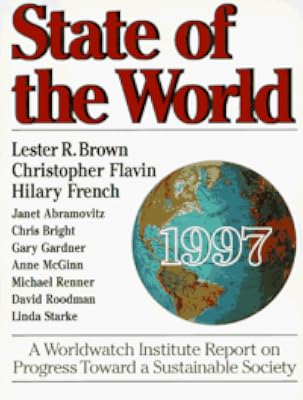
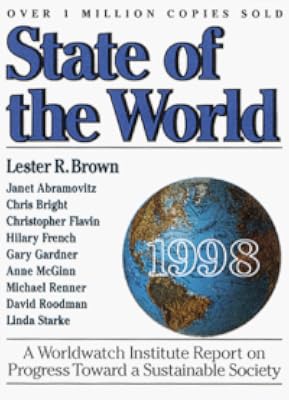
"This twelfth edition in the State of the World series is appearing at a time when more and more people are aware of the effect of a rapidly rising human population on the earth's environmental support systems. The seemingly sudden collapse of the oceanic fishing economy; the rising expectations of China's 1.2 billion consumers; deforestation of the Indian subcontinent caused by the 'second India'; and the unmanageable tide of refugees around the world all point to a need for understanding show more the interrelation of population and environmental forces on a global scale. The opening chapter, 'Facing the Limits', will perhaps strike a chord with those who think environmental limits are unrelated to economic trends, such as seafood prices. This chapter describes the economic and social costs of unsustainable harvesting of natural resources from the decimated hardwood forests of the Ivory Coast to the idle fishing fleets of Newfoundland. Coupled with this hard look at our unsustainable world economy, the Worldwatch analysts have also researched and reported the trends that can lead us toward a future that is both sustainable and appealing. This year's edition also covers the welcome trends in the number of global environmental treaties; the growing revolution in energy leading to global use of hydrogen, the cleanest of fuels; the technologies that will allow us to create cars and buildings that use far less energy; and the idea that future economic growth will come from more efficient use of materials than from using up our natural resources and creating mountains of trash"--Provided by publisher show lessTags
Recommendations














Member Reviews
State of the World 1995 provides an analysis of China's economic and environmental future, constructing sustainable buildings, the state of the world's oecanic fisheries the urgent need to conserve mountain ecosystems, and creating a sustainable material
Ratings
Members
- Recently Added By
Author Information

109+ Works 3,436 Members
The son of farmers, Lester Brown was born in New Jersey in 1934 and attended Rutgers University, receiving a B.S. in agricultural science in 1955. He earned an M.S. in agricultural economics from the University of Maryland in 1959 and an M.P.A. from Harvard University in 1962. He worked as adviser on foreign agricultural policy for the secretary show more of the U.S. Department of Agriculture, served as administrator of the International Agricultural Development Service, and helped establish the Overseas Development Council. In 1974, Brown founded the Worldwatch Institute, a private, nonprofit, environmental think tank designed to act as a global early warning system and to study overpopulation, famine, and other world problems. Located in Washington, D.C., the institute publishes the Worldwatch Papers series, Worldwatch Magazine, and the annual State of the World report. Although sometimes criticized for his emphasis on population control, this author of more than a dozen books and the recipient of a MacArthur Foundation fellowship has been highly praised for his understanding of the threats to the ecology of our planet. (Bowker Author Biography) Lester R. Brown, founder & now chairman of the Worldwatch Institute in Washington, D.C., is a MacArthur Fellow. He is a senior author of "State of the World". (Bowker Author Biography) show less
Series

Common Knowledge
- Canonical title
- State of the World 1995
- Alternate titles
- State of the World 1995: A Worldwatch Institute Report on Progress Toward a Sustainable Society
Classifications
Statistics
- Members
- 60
- Popularity
- 515,781
- Reviews
- 1
- Rating
- (4.00)
- Languages
- 5 — English, Finnish, German, Italian, Swedish
- Media
- Paper
- ISBNs
- 7