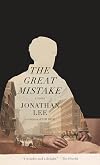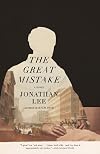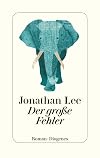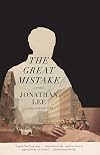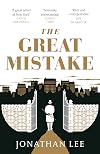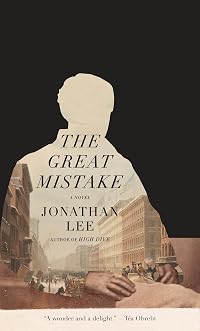
The Great Mistake
by Jonathan Lee
On This Page
Description
"From the acclaimed author of High Dive comes an enveloping, exultant novel of New York City at the turn of the twentieth century, a story of one man's rise to fame and fortune, and his murder in a case of mistaken identity. On Friday the 13th of November, 1903, a famous man was killed on Park Avenue in broad daylight by a stranger. It was neither a political act nor a crime of passion. It was a mistake. The victim was Andrew Haswell Green, the "Father of Greater New York," who shaped the show more city as we know it. Without him there would be no Central Park, no Metropolitan Museum of Art, no Museum of Natural History, no New York Public Library. His influence was everywhere, yet he died alone, misunderstood, feeling that his whole life might have been, after all, a great mistake. A work of tremendous depth and piercing emotion, The Great Mistake is a portrait of a self-made man--farm boy to urban visionary; the reimagining of a murder investigation that shook the city; and the moving story of a singular individual who found the world closed off to him, and, in spite of all odds, enlarged it"-- show lessTags
Recommendations






Member Reviews
Er war der Mann, der Greater New York zu dem gemacht hat, was es heute ist. Und doch ist der Erschaffer des Central Parks, der New York Public Library und des Metropolitan Museum of Art weitgehend unbekannt, nur eine winzige Plakette an schwer zugänglicher Stelle im Central Park erinnert an ihn und ein Gemälde, das jedoch nicht öffentlich zugänglich ist. Jonathan Lee beginnt die Geschichte des größten Bauherrn der Stadt mit dessen Todestag. An dem unheilvollen Freitag, dem 13. November 1903 wird Andrew Haswell Green vor seinem Haus in der Park Avenue von Cornelius Williams mit fünf Kugeln erschossen.
Wie auch in seinem Roman „Wer ist Mr Satoshi?“ lässt Jonathan Lee die Geschichte von einem Ende her erzählen, das jedoch show more zahlreiche Fragen aufwirft. Während sich Inspector McClusky auf die Erforschung der Gründe für den Mord macht, erfährt der Leser, wie aus dem armen Farmerjungen aus Massachusetts der Mann werden konnte, der das Bild des Big Apples für immer prägen sollte. Im Wechsel taucht man ein in die Lebensgeschichte Greens und die Ermittlungen, die trotz der Festnahme des Tatverdächtigen nur langsame Fortschritte machen.
Am prägendsten für Green war sicher die Freundschaft mit Samuel J. Tilden, Rechtsanwalt und späterer Gouverneur von New York und Präsidentschaftskandidat. Er nahm den damaligen Lehrling unter seine Fittiche, ermöglichte den Aufstieg und ermutigte ihn auch, seine Träume zu verfolgen.
Auch wenn ein Mord im Zentrum steht, ist der Roman doch sicherlich kein Krimi – allein das Ergebnis der Ermittlung verbittet dies schon. Lee hat eine spannende Mischung aus Biografie einer Person und einer Stadt erschaffen, man spürt den Herzschlag New Yorks. Einerseits fließen vielfältige Details in die Handlung ein, dann wiederum lässt der Autor auch Leerstellen, beispielsweise wenn es um das Verhältnis von Green und Tilden geht. Er bedient damit keinen Voyeurismus, ebenso wie man kaum Greens Gedankenwelt bei der Erschaffung seiner großen Werke nachvollziehen kann.
Lee gelingt im letzten Kapitel ein grandioser Abschluss, der vielleicht am besten die schwer zufassende Figur Andrew H. Green beschreibt:
„Parks. Brücken. Große Institutionen. Kunst. Sie waren die einig erschwinglicheren Formen der Unsterblichkeit (...) Doch kam ihm hier und jetzt der Gedanke (...), dass all seine öffentliche Arbeit nicht so viel bedeutete, wie einen Freund zu haben, der seine Hand hielt, wenn er starb.“ show less
Wie auch in seinem Roman „Wer ist Mr Satoshi?“ lässt Jonathan Lee die Geschichte von einem Ende her erzählen, das jedoch show more zahlreiche Fragen aufwirft. Während sich Inspector McClusky auf die Erforschung der Gründe für den Mord macht, erfährt der Leser, wie aus dem armen Farmerjungen aus Massachusetts der Mann werden konnte, der das Bild des Big Apples für immer prägen sollte. Im Wechsel taucht man ein in die Lebensgeschichte Greens und die Ermittlungen, die trotz der Festnahme des Tatverdächtigen nur langsame Fortschritte machen.
Am prägendsten für Green war sicher die Freundschaft mit Samuel J. Tilden, Rechtsanwalt und späterer Gouverneur von New York und Präsidentschaftskandidat. Er nahm den damaligen Lehrling unter seine Fittiche, ermöglichte den Aufstieg und ermutigte ihn auch, seine Träume zu verfolgen.
Auch wenn ein Mord im Zentrum steht, ist der Roman doch sicherlich kein Krimi – allein das Ergebnis der Ermittlung verbittet dies schon. Lee hat eine spannende Mischung aus Biografie einer Person und einer Stadt erschaffen, man spürt den Herzschlag New Yorks. Einerseits fließen vielfältige Details in die Handlung ein, dann wiederum lässt der Autor auch Leerstellen, beispielsweise wenn es um das Verhältnis von Green und Tilden geht. Er bedient damit keinen Voyeurismus, ebenso wie man kaum Greens Gedankenwelt bei der Erschaffung seiner großen Werke nachvollziehen kann.
Lee gelingt im letzten Kapitel ein grandioser Abschluss, der vielleicht am besten die schwer zufassende Figur Andrew H. Green beschreibt:
„Parks. Brücken. Große Institutionen. Kunst. Sie waren die einig erschwinglicheren Formen der Unsterblichkeit (...) Doch kam ihm hier und jetzt der Gedanke (...), dass all seine öffentliche Arbeit nicht so viel bedeutete, wie einen Freund zu haben, der seine Hand hielt, wenn er starb.“ show less
This is a mixture of historical fiction and a detective story. Andrew Haswell Green was a real person who was responsible for many of NYC's most important civic projects, the most significant being Central Park. Also, as an octogenarian, he was shot to death in front of his home on Park Avenue. Although the murderer was apprehended, little is known about the motive. Likewise, not much is known about Green's background. With these two tantalizing mysteries in hand, Lee has fashioned an intriguing story that embellishes Green's life and death. The narrative structure consists of two parallel stories: one follows Green's backstory from his childhood in Massachusetts to his time as an apprentice in NYC, a brief period in Jamaica, and his show more ultimate settling in NYC. The other follows a detective who is attempting to unravel the mystery behind Green's murder. Lee suggests that Green may have been a closeted homosexual whose significant other was Samuel Tilden, a governor of NY as well as a presidential candidate. Although never really resolved, Lee further suggests that Green's murder may have been a case of mistaken identity. These two revelations carry a double meaning for the novel's title.
Although a little slow and meandering, Lee's narrative is clear and focused enough to keep most readers intrigued. He succeeds in evoking the gritty aspects of turn-of-the-century life in NYC, while also portraying Green as a visionary social innovator. With the exceptions of the Mrs's Bray and "Davis" his characterizations, even including his protagonist, seem understated, detracting from their appeal. show less
Although a little slow and meandering, Lee's narrative is clear and focused enough to keep most readers intrigued. He succeeds in evoking the gritty aspects of turn-of-the-century life in NYC, while also portraying Green as a visionary social innovator. With the exceptions of the Mrs's Bray and "Davis" his characterizations, even including his protagonist, seem understated, detracting from their appeal. show less
Who was Andrew Haswell Green? According to this fascinating and well told fictionalized biography, he was a key builder of New York City’s infrastructures such as Central Park, the New York Public Library, the Met, the Brooklyn Bridge and others. At the age of 83 while returning to his home on Park Ave., he was shot on Friday, November 13, 1903 in a case of mistaken identity, hence the Great Mistake.
Green was born into a large farming family in Massachusetts and loved the natural world for its ability to provide comfort, beauty and solace. His first job was as an apprentice to a dry goods merchant in New York City where he met his lifelong friend Samuel Tilden. Tilden would become the Governor of New York as well as a presidential show more nominee for the Democratic Party. Green managed a plantation in Trinidad for a while and upon his return to New York was able to acquire a law degree and became a partner in Tilden’s firm. He rose through the ranks of the very partisan city bureaucracy and was able to push though very innovative ideas regarding public education, parks, museums and buildings. He was a very liberal thinker and wanted to rectify the imbalance between the haves and have nots while fighting the corruption at city hall of mayor William Tweed and his cronies.
The author portrays Green as a sensitive, solitary, thoughtful, caring, meticulous planner with a reputation of getting things done. He is also a closeted gay man who must hide his relationship with Tilden from public view.
The author concentrates on internal monologues to portray Green’s thoughts, feelings and sensibilities while downplaying the importance of his role in planning for a better metropolis for the future of New York. show less
Green was born into a large farming family in Massachusetts and loved the natural world for its ability to provide comfort, beauty and solace. His first job was as an apprentice to a dry goods merchant in New York City where he met his lifelong friend Samuel Tilden. Tilden would become the Governor of New York as well as a presidential show more nominee for the Democratic Party. Green managed a plantation in Trinidad for a while and upon his return to New York was able to acquire a law degree and became a partner in Tilden’s firm. He rose through the ranks of the very partisan city bureaucracy and was able to push though very innovative ideas regarding public education, parks, museums and buildings. He was a very liberal thinker and wanted to rectify the imbalance between the haves and have nots while fighting the corruption at city hall of mayor William Tweed and his cronies.
The author portrays Green as a sensitive, solitary, thoughtful, caring, meticulous planner with a reputation of getting things done. He is also a closeted gay man who must hide his relationship with Tilden from public view.
The author concentrates on internal monologues to portray Green’s thoughts, feelings and sensibilities while downplaying the importance of his role in planning for a better metropolis for the future of New York. show less
Whilst I could appreciate the quality of the writing, I found this curiously uncompelling. Andrew Haswell Green and his friend, unsuccessful Presidential candidate Samuel Tilden, are both interesting characters - but I found myself wanting to know more about them than the book manages to deliver (ended up resorting to Wikipedia for this - where I found a fair bit of interesting material that it doesn't really explore). I got the impression the author assumed I would know more about them than I actually did (perhaps they are both better known in the US than the UK, which is where I'm from).
There is not much going on in the way of plot - the only things really driving it are (a) your desire to find out what motivated Green's involvement show more in major public projects like creating New York's Central Park; and (b) the mystery around why Green gets shot in his eighties (NB not a spoiler - this is in the blurb and happens at the start of the book). I didn't find either of these was enough to keep the momentum going over the full length of the novel and the last section was quite hard going. I felt that (a) had already been covered by what we find out about Green's childhood and life as a young adult (although I did find these parts more compelling and others have noted, the author manages to generate a fair bit of sympathy for Green). With (b), there wasn't much mystery to it, ultimately (and I'd guessed what the answer was long before it was confirmed). Another problem with it is that, because we start with him dying in his eighties, we already know quite a lot about what he has become and so any tension over things like "Will Green get back in touch with his close friend Samuel Tilden when he returns from working in Trinidad?" is largely absent - we already know he does, so the only question is how this happens.
Perhaps I shouldn't complain about the lack of such mundane things as plot - after all, this is a literary novel and my mind should surely be on higher things..... As I say, I could appreciate its literary merits, but I was less bowled over by them than some of the reviewers quoted on the book jacket. Did I actually enjoy reading it? Well, if I'm honest, only parts of it - getting all the way to the end felt like quite hard work. show less
There is not much going on in the way of plot - the only things really driving it are (a) your desire to find out what motivated Green's involvement show more in major public projects like creating New York's Central Park; and (b) the mystery around why Green gets shot in his eighties (NB not a spoiler - this is in the blurb and happens at the start of the book). I didn't find either of these was enough to keep the momentum going over the full length of the novel and the last section was quite hard going. I felt that (a) had already been covered by what we find out about Green's childhood and life as a young adult (although I did find these parts more compelling and others have noted, the author manages to generate a fair bit of sympathy for Green). With (b), there wasn't much mystery to it, ultimately (and I'd guessed what the answer was long before it was confirmed). Another problem with it is that, because we start with him dying in his eighties, we already know quite a lot about what he has become and so any tension over things like "Will Green get back in touch with his close friend Samuel Tilden when he returns from working in Trinidad?" is largely absent - we already know he does, so the only question is how this happens.
Perhaps I shouldn't complain about the lack of such mundane things as plot - after all, this is a literary novel and my mind should surely be on higher things..... As I say, I could appreciate its literary merits, but I was less bowled over by them than some of the reviewers quoted on the book jacket. Did I actually enjoy reading it? Well, if I'm honest, only parts of it - getting all the way to the end felt like quite hard work. show less
A fascinating novel that is an imaginative recreation pf the life of Andrew Haswell Green, who was a driving force behind the development of New York in the period from 1850-1900. Lee traces his life from poor rural beginnings in the a820s to his murder in 1903 and on the way reveals the background to his conviction that there should be publicly and freely accessible facilities for all to enjoy. Lee shows how this self-made man improved his education and social status which enabled him to have enough influence and connections in the city to realise his ambitions for this enduring legacy. Also, throughout the book, there is an investigation into the reasons for Green’s murder and as Inspector McCluskey attempts to solve this, he show more uncovers much more about the man. Lee has painted a vivid portrait of Andrew Green and in doing so, one that reveals a great deal about his time in the history of the city. show less
Incredible story telling. It evokes feelings of sympathy and distress, but mostly admiration for a life lived as well as possible under difficult circumstances.
Andrew Green was the middle son of an emotionally distant father who never believed his son would prosper. Sent off to New York City at an early age as an apprentice to a mercantile owner, Andrew was socially insecure and a loner. At a later age, he goes to Trinidad where he supervises on a sugar plantation.
The book opens with his murder at the age of 83 on the streets of New York. Andrew had achieved much in his life after his experiences in Trinidad. He never married but was close friends with Samuel Tilden who was an unsuccessful candidate for President in the 1876 election after an electorial controversy .
The book skips around in time between Green's childhood, his relationship with Tilden and his own family, and the killer who show more blamed Green for keeping a woman away from him. This is somewhat of a mystery with lots of history about New York City as Green was responsible for many of NYC's landmarks: The Met, Central Park, and others. Interesting book. show less
The book opens with his murder at the age of 83 on the streets of New York. Andrew had achieved much in his life after his experiences in Trinidad. He never married but was close friends with Samuel Tilden who was an unsuccessful candidate for President in the 1876 election after an electorial controversy .
The book skips around in time between Green's childhood, his relationship with Tilden and his own family, and the killer who show more blamed Green for keeping a woman away from him. This is somewhat of a mystery with lots of history about New York City as Green was responsible for many of NYC's landmarks: The Met, Central Park, and others. Interesting book. show less
Members
- Recently Added By
Lists

Fiction: Crime, Detective, Mystery
350 works; 3 members

Books Read in 2026
1,950 works; 66 members
Author Information

4 Works 553 Members
Some Editions
Awards and Honors
Distinctions
Common Knowledge
- Canonical title
- The Great Mistake
Classifications
Statistics
- Members
- 227
- Popularity
- 143,539
- Reviews
- 12
- Rating
- (3.55)
- Languages
- English, German, Italian
- Media
- Paper, Audiobook, Ebook
- ISBNs
- 9
- ASINs
- 5