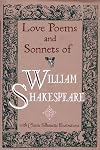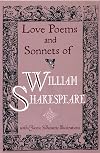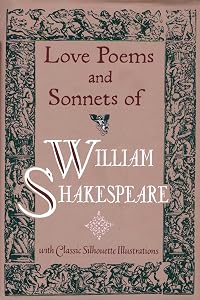
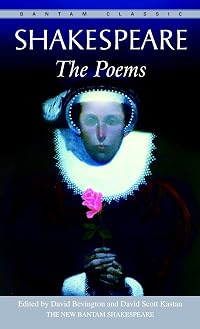
Love Poems & Sonnets of William Shakespeare
by William Shakespeare
On This Page
Description
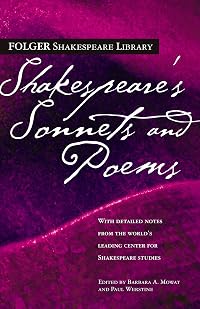
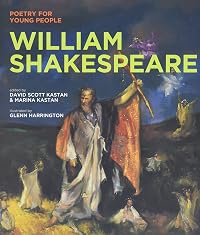
An illustrated anthology of verse by sixteenth-century playwright William Shakespeare, including 154 sonnets, as well as an additional selection of love poetry.Tags
Recommendations














Member Reviews
Summary:
William Shakespeare wrote plays with such poetic language. The poems in this book are mainly from his most popular plays and relate to the theme of love. Even if the play, “Hamlet”, the poems relate to his love for Ophelia. The poems from Romeo and Juliet and from the most well known parts such as; “But, soft! What light from yonder window breaks?”.
Reaction:
I enjoyed reading these because I love Shakespeare. For at least the past 10 years I have attended OKC Shakespeare in the Park and it seems I appreciate them more and more each year. This book gives me the most memorable parts of the plays to read without reading the entire play.
Activities:
I would find a young version of the plays and have my students perform the show more play for other classes.
I would have my students choose a scene from the play and illustrate a poster to advertise the play. show less
William Shakespeare wrote plays with such poetic language. The poems in this book are mainly from his most popular plays and relate to the theme of love. Even if the play, “Hamlet”, the poems relate to his love for Ophelia. The poems from Romeo and Juliet and from the most well known parts such as; “But, soft! What light from yonder window breaks?”.
Reaction:
I enjoyed reading these because I love Shakespeare. For at least the past 10 years I have attended OKC Shakespeare in the Park and it seems I appreciate them more and more each year. This book gives me the most memorable parts of the plays to read without reading the entire play.
Activities:
I would find a young version of the plays and have my students perform the show more play for other classes.
I would have my students choose a scene from the play and illustrate a poster to advertise the play. show less
I might be a Pimp, but Shakespeare wrote the book on P.I.M.P.I.N.
Ratings
Members
- Recently Added By
Author Information

William Shakespeare, 1564 - 1616 Although there are many myths and mysteries surrounding William Shakespeare, a great deal is actually known about his life. He was born in Stratford-Upon-Avon, son of John Shakespeare, a prosperous merchant and local politician and Mary Arden, who had the wealth to send their oldest son to Stratford Grammar School. show more At 18, Shakespeare married Anne Hathaway, the 27-year-old daughter of a local farmer, and they had their first daughter six months later. He probably developed an interest in theatre by watching plays performed by traveling players in Stratford while still in his youth. Some time before 1592, he left his family to take up residence in London, where he began acting and writing plays and poetry. By 1594 Shakespeare had become a member and part owner of an acting company called The Lord Chamberlain's Men, where he soon became the company's principal playwright. His plays enjoyed great popularity and high critical acclaim in the newly built Globe Theatre. It was through his popularity that the troupe gained the attention of the new king, James I, who appointed them the King's Players in 1603. Before retiring to Stratford in 1613, after the Globe burned down, he wrote more than three dozen plays (that we are sure of) and more than 150 sonnets. He was celebrated by Ben Jonson, one of the leading playwrights of the day, as a writer who would be "not for an age, but for all time," a prediction that has proved to be true. Today, Shakespeare towers over all other English writers and has few rivals in any language. His genius and creativity continue to astound scholars, and his plays continue to delight audiences. Many have served as the basis for operas, ballets, musical compositions, and films. While Jonson and other writers labored over their plays, Shakespeare seems to have had the ability to turn out work of exceptionally high caliber at an amazing speed. At the height of his career, he wrote an average of two plays a year as well as dozens of poems, songs, and possibly even verses for tombstones and heraldic shields, all while he continued to act in the plays performed by the Lord Chamberlain's Men. This staggering output is even more impressive when one considers its variety. Except for the English history plays, he never wrote the same kind of play twice. He seems to have had a good deal of fun in trying his hand at every kind of play. Shakespeare wrote 154 sonnets, all published on 1609, most of which were dedicated to his patron Henry Wriothsley, The Earl of Southhampton. He also wrote 13 comedies, 13 histories, 6 tragedies, and 4 tragecomedies. He died at Stratford-upon-Avon April 23, 1616, and was buried two days later on the grounds of Holy Trinity Church in Stratford. His cause of death was unknown, but it is surmised that he knew he was dying. (Bowker Author Biography) show less
Some Editions
Classifications
Statistics
- Members
- 441
- Popularity
- 69,494
- Reviews
- 2
- Rating
- (4.01)
- Languages
- English
- Media
- Paper, Ebook
- ISBNs
- 6
- ASINs
- 9