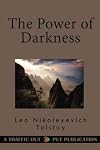
The Power of Darkness
by Leo Tolstoy
71 Members (2.88)
On This Page
Description
The Power of Darkness (1886) is a play by Leo Tolstoy. Forbidden for decades in Tolstoy's native Russia, the five-act play was first staged in Paris, where it earned praise from some of France's leading critics. Noted for its brutal depiction of violence and desperation, the play is concerned with the universal religious and philosophical themes that inspired such masterpieces as War and Peace (1869) and Anna Karenina (1877). Peasant life is often portrayed in art as peaceful and romantic, show more in touch with the rhythms of the natural world and coursing with spirituality. In The Power of Darkness, Tolstoy refuses such empty symbolism, choosing instead to tell a story of greed, murder, and betrayal that has everything to do with the political reality faced by its impoverished characters. Fearful of what will happen to their farm when her aging husband Peter dies, Anisya seduces her farmhand Nikita, whose lack of education and opportunity--as well as a moral emptiness--make him a willing accomplice. Betraying Marinka, a young orphan girl he manipulates for pleasure, Nikita joins Anisya in dispossessing her stubborn husband. Tragic and disturbing, The Power of Darkness is a story of man at war with nature, and therefore at war with himself. With a beautifully designed cover and professionally typeset manuscript, this edition of Leo Tolstoy's The Power of Darkness is a classic work of Russian literature reimagined for modern readers. show lessTags
Recommendations






















Member Reviews
Members
- Recently Added By
Author Information

2,499+ Works 129,621 Members
Count Lev Nikolayevich Tolstoy was born on September 9, 1828 in Russia. He is usually referred to as Leo Tolstoy. He was a Russian author who is regarded as one of the greatest authors of all time. Leo Tolstoy is best known for his novels War and Peace (1869) and Anna Karenina (1877). Tolstoy's fiction includes dozens of short stories and several show more novellas such as The Death of Ivan Ilyich, Family Happiness, and Hadji Murad. He also wrote plays and numerous philosophical essays. Tolstoy had a profound moral crisis and spiritual awakening in the 1870's which he outlined in his work, A Confession. His literal interpretation of the ethical teachings of Jesus, centering on the Sermon on the Mount, caused him to become a fervent Christian anarchist and pacifist. His ideas of nonviolent resistance which he shared in his works The Kingdom of God is Within You, had a profund impact on figures such as Mohandas Gandhi and Martin Luther King, Jr. On September 23, 1862 Tolstoy married Sophia Andreevna Behrs. She was the daughter of a court physician. They had 13 children, eight of whom survived childhood. Their early married life allowed Tolstoy much freedom to compose War and Peace and Anna Karenina with his wife acting as his secretary and proofreader. The Tolstoy family left Russia in the aftermath of the Russian Revolution and the subsequent establishment of the Soviet Union. Leo Tolstoy's relatives and descendants moved to Sweden, Germany, the United Kingdom, France and the United States. Tolstoy died of pneumonia at Astapovo train station, after a day's rail journey south on November 20, 1910 at the age of 82. (Bowker Author Biography) Count Leo Tolstoy was born in 1828 on the family estate of Yasnaya Polyana in the Tula province. He married in 1862 & was the father of 13 children. Tolstoy managed the estate of Yasnaya Polyana & ran its peasant schools, while writing his great novels, "War & Peace" (1869) & "Anna Karenina" (1877). He died in 1910. (Publisher Provided) show less
Some Editions
Series
Belongs to Publisher Series
Work Relationships
Is contained in
Plays by Leo Tolstoy
Common Knowledge
- Canonical title
- The Power of Darkness
- First words
- The horses have got loose again.
- Last words
- (Click to show. Warning: May contain spoilers.)I will say no more!
Classifications
- Genre
- Fiction and Literature
- DDC/MDS
- 891.723 — Literature & rhetoric Literatures of other languages East Indo-European and Celtic literatures Russian and East Slavic languages Russian drama 1800–1917
- LCC
- PG3366 .V513 — Language and Literature Slavic languages and literatures. Baltic languages. Albanian language Slavic. Baltic. Albanian Russian literature Individual authors and works 1800-1870 Tolstoi
- BISAC
Statistics
- Members
- 71
- Popularity
- 441,959
- Rating
- (2.88)
- Languages
- 8 — Catalan, English, French, German, Greek, Italian, Russian, Turkish
- Media
- Paper, Audiobook, Ebook
- ISBNs
- 16
- UPCs
- 1
- ASINs
- 8