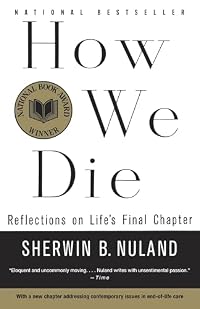
How We Die: Reflections on Life's Final Chapter
by Sherwin B. Nuland
On This Page
Description
"There is a vast literature on death and dying, but there are few reliable accounts of the ways in which we die. The intimate account of how various diseases take away life, offered in How We Die, is not meant to prompt horror or terror but to demythologize the process of dying to help us rid ourselves of that fear of the terra incognita." "Though the avenues of death - AIDS, cancer, heart attack, Alzheimer's, accident, and stroke - are common, each of us will die in a way different from any show more that has gone before. Each one of death's diverse appearances is as distinctive as that singular face we each show during our lives. Behind each death is a story." "In How We Die, Sherwin B. Nuland, a surgeon and teacher of medicine, tells some stories of dying that reveal not only why someone dies but how. He offers a portrait of the experience of dying that makes clear the choices that can be made to allow each of us his or her own death."--Jacket. show lessTags
Recommendations



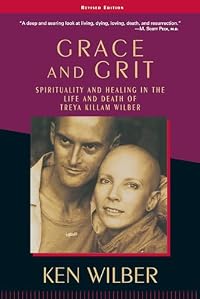

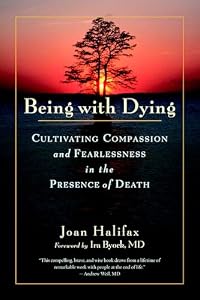
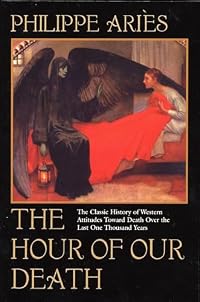

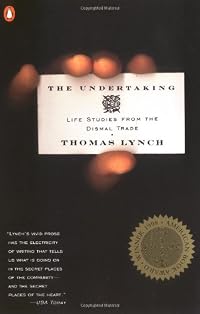
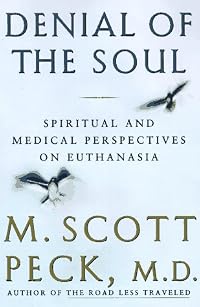
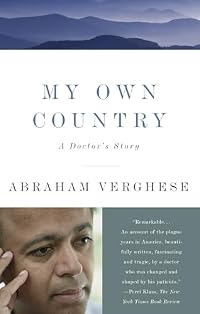
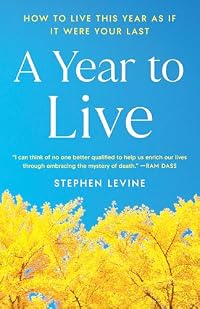
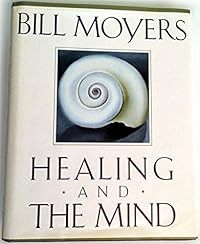


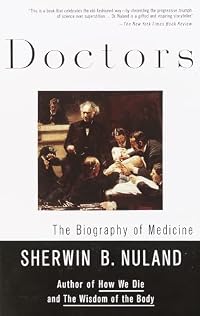
Member Recommendations
Member Reviews
I was accused of being morbid for enjoying this book so much. It's a surprisingly well written treatise on the various biological processes that occur when we die, for various causes of death. It's the kind of book that makes you want to talk about it, but I caution you -- almost any time you bring it up in conversation, you will be accused of making "the worst segue *ever*". Be warned, this book will prove difficult to put down, and it's really difficult to explain on your bedside.
In this well-written book, Nuland, a practicing surgeon and faculty member of Yale Medical School, describes six of the most common illnesses that kill us, from heart disease to cancer. By educating us non-physicians, he aims to enable us to make more informed choices when faced with terminal disease.
Nothing can change the fact that we will die. Without minimizing the sobering impact of this, Nuland stresses that our death is necessary for the future vitality of life on earth— just as with each plant or animal.
Further, he stresses from the outset to the conclusion that our hopes for death with dignity are illusory for most of us. The transition from life to death is not pretty. He urges his readers to focus on a life with dignity show more instead.
To help us make choices, Nuland stresses the recognition that specialists see pathology as a puzzle and tend to forget the aspect of the reasonable limits of treatment (reminds one of Dr. House, doesn’t it?). Nuland writes: “The Riddle is the doctor’s lodestone as an applied scientist; it is his albatross as a humane caregiver.” Thus, the need for family physicians. Their long-term acquaintance with the afflicted person makes them valuable in helping weigh the benefits and risks of any proposed treatment.
Medical science has made breathtaking advances (and has continued to in the thirty years since this book was published). Survival rates have extended life for many (of course, our mortality rate remains at 100%). This progress must be measured against the suffering an ultimately futile battle brings. Thus, the need for informed patients and loved ones. Another need that Nuland advocates is more availability of hospice care.
Despite the sometimes gruesome details, I found this book engaging and readable. Since it was a library book, I copied many passages. I hope to remember the lessons this book imparts when my life draws to its close. show less
Nothing can change the fact that we will die. Without minimizing the sobering impact of this, Nuland stresses that our death is necessary for the future vitality of life on earth— just as with each plant or animal.
Further, he stresses from the outset to the conclusion that our hopes for death with dignity are illusory for most of us. The transition from life to death is not pretty. He urges his readers to focus on a life with dignity show more instead.
To help us make choices, Nuland stresses the recognition that specialists see pathology as a puzzle and tend to forget the aspect of the reasonable limits of treatment (reminds one of Dr. House, doesn’t it?). Nuland writes: “The Riddle is the doctor’s lodestone as an applied scientist; it is his albatross as a humane caregiver.” Thus, the need for family physicians. Their long-term acquaintance with the afflicted person makes them valuable in helping weigh the benefits and risks of any proposed treatment.
Medical science has made breathtaking advances (and has continued to in the thirty years since this book was published). Survival rates have extended life for many (of course, our mortality rate remains at 100%). This progress must be measured against the suffering an ultimately futile battle brings. Thus, the need for informed patients and loved ones. Another need that Nuland advocates is more availability of hospice care.
Despite the sometimes gruesome details, I found this book engaging and readable. Since it was a library book, I copied many passages. I hope to remember the lessons this book imparts when my life draws to its close. show less
This book is an invaluable guide to deciding on how to care for we love as they approach death, and to thinking about (and planning for) our own deaths. I first read it back in the 1980's, and found it both fascinating and frightening. Dr. Nuland illustrated very clearly that most of us are unlikely to go gentle into that good night, and discussed very movingly how that fact conditions the choices we will have to make . At the time, however, this did not seem terribly relevant to me -- I was, after all, just moving into middle age. . Now, however, I am over 70, and it is an extraordinarily relevant book. Last month, I reread it in the revised edition, as a dear friend for whom I have been responsible came to the end of her life. I only show more wish that I had read it earlier in this process. What Dr. Nuland said in the 1980's, and again in the 1990's, is still true. All too often, the American medical system still doesn't recognize that some illnesses cannot be cured. A dying patient may be subjected to procedure after procedure, and treatment after treatment, in a vain effort to avoid the inevitable. Hospice may not be called in until the very end, because the doctors and the patient and the patient's family are still focussed on treating the illness rather than the patient. The result is pain, discomfort and disorientation that might have been avoided. Had I realized just how entrenched this bias still is, I would have insisted that chemotherapy be cut off sooner than it was, and that my friend go on hospice sooner than she did. For the future, this book -- and my recent experience -- convince me that if I am diagnosed with a cancer that is likely to kill me, I will enlist a palliative care doctor on my medical team from the start. I only hope that I will find one with a fraction of Dr. Nuland's empathy and understanding. show less
"Stand by me, Death, lest these dark days
Should hurt me more than I may know;
I beg that if the wound grows sharp
You take me when I ask to go.
Step closer, Love, and dry your eyes,
What's marred you'll never mend by tears;
Let's finish where the tale began
And kiss away the ruined years.
A moment, Faith, before you leave,
There's one last favour I would ask:
Put to use your handsome hand
And show me the face behind your mask."
"Three Pleas" by Henry Treece
I understand that imagining my personal death, for instance, is truly horrendous, and I guess that what makes me worried is indeed the very thought of that last process of existence, particularly whether it would be with great physical and mental suffering while I am being aware of it. I would show more rather dream of having a quick, sudden and peaceful end. Although I have to admit that the process of planning it that how it ought to happen would be desirable, but absurd. Of course, in an ideal situation, I guess, I should rather be thinking about the moments that I am still around (alive), not thinking all the time when its time comes or how I would prefer “to plan” it to proceed. Moreover, there is a sort of irony in this way of defining life, waiting to end that is, and I blame it to a metaphorical conceptualisation of sort of banal existence that derives us unwillingly and irrationally to self termination. Isn’t it prioritising life for ding rather than living? The irony is that life, in general, might have already become something of illusionistic, artificial and self oriented materialistic values. Say for example, I am recording and televising my death. What am I trying to say by that? Self-pity?
After having finished Nuland’s book, I have allocated some minutes to wondering about death and have emerged hoping that I will be struck by lightening or hit by a coconut. And then people would say, "He was sooo random until the end." I think we have a whole industry devoted to making us smile in the face of fear, not least the execrable breast cancer pink posse making it sound like it's as easy as getting over being fired.
The great thing about living to the threshold of old age is that it gives you a chance to adjust to the idea of dying. When I was young, the idea of dying appalled me, but as I died to my youth, the prospect of dying to my life didn't seem anywhere near as appalling as it did when I still possessed youth - or the illusion thereof. As you get older, you die bit by bit, so the final heave into death doesn't seem as great as it once did. Of course, the prospect of suffering pain while dying, is not alluring, but, as for death itself, I think in the end you realise that it just goes with the territory and accept it.
I used to live each day as if it were my last. Now I live each block of hours and it's fun. I'm not thinking about death but rather about enjoying life and not wasting time.
Who has any idea how they will react when it happens. And what is right or noble? show less
Should hurt me more than I may know;
I beg that if the wound grows sharp
You take me when I ask to go.
Step closer, Love, and dry your eyes,
What's marred you'll never mend by tears;
Let's finish where the tale began
And kiss away the ruined years.
A moment, Faith, before you leave,
There's one last favour I would ask:
Put to use your handsome hand
And show me the face behind your mask."
"Three Pleas" by Henry Treece
I understand that imagining my personal death, for instance, is truly horrendous, and I guess that what makes me worried is indeed the very thought of that last process of existence, particularly whether it would be with great physical and mental suffering while I am being aware of it. I would show more rather dream of having a quick, sudden and peaceful end. Although I have to admit that the process of planning it that how it ought to happen would be desirable, but absurd. Of course, in an ideal situation, I guess, I should rather be thinking about the moments that I am still around (alive), not thinking all the time when its time comes or how I would prefer “to plan” it to proceed. Moreover, there is a sort of irony in this way of defining life, waiting to end that is, and I blame it to a metaphorical conceptualisation of sort of banal existence that derives us unwillingly and irrationally to self termination. Isn’t it prioritising life for ding rather than living? The irony is that life, in general, might have already become something of illusionistic, artificial and self oriented materialistic values. Say for example, I am recording and televising my death. What am I trying to say by that? Self-pity?
After having finished Nuland’s book, I have allocated some minutes to wondering about death and have emerged hoping that I will be struck by lightening or hit by a coconut. And then people would say, "He was sooo random until the end." I think we have a whole industry devoted to making us smile in the face of fear, not least the execrable breast cancer pink posse making it sound like it's as easy as getting over being fired.
The great thing about living to the threshold of old age is that it gives you a chance to adjust to the idea of dying. When I was young, the idea of dying appalled me, but as I died to my youth, the prospect of dying to my life didn't seem anywhere near as appalling as it did when I still possessed youth - or the illusion thereof. As you get older, you die bit by bit, so the final heave into death doesn't seem as great as it once did. Of course, the prospect of suffering pain while dying, is not alluring, but, as for death itself, I think in the end you realise that it just goes with the territory and accept it.
I used to live each day as if it were my last. Now I live each block of hours and it's fun. I'm not thinking about death but rather about enjoying life and not wasting time.
Who has any idea how they will react when it happens. And what is right or noble? show less
Not the most pleasant of subjects to address, but sooner or later we will all share the common unpleasant experience. Dr. Nuland takes us through a number of interesting and in some aspects stark realities of how we die and some of the controversies surrounding it. Dr. Nuland covers a fairly wide range of topics one being the somewhat romanticized version of drawing our last breath peacefully surrounded by our loved ones. Most cases in reality he says are nothing of the sort as the long drawn out pain and suffering comes to an end for the individual and shock of the witnessing loved ones. Not a pleasant scene to look forward to. If ones death can be framed that way.
Another aspect he delves into is the doctor and his relentless pursuit show more of saving the patient, not to mention the tab that is rolled up. Hope against hope we are pushed through the process of every last measure to our needless prolonged suffering in the cause of medicine. To me it seems barbaric but maybe I will have a different opinion at the time, but it is state of the art for now.
The inevitability of death and taxes is real and we must be prepared to face it as best we can. The book sheds light on things we need to consider now before are time has come. It is my hope that as us large group of Baby Boomer heads down this road the laws and ethical considerations of the easy way our will be addressed better. We should have more choice in bringing the end when it is certain. It seems absurd to me that so many are forced to endure the suffering and pain of their demise, yet convicted murderers sentenced to death exit in a dreamlike sleep. show less
Another aspect he delves into is the doctor and his relentless pursuit show more of saving the patient, not to mention the tab that is rolled up. Hope against hope we are pushed through the process of every last measure to our needless prolonged suffering in the cause of medicine. To me it seems barbaric but maybe I will have a different opinion at the time, but it is state of the art for now.
The inevitability of death and taxes is real and we must be prepared to face it as best we can. The book sheds light on things we need to consider now before are time has come. It is my hope that as us large group of Baby Boomer heads down this road the laws and ethical considerations of the easy way our will be addressed better. We should have more choice in bringing the end when it is certain. It seems absurd to me that so many are forced to endure the suffering and pain of their demise, yet convicted murderers sentenced to death exit in a dreamlike sleep. show less
How We Die groups the myriad of biomedical ways each of us find death into categories that best explain the manner by which our bodies eventually fail. Heart failure, old age, Alzheimer's, suicide & euthanasia, AIDs and cancer are discussed in perfectly written (and translated) medical terms. Each major category comes with a handful of patient anecdotes that vividly illustrate his point. Nuland not only writes of the importance of humane treatment of patients and their families, but also of how the disease that has affected them was originally discovered, providing quite a bit of medical history.
Nuland is an excellent writer and offers a book so well crafted that the result is a thought-provoking, poignant, and educational volume on show more death, which is "not a confrontation. It is simply an event in the sequence of nature's ongoing rhythms." (10) show less
Nuland is an excellent writer and offers a book so well crafted that the result is a thought-provoking, poignant, and educational volume on show more death, which is "not a confrontation. It is simply an event in the sequence of nature's ongoing rhythms." (10) show less
This is a fantastic book. The author's purpose (in my opinion) is to de-mystify both the causes and process of death. A great deal of the book is is devoted to discussion of the chemical and molecular processes that happen when mortal illnesses, such as cancer and AIDS, arise. By doing this, the author removes the emotional aspect of death and reduces it to merely another process in nature.
Having presented the clinical perspective of death, the author than reintroduces the emotional perspective. He does an incredible job of examining the tension that often exists between the physician (and sometime loved ones) who are completely focused on "defeating" death and the patient. If the patient is complicit in the desire to extend life at any show more cost, this tension is minimal at most. If the patient has accepted the imminence of their death, this tension can be great. The author illustrates the latter situation with several personal examples.
I would highly recommend this book to everyone. Death is not optional, and the better we prepare for the eventuality of it with ourselves and especially our loved ones, the easier the process will be for all concerned. show less
Having presented the clinical perspective of death, the author than reintroduces the emotional perspective. He does an incredible job of examining the tension that often exists between the physician (and sometime loved ones) who are completely focused on "defeating" death and the patient. If the patient is complicit in the desire to extend life at any show more cost, this tension is minimal at most. If the patient has accepted the imminence of their death, this tension can be great. The author illustrates the latter situation with several personal examples.
I would highly recommend this book to everyone. Death is not optional, and the better we prepare for the eventuality of it with ourselves and especially our loved ones, the easier the process will be for all concerned. show less
Members
- Recently Added By
Lists

Best Medical Nonfiction
79 works; 29 members

Really Good Narrative Non-Fiction
65 works; 24 members

So you want to get into medicine
29 works; 6 members

Deathreads
78 works; 2 members

Tom's Bookstore
346 works; 2 members

Books That Changed Our Perspective
423 works; 166 members
Author Information

40+ Works 4,963 Members
Dr. Sherwin B. Nuland was born Shepsel Ber Nudelman on December 8, 1930 in the Bronx, New York. He received a bachelor's degree from New York University in 1951 and a medical degree from Yale University in 1955. He decided to specialize in surgery and in 1958, became the chief surgical resident at Yale-New Haven Hospital. From 1962 to 1991, he was show more a clinical professor of surgery at Yale University, where he also taught bioethics and medical history. Before retiring to write full-time, he was a surgeon at Yale-New Haven Hospital from 1962 to 1992. His books include Doctors: The Biography of Medicine, The Wisdom of the Body, The Doctors' Plague, The Uncertain Art, and the memoir Lost in America. His book, How We Die, won the National Book Award for nonfiction in 1994. He was also a contributing editor to The American Scholar and The New Republic. He died of prostate cancer on March 3, 2014 at the age of 83. (Bowker Author Biography) show less
Awards and Honors
Awards
Distinctions
Common Knowledge
- Canonical title*
- Wie wir sterben
- Dedication
- To my brothers, Harvey Nuland and Vittorio Ferrero
- First words
- Everyone wants to know the details of dying, though few are willing to say so.
- Quotations
- In charity or love there is an understanding of another's perceptions and there is also unqunchable faith. (p. xii)
That day would surely have been a lot easier for me, and its memory less painful, had I but known that not only my own grandmother but indeed everyone become littler with death--when the human spirit departs, it takes with it... (show all) the vital stuffing of life. (pp. 62-63)
Whether the result of wear. tear, and exhaustion of resources or whether genetically programmed, all life has a finite span and each species has its own particular longevity. (p. 84)
As a confirmed skeptic, I am bound by the conviction that we must not only question all things but be willing to believe that all things are possible. (p. 138)
Nature is being kind without knowing it, as nature can be cruel without knowing it. (p. 193)
In the community of living tissues, the uncontrolled mob of misfits that is cancer behaves like a gang of perpetually wilding adolescents. They are the juvenile delinquents of cellular society. (p. 208)
Mine is not the first voice to suggest that as patients, as families, and even as doctors, we need to find hope in other ways, more realistic ways than in the pursuit of elusive and danger-filled cures. (p. 233)
The greatest dignity to be found in death is the dignity of the life that preceded it. (p. 242) - Last words
- (Click to show. Warning: May contain spoilers.)So live, that when thy summons comes to join --
The innumerable caravan, which moves --
To that mysterious realm, where each shall take --
His chamber in the silent halls of death, --
Thou go not, like the quarry-slave at night, --
Scourged to his dungeon, but, sustained and soothed --
By an unfaltering trust, approach thy grave, --
Like one who wraps the drapery of his couch --
About him, and lies down to pleasant dreams. -- --
William Cullen Bryant: "Thanatopsis" - Blurbers
- Nolan, James, P., M.D.; Gleick, James; Kushner, Harold, Rabbi; Barondess, Jeremiah, M.D.
*Some information comes from Common Knowledge in other languages. Click "Edit" for more information.
Classifications
Statistics
- Members
- 2,375
- Popularity
- 8,203
- Reviews
- 29
- Rating
- (4.12)
- Languages
- 12 — Chinese, Danish, Dutch, English, Finnish, French, German, Hungarian, Italian, Polish, Spanish, Swedish
- Media
- Paper, Audiobook, Ebook
- ISBNs
- 33
- UPCs
- 1
- ASINs
- 11