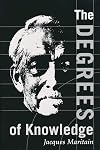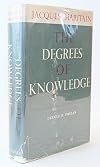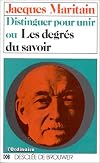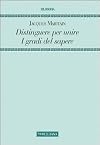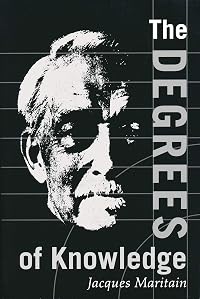
The Degrees of Knowledge
by Jacques Maritain
On This Page
Description
Maritain argues that there are different 'kinds' and 'orders' of knowledge and, within them, different 'degrees' determined by the nature of the thing to be known and the 'degree of abstraction' involved. The book is divided into two parts: Part one discusses the degrees of knowledge for science and philosophy - or 'rational knowledge,' and part two discusses the degrees of knowledge for religious faith and mysticism - or 'super-rational knowledge.'Tags
Recommendations



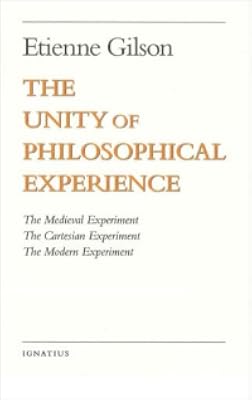

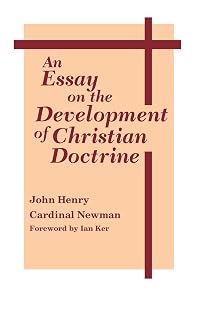
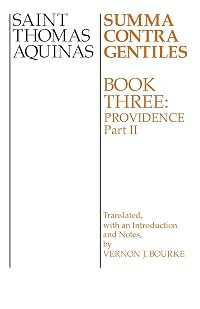

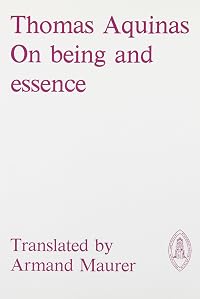







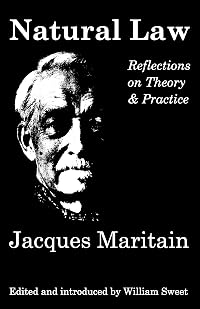

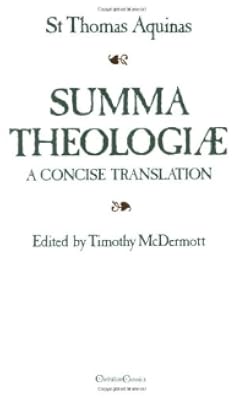
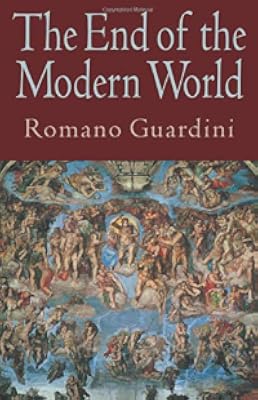
Member Reviews
I found the following review online and I agree with it wholeheartedly.
KIRKUS REVIEW
The shorter works of Jacques Maritain have been so enthusiastically received that this, his first long work, should be even more welcome. Undoubtedly one of the greatest 20th century philosophers this book will have a wide field. Philosophers and theologians cannot miss it and to add to its importance it bears the imprimatur so that Catholics as well as Protestants will consider it required reading. While it is not easy reading it is amazing how clearly the author cuts his way through the maze of problems and subjects that face him. Equally at home in the field of science of theology, in physics or mysticism, mathematics or philosophy, we find ourselves show more following our surefooted guide with an amazing but delightful sense of achievement. This is a book to own, read, reread and study, not to be digested in one reading. It contains a lifetime of knowledge. show less
KIRKUS REVIEW
The shorter works of Jacques Maritain have been so enthusiastically received that this, his first long work, should be even more welcome. Undoubtedly one of the greatest 20th century philosophers this book will have a wide field. Philosophers and theologians cannot miss it and to add to its importance it bears the imprimatur so that Catholics as well as Protestants will consider it required reading. While it is not easy reading it is amazing how clearly the author cuts his way through the maze of problems and subjects that face him. Equally at home in the field of science of theology, in physics or mysticism, mathematics or philosophy, we find ourselves show more following our surefooted guide with an amazing but delightful sense of achievement. This is a book to own, read, reread and study, not to be digested in one reading. It contains a lifetime of knowledge. show less
ER-5
Dec 14, 2020Catalan
Ratings
Members
- Recently Added By
Lists

Filosofía - Clásicos
217 works; 1 member

How to Read a Book's Recommended Reading List
309 works; 10 members
Author Information

211+ Works 5,271 Members
T. S. Eliot once called Jacques Maritain "the most conspicuous figure and probably the most powerful force in contemporary philosophy." His wife and devoted intellectual companion, Raissa Maritain, was of Jewish descent but joined the Catholic church with him in 1906. Maritain studied under Henri Bergson but was dissatisfied with his teacher's show more philosophy, eventually finding certainty in the system of St. Thomas Aquinas. He lectured widely in Europe and in North and South America, and lived and taught in New York during World War II. Appointed French ambassador to the Vatican in 1945, he resigned in 1948 to teach philosophy at Princeton University, where he remained until his retirement in 1953. He was prominent in the Catholic intellectual resurgence, with a keen perception of modern French literature. Although Maritain regarded metaphysics as central to civilization and metaphysically his position was Thomism, he took full measure of the intellectual currents of his time and articulated a resilient and vital Thomism, applying the principles of scholasticism to contemporary issues. In 1963, Maritain was honored by the French literary world with the national Grand Prize for letters. He learned of the award at his retreat in a small monastery near Toulouse where he had been living in ascetic retirement for some years. In 1967, the publication of "The Peasant of the Garonne" disturbed the French Roman Catholic world. In it, Maritain attacked the "neo-modernism" that he had seen developing in the church in recent decades, especially since the Second Vatican Council. According to Jaroslav Pelikan, writing in the Saturday Review of Literature, "He laments that in avant-garde Roman Catholic theology today he can 'read nothing about the redeeming sacrifice or the merits of the Passion.' In his interpretation, the whole of the Christian tradition has identified redemption with the sacrifice of the cross. But now, all of that is being discarded, along with the idea of hell, the doctrine of creation out of nothing, the infancy narratives of the Gospels, and belief in the immortality of the human soul." Maritain's wife, Raissa, also distinguished herself as a philosophical author and poet. The project of publishing Oeuvres Completes of Jacques and Raissa Maritain has been in progress since 1982, with seven volumes now in print. (Bowker Author Biography) show less
All Editions
Common Knowledge
- Canonical title
- The Degrees of Knowledge
Classifications
- Genres
- Philosophy, Nonfiction, Religion & Spirituality, General Nonfiction
- DDC/MDS
- 121 — Philosophy & psychology Epistemology (how do you know what you know?) Epistemology (Theory of knowledge)
- LCC
- BD162 .M273 — Philosophy, Psychology and Religion Speculative philosophy Speculative philosophy Epistemology. Theory of knowledge
- BISAC
Statistics
- Members
- 202
- Popularity
- 161,560
- Reviews
- 3
- Rating
- (4.75)
- Languages
- 5 — Chinese, English, French, Italian, Spanish
- Media
- Paper, Ebook
- ISBNs
- 5
- ASINs
- 6