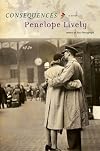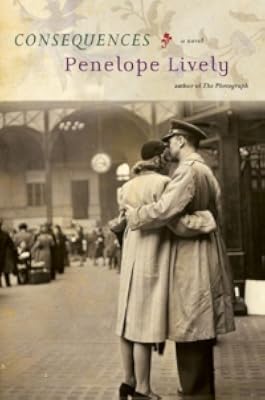
Consequences
by Penelope Lively
On This Page
Description
A love story that connects the lives of three generations, Lorna and Matt who experience heartache during World War II, their daughter Molly, and their granddaughter Ruth, who begins a journey that takes her back to 1941.Tags
Recommendations














Member Recommendations

Member Reviews
This is an intricately plotted, warm and intelligent story following three generations of an English family since the mid 30s. On one level this is an exploration of the significance of apparently random events, rather like Kate Atkinson's Life After Life, though without the alternative narratives, and there is nothing random about the range of the novel or the ideas behind it. It is also about the changes in women's lives and expectations since the 1930s, and about memory, what is remembered and what is forgotten, not least what is forgotten about the political and social struggles of the recent past.
I read the first paragraph of Penelope Lively's novel Consequences while standing in a bookstore. Got hooked immediately.
Nothing spectacular here -- the novel simply traces three generations of a British family, from the 1930s to the present day. The characters are understated, the prose is understated, and all the most violent turns of the plot happen "offscreen" -- and yet the book has a great deal of cumulative power.
Lively muses on the way a little happenstance gives rise to whole new lives, loves, loss. A young man sketching ducks on a park bench happens to glance to the left, catches the eye of a young woman who's just been crying, and so begins a family that will endure much and look back on the young man with curiosity and show more wonder. All right, so the plot is often predictable, but I didn't mind. Much of our life is predictable, but it's worth noticing, and Lively notes it well, doing her characters honorable service. show less
Nothing spectacular here -- the novel simply traces three generations of a British family, from the 1930s to the present day. The characters are understated, the prose is understated, and all the most violent turns of the plot happen "offscreen" -- and yet the book has a great deal of cumulative power.
Lively muses on the way a little happenstance gives rise to whole new lives, loves, loss. A young man sketching ducks on a park bench happens to glance to the left, catches the eye of a young woman who's just been crying, and so begins a family that will endure much and look back on the young man with curiosity and show more wonder. All right, so the plot is often predictable, but I didn't mind. Much of our life is predictable, but it's worth noticing, and Lively notes it well, doing her characters honorable service. show less
Posted on: http://web.mac.com/ann163125/Table_Talk/Table_Talk_Blog/Entries/2007/12/20_Conse...
I need someone to take me on one side and explain why I stopped reading everything that Penelope Lively publishes. I certainly used to so when she was writing for children and I’ve written before about my favourites in this field, but it’s only over these past two or three weeks that I’ve started to pick up her work for adults and while I thoroughly enjoyed The Photograph, her new novel, Consequences, is one of those books that I shall want on my bookshelves for the rest of my life just so that I can take it down every now and again and luxuriate in her characters, her settings and her insights on life.
Consequences is about three show more generations of women in the same family, Lorna, her daughter, Molly and Molly’s child, Ruth. Lorna comes from a well-heeled pre-war family who are shocked to the core when she refuses to have anything to do with the usual social marriage-go-round and instead weds Matt, the struggling artist she meets in St James’s Park. They live in a two up, two down, no amenities cottage in the Somerset countryside and it is there that Molly is born just as the Second World War is starting. In the post-war years the focus switches to Molly, working in London, and refusing to marry the father of her expected child for the very good reason that she doesn’t love him. When Ruth, in her turn, moves into adulthood, she also finds herself going against expectations by actually marrying the man with whom she has been living, only for the marriage to flounder as she and her husband realise that what they thought was love was more to do with familiarity. Left to bring up two children on her own, Ruth eventually finds her way back to the Somerset cottage and there discovers legacies of her grandparents, some tangible and others less easily defined.
One difference for me between this novel and The Photograph was that whereas there were very few characters in The Photograph that I liked at all, here I positively loved most of them. I wanted to know these women and some of the men in their lives, especially those who eventually turn up as stepfathers. This novel actually gives stepparents a good name!
I loved the settings too. Lively is brilliant with houses. I could really imagine the Somerset cottage and the wonderful old house where Lorna and Molly eventually live in London, which becomes a focal point for all generations of the family. Neither of them come with what you might call all mod-cons, but both of them are full of the character of the people who have lived and loved there – far more important in the long run.
But why Consequences? At first I thought of the word in terms of a dire warning. “Be careful of what you do, there will be consequences!” But far more central to Lively’s theme, I think, is the notion of the game of consequences that we’ve all probably played at some time or another. You know the one. The first player writes down someone’s name, folds the paper over so that what has been written can’t be seen and then passes it on to the next person for them to write down the name of a prospective partner. A met B in C etc. etc. etc. A word that is repeated several times is Happenstance and it is absolutely appropriate, for all three women meet the men that they will eventually marry in as haphazard a way as the As and Bs find themselves paired off in a game of Consequences and yet at the moment of meeting they know instantaneously that this is for life. One of the characters, Simon, Molly’s half-brother, says that ‘life is a matter of negotiation’, but Molly challenges him and he very soon accepts that there are things in life with which you just can’t negotiate. The big things that turn a life around simply happen. They cannot be predicted, neither can they be resisted.
This could seem to be a very depressing message. Some of the things that ‘happen’ to the women in this story are hardly what you would wish to find as you open up the game of Consequences that spells out your future. But, there is a final idea developed right at the end that brings all that Lively has had to say into a new perspective. When Ruth goes back to the Somerset cottage she gets into discussion with the new owner, Brian, about his work. An academic he is interested in... the way in which elsewhere – the other place – has been perceived, over time. Whether it is of no interest, or territory to be acquired, or just an area over which you move. Many things have been perceived differently over the period of time that Lively’s novel spans. Attitudes towards class, towards marriage, towards child-rearing, towards houses, towards art, the book explores changes in them all. The one thing, however, that is permanent is the immediate attraction between two people that is real love. This transcends the generations and ultimately ties the novel together and makes it the supremely hopeful work that it is.
When I’d finished reading this novel I wanted to go straight back and start all over again. I didn’t want to let these people go. What I did do, in fact, was turn to the front page and discover that there are fifteen other Lively novels that I have still to read. For the moment that is going to be my permanence. show less
I need someone to take me on one side and explain why I stopped reading everything that Penelope Lively publishes. I certainly used to so when she was writing for children and I’ve written before about my favourites in this field, but it’s only over these past two or three weeks that I’ve started to pick up her work for adults and while I thoroughly enjoyed The Photograph, her new novel, Consequences, is one of those books that I shall want on my bookshelves for the rest of my life just so that I can take it down every now and again and luxuriate in her characters, her settings and her insights on life.
Consequences is about three show more generations of women in the same family, Lorna, her daughter, Molly and Molly’s child, Ruth. Lorna comes from a well-heeled pre-war family who are shocked to the core when she refuses to have anything to do with the usual social marriage-go-round and instead weds Matt, the struggling artist she meets in St James’s Park. They live in a two up, two down, no amenities cottage in the Somerset countryside and it is there that Molly is born just as the Second World War is starting. In the post-war years the focus switches to Molly, working in London, and refusing to marry the father of her expected child for the very good reason that she doesn’t love him. When Ruth, in her turn, moves into adulthood, she also finds herself going against expectations by actually marrying the man with whom she has been living, only for the marriage to flounder as she and her husband realise that what they thought was love was more to do with familiarity. Left to bring up two children on her own, Ruth eventually finds her way back to the Somerset cottage and there discovers legacies of her grandparents, some tangible and others less easily defined.
One difference for me between this novel and The Photograph was that whereas there were very few characters in The Photograph that I liked at all, here I positively loved most of them. I wanted to know these women and some of the men in their lives, especially those who eventually turn up as stepfathers. This novel actually gives stepparents a good name!
I loved the settings too. Lively is brilliant with houses. I could really imagine the Somerset cottage and the wonderful old house where Lorna and Molly eventually live in London, which becomes a focal point for all generations of the family. Neither of them come with what you might call all mod-cons, but both of them are full of the character of the people who have lived and loved there – far more important in the long run.
But why Consequences? At first I thought of the word in terms of a dire warning. “Be careful of what you do, there will be consequences!” But far more central to Lively’s theme, I think, is the notion of the game of consequences that we’ve all probably played at some time or another. You know the one. The first player writes down someone’s name, folds the paper over so that what has been written can’t be seen and then passes it on to the next person for them to write down the name of a prospective partner. A met B in C etc. etc. etc. A word that is repeated several times is Happenstance and it is absolutely appropriate, for all three women meet the men that they will eventually marry in as haphazard a way as the As and Bs find themselves paired off in a game of Consequences and yet at the moment of meeting they know instantaneously that this is for life. One of the characters, Simon, Molly’s half-brother, says that ‘life is a matter of negotiation’, but Molly challenges him and he very soon accepts that there are things in life with which you just can’t negotiate. The big things that turn a life around simply happen. They cannot be predicted, neither can they be resisted.
This could seem to be a very depressing message. Some of the things that ‘happen’ to the women in this story are hardly what you would wish to find as you open up the game of Consequences that spells out your future. But, there is a final idea developed right at the end that brings all that Lively has had to say into a new perspective. When Ruth goes back to the Somerset cottage she gets into discussion with the new owner, Brian, about his work. An academic he is interested in... the way in which elsewhere – the other place – has been perceived, over time. Whether it is of no interest, or territory to be acquired, or just an area over which you move. Many things have been perceived differently over the period of time that Lively’s novel spans. Attitudes towards class, towards marriage, towards child-rearing, towards houses, towards art, the book explores changes in them all. The one thing, however, that is permanent is the immediate attraction between two people that is real love. This transcends the generations and ultimately ties the novel together and makes it the supremely hopeful work that it is.
When I’d finished reading this novel I wanted to go straight back and start all over again. I didn’t want to let these people go. What I did do, in fact, was turn to the front page and discover that there are fifteen other Lively novels that I have still to read. For the moment that is going to be my permanence. show less
Lorna and Matt meet by chance on a London park bench in 1935. They fall in love, have a child, and the story continues on for three generations.
I've read one other book by Penelope Lively (The Photograph), and that was some time ago. I remember not loving that one -- it had a dark & depressing feel to it. This one was better, but there is still something about her writing that doesn't quite capture me as I feel maybe it should. Her books are somewhat of a slow burn, relying more on description than dialogue. I didn't dislike this one, but sometimes the way the timelines shifted back and forth were a bit disconcerting. And I never felt like I really got to know the characters -- it felt more like I was looking down from above. Reading show more this on audio, I also felt like the reader may have influenced my opinion. Though certainly capable, Josephine Bailey read this rather formally, without a lot of inflection in her voice, and I can't quite decide if that's because it fit the tone of the book or if that was just her style. Either way, it was kind of off-putting to me. show less
I've read one other book by Penelope Lively (The Photograph), and that was some time ago. I remember not loving that one -- it had a dark & depressing feel to it. This one was better, but there is still something about her writing that doesn't quite capture me as I feel maybe it should. Her books are somewhat of a slow burn, relying more on description than dialogue. I didn't dislike this one, but sometimes the way the timelines shifted back and forth were a bit disconcerting. And I never felt like I really got to know the characters -- it felt more like I was looking down from above. Reading show more this on audio, I also felt like the reader may have influenced my opinion. Though certainly capable, Josephine Bailey read this rather formally, without a lot of inflection in her voice, and I can't quite decide if that's because it fit the tone of the book or if that was just her style. Either way, it was kind of off-putting to me. show less
Penelope Lively is known for character-driven novels featuring strong women, with storylines advanced through a series of seemingly minor connections where the whole is much greater than the sum of its parts. By its very title, Consequences promises to deliver on this formula, but unfortunately the execution doesn’t achieve the excellence of Lively’s other novels.
The biggest problem with this book is Lively’s attempt to capture three generations in a mere 258 pages. The story opens with Lorna and Matt, a young newly-married couple living in the British countryside during World War II. Matt is a talented and promising artist. They have a daughter, Molly. Just as I was getting to know these characters, Molly is suddenly an adult show more and soon has a daughter of her own. And again, just as I began to care about Molly, the focus shifted again to her daughter, Ruth.
For the most part, the eponymous consequences -- which would seem to be a way for Lively to do her usual “thing” with connections -- fall short. The lone exception is a tiny breadcrumb left by Lorna, which resurfaces later in a very satisfying way. Consequences ultimately left me feeling frustrated and a bit grumpy. show less
The biggest problem with this book is Lively’s attempt to capture three generations in a mere 258 pages. The story opens with Lorna and Matt, a young newly-married couple living in the British countryside during World War II. Matt is a talented and promising artist. They have a daughter, Molly. Just as I was getting to know these characters, Molly is suddenly an adult show more and soon has a daughter of her own. And again, just as I began to care about Molly, the focus shifted again to her daughter, Ruth.
For the most part, the eponymous consequences -- which would seem to be a way for Lively to do her usual “thing” with connections -- fall short. The lone exception is a tiny breadcrumb left by Lorna, which resurfaces later in a very satisfying way. Consequences ultimately left me feeling frustrated and a bit grumpy. show less
Loved this book, but no surprise. It's full of people knowing and not knowing odds and ends about their parents and grandparents, something which fascinates me. And it has something I really love: the sense that the characters are engaged in time-travel while firmly rooted in their own time. The time-travel happens through stories and books and engravings and walls and cottages and cemeteries,and feels completely real to me. Wish I were still reading it.
I had liked two other books by Penelope Lively quite a bit (Passing On and The Photograph) and so was looking forward to this. I was disappointed -- it wasn't terrible but the characterization seemed flat. It did seem to improve a bit as it went along, and I wondered if that was intentional-- that the people farthest back in time were distant and hard to know, where the people more contemporary with me were easier to relate to...
Members
- Recently Added By
Author Information

73+ Works 14,533 Members
Penelope Lively has written over 18 books for children, and over 15 titles for adults, distinguishing herself on both levels. Among the awards she has received are the coveted Booker Prize for the adult novel "Moon Tiger" (1987) and the Carnegie Medal for the highly acclaimed juvenile work, "The Ghost of Thomas Kempe" (1973). In Lively's writing, show more for both adults and children, the recurrent theme is interpreting the past through exploring the function of memory. "My particular preoccupation as a writer is with memory. Both with memory in the historical sense and memory in the personal sense." Beginning her writing career in the early 1970's, Lively wrote exclusively for children for over a decade. Because children have limited memories, devices were used to explore their perceptions of the past, such as ghosts in "Uninvited Ghosts and Other Stories" (1985), and a sampler in "A Stitch in Time' (1976). Lively's first adult novel, "The Road to Lichfield" (1977) was the result of turning to an older audience when she felt inspiration running out. Her adult novels include "Passing On" (1995), the story of a mother's legacy to her children and 'Oleander, Jacarandi: A Childhood Perceived' (1994) which is a memoir of Lively's childhood. Penelope (Low) Lively, born March 17, 1933 in Cairo, Egypt, had a most unusual childhood. She grew up in Cairo with no formal education until age 12, when her family put her in boarding school in England. After earning a B.A. in history at Oxford in 1955, she married Jack Lively, a university professor, whom she calls her most useful critic. They have a son and a daughter, Adam and Josephine. (Bowker Author Biography) show less
Some Editions
Awards and Honors
Awards
Common Knowledge
- Original publication date
- 2007
- People/Characters
- Matt Faraday; Lorna Faraday; Lucas Talbot; Molly Faraday; Simon Talbot; Ruth Faraday (show all 8); Sam Priest; James Portland
- Important places
- London, England, UK; Somerset, England, UK; Heraklion, Crete
- Important events
- World War II
- Dedication
- To Jean
- First words
- They met on a bench in St. James's Park; it was the sixth of June 1935.
- Quotations
- You do not want to admit that you have never been in love, at forty-three. That the most compelling experience going has somehow passed you by, that you are a kind of emotional virgin, that when you read great literature, one... (show all) of its central themes is mysterious to you.
Grief was muted now, a continuous dull pain, as though she had some incurable illness. She still wept; at unwary moments, the realization of what had happened would come surging up and knock everything else aside, so that she... (show all) was dazed, unable to function.
Librarianship could be picked up with ease by anyone with their wits about them, she decided. - Last words
- (Click to show. Warning: May contain spoilers.)Then she turned into the lane - that would take her away, that would bring her back.
Classifications
Statistics
- Members
- 754
- Popularity
- 37,213
- Reviews
- 34
- Rating
- (3.70)
- Languages
- English, German, Italian
- Media
- Paper, Audiobook, Ebook
- ISBNs
- 25
- ASINs
- 9