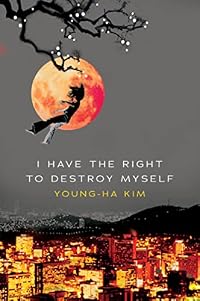
I Have the Right to Destroy Myself
by Young-ha Kim
On This Page
Description
A "mesmerizing" novel of a love triangle and a mysterious disappearance in South Korea ( Booklist ). In the fast-paced, high-urban landscape of Seoul, C and K are brothers who have fallen in love with the same beguiling drifter, Se-yeon, who gives herself freely to both of them. Then, just as they are trying desperately to forge a connection in an alienated world, Se-yeon suddenly disappears. All the while, a spectral, calculating narrator haunts the edges of their lives, working to help the show more lost and hurting find escape through suicide. When Se-yeon reemerges, it is as the narrator's new client. Recalling the emotional tension of Milan Kundera and the existential anguish of Bret Easton Ellis, I Have the Right to Destroy Myself is a dreamlike "literary exploration of truth, death, desire and identity" ( Publishers Weekly ). Cinematic in its urgency, the novel offers "an atmosphere of menacing ennui [set] to a soundtrack of Leonard Cohen tunes" ( Newark Star-Ledger ). "Kim's novel is art built upon art. His style is reminiscent of Kafka's and also relies on images of paintings (Jacques-Louis David's 'The Death of Marat, ' Gustav Klimt's 'Judith') and film (Jim Jarmusch's 'Stranger Than Paradise'). The philosophy-life is worthless and small-reminds us of Camus and Sartre, risky territory for a young writer.... But Kim has the advantage of the urban South Korean landscape. Fast cars, sex with lollipops and weather fronts from Siberia lend a unique flavor to good old-fashioned nihilism. Think of it as Korean noir." - Los Angeles Times "Like Georges Simenon, [Kim's] keen engagement with human perversity yields an abundance of thrills as well as chills (and, for good measure, a couple of memorable laughs). This is a real find." -Han Ong, author of Fixer Chao show lessTags
Recommendations





Member Reviews
An interesting example of cultural dislocation. the book is about young twenty-something men and women in Korea and in Europe, drifting from place to place, having sex, exchanging more or less nihilistic and random thoughts. One of them spends his time arranging for people to kill themselves. In all of that, and in the author's age (was born in 1968; this was written in 1996) this book owes something to Bret Easton Ellis and other writers of the 1980s (Ellis was born in 1964). A little further back in time, the models are William Burroughs, Sylvia Plath, and Henry Miller. So in terms of urban affect, the book is about ten years out of date.
But in terms of the author's, and the narrator's, aesthetic choices, the book is massively show more anachronistic, and the author seems entirely unaware of that fact. He presents his narrator as a person who loves Gustav Klimt and Van Gogh and reads Oscar Wilde. Other time periods play into the plot: the narrator also likes Henry Miller and Sylvia Plath, and the book opens and closes with Romantic painting: in the beginning, it's the "Death of Marat," and at the end, it's Delacroix's "Death of Sardanapalus."
These visual and literary influences can be divided into three groups. The Romantic paintings are emblems of the desperate passions and romantic suicide that drive the book's plot. Henry Miller and Sylvia Plath are the literary mix that inspires Kim. It's the fin-de-siècle art that is so deeply anachronistic. The author clearly wants us to think of his narrator, and his tastes, as thrillingly nihilistic, scarred, urban, cosmopolitan, and knowing. But the taste for fin-de-siècle painting and prose was typical of the first generations of Chinese, Korean, and Japanese artists who visited Europe beginning in the 1920s (and earlier, in the case of Japan). It is as dusty now as a "stale cream puff," as Ezra Pound described his own early book of poetry, "A lume spento," written earnestly, in Venice, in a kind of nineteenth-century dream.
Is it possible to take a book seriously if its imaginative world is so belated, so scattered, so unaware of its anachronism? Can a taste that combines the 1820s, the 1900's, and the 1980s be presented represented seriously, without irony or historical distance? Can characters in their 20's be read sympathetically if the author doesn't realize they are pastiches? ("I Have the Right to Destroy Myself" also resembles the disaffected, empty lives that are common in contemporary Japanese fiction, but with a lacquer of old fashioned fine art.) show less
But in terms of the author's, and the narrator's, aesthetic choices, the book is massively show more anachronistic, and the author seems entirely unaware of that fact. He presents his narrator as a person who loves Gustav Klimt and Van Gogh and reads Oscar Wilde. Other time periods play into the plot: the narrator also likes Henry Miller and Sylvia Plath, and the book opens and closes with Romantic painting: in the beginning, it's the "Death of Marat," and at the end, it's Delacroix's "Death of Sardanapalus."
These visual and literary influences can be divided into three groups. The Romantic paintings are emblems of the desperate passions and romantic suicide that drive the book's plot. Henry Miller and Sylvia Plath are the literary mix that inspires Kim. It's the fin-de-siècle art that is so deeply anachronistic. The author clearly wants us to think of his narrator, and his tastes, as thrillingly nihilistic, scarred, urban, cosmopolitan, and knowing. But the taste for fin-de-siècle painting and prose was typical of the first generations of Chinese, Korean, and Japanese artists who visited Europe beginning in the 1920s (and earlier, in the case of Japan). It is as dusty now as a "stale cream puff," as Ezra Pound described his own early book of poetry, "A lume spento," written earnestly, in Venice, in a kind of nineteenth-century dream.
Is it possible to take a book seriously if its imaginative world is so belated, so scattered, so unaware of its anachronism? Can a taste that combines the 1820s, the 1900's, and the 1980s be presented represented seriously, without irony or historical distance? Can characters in their 20's be read sympathetically if the author doesn't realize they are pastiches? ("I Have the Right to Destroy Myself" also resembles the disaffected, empty lives that are common in contemporary Japanese fiction, but with a lacquer of old fashioned fine art.) show less
This novella came to my attention on a random list that I found on the net somewhere. I'm not sure if I still have the list and I can't recall what website I found it on. Anyway, I decided to read it next as I fancied something a little off the wall and it also means I get to tick another country off the list. This book was a gift from someone and I sometimes wonder what they think about my mental state when I read books like this.
It's a bit tricky to review the book as the story is pretty strange and in places nasty. Sometimes the nastiness in a book really feels like it is there for effect only but I thought it worked well here. It's not over done but it does catch the attention and I found myself re-reading a few bits to make sure I show more read what I thought I had.
I also really liked the concept of a person who moves from place to place finding and helping people who wish to commit suicide. It's a delightfully dark idea and something which really appeals to my mind. Personally, I would have preferred a bit more plot but that probably would have spoiled the book.
A warped but interesting book.
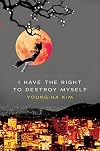
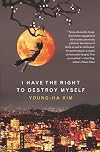
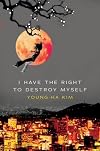
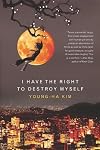
Ohh, and the cover is gorgeous, it would be an incredible tattoo but would require one hell of an artist to make it work. show less
It's a bit tricky to review the book as the story is pretty strange and in places nasty. Sometimes the nastiness in a book really feels like it is there for effect only but I thought it worked well here. It's not over done but it does catch the attention and I found myself re-reading a few bits to make sure I show more read what I thought I had.
I also really liked the concept of a person who moves from place to place finding and helping people who wish to commit suicide. It's a delightfully dark idea and something which really appeals to my mind. Personally, I would have preferred a bit more plot but that probably would have spoiled the book.
A warped but interesting book.
Ohh, and the cover is gorgeous, it would be an incredible tattoo but would require one hell of an artist to make it work. show less
Such is a shame. This undernourished story is intriguing, though only a germ of a novel. Given my effusive lust for Korean cinema, I was excited to find Young-Ha Kim's debut on a remainder table for two dollars. What resulted is actually more akin to a screenplay than any plumbing of the darkened corridors of the mind. The suicide assistant would be a perfect role for Lee Byung-hun: shit, he's played variations on the role a number of times. That said, this clumsy collision of art, death and ennui didn't move me.
Ruminating on this a for a spell, I still love the section abroad much more than the snowstorm scene. Being dulled by vehicular speed, sex and stimulus, the characters look for the elegant departure.
Ruminating on this a for a spell, I still love the section abroad much more than the snowstorm scene. Being dulled by vehicular speed, sex and stimulus, the characters look for the elegant departure.
Eu gostei de como o livro fala sobre o suicídio sem questioná-lo, foi uma perspectiva interessante. Especialmente como o narrador, cuja profissão é de auxiliar as pessoas a cometer suicídio, procura e aborda seus clientes em potencial. O título diz mais que simplesmente afirmar que uma pessoa tem o direito de se destruir, ele diz que uma pessoa tem o direito de se destruir sem um grande motivo, um grande trauma, e sem se explicar.
I have read books about serial killers, mass murderers, sexual sadists, and freaks. I have never run across a book about someone who assists others commit suicide. Kim Young-Ha’s ‘I have the right to destroy myself’ was a twisted new diversion in my reading. hooray for south korean fiction!
every person has at least one moment in their lifetime when the think to themselves that they would be better off dead. it is not a matter of depression, hopelessness, nor rejection; instead, suicide is the logical option for many who have found themselves at the end of their journey. they are complete.
the main character has no name. he is not a perversion, he provides a service. he helps handpicked individuals come to terms with their desire to show more die. he sees what is best for them and assists them to be successful. he does not force their hand, connive, or trick. if they are not ready, he asks them to come back later. he never participates in their death, only administrates..
equal parts introspection and story telling, Young-Ha creates a wonderful story.
for those concerned, this is not a gory book. it focuses more on the intricacies of decision making and the differences of perception when it comes to beauty and priorities. there is a fair amount of people “bumping uglies” in the first half as well. show less
every person has at least one moment in their lifetime when the think to themselves that they would be better off dead. it is not a matter of depression, hopelessness, nor rejection; instead, suicide is the logical option for many who have found themselves at the end of their journey. they are complete.
the main character has no name. he is not a perversion, he provides a service. he helps handpicked individuals come to terms with their desire to show more die. he sees what is best for them and assists them to be successful. he does not force their hand, connive, or trick. if they are not ready, he asks them to come back later. he never participates in their death, only administrates..
equal parts introspection and story telling, Young-Ha creates a wonderful story.
for those concerned, this is not a gory book. it focuses more on the intricacies of decision making and the differences of perception when it comes to beauty and priorities. there is a fair amount of people “bumping uglies” in the first half as well. show less
This was a short sparsely written book. The narrator finds people who seem to have an inclination towards suicide and helps them accomplish the task. I kept wondering if this person was an assistant to the Grim Reaper himself. The story was told around the lives of brothers C and K. They meet strange, hopeless, attractive young women who eventually kill themselves. Sex is compulsive and void of any real passion.
It was an easy read and very compelling. Discussions of art and the business of capturing images - do we do this out of fear of the blank canvas, or to hide behind. All in all, not very uplifting stuff.
It was an easy read and very compelling. Discussions of art and the business of capturing images - do we do this out of fear of the blank canvas, or to hide behind. All in all, not very uplifting stuff.
Members
- Recently Added By
Lists

Books With the Most Memorable Titles
478 works; 158 members

Korean literature
68 works; 5 members
Author Information

26+ Works 978 Members
Some Editions
Awards and Honors
Awards
Common Knowledge
- Canonical title
- I Have the Right to Destroy Myself
- Original title
- 나는 나를 파괴할 권리가 있다
- Original publication date
- 1996
- People/Characters
- Narrator; C; K; Se-yeon (Judith); Yu Mimi
- Important places
- Seoul, South Korea
- First words
- I'm looking at Jacques-Louis David's 1793 oil painting, The Death of Marat, printed in an art book.
- Quotations
- But they can't fool me; I catch the glimmer of possibility in their empty words, I unearth clues from the types of music they prefer, the family histories they sometimes reveal, the books that hit a nerve, the artists they lo... (show all)ve. People unconsciously want to reveal their inner urges. They are waiting for someone like me.
Judith likes Chupa Chups lollipops. When she isn't smoking she constantly sucks on them. She doesn't take the thing out of her mouth, even during sex. Every time, C is scared that the stick will poke his eye out. Actually... (show all), one did stab his left eye once. He worried he might go blind, and he was afraid to have sex with her for a few days.
Sometimes fiction is more easily understood that true events. Reality is often pathetic. I learned at a very young age that it was easier to make up stories to make a point. I enjoy creating stories. The world is filled w... (show all)ith fiction anyway.
I thought of the movie Mannequin. It was about a man who loved a plastic model who turned into a person. Are humans that much better than mannequins? Why do cartoon monsters and cyborgs want so badly to become human... (show all)?
He cherished the time he spent waiting for someone to show up. During that time, he wasn't obligated to do anything. He could read a book or people watch. This was the only time he didn't suffer from a sense of debt to him... (show all)self. He was free from the compulsion to be productive. - Last words
- (Click to show. Warning: May contain spoilers.)Why does nothing change, even when you set out for a faraway place?
Classifications
- Genres
- Fiction and Literature, General Fiction
- DDC/MDS
- 895.734 — Literature & rhetoric Asian Literature Literatures of East and Southeast Asia Korean Korean fiction 1945–2000
- LCC
- PL992.415 .Y5863 .N313 — Language and Literature Languages and literatures of Eastern Asia, Africa, Oceania Languages of Eastern Asia, Africa, Oceania Korean language and literature Korean literature
- BISAC
Statistics
- Members
- 325
- Popularity
- 97,516
- Reviews
- 12
- Rating
- (3.21)
- Languages
- 7 — Czech, Dutch, English, French, German, Korean, Spanish
- Media
- Paper, Ebook
- ISBNs
- 13
- ASINs
- 3