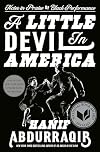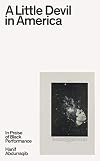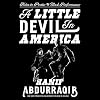
A Little Devil in America: Notes in Praise of Black Performance
by Hanif Abdurraqib
On This Page
Description
"A Little Devil in America is an urgent project that unravels all modes and methods of black performance, in this moment when black performers are coming to terms with their value, reception, and immense impact on America. With sharp insight, humor, and heart, Abdurraqib examines how black performance happens in specific moments in time and space--midcentury Paris, the moon, or a cramped living room in Columbus, Ohio. At the outset of this project, Abdurraqib became fascinated with clips of show more black minstrel entertainers like William Henry Lane, better known as Master Juba. Knowing there was something more complicated and deep-seated in the history and legacy of minstrelsy, Abdurraqib uncovered questions and tensions that help to reveal how black performance pervades all areas of American society. Abdurraqib's prose is entrancing and fluid as he leads us along the links in his remarkable trains of thought. A Little Devil in America considers, critques, and praises performance in music, sports, writing, comedy, grief, games, and love"-- show lessTags
Recommendations















Member Reviews
I don't always like memoirs, but when I do, I like memoirs that weave together a broad understanding of history and culture with the memoirist's personal experience of that history and culture. Abdurraqib is brilliant at this. This weaving combined with my interest in reading about how other Ohioans experience Ohio (and while there is overlap, Abdurraqib's experience is quite different from mine) made this book an excellent way to spend some time. It had me taking breaks to look up performances both familiar and new to me, enriched by the context of the author's interpretation.
Hanif Abdurraqib writes prose like a poet, with a sense of sound and rhythm, his language both loose and precise. The performance referred to in his subtitle encompasses not only song and dance on stage, in juke-joint basements and church, but performance as survival, as going home, as misdirection and dissimulation, a way of turning the absurdity of black experience inside out.
Abdurraqib’s essays in A Little Devil in America combine a wide-ranging consideration of popular culture with an acute historical awareness. He writes of how the Harlem Hellfighters and jazz musicians arrived in France at the same time, about the rivalry of Joe Tex and James Brown and the audience at the Apollo Theatre, about how Don Shirley abandoned a musical show more career for a psychology practice in Chicago then combined the two in a nightclub study of how piano music affected the behavior of at-risk juveniles.
In a chapter called “Nine Considerations of Black People in Space,” Abdurraqib writes of Octavia Butler’s science fiction speaking to people who have long survived by learning to adapt until something better comes along, and of his fascination with Sun Ra’s claim to knowledge of another world and the performance that he wrought from it.
What I loved was that none of it seemed outlandish. It didn’t seem like a particularly excruciating performance, nor did it seem like the ramblings of someone suffering from some mental detachment. It all seemed very measured, calm, matter of fact. Sun Ra was from somewhere else and he’d seen things none of us could fathom, and yet here he was, sharing what he had to give with us anyway. show less
Abdurraqib’s essays in A Little Devil in America combine a wide-ranging consideration of popular culture with an acute historical awareness. He writes of how the Harlem Hellfighters and jazz musicians arrived in France at the same time, about the rivalry of Joe Tex and James Brown and the audience at the Apollo Theatre, about how Don Shirley abandoned a musical show more career for a psychology practice in Chicago then combined the two in a nightclub study of how piano music affected the behavior of at-risk juveniles.
In a chapter called “Nine Considerations of Black People in Space,” Abdurraqib writes of Octavia Butler’s science fiction speaking to people who have long survived by learning to adapt until something better comes along, and of his fascination with Sun Ra’s claim to knowledge of another world and the performance that he wrought from it.
What I loved was that none of it seemed outlandish. It didn’t seem like a particularly excruciating performance, nor did it seem like the ramblings of someone suffering from some mental detachment. It all seemed very measured, calm, matter of fact. Sun Ra was from somewhere else and he’d seen things none of us could fathom, and yet here he was, sharing what he had to give with us anyway. show less
Summary: A celebration of Black performance and its significance for Blacks in America.
Just over a year ago, I read a couple of Hanif Abdurraqib’s essays in an anthology of Columbus writers. Little did I realize how much I would encounter this Columbus writer’s name in the next year, culminating in his recent award of a MacArthur Fellowship (a five year, $625,000 grant) and this week’s award of the Andrew Carnegie Medal for Excellence in Nonfiction by the American Library Association for A Little Devil in America. He was born and grew up in the same city we moved to thirty-one years ago. If nothing else, it’s exciting to see an Ohio author from Columbus do so well!
This is an extraordinary book. It’s major subject is a survey show more of black performance in many genres from dance to magic to music. The title is drawn from a statement by Josephine Baker, who by 1963 had danced across the stages of the world. Speaking at the March on Washington, she proclaimed, “I was a devil in other countries, and I was a little devil in America, too. The statement speaks of the passionate, celebratory, and resistant character of Black performance.
Abdurraqib takes us through this history with chapters reflected well-researched descriptions of performers from the dance marathons of the ’20’s and the 30’s through to Don Cornelius’s Soul Train and how in Black neighborhoods across the land, young men and women danced, desired and sometimes found and sometimes lost love. In later chapters, he projects that forward to the clubs and masses of bodies moving together to the music.
Then there is Aretha. He looks back from her funeral to the film Amazing Grace and the short distance “between soul music and music of the soul.” One of the most riveting stories is that of Merry Clayton, who recorded the background vocals on the Rolling Stones’ Gimme Shelter, even while very pregnant. The intensity in which she sings the words “Rape. Murder. It’s just a shot away” is something I never heard before reading Abdurraqib. I had to go back and listen to music I knew from my teens. I had never paid attention to what an extraordinary singer she was. Abdurraqib chronicles her efforts to move from the background to a solo career that never took off. But he also draws us into that moment, the third time she repeats the word “murder” in a “voice cracking howl”–no longer just fear, but anger, and even glee.
He takes us through the rivalry between Joe Tex and James Brown, the inability of Whitney Houston to dance and how Beyonce, a supporting act to Coldplay steals the show and owns the Super Bowl and makes a powerful Black power statement remembering the Black Panthers. Then there is the incomparable Michael Jackson, and Abdurraqib’s own miserable attempt to “moonwalk.”
He moves between the famous and the marginalized. We learn of Ellen Armstrong, a black female magician, and William Henry Lane, who out-danced the white performer John Diamond. Lane, under the stage name, Master Juba, wore blackface, perhaps a subtle or not so subtle criticism. He reflects on the actor Don Shirley, and the movie he wishes could be made where no Black suffers, where they simply live. He remembers fellow Columbus native Buster Douglas’s stunning defeat of Mike Tyson twenty-eight days after his mother’s death–and how he could see the change in the eyes of a man who no longer feared.
Abdurraqib dedicates the book to Josephine Baker and the book’s central chapter focuses on her extraordinary dancing career–the vaudeville performer who flees to France, first entertaining Black servicemen in World War I and then making it her performing home, and using her talent and celebrity to act as a spy in World War II. Abdurraqib reflects on his own departure and return to Columbus as he traces Baker’s return to the U. S. Each section begins with “On Times I Have Forced Myself to Dance,” most of which reflect Abdurraqib’s poetry slam experience, having the feel of spoken word performance.
He moves seamlessly between profiles of performers and his varied life experiences. He reveals the kind of Black performance that goes on every day, whether in a game of spades or “beef” and the thin line that often runs between love and hate, closeness and violence, and the possibility that it could all end, as it had with so many friends. The book captures the range of emotion from exuberant joy to rage, from soulful hope to the gritty resistance that runs through both Black performance and Black life in America. There is the apprehension of the sweetness of life and love, made all the more so because it can be snuffed out in a moment and that “no job can stop a bullet.” show less
Just over a year ago, I read a couple of Hanif Abdurraqib’s essays in an anthology of Columbus writers. Little did I realize how much I would encounter this Columbus writer’s name in the next year, culminating in his recent award of a MacArthur Fellowship (a five year, $625,000 grant) and this week’s award of the Andrew Carnegie Medal for Excellence in Nonfiction by the American Library Association for A Little Devil in America. He was born and grew up in the same city we moved to thirty-one years ago. If nothing else, it’s exciting to see an Ohio author from Columbus do so well!
This is an extraordinary book. It’s major subject is a survey show more of black performance in many genres from dance to magic to music. The title is drawn from a statement by Josephine Baker, who by 1963 had danced across the stages of the world. Speaking at the March on Washington, she proclaimed, “I was a devil in other countries, and I was a little devil in America, too. The statement speaks of the passionate, celebratory, and resistant character of Black performance.
Abdurraqib takes us through this history with chapters reflected well-researched descriptions of performers from the dance marathons of the ’20’s and the 30’s through to Don Cornelius’s Soul Train and how in Black neighborhoods across the land, young men and women danced, desired and sometimes found and sometimes lost love. In later chapters, he projects that forward to the clubs and masses of bodies moving together to the music.
Then there is Aretha. He looks back from her funeral to the film Amazing Grace and the short distance “between soul music and music of the soul.” One of the most riveting stories is that of Merry Clayton, who recorded the background vocals on the Rolling Stones’ Gimme Shelter, even while very pregnant. The intensity in which she sings the words “Rape. Murder. It’s just a shot away” is something I never heard before reading Abdurraqib. I had to go back and listen to music I knew from my teens. I had never paid attention to what an extraordinary singer she was. Abdurraqib chronicles her efforts to move from the background to a solo career that never took off. But he also draws us into that moment, the third time she repeats the word “murder” in a “voice cracking howl”–no longer just fear, but anger, and even glee.
He takes us through the rivalry between Joe Tex and James Brown, the inability of Whitney Houston to dance and how Beyonce, a supporting act to Coldplay steals the show and owns the Super Bowl and makes a powerful Black power statement remembering the Black Panthers. Then there is the incomparable Michael Jackson, and Abdurraqib’s own miserable attempt to “moonwalk.”
He moves between the famous and the marginalized. We learn of Ellen Armstrong, a black female magician, and William Henry Lane, who out-danced the white performer John Diamond. Lane, under the stage name, Master Juba, wore blackface, perhaps a subtle or not so subtle criticism. He reflects on the actor Don Shirley, and the movie he wishes could be made where no Black suffers, where they simply live. He remembers fellow Columbus native Buster Douglas’s stunning defeat of Mike Tyson twenty-eight days after his mother’s death–and how he could see the change in the eyes of a man who no longer feared.
Abdurraqib dedicates the book to Josephine Baker and the book’s central chapter focuses on her extraordinary dancing career–the vaudeville performer who flees to France, first entertaining Black servicemen in World War I and then making it her performing home, and using her talent and celebrity to act as a spy in World War II. Abdurraqib reflects on his own departure and return to Columbus as he traces Baker’s return to the U. S. Each section begins with “On Times I Have Forced Myself to Dance,” most of which reflect Abdurraqib’s poetry slam experience, having the feel of spoken word performance.
He moves seamlessly between profiles of performers and his varied life experiences. He reveals the kind of Black performance that goes on every day, whether in a game of spades or “beef” and the thin line that often runs between love and hate, closeness and violence, and the possibility that it could all end, as it had with so many friends. The book captures the range of emotion from exuberant joy to rage, from soulful hope to the gritty resistance that runs through both Black performance and Black life in America. There is the apprehension of the sweetness of life and love, made all the more so because it can be snuffed out in a moment and that “no job can stop a bullet.” show less
I tackled this book because it fell under the auspices of Black performers and their impact on culture and audiences. There is a justified rage permeating through the book that makes for an emotionally difficult read. Yet I was spellbound on the chapter about a female magician named Ellen Armstrong. The chapter ends with a treatise by the author that states, “You who might read this or hear this or stumble upon it and hope to find some answer or absolution within. This goes out to the sins; I cannot crawl myself out of in order to forgive the ones you might be buried under. This one goes out to all of the best stories I have never told. The ones I will hold close until I can pass them down to someone ese who pass them down. I have no show more real magic to promise any of you. I am praying for the most unspectacular exits.”
His impressions of Merry Clayton, Beyonce, Michael Jackson, Joe Tex, and Aretha Franklin are gut wrenching discourses that will compel you to rethink these artists and how you have related to them. show less
His impressions of Merry Clayton, Beyonce, Michael Jackson, Joe Tex, and Aretha Franklin are gut wrenching discourses that will compel you to rethink these artists and how you have related to them. show less
Hanif Abdurraqib collection of essays mix autobiography and his personal relationship with African American culture with his incisive thoughts on Black performance. The word "performance" has a double-meaning. Abdurraqib recognizes many greats in Black performing arts - music, dance, acting, and comedy among them. But the word also relates to performing Blackness in a society that necessitates code switching and proving one's own "Blackness."
Topics in these essays include the significance of the Soul Train line dance, Black people in space and Afrofuturism, and local variations in the card game of spades. Abdurraqib also offers tributes to Aretha Franklin, Merry Clayton, and Josephine Baker. The stereotypes of the Magical Negro and show more Blackface are examined with a particularly stunning recounting of Ben Vereen performing in Blackface for Ronald Reagan's inauguration, the point of the performance being missed by the audience. Abdurraqib also dissects a Grammy Awards performance by Whitney Houston that expertly hid that she could not dance well as an introduction to Houston's struggle to be accepted by Black music fans. show less
Topics in these essays include the significance of the Soul Train line dance, Black people in space and Afrofuturism, and local variations in the card game of spades. Abdurraqib also offers tributes to Aretha Franklin, Merry Clayton, and Josephine Baker. The stereotypes of the Magical Negro and show more Blackface are examined with a particularly stunning recounting of Ben Vereen performing in Blackface for Ronald Reagan's inauguration, the point of the performance being missed by the audience. Abdurraqib also dissects a Grammy Awards performance by Whitney Houston that expertly hid that she could not dance well as an introduction to Houston's struggle to be accepted by Black music fans. show less
I received this book free in a Goodreads Giveway. As always, this did not impact my review. i can be bought, but it costs way more than a book, even a high quality hardcover.
I love Hanif Abdurraqib's work in all forms, and his are the only Spotify playlists I add to my feed without preview. His writing is taut and persuasive, personal and universal. His knowledge of music and modern American history is something beyond prodigious. He is, for me, the black Muslim Midwestern version of Jonathan Lethem's white Jewish New Yorker. As with Lethem this is not to say I agree with his every position or that I embrace his every analysis, but rather that I respect his positions and analysis, I follow and dissect them, and find they inspire in me show more new ways to think about very important things. They also entertain me. As he blended the historic with the personal I came to understand better his experience as a black Muslim man in America.
As with other Abdurraqib collections/articles/ podcasts/poems I have consumed before, my favorite pieces here were those that focused on music. The essay about Don Cornelius blew me away, but it was a distant second to the chapter on Merry Clayton/Gimme Shelter/the murder at Altamont. I was also intrigued by the Whitney Houston essay, though disappointed that the author chose not to look into the reasons that black audiences booed and heckled the singer. The same things happen when he writes of Dave Chapelle, and mentions in passing that the man spews hate toward those in the LGBT+ community, and laughs at them not with them -- the very thing that made him want to move away from comedy focused black culture aimed at white audiences. If Addurraqib had done a proper analysis rather than picking up his marbles and going home, the answers to his questions would not be pretty, but the truth matters. If he had been looking at the same issue with a white audience or white performer he would not have chosen to abandon ship (nor should he), and would have analyzed every utterance and act. That is my one beef with this book, that there are several times Abdurraqib's excellent analyses are cut short when they are not going in a direction in which he wants them to travel. This is not enough of an issue to cost a star, but I do think this would be a 4.5 if that were allowed.
Adurrqib left me smarter, better informed, more self-aware, and somewhat wiser. I cannot ask much more than that. show less
I love Hanif Abdurraqib's work in all forms, and his are the only Spotify playlists I add to my feed without preview. His writing is taut and persuasive, personal and universal. His knowledge of music and modern American history is something beyond prodigious. He is, for me, the black Muslim Midwestern version of Jonathan Lethem's white Jewish New Yorker. As with Lethem this is not to say I agree with his every position or that I embrace his every analysis, but rather that I respect his positions and analysis, I follow and dissect them, and find they inspire in me show more new ways to think about very important things. They also entertain me. As he blended the historic with the personal I came to understand better his experience as a black Muslim man in America.
As with other Abdurraqib collections/articles/ podcasts/poems I have consumed before, my favorite pieces here were those that focused on music. The essay about Don Cornelius blew me away, but it was a distant second to the chapter on Merry Clayton/Gimme Shelter/the murder at Altamont. I was also intrigued by the Whitney Houston essay, though disappointed that the author chose not to look into the reasons that black audiences booed and heckled the singer. The same things happen when he writes of Dave Chapelle, and mentions in passing that the man spews hate toward those in the LGBT+ community, and laughs at them not with them -- the very thing that made him want to move away from comedy focused black culture aimed at white audiences. If Addurraqib had done a proper analysis rather than picking up his marbles and going home, the answers to his questions would not be pretty, but the truth matters. If he had been looking at the same issue with a white audience or white performer he would not have chosen to abandon ship (nor should he), and would have analyzed every utterance and act. That is my one beef with this book, that there are several times Abdurraqib's excellent analyses are cut short when they are not going in a direction in which he wants them to travel. This is not enough of an issue to cost a star, but I do think this would be a 4.5 if that were allowed.
Adurrqib left me smarter, better informed, more self-aware, and somewhat wiser. I cannot ask much more than that. show less
This book encompassed so much more than I realized it would, which shouldn't have surprised me knowing that Abdurraqib can expand every sentence into a universe. I loved how the essays meandered around one or several topics--it's so easy to get lost in his words until you take a step back and get that "oh shit, this is it" feeling. He is one of our best writers and certainly one of my favorites.
Members
- Recently Added By
Published Reviews
ThingScore 100
Reading this book reminded me of listening to the late night DJs of my youth who used songs as the starting point to improvise a jazz solo of murmured conversation and mellifluous contemplation. Abdurraqib also belongs in the special order of those who magically entwine musicality, voice and narrative in the liminal place between sleep and wakefulness where all is possible, and temporality is show more fluid. show less
added by aprille
Critics, as Abdurraqib would know, are taught to avoid superlatives, but sometimes there's no other choice. To call Abdurraqib anything less than one of the best writers working in America, and to call this book anything less than a masterpiece, would be doing him, and literature as a whole, a disservice.
added by aprille
[He] has brought to pop criticism and cultural history not just a poet’s lyricism and imagery but also a scholar’s rigor, a novelist’s sense of character and place, and a punk-rocker’s impulse to dislodge conventional wisdom from its moorings until something shakes loose and is exposed to audiences too lethargic to think or even react differently ... Abdurraqib cherishes this power to show more enlarge oneself within or beyond real or imagined restrictions show less
added by aprille
Lists

Best Autobiographies and Memoirs
370 works; 67 members

Books recommended by Barack Obama
295 works; 28 members

Top Five Books of 2022
736 works; 272 members

Music
89 works; 1 member

Obama Reads
181 works; 3 members

BLM
210 works; 1 member

2022 Notable Books for Adults
25 works; 3 members

Barak Obama's Summer Reads
14 works; 1 member

Barack Obama's Summer Reading List 2022
14 works; 2 members

Books Read in 2025
4,090 works; 97 members

Top Five Books of 2025
950 works; 302 members
Author Information

11+ Works 2,500 Members
Some Editions
Awards and Honors
Awards
Distinctions
The Guardian Book of the Day (2021-04-22)
Common Knowledge
- Original publication date
- 2021
- People/Characters
- Whitney Houston; Aretha Franklin; Dave Chappelle; Ben Vereen; Master Juba; Don Cornelius (show all 9); Michael Jackson; Al Jolson; Josephine Baker
- Epigraph
- If you are not a myth whose reality are you? If you are not a reality whose myth are you? -- Sun Ra.
Think of our lives and tell us your particularized world. Make up a story. -- Toni Morrison. - Dedication
- For Josephine Baker
- First words
- Safe to say none of the other Muslim kids on the eastside of Columbus got MTV or BET in their cribs
- Original language
- English
Classifications
Statistics
- Members
- 603
- Popularity
- 48,239
- Reviews
- 18
- Rating
- (4.46)
- Languages
- English, Portuguese
- Media
- Paper, Audiobook, Ebook
- ISBNs
- 11
- ASINs
- 3