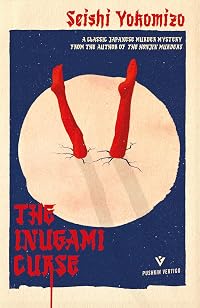
On This Page
Description
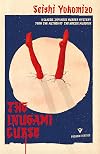
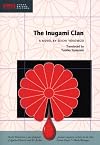
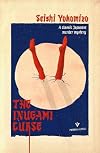
"In 1940s Japan, the wealthy head of the Inugami Clan dies, and his family eagerly await the reading of the will. But no sooner are its strange details revealed than a series of bizarre, gruesome murders begins. Detective Kindaichi must unravel the clan's terrible secrets of forbidden liaisons, monstrous cruelty, and hidden identities to find the murderer, and lift the curse wreaking its bloody revenge on the Inugamis."--Provided by publisher.Tags
Recommendations







Member Reviews
as a life long devotee of cozy whodunits, i could honestly say that this was one one of the best i've read in the genre! sure, its not as neat and tidy as your typical agatha christie (and at some point i felt it was in danger of becoming too bombastic), but real life crime is not tidy anyway. And the logic of the solution is quite good, tight, and satisfying.
I have to add, too, that i despised all the main characters (maybe not the lead detective) and hoped they would all go to prison. I think that's a testament the author's abilities.
I have to add, too, that i despised all the main characters (maybe not the lead detective) and hoped they would all go to prison. I think that's a testament the author's abilities.
Sahei Inugami, the head of the wealthy Inugami clan, has just died. Who will inherit the family fortune? The family’s solicitor knows the news won’t be good: the terms of the will are guaranteed to create conflict and feuding. Then the murders begin. Fortunately, Kosuke Kindaichi is on the case.
This is the 6th book in the Kosuke Kindaichi series, and perhaps the series has hit its stride by now, content-wise, or perhaps having a different translator changes the feel, but I liked this a bit better than The Honjin Murders, which is the first in the series. The translation may be smoother, or I may just be used to some of the authorial quirks (particularly the way he breaks the fourth wall). Or I am just a bloodthirsty Golden Age show more mystery reader and enjoyed the gruesomeness of these particular murders.
This book wears some of its Golden Age influences on its sleeve; John Dickson Carr in particular was very influential in Japan, and readers of Carr will note an homage to The Crooked Hinge. (I felt very proud of myself for spotting it!) I also liked that the book lampshaded somewhat the fact that communication problems lay at the heart of the mystery; if people had spoken up sooner, a lot of the book wouldn’t have happened! It’s sometimes vexing to read books like that, but I like when the book says “Yes, I know, but play along.”
I would recommend this if you’re a fan of mysteries by such folks as John Dickson Carr, or if you like mysteries set in Japan. show less
This is the 6th book in the Kosuke Kindaichi series, and perhaps the series has hit its stride by now, content-wise, or perhaps having a different translator changes the feel, but I liked this a bit better than The Honjin Murders, which is the first in the series. The translation may be smoother, or I may just be used to some of the authorial quirks (particularly the way he breaks the fourth wall). Or I am just a bloodthirsty Golden Age show more mystery reader and enjoyed the gruesomeness of these particular murders.
This book wears some of its Golden Age influences on its sleeve; John Dickson Carr in particular was very influential in Japan, and readers of Carr will note an homage to The Crooked Hinge. (I felt very proud of myself for spotting it!) I also liked that the book lampshaded somewhat the fact that communication problems lay at the heart of the mystery; if people had spoken up sooner, a lot of the book wouldn’t have happened! It’s sometimes vexing to read books like that, but I like when the book says “Yes, I know, but play along.”
I would recommend this if you’re a fan of mysteries by such folks as John Dickson Carr, or if you like mysteries set in Japan. show less
The head of the Inugami family has died, leaving a complex will that leads to murder. Inugami had three daughters, each to a different mistress, and showed neither them nor their mothers any interest or affection. His daughters married and each produced a son, one of whom stands to inherit the bulk of the Inugami fortune should he be chosen as a husband by the beautiful granddaughter of Inugami's mentor, a priest who saved him from starvation and death. This is a ludicrously artificial mystery, but very entertaining. It was first published in 1946, when soldiers were returning from the war. A disfigured returned soldier in a rubber mask plays an important role, as does another returned serviceman who hides his identity with a muffler. show more There are lots of interesting cultural bits and pieces. show less
I have a split record with Seishi Yokomizo. His books are closer to noir than cozies. I adored The Honjin Murders, but my next Yokomizo novel, The Village of Eight Graves, was terrible. So I went into The Inugami Curse with trepidation.
The novel was the triumph of hope over experience. Disheveled, stuttering genius detective Kosuke Kindaichi investigates an incredibly convoluted crime involving the Inugami clan: three spiteful, greedy half-sisters who despise each other and are jockeying to ensure that their families get the lion’s share of their late father’s wealth and businesses. That it leads to murder isn’t a spoiler: The first victim dies in Chapter 3. Yokomizo packs this mystery with plenty of suspense and twists, but to show more tell you any more would ruin the book. I’ll just say that I alternately glommed onto one suspect after the other, but I never guessed the culprit. Highly recommended. show less
The novel was the triumph of hope over experience. Disheveled, stuttering genius detective Kosuke Kindaichi investigates an incredibly convoluted crime involving the Inugami clan: three spiteful, greedy half-sisters who despise each other and are jockeying to ensure that their families get the lion’s share of their late father’s wealth and businesses. That it leads to murder isn’t a spoiler: The first victim dies in Chapter 3. Yokomizo packs this mystery with plenty of suspense and twists, but to show more tell you any more would ruin the book. I’ll just say that I alternately glommed onto one suspect after the other, but I never guessed the culprit. Highly recommended. show less
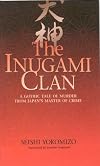
The Inugami Clan is one of Seishi Yokomizo's most well-known works and is currently the only novel by the popular and prolific author of mystery and detective fiction to have been translated into English. Yokomizo completed The Inugami Clan in 1951. Yumiko Yamazaki's English translation was published twice—first by ICG Muse 2003 and then again by Stone Bridge Press in 2007—but sadly both editions have since gone out of print. The Inugami Clan is one of many stories by Yokomizo which features the eccentric private investigator Kosuke Kindaichi, perhaps the author's most notable, popular, and memorable character. (It's interesting to note that the manga series Kindaichi Case Files is in part inspired by Yokomizo's detective show more Kindaichi.) Like a number of Yokomizo's other works, The Inugami Clan served as the basis for a live-action adaptation—director Kon Ichikawa's award-winning film The Inugamis was released in 1976 and then remade again in 2006.
Sahei Inugami began his life as a poor and homeless orphan. He drifted from place to place until, at the age of seventeen, he was taken in by Daini Nonomiya, a Shinto priest at a shrine near Lake Nasu, and his wife. But by the end of his life, Sahei had become a wealthy and respected businessman, as well as the head of a dysfunctional family with very little love lost among its members. Sahei died in the mid-1940s, leaving behind a last will and testament that triggered a series of ghastly murders. One after another, people closely associated with Sahei began dying and the number of his potential heirs dwindled. Because of the strange and stained circumstances surrounding Sahei's demise a private detective, Kosuke Kindaichi, was called to Nasu to investigate. However, his presence does little to stop the unfolding calamity until he delves more deeply into the closely kept secrets and hidden pasts of Sahei and the rest of the Inugamis.
I found The Inugami Clan to be an extraordinarily satisfying mystery. From the very beginning of the novel, Yokomizo provides the hints and clues needed to solve case, giving readers the opportunity to come to their own conclusions should they choose. There are many surprises as the story twists and turns, but everything falls beautifully into place by the end in a way that, although unexpected and arguably unbelievable, feels natural rather than forced. The already troubled relationships among the various members of the Inugami family along with the execution of Sahei's peculiar will present numerous scenarios in which any one of the Inugamis could have a convincing motive to carry out the murders as well as the opportunity to act upon their ill intentions. Coincidences and deliberate actions come together to form a deadly situation where very few of the Inugamis can claim to be completely innocent. And so it is left to Kindaichi, and by proxy the reader, to piece together the facts and untangle an elaborate knot of passion, loyalty, and betrayal in order to deduce the culprit's identity.
The Inugami Clan works so well as a novel and as a mystery because of Yokomizo's close attention to the intricacies and complexities of human and familial relationships—people don't always behave logically or act rationally when the lives and happiness of the ones who they love are at stake. As Kindaichi investigates the Inugami family and the murders it is revealed that everything that has happened can ultimately be traced back to the homosexual relationship rumored to have existed between Sahei and Daini; their closeness and intimacy has grave, unintended consequences decades later. A subtle thread of eroticism pervades The Inugami Clan, love and sexuality being a key part of the plot without necessarily being obvious. That combined with the dramatic scandals and dysfunction of the Inugamis as well as the bizarre and grotesque nature of the murders makes The Ingumai Clan both thrilling and engaging if at times somewhat outrageous. However, the novel's popularity is completely understandable; I only wish that more of Yokomizo's work would be translated.
Experiments in Manga show less
Sahei Inugami began his life as a poor and homeless orphan. He drifted from place to place until, at the age of seventeen, he was taken in by Daini Nonomiya, a Shinto priest at a shrine near Lake Nasu, and his wife. But by the end of his life, Sahei had become a wealthy and respected businessman, as well as the head of a dysfunctional family with very little love lost among its members. Sahei died in the mid-1940s, leaving behind a last will and testament that triggered a series of ghastly murders. One after another, people closely associated with Sahei began dying and the number of his potential heirs dwindled. Because of the strange and stained circumstances surrounding Sahei's demise a private detective, Kosuke Kindaichi, was called to Nasu to investigate. However, his presence does little to stop the unfolding calamity until he delves more deeply into the closely kept secrets and hidden pasts of Sahei and the rest of the Inugamis.
I found The Inugami Clan to be an extraordinarily satisfying mystery. From the very beginning of the novel, Yokomizo provides the hints and clues needed to solve case, giving readers the opportunity to come to their own conclusions should they choose. There are many surprises as the story twists and turns, but everything falls beautifully into place by the end in a way that, although unexpected and arguably unbelievable, feels natural rather than forced. The already troubled relationships among the various members of the Inugami family along with the execution of Sahei's peculiar will present numerous scenarios in which any one of the Inugamis could have a convincing motive to carry out the murders as well as the opportunity to act upon their ill intentions. Coincidences and deliberate actions come together to form a deadly situation where very few of the Inugamis can claim to be completely innocent. And so it is left to Kindaichi, and by proxy the reader, to piece together the facts and untangle an elaborate knot of passion, loyalty, and betrayal in order to deduce the culprit's identity.
The Inugami Clan works so well as a novel and as a mystery because of Yokomizo's close attention to the intricacies and complexities of human and familial relationships—people don't always behave logically or act rationally when the lives and happiness of the ones who they love are at stake. As Kindaichi investigates the Inugami family and the murders it is revealed that everything that has happened can ultimately be traced back to the homosexual relationship rumored to have existed between Sahei and Daini; their closeness and intimacy has grave, unintended consequences decades later. A subtle thread of eroticism pervades The Inugami Clan, love and sexuality being a key part of the plot without necessarily being obvious. That combined with the dramatic scandals and dysfunction of the Inugamis as well as the bizarre and grotesque nature of the murders makes The Ingumai Clan both thrilling and engaging if at times somewhat outrageous. However, the novel's popularity is completely understandable; I only wish that more of Yokomizo's work would be translated.
Experiments in Manga show less
Set in Japan just after the end of World War Two, The Inugami Curse sees private detective Kosuke Kindaichi try to unmask who's been killing off members of the wealthy Inugami family following the death of its patriarch and the reading of his highly convoluted will.
As can be the case with reading something in translation, it was difficult for me to tell how much of the novel's OTT melodrama is down to the translator or, if the translation is an accurate reflection of the original prose, whether the Japanese-language version is more deliberately stylised. The characters are frequently shaking and sweating with tension, grinding their teeth while glaring at one another, in ways that don't seem naturalistic. The reveal of show more whodunnit/howdunnit also strained credibility and the treatment of the women characters (because they're all very much women characters, in various different ways, not people) was irritating. This is apparently a classic of Japanese detective fiction, of an influence on par with the most well-known of Agatha Christie's works in the Anglophone world, but I think this will only work for you if you're more interested in convoluted puzzleboxes than mysteries featuring plausible people. show less
As can be the case with reading something in translation, it was difficult for me to tell how much of the novel's OTT melodrama is down to the translator or, if the translation is an accurate reflection of the original prose, whether the Japanese-language version is more deliberately stylised. The characters are frequently shaking and sweating with tension, grinding their teeth while glaring at one another, in ways that don't seem naturalistic. The reveal of show more whodunnit/howdunnit also strained credibility and the treatment of the women characters (because they're all very much women characters, in various different ways, not people) was irritating. This is apparently a classic of Japanese detective fiction, of an influence on par with the most well-known of Agatha Christie's works in the Anglophone world, but I think this will only work for you if you're more interested in convoluted puzzleboxes than mysteries featuring plausible people. show less
Immediately after the end of WWII, the patriarch of a rich Japanese family dies leaving a will designed to set his three grandsons and their mothers at odds with each other. The bodies of members of the family start piling up. Can Kosuke Kindaichi solve the case while there are still some heirs left?
There is a family tree supplied but long before I got to that point I'd resorted to making one myself to keep everybody and their relationships straight in my head. Attitudes in 1940s Japan were of course very different from the 2020s Anglosphere so at some points one just has to accept them as they were. But it's worth it for this look at a society with different family structures, speech patterns, and relationships to what we may be used to.
There is a family tree supplied but long before I got to that point I'd resorted to making one myself to keep everybody and their relationships straight in my head. Attitudes in 1940s Japan were of course very different from the 2020s Anglosphere so at some points one just has to accept them as they were. But it's worth it for this look at a society with different family structures, speech patterns, and relationships to what we may be used to.
Members
- Recently Added By
Author Information

55+ Works 3,024 Members
Some Editions
Series

Belongs to Publisher Series
Common Knowledge
- Canonical title
- The Inugami Curse
- Original title
- 犬神家の一族 (Inugamike no Ichizoku) (Inugamike no Ichizoku); Inugamike no ichizoku
- Alternate titles
- The Inugami Clan
- Original publication date
- 1976
- People/Characters
- Kindaichi Kosuke; Tamayo; Suketomo; Sukekiyo; Suketake; Shizuma (show all 11); Saruzo; Matsuko; Takeko; Umeko; Inugami Sahee
- Important places
- Fukuoka, Japan (whereabouts)
- Related movies
- Inugami-ke no ichizoku (1976 | IMDb); The Inugamis (1976) by Kon Ichikawa (1976); Inugami-ke no ichizoku (2006 | IMDb)
- First words
- C'etait en fevrier 1949, dans son domicile principal situe sur les rives du lac de Nasu, dans la province du Shinshu, que s'endormit de son premier sommeil, a l'age respectable de quatre-vingt-un ans, le vieux Inugami Sahee, ... (show all)l'un des magnats de la finance du Shinshu, le fondateur du trust Inugami, celui qu'on appelait le roi de la soie japonaise.
- Last words
- (Click to show. Warning: May contain spoilers.)Le crepuscule tombait, accompagne d'un froid glacial et penetrant.
Classifications
- Genres
- Fiction and Literature, Mystery, Historical Fiction
- DDC/MDS
- 895.635 — Literature & rhetoric Literatures of other languages Literatures of East and Southeast Asia Japanese Japanese fiction 1945–2000
- LCC
- PL842 .O55 .I513 — Language and Literature Languages and literatures of Eastern Asia, Africa, Oceania Languages of Eastern Asia, Africa, Oceania Japanese language and literature Japanese literature Individual authors and works
- BISAC
Statistics
- Members
- 572
- Popularity
- 51,520
- Reviews
- 16
- Rating
- (3.73)
- Languages
- 8 — English, French, German, Greek, Italian, Japanese, Russian, Spanish
- Media
- Paper, Audiobook, Ebook
- ISBNs
- 22
- ASINs
- 6