On This Page
Description
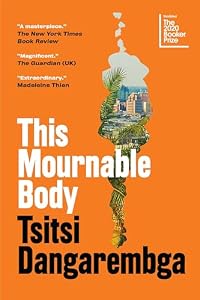
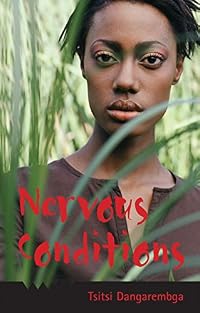
"Anxious about her prospects after leaving a stagnant job, Tambudzai finds herself living in a run-down youth hostel in downtown Harare. For reasons that include her grim financial prospects and her age, she moves to a widow's boarding house and eventually finds work as a biology teacher. But at every turn in her attempt to make a life for herself, she is faced with a fresh humiliation, until the painful contrast between the future she imagined and her daily reality ultimately drives her to show more a breaking point. In This Mournable Body, Tsitsi Dangarembga returns to the protagonist of her acclaimed first novel, Nervous Conditions, to examine how the hope and potential of a young girl and a fledgling nation can sour over time and become a bitter and floundering struggle for survival. As a last resort, Tambudzai takes an ecotourism job that forces her to return to her parents' impoverished homestead. It is this homecoming, in Dangarembga's tense and psychologically charged novel, that culminates in an act of betrayal, revealing just how toxic the combination of colonialism and capitalism can be."--Amazon.com. show lessTags
Recommendations








Member Reviews
I feel an odd mix of appreciation and frustration with this novel. I struggled with the second-person narrative at times, feeling like I missed whole chunks of the plot. Luckily, the narrative would smooth out again and there were magnificent sections in which the story, the mood, and the poignant struggles of Tambudzai were captivating. Our protagonist has quit her job in an advertising agency when she realized that her white coworkers were taking credit for her work. But putting herself out on the Harare job market at her age turns out to be very difficult. We follow her efforts to establish some financial security for herself as she sorts through her own personal limits in achieving this. What is she willing to do for a solid income? show more Returning to the village where she grew up, she confronts the dynamics of a country turning to tourism for its economy and faces her sense of failure and disappointment as she tries to help her family. It's a compelling story and well worth reading; the unevenness of the narrative bothered me but it didn't detract from the powerful ending. Also, I have not read the first two novels in Dangarembga's trilogy. I'm guessing that this novel will flow a bit more easily for readers who already know Tambudzai. show less
At the opening of this book we meet Tambudzai, central character of Dangarembga's two previous novels, at a low spot in her life. She's walked out of her prestigious job in an advertising agency on finding that (white) co-workers are taking credit for her work, but soon finds that a new generation of bright (thin) young women has come onto the Harare job-market since she was last looking for employment, and she's rapidly losing self-confidence. Finding somewhere to live has been every bit as difficult as finding a job. But the last thing she wants to do is seek the help of her family back in the village who made such huge sacrifices to enable her to go to a good school, and she's even more determined to stay away from the aunts and show more cousins who were in the bush fighting for freedom whilst she was getting her "O" and "A" levels.
After a brief, disastrous, spell as a teacher, she finds herself back in the hands of her family anyway, and then she's offered a job by Tracy, the white woman who was promoted over her head at school and in the advertising agency, but still seems to think of Tambudzai as a friend. Tracy is running an eco-friendly safari company based on her parents' old farm, and for a while Tambudzai slots happily back into businesswoman mode. But sooner or later, she's got to face the ghosts of the village and the war...
This book has its irritations: I didn't like the way it's all in second-person narrative, for instance, and there are passages which are rather over-written, but it was a very interesting look at what it's like to live on that divide between tradition and globalisation in modern Africa. In some ways very similar to the themes that come up in European and American novels of fifty years ago (the child of a working-class family that goes to college and finds it doesn't fit in any more with either world), but in some ways very different (the trauma of the guerrilla war, the legacy of colonialism). show less
After a brief, disastrous, spell as a teacher, she finds herself back in the hands of her family anyway, and then she's offered a job by Tracy, the white woman who was promoted over her head at school and in the advertising agency, but still seems to think of Tambudzai as a friend. Tracy is running an eco-friendly safari company based on her parents' old farm, and for a while Tambudzai slots happily back into businesswoman mode. But sooner or later, she's got to face the ghosts of the village and the war...
This book has its irritations: I didn't like the way it's all in second-person narrative, for instance, and there are passages which are rather over-written, but it was a very interesting look at what it's like to live on that divide between tradition and globalisation in modern Africa. In some ways very similar to the themes that come up in European and American novels of fifty years ago (the child of a working-class family that goes to college and finds it doesn't fit in any more with either world), but in some ways very different (the trauma of the guerrilla war, the legacy of colonialism). show less
I think it was the American literary critic Harold Bloom who once stated that the ultimate criterion for great literature was characters evolving throughout the novel, poem, or play: at the end they have to be no longer the same as at the beginning. If that's right, then this novel by the Zimbabwean writer Tsiti Dangarembga (° 1959) is an absolute success.
We get to know main character Tambudzai Sigauke (Tambu) when she is looking for work and permanent shelter in the capital Harare. At this point she already has quite a background: relieved that she was able to escape her rural village through successful studies, she worked for a while in a flashy advertising agency, but left that office after apparent racial and gender-related show more discrimination; and now she is in a desperate condition while her family back home counts on her support. Her experiences have made Tambu a fragile, very insecure personality, while at the same time still cherishing the ambition to prove herself. Throughout this novel, we will see Tambu's star rising and falling, as a result of both unexpectedly prosperous and predictably dramatic events, eventually ending in a form of resignation.
Dangarembga aptly describes the difficult living and working conditions in Zimbabwe, which still is marked by the war of independence (veterans play a rather nasty role in this novel), by remnants of the colonial regime (in practice whites remain in the lead), and due to the rotting corruption of the current regime ('the old crocodile' is mentioned once, needless to say who this refers to). But above all, this novel shows how a fragile personality can be crushed by a particular culture, such as the ubiquitous macho-sexism, by structures that aim for cheap money, and by old family traditions that impose obligations, etc. It is one of the great achievements of this novel that it offers a complex cocktail of these elements, within many intermingling layers.
It’s the prudent resilience of Tambu that makes this novel stand out: she constantly ends up into trouble, regularly collapses under the pressure, but she also manages to surpass this, or at least adapt to her difficulties. It's a great example of female empowerment. And the great merit of Dangaremgba is that she did not turn this into a cheap feel-good story (along the lines of for instance The Color Purple): even in the end, Tambu remains vulnerable and insecure, albeit to some extent purified.
From a literary point of view, this novel is a bit precarious: there’s a succession of brilliant and slightly dragging passages, and especially at the end the story unwinds a bit too quickly. But it's mainly through the narrative point of view, - the author constantly addressing Tambu in the you-form (very unusual in literature) -, that Dangarembga succeeds in arousing our involvement as a reader and our sympathy with the fragile Tambu. I think this novel was rightly placed on the Short List of the Booker Prize. show less
We get to know main character Tambudzai Sigauke (Tambu) when she is looking for work and permanent shelter in the capital Harare. At this point she already has quite a background: relieved that she was able to escape her rural village through successful studies, she worked for a while in a flashy advertising agency, but left that office after apparent racial and gender-related show more discrimination; and now she is in a desperate condition while her family back home counts on her support. Her experiences have made Tambu a fragile, very insecure personality, while at the same time still cherishing the ambition to prove herself. Throughout this novel, we will see Tambu's star rising and falling, as a result of both unexpectedly prosperous and predictably dramatic events, eventually ending in a form of resignation.
Dangarembga aptly describes the difficult living and working conditions in Zimbabwe, which still is marked by the war of independence (veterans play a rather nasty role in this novel), by remnants of the colonial regime (in practice whites remain in the lead), and due to the rotting corruption of the current regime ('the old crocodile' is mentioned once, needless to say who this refers to). But above all, this novel shows how a fragile personality can be crushed by a particular culture, such as the ubiquitous macho-sexism, by structures that aim for cheap money, and by old family traditions that impose obligations, etc. It is one of the great achievements of this novel that it offers a complex cocktail of these elements, within many intermingling layers.
It’s the prudent resilience of Tambu that makes this novel stand out: she constantly ends up into trouble, regularly collapses under the pressure, but she also manages to surpass this, or at least adapt to her difficulties. It's a great example of female empowerment. And the great merit of Dangaremgba is that she did not turn this into a cheap feel-good story (along the lines of for instance The Color Purple): even in the end, Tambu remains vulnerable and insecure, albeit to some extent purified.
From a literary point of view, this novel is a bit precarious: there’s a succession of brilliant and slightly dragging passages, and especially at the end the story unwinds a bit too quickly. But it's mainly through the narrative point of view, - the author constantly addressing Tambu in the you-form (very unusual in literature) -, that Dangarembga succeeds in arousing our involvement as a reader and our sympathy with the fragile Tambu. I think this novel was rightly placed on the Short List of the Booker Prize. show less
33. This Mournable Body by Tsitsi Dangarembga
published: 2018
format: 280-page paperback
acquired: June
read: Jul 12-19
time reading: 10:01, 2.1 mpp
rating: 4
locations: Zimbabwe
about the author: born 1959 in Southern Rhodesia (now Zimbabwe)
My Litsy review says a lot in small amount of space:
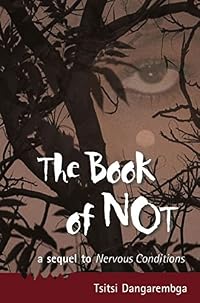
This show more novel follows Tambu again, continuing from the previous novels but into a very different Zimbabwe. The first two books took place in the 1960's and 1970's, during the "War". (The Rhodesian Bush War—also called the Second Chimurenga as well as the Zimbabwe War of Liberation, 1965-1979). I don't think we are ever given a date for the time period covered here, but at one point a 2002 movie is mentioned, and we have email but not smart phones. This Zimbabwe is peaceful, somewhat prosperous, and has a flourishing tourist industry. It also has its tensions: an accepted but corrupt government, a kind of tense cooperation between the mostly wealthy whites and the rest of the population, and, notably, a significant set of psychologically scarred veteran freedom fighters who tend to be discouraged with the results of their victory. Thematically this builds on the last chapters of [The Book of Not] where Dangarembga began to explore the dangers of the post-war urban capitalisms and its underlying emptiness. There it almost felt like an add on. But here Tambu's struggles within this environment are the main plot.
I'm really glad I read the first two books before this ([Nervous Conditions] and [The Book of Not]). They aren't essential plot-wise, but they provide a context, and a background for Tambu, adding a kind of resonating shock value here. Also the first two books are really rewarding, and, unlike this one, are easy on the reader.
2021
https://www.librarything.com/topic/333774#7558712 show less
published: 2018
format: 280-page paperback
acquired: June
read: Jul 12-19
time reading: 10:01, 2.1 mpp
rating: 4
locations: Zimbabwe
about the author: born 1959 in Southern Rhodesia (now Zimbabwe)
My Litsy review says a lot in small amount of space:
"This an uncomfortable book. After building up our hero, Tambu, in two terrific novels, Dangarembga essentially tosses that away. Zimbabwe is not such an easily wrapped place and her previous construct is here, maybe intentionally, undermined. This is not a Tambu you‘re going to like, nor will you like seeing her struggles from inside your own head in a 2nd person narrative. I‘m partially horrified and partially impressed. A difficult read."
This show more novel follows Tambu again, continuing from the previous novels but into a very different Zimbabwe. The first two books took place in the 1960's and 1970's, during the "War". (The Rhodesian Bush War—also called the Second Chimurenga as well as the Zimbabwe War of Liberation, 1965-1979). I don't think we are ever given a date for the time period covered here, but at one point a 2002 movie is mentioned, and we have email but not smart phones. This Zimbabwe is peaceful, somewhat prosperous, and has a flourishing tourist industry. It also has its tensions: an accepted but corrupt government, a kind of tense cooperation between the mostly wealthy whites and the rest of the population, and, notably, a significant set of psychologically scarred veteran freedom fighters who tend to be discouraged with the results of their victory. Thematically this builds on the last chapters of [The Book of Not] where Dangarembga began to explore the dangers of the post-war urban capitalisms and its underlying emptiness. There it almost felt like an add on. But here Tambu's struggles within this environment are the main plot.
I'm really glad I read the first two books before this ([Nervous Conditions] and [The Book of Not]). They aren't essential plot-wise, but they provide a context, and a background for Tambu, adding a kind of resonating shock value here. Also the first two books are really rewarding, and, unlike this one, are easy on the reader.
2021
https://www.librarything.com/topic/333774#7558712 show less
I haven't read the winner of the 2020 Booker Prize yet, but it must have been spectacularly good to have been chosen instead of the shortlisted This Mournable Body by Zimbabwean author Tsitsi Dangarembga. It's one of those books that makes me wish that all my reading were as worthwhile.
The novel tells the story of one woman's moral decay and decline into poverty and is emblematic of Zimbabwe's postcolonial debacle. So it could have been a melancholy book, but witty asides and black humour lighten the tone. At the same time, it's also a painfully honest examination of the deluded visions of Zimbabwe's leadership and the corrupt state of the nation and body politic.
Tambudzai (Tambu) is a thirty-something Zimbabwean down on her luck. And show more it's not her fault: she was uplifted from rural poverty by an uncle who enabled her education but despite her degree she can't get work and she can't get ahead. Progress towards a better life and success are a mirage.
Tired of being paid a miserable wage while men took credit for the work she did, she imprudently resigned from her job in an advertising agency. When the novel opens she is exhausting her meagre savings in a rundown hostel where she is past her use-by date because the hostel is for young women, and she is no longer young.
Very soon the reader is drawn into the moral collapse that represents the morass into which Zimbabwe has fallen. Tambu goes for a job interview as secretary for the Widow Riley but is refused entrance by a wily servant who perceives that Tambu will displace her. Discouraged yet again, Tambu goes home in anger that expresses itself when a mob turns on one of the girls from the hostel, a flashy, sexy good-time-girl called Gertrude. I don't know whether the image of Tambu standing ready to cast a stone is a Biblical allusion to shared guilt or if that's me imposing a colonial interpretation on a traditional Zimbabwean way of 'disciplining' unruly young women who depart from patriarchal standards of behaviour. But either way the scene skewers the reader into being complicit. On the one hand Tambu is addressing herself; on the other, the second-person 'you' is the reader—both the postcolonial Zimbabwean who wilfully refuses to take responsibility for the descent into mob rule and the wider world which looks away, helpless to intervene in affairs for which under colonialism it was the bedrock but which it now no longer controls.
Justification comes easily:
To read the rest of my review please visit https://anzlitlovers.com/2021/02/13/this-mournable-body-by-tsitsi-dangarembga/ show less
The novel tells the story of one woman's moral decay and decline into poverty and is emblematic of Zimbabwe's postcolonial debacle. So it could have been a melancholy book, but witty asides and black humour lighten the tone. At the same time, it's also a painfully honest examination of the deluded visions of Zimbabwe's leadership and the corrupt state of the nation and body politic.
Tambudzai (Tambu) is a thirty-something Zimbabwean down on her luck. And show more it's not her fault: she was uplifted from rural poverty by an uncle who enabled her education but despite her degree she can't get work and she can't get ahead. Progress towards a better life and success are a mirage.
Tired of being paid a miserable wage while men took credit for the work she did, she imprudently resigned from her job in an advertising agency. When the novel opens she is exhausting her meagre savings in a rundown hostel where she is past her use-by date because the hostel is for young women, and she is no longer young.
Very soon the reader is drawn into the moral collapse that represents the morass into which Zimbabwe has fallen. Tambu goes for a job interview as secretary for the Widow Riley but is refused entrance by a wily servant who perceives that Tambu will displace her. Discouraged yet again, Tambu goes home in anger that expresses itself when a mob turns on one of the girls from the hostel, a flashy, sexy good-time-girl called Gertrude. I don't know whether the image of Tambu standing ready to cast a stone is a Biblical allusion to shared guilt or if that's me imposing a colonial interpretation on a traditional Zimbabwean way of 'disciplining' unruly young women who depart from patriarchal standards of behaviour. But either way the scene skewers the reader into being complicit. On the one hand Tambu is addressing herself; on the other, the second-person 'you' is the reader—both the postcolonial Zimbabwean who wilfully refuses to take responsibility for the descent into mob rule and the wider world which looks away, helpless to intervene in affairs for which under colonialism it was the bedrock but which it now no longer controls.
Her mouth is a pit. She is pulling you in. You do not want her to entomb you. You drop your gaze but do not walk off because on the one hand you are hemmed in by the crowd. On the other if you return to solitude you will fall back inside yourself where there is no place to hide. (p.24)
Justification comes easily:
You did not want to do what you did at the market. You did not want all that to happen, nor did anyone else. No one wanted it. It is just something that took place like that, like a moment of madness. (p.28)
To read the rest of my review please visit https://anzlitlovers.com/2021/02/13/this-mournable-body-by-tsitsi-dangarembga/ show less
This book has so much unrealized potential, but unfortunately falls way short of what I expect in a good novel. The themes are interesting. Tambu was very successful academically in her youth through hard work, but in the real world, she seems unable to grab a foothold on the ladder of success. She is wildly jealous of those who have been able to amass anything approaching material success. In Zimbabwe, the poverty, the lack of respect for women, the corruption, the unenforceable property rights all make it hard for a woman to make her way in the world, and all of this is elucidated during the course of the story.
Unfortunately, it is told in a way that is so boring and unnecessarily obtuse. I did not read the two prior books in the show more trilogy, and I do think that might have made a big difference because perhaps I would have had passing familiarity with the characters beyond the protagonist. But since I didn’t, they all just seemed like a stream of names. Some of them had multiple names and were referred to differently from time to time. Others were referred to as her mother’s uncle’s sister’s son (okay, not really, but that represents how confusing it all was in terms of who was related to whom and how they were interrelated). If I have to spend this much time just figuring out what is going on, it is very, very hard to get lost in the storytelling.
Many people will dislike the fact that the book is written in the second person POV, but I actually liked that element and thought it was well done. It’s almost like we were inside Tambu’s mind as she scolds herself for her many failures. In addition, there were actually some descriptive passages that were beautifully written, but sadly there weren’t many of them. I wanted to see more of that author and less of the one struggling to move her character to the finish line.
Bottom line, this book didn’t get interesting until the last 20% when I finally understood where the author was going and why. The first 80% is such a slog that honestly in no way was the journey made worthwhile by the payoff.
Writing quality: 3/5
Originality: 4/5
Character development: 2/4
Plot development: 1/4
Overall enjoyment: 0/2
Total: 10/20 show less
Unfortunately, it is told in a way that is so boring and unnecessarily obtuse. I did not read the two prior books in the show more trilogy, and I do think that might have made a big difference because perhaps I would have had passing familiarity with the characters beyond the protagonist. But since I didn’t, they all just seemed like a stream of names. Some of them had multiple names and were referred to differently from time to time. Others were referred to as her mother’s uncle’s sister’s son (okay, not really, but that represents how confusing it all was in terms of who was related to whom and how they were interrelated). If I have to spend this much time just figuring out what is going on, it is very, very hard to get lost in the storytelling.
Many people will dislike the fact that the book is written in the second person POV, but I actually liked that element and thought it was well done. It’s almost like we were inside Tambu’s mind as she scolds herself for her many failures. In addition, there were actually some descriptive passages that were beautifully written, but sadly there weren’t many of them. I wanted to see more of that author and less of the one struggling to move her character to the finish line.
Bottom line, this book didn’t get interesting until the last 20% when I finally understood where the author was going and why. The first 80% is such a slog that honestly in no way was the journey made worthwhile by the payoff.
Writing quality: 3/5
Originality: 4/5
Character development: 2/4
Plot development: 1/4
Overall enjoyment: 0/2
Total: 10/20 show less
I got the point of this, but at the same time I felt a sustained sense of discomfort while reading due to the combination of Tambu‘s self-centered actions and the unceasing “you” which points the finger back towards the reader. It wasn‘t a pleasurable reading experience. However, the author has lived an incredible life and stood up for what she believes in, and I really admire what she tries to do with her writing.
Members
- Recently Added By
Lists

The Guardian Books of the Year 2020
126 works; 8 members

Black Authors
381 works; 32 members

Books Read in 2020
4,379 works; 124 members

Second-person fiction
63 works; 3 members
Author Information

9+ Works 3,106 Members
Some Editions
Awards and Honors
Awards
Distinctions
The Guardian Book of the Day (2020-01-24)
Series

Common Knowledge
- Canonical title*
- Überleben
- Original title
- This Mournable Body
- Original publication date
- 2018
- People/Characters
- Tambudzai
- Important places
- Harare, Zimbabwe
*Some information comes from Common Knowledge in other languages. Click "Edit" for more information.
Classifications
Statistics
- Members
- 453
- Popularity
- 67,086
- Reviews
- 14
- Rating
- (3.30)
- Languages
- English, French, German, Swedish
- Media
- Paper, Audiobook, Ebook
- ISBNs
- 14
- ASINs
- 6