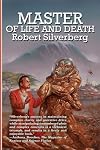
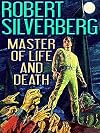
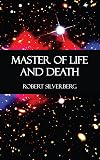
Master of Life and Death
by Robert Silverberg
On This Page
Description
By the 23rd century Earth's population had reached seven billion. Mankind was in danger of perishing for lack of elbow room--unless prompt measures were taken. Roy Walton had the power to enforce those measures. But though his job was in the service of humanity, he soon found himself the most hated man in the world. For it was his job to tell parents their children were unfit to live; he had to uproot people from their homes and send them to remote areas of the world. Now, threatened by mobs show more of outraged citizens, denounced and blackened by the press, Roy Walton had to make a decision: resign his post, or use his power to destroy his enemies and become a dictator in the hopes of saving humanity from its own folly. In other words, should he become the MASTER OF LIFE AND DEATH? show lessTags
Recommendations






Member Reviews
This short novel is set in a 23rd century Earth at a time when the population explosion in most of the world is causing severe overcrowding, such that a Bureau of Population Equalisation (Popeek) has been established by the UN more or less to forcibly redistribute parts of the world's population to less populous areas (though it should be said that the world population in 2232 is stated to be 7 billion, which is actually what it reached in 2011). Despite this grim backdrop, this novel has quite a humorous feel when read today; it was published in 1957 and the attitudes towards both the science fiction elements, and wider social attitudes, are of their time. There are pulp fiction aliens from a neighbouring solar system that Popeek wants show more to use as a refuge to relieve the overcrowding on Earth; there is an expedition landing on Venus to try to terraform it. At another level, though, the story is about the moral dilemmas faced by one man, Roy Walton, the head of Popeek, who comes into office unexpectedly following the assassination of his predecessor as part of a plot by anti-population equalisers. Walton finds that that predecessor had kept much of his work secret, and the decisions he needs to take to do his job and combat the conspiracy require him to assume arbitrary and even dictatorial powers as the novel's title suggests, though he genuinely believes himself to be doing these actions for humanity's long term benefit. My description probably makes this novel sound like a bit of a mess, but it is actually an enjoyable read that packs a lot into its 144 pages, but does so effortlessly as the narrative flows very easily with the minimum of effort and extraneous description. Not a classic SF novel, but definitely worth a look. show less
Ratings
Members
- Recently Added By
Author Information

988+ Works 62,621 Members
Some Editions
Series
Belongs to Publisher Series
Work Relationships
Common Knowledge
- Original publication date
- 1957
- People/Characters
- Roy Walton; Fred Walton; Lee Percy; Colonel Leslie McLeod; Ludwig; Sellors (show all 11); FitzMaugham; Martinez; Lyle Prior; Noel Hervey; Thogran Klayrn
- Dedication
- For Antigone - Who Thinks We're Property
- First words
- The offices of the Bureau of Population Equalization, vulgarly known as Popeek, were located on the twentieth through twenty-ninth floors of the Cullen Building, a hundred-story monstrosity typical of twenty-second-century ne... (show all)o-Victorian at its overdecorated worst.
- Last words
- (Click to show. Warning: May contain spoilers.)Plenty of work waited for him back in New York.
Classifications
Statistics
- Members
- 189
- Popularity
- 173,900
- Reviews
- 1
- Rating
- (3.25)
- Languages
- English, French, German, Italian
- Media
- Paper, Ebook
- ISBNs
- 12
- ASINs
- 16