116 Members (4.00)
On This Page
Description
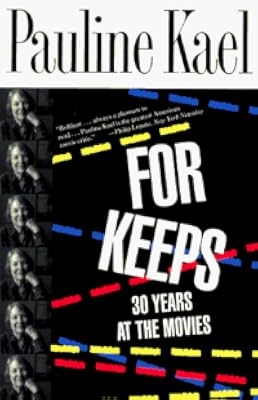
InGoing Steady Kael has deliberately kept her film reviews in chronological order so that the reader can follow 'what was evolving in film during a crucial period of social and aesthetic change' at the end of the sixties. From Godard'sWeekend to Kubrick's2001, viaBarbarella,Bullitt andYellow Submarine.Tags
Recommendations




















Member Reviews
Members
- Recently Added By
Published Reviews
ThingScore 100
Pauline Kael is my favorite movie critic, which doesn’t mean she is necessarily “reliable” or “trustworthy.” Absolute trustworthiness presupposes a static intelligence, a kind of analytical gearbox or dogma mill for grinding fine whatever cinematic grain drops into it. “Reliable” critics, automata with whom you know you will always agree or disagree, are usually flacking for one show more of George Orwell’s “smelly little orthodoxies,” either, ideological or commercial. Not Miss Kael. She doesn’t thump you on the head with Cahiers du Cinema or Siegfried Kracauer or the latest press release on the state of Darryl Zanuck’s soul...
There aren’t any stunning setpieces like “The Group” analysis in “Kiss Kiss” or the “Come-Dressed-as-the-Sick-Soul-of-Europe Parties” and the scourging of auteur theorists in “I Lost It.”But because The New Yorker gave her the space. Miss Kael for the last two years has been able to explore aspects of moviemaking usually ignored by reviewers rushing to file short notices... While I miss the polemics and the reviews of other reviewers that made her first two collections such evil fun, I care about Miss Kael’s criticism as literature. Her reviews can be read before, immediately after, and long after we have seen the movie that inspires or exasperates her. show less
There aren’t any stunning setpieces like “The Group” analysis in “Kiss Kiss” or the “Come-Dressed-as-the-Sick-Soul-of-Europe Parties” and the scourging of auteur theorists in “I Lost It.”But because The New Yorker gave her the space. Miss Kael for the last two years has been able to explore aspects of moviemaking usually ignored by reviewers rushing to file short notices... While I miss the polemics and the reviews of other reviewers that made her first two collections such evil fun, I care about Miss Kael’s criticism as literature. Her reviews can be read before, immediately after, and long after we have seen the movie that inspires or exasperates her. show less
added by SnootyBaronet
Her latest collection—one essay and her New Yorker reviews from January 1968 through March 1969— has been pressed into permanence as quickly as antiquated book publishing methods permit. All this suggests that Miss Kael is an especially popular film reviewer, and “Going Steady” shows why.
Her style is attractively personal: casual yet tart. She is a splendid critic of acting and fully show more understands the category “movie star.” On film lore in general, she is always in formative, because of her unique grasp of movies both as business and as social institutions. But her insider’s knowledge doesn’t make her soft or unctuous: of the 78 films she reviews here, only 15 pass muster. Since she won’t accept cor rupt merchandise in slick packages, Miss Kael rightly finds little to ap prove from “the Mechanical Muse.” No one in film reviewing is so utterly unsentimental. Not only can she ex pose bogus uplift in “The Two of Us” or pacifist satire in “The Charge of the Light Brigade,” she can put down swinger self‐righteousness in “Joanna.” On the other hand, she can sometimes find skill where other people have missed it. show less
Her style is attractively personal: casual yet tart. She is a splendid critic of acting and fully show more understands the category “movie star.” On film lore in general, she is always in formative, because of her unique grasp of movies both as business and as social institutions. But her insider’s knowledge doesn’t make her soft or unctuous: of the 78 films she reviews here, only 15 pass muster. Since she won’t accept cor rupt merchandise in slick packages, Miss Kael rightly finds little to ap prove from “the Mechanical Muse.” No one in film reviewing is so utterly unsentimental. Not only can she ex pose bogus uplift in “The Two of Us” or pacifist satire in “The Charge of the Light Brigade,” she can put down swinger self‐righteousness in “Joanna.” On the other hand, she can sometimes find skill where other people have missed it. show less
added by SnootyBaronet
Author Information

41+ Works 2,936 Members
Series

Common Knowledge
- First words
- Movies have been doing so much of the same thing—in slightly different ways—for so long that few of the possibilities of this great hybrid art have yet been explored.
- Quotations
- Movies — a tawdry corrupt art for a tawdry corrupt world — fit the way we feel. The world doesn’t work the way the schoolbooks said it did and we are different from what our parents and teachers expected us to be. Movie... (show all)s are our cheap and easy expression, the sullen art of displaced persons.
- Last words
- (Click to show. Warning: May contain spoilers.)He and Maggie Smith have an intimacy when they talk together in one scene that almost makes their love affair convincing; he is the only character in the film with whom she isn't domineering, and that is as it should be.
Classifications
- Genres
- Nonfiction, General Nonfiction
- DDC/MDS
- 791.43 — Arts & recreation Recreation, sports, and performing arts Public performances Motion pictures, radio, television, podcasting Motion pictures
- LCC
- PN1995 .K23 — Language and Literature Literature (General) Literature (General) Drama Motion pictures
- BISAC
Statistics
- Members
- 116
- Popularity
- 281,727
- Rating
- (4.00)
- Languages
- English
- Media
- Paper
- ISBNs
- 6
- ASINs
- 2